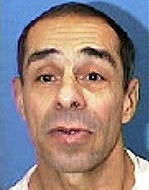
Bruce Charles Jacobs
Murderer Brian Kevin Rosenfeld
Murderer · USA · 1985
Brian Kevin Rosenfeld Brian Kevin Rosenfeld was sentenced to three concurrent l…
23 victims
Brian Kevin Rosenfeld
Murderer · USA · 1985
Brian Kevin Rosenfeld Brian Kevin Rosenfeld was sentenced to three concurrent l…
23 victims
 Yahweh ben Yahweh
Murderer · USA · 1980
Yahweh ben Yahweh was born and legally named Hulon Mitchell Jr. (October 27, 19…
23 victims
Yahweh ben Yahweh
Murderer · USA · 1980
Yahweh ben Yahweh was born and legally named Hulon Mitchell Jr. (October 27, 19…
23 victims
 Russell Ellwood
Murderer · USA · 1991
Russell Ellwood was a former taxi driver. Authorities suspected him of killing…
20 victims
Russell Ellwood
Murderer · USA · 1991
Russell Ellwood was a former taxi driver. Authorities suspected him of killing…
20 victims
 Edwin Snelgrove
Murderer · USA · 1983
Edwin “Ned” Snelgrove was born Edwin Fales Snelgrove, Jr. on August 9, 1960. He…
2 victims
Edwin Snelgrove
Murderer · USA · 1983
Edwin “Ned” Snelgrove was born Edwin Fales Snelgrove, Jr. on August 9, 1960. He…
2 victims
 James Duquette
Murderer · USA · 1980
James Duquette Jr. was convicted of murder and was also sentenced in connection…
2 victims
James Duquette
Murderer · USA · 1980
James Duquette Jr. was convicted of murder and was also sentenced in connection…
2 victims
 John Amos Small
Murderer · USA · 1981
John Amos Small was sentenced to death on June 19, 1996 after being convicted o…
1 victim
John Amos Small
Murderer · USA · 1981
John Amos Small was sentenced to death on June 19, 1996 after being convicted o…
1 victim
 Anthony Ayres
Murderer · United Kingdom · 1993
Anthony Ayres was a 49-year-old man when he was sentenced for the murder of Kel…
2 victims
Anthony Ayres
Murderer · United Kingdom · 1993
Anthony Ayres was a 49-year-old man when he was sentenced for the murder of Kel…
2 victims
 Joseph Donald Ture
Serial killer · USA · 1978
Joseph Donald Ture was indicted by a Stearns County grand jury on four counts o…
6 victims
Joseph Donald Ture
Serial killer · USA · 1978
Joseph Donald Ture was indicted by a Stearns County grand jury on four counts o…
6 victims
 Timothy Wilson Spencer
Serial killer · USA · 1984
Name: Timothy Wilson Spencer · Alias(es) / monikers: “the Southside Slayer”; “t…
5 victims
Timothy Wilson Spencer
Serial killer · USA · 1984
Name: Timothy Wilson Spencer · Alias(es) / monikers: “the Southside Slayer”; “t…
5 victims
- Gender
- male
- Country
- USA
- Location
- Dallas County, Texas, USA
- Date of birth
- October 13, 1946
- Age at first offence
- 40
- Characteristics
- stalker, rape, drug addict, alcoholic, history of mental illness
- Victim profile
- Conrad Harris (male, 16)
- Method of murder
- Stabbing with knife 24 times
- Date(s) of murder
- July 22, 1986
- Years active
- 1986
- Date of arrest
- 2 days after
- Status
-
Executed
Executed by lethal injection in Texas on May 15, 2003
Case information
Bruce Charles Jacobs was convicted of capital murder for killing Conrad Harris.
Status and sentence
Jacobs was sentenced to death following a separate punishment hearing.
Timeline
- Oct. 16, 1986 — A grand jury indicted Jacobs in the Criminal District Court No. 3 of Dallas County for the capital offense of murdering Conrad Harris during the course of committing a burglary.
- June 30, 1987 — A jury found Jacobs guilty of capital murder.
- July 2, 1987 — Following a separate punishment hearing, the court assessed a sentence of death based on the jury's answers to the punishment issues.
- March 23, 1994 — Jacobs' conviction and sentence were affirmed on direct appeal by the Texas Court of Criminal Appeals in an unpublished opinion.
- Oct. 17, 1994 — The United States Supreme Court denied certiorari review.
- Oct. 7, 1996 — Jacobs filed an application for writ of habeas corpus in the trial court.
- Oct. 22, 1997 — The Court of Criminal Appeals denied habeas relief.
- March 18, 1998 — Jacobs filed a petition for writ of habeas corpus in the United States District Court for the Northern District of Texas, Dallas Division.
- Jan. 31, 2002 — The federal district court denied habeas relief.
- March 21, 2002 — The federal district court denied permission to appeal.
- June 20, 2002 — Jacobs requested permission to appeal to the United States Court of Appeals for the Fifth Circuit.
- Oct. 29, 2002 — The Fifth Circuit denied permission to appeal in an unpublished per curiam opinion.
- Jan. 24, 2003 — Jacobs petitioned the United States Supreme Court for certiorari review.
- Jan. 31, 2003 — The Dallas County Criminal District Court No. 3, Judge Robert W. Francis, scheduled Jacobs' execution for May 15, 2003.
- March 31, 2003 — The Supreme Court denied certiorari review.
- April 23, 2003 — Jacobs filed a clemency application with Texas Board of Pardons and Paroles.
- April 29, 2003 — Jacobs filed a successive state habeas application in state trial court.
- May 15, 2003 — Jacobs was executed by lethal injection in Texas.
Background
Jacobs had prior criminal history involving assaults on children and other offenses.
In May 1963, Jacobs assaulted a 12-year-old girl on her way to school, forcing her behind a nearby building and stabbing her in the back with a steak knife when she attempted to flee. He was sent to Boys School.
In 1965 to 1966, while a student-inmate at the Mountain View School for Boys, Jacobs was put in maximum security, a form of solitary confinement, after he became angry with a dorm-parent and “took the axe handle or the pick handle to [him].” Jacobs was also placed in maximum security after another incident when he became jealous and angry with another student-inmate.
In 1967, Jacobs assaulted a teenaged girl as she passed through a covered tunnel on her way home from school. He held a razor blade to her neck and demanded her money, then released her when she complied. After the girl testified against him in court for that offense, Jacobs threatened to kill her.
As an inmate in the Oregon State Penitentiary in 1970 to 1971, Jacobs was discovered with a razor-tipped broom in his cell.
Several individuals testified about Jacobs' behavior and interactions:
- Shirley Reynolds, Jacobs' estranged aunt, testified at his trial that Jacobs had called her on July 23, 1986, the day after Jacobs murdered Conrad Harris, asking where she worked, how old her daughters were, and what they did during the day.
- Reynolds' 15-year-old daughter called her at work the following day reporting that a suspicious looking person was hanging around outside their home; he had rung the doorbell several times, then went around to the back of the house. Reynolds went home to check on her daughter and found that police had already arrived. She recognized the man they had detained as her nephew, Jacobs. Jacobs admitted to prying off two window screens and breaking a window but claimed he had no money to pay for the damage. He said he only wanted to see her before he left town for Houston. Reynolds took Jacobs to the bus station.
- Another woman testified that Jacobs had harassed her on several occasions as she walked around downtown Dallas; she became frightened of him due to his increasingly suspicious and threatening behavior.
- Several co-workers testified that Jacobs had continually harassed and propositioned female employees, then threatened them when they rejected his advances.
- An animal research technician at Dallas Zoo testified that one night after her name and picture had appeared in the Dallas Times Herald, Jacobs showed up at her house as a total stranger claiming he wanted to talk to her about animals. The woman inadvertently left her keys in the front door, and Jacobs took the keys and entered her house without knocking. He said he wanted to talk to her, but she insisted he leave when he refused to tell her why he was there.
Jacobs served 5 years in Oregon in 1967 to 1972 for Assault With Intent to Commit Robbery.
The offence
At approximately 6:30 a.m. on July 22, 1986, Jacobs broke into the Harris residence. Jacobs peered into the bedroom where Hugh Harris and his wife, Holly Kuper, lay sleeping, retrieved a butcher knife from the kitchen, entered the room where Harris' son, Conrad Harris, was sleeping, and stabbed Conrad approximately 24 times, killing Conrad on his sixteenth birthday.
Conrad's father and stepmother awoke to Conrad's piercing screams. When Mr. Harris opened the door to Conrad's room, he saw his son lying butchered and bleeding on the floor and a man standing over him holding a large knife. As Harris backed out of the room and moved toward the front door, the assailant fled out the back.
Harris described the suspect as a short, white male with a black beard, muscular arms and shoulders, and wearing a tank top and a Panama hat.
Holly Kuper told police that a man matching that description and wearing jeans had tried to break into their house the day before the murder. Kuper explained that around 8:00 a.m. the day prior, after her husband left, she was awakened by knocking at the front door. She answered the door and the man asked for directions to a street clearly visible from the Harris' home. A few minutes later, as Kuper opened the back door to let the dog out, the same man approached and tried to push his way into the house. Kuper managed to get the door closed and locked, and she called the police.
At trial, the medical examiner testified that Conrad died as a result of 24 to 26 stab and cut wounds to his left arm, left side, and back and that he lost one-half of his entire blood supply. The medical examiner testified that Jacobs stabbed Conrad with such force that part of the knife broke off and became embedded, and that the knife left irregular wounds after becoming deformed from hitting bone in Conrad's body. The medical examiner classified Conrad's injuries as “overkill” and as having “sexual overtones.”
Investigation
The police found the murder weapon outside the Harris home but found no identifiable prints on the weapon. The police were able to identify five fingerprints belonging to Jacobs on one of the Harris' dinner knives.
Kuper reported that on the morning Conrad was killed, the assailant dumped out the contents of Mrs. Kuper's purse and that a $100 bill was missing from her wallet.
Investigators identified the suspect through witness descriptions and subsequent arrests:
- Harris and Kuper independently made composite drawings for the police, and one of the major newspapers ran Kuper's drawing with a story about the murder. Various radio stations broadcast the description.
- A witness who worked at SMU and who was parked near the campus contacted police after hearing about the murder. The witness said that at about 6:45 a.m. on the day of the murder, a man with a beard and well-developed muscles wearing a Panama hat came out of a nearby alley and walked in front of the witness's car at a fast pace. The witness noticed the man because the man looked like a “circus worker.” The witness explained that when police sirens became audible, the man “almost broke into a run” toward the west side of the campus. At trial, the witness testified that Jacobs looked like the man seen coming out of the alley.
- Another witness contacted police and told them that at 7:00 a.m. she saw a man wearing a Panama hat running toward her and getting into a taxi cab near the west side of the SMU campus. The witness identified the cab driver to police but was unable to identify Jacobs at trial. After Kuper's composite drawing was shown to the taxi driver, the taxi driver said his first customer on the morning in question had a beard and a hat like those in the picture. The taxi driver said the man entered the cab with his hat pulled down over his face and immediately lay down in the back seat.
- Two days following the murder, the cab driver rode in an unmarked vehicle with two police officers and retraced the route he traveled with the suspect. As they approached the location where the cab driver had dropped off the suspect, the driver pointed to a man walking down the street and said that he looked like the man he picked up, except that his beard was missing. The officers independently determined that the man matched the other witnesses' descriptions.
Police surveillance and arrest:
- After the police watched the suspect enter a house, they began taking steps to put the house under surveillance and obtain a search warrant. After only a short while, the suspect left the house and went into a nearby 7-Eleven, and the officers followed him inside and arrested him.
- Jacobs gave the police written consent to search his apartment. Police seized damp blue jeans with traces of human blood that were too small to be blood typed, and beard hair fibers. Police also seized six $100 bills and other smaller bills totaling $800.
Arrest
Police arrested Jacobs after surveillance at a house ended and officers followed him into a nearby 7-Eleven.
Trial
At trial, Jacobs provided a voluntary written statement to police shortly after his arrest in which he admitted to having been in the house that morning and being seen by Harris while holding a knife. Jacobs' statement was not introduced at trial after the trial judge concluded in a pretrial hearing that Jacobs had not received adequate Miranda warnings prior to giving the statement.
Mr. Harris provided the eyewitness identification at trial.
Jacobs pleaded not guilty. He pointed out that the Harrises originally identified a different suspect, John Muldune, from a photographic lineup and said they did not identify him as the murderer until police arrested him, told them they caught the murderer, and showed them his picture.
The jury heard testimony about Jacobs' prior conduct, including testimony that at age 16 Jacobs stabbed a 12-year-old girl with a steak knife during an assault, and that while in a juvenile lockup he beat another person with an ax handle. Witnesses also testified about the 1967 incident where he was taken into custody after holding a razor blade to a girl's neck during a robbery, and about his time in Oregon for assault and his discovery with a razor-tipped broom in his cell.
Sentencing
Following a separate punishment hearing, on July 2, 1987, the court assessed a sentence of death based on the jury's answers to the punishment issues.
Appeals
Jacobs' conviction and sentence were affirmed on March 23, 1994, by the Texas Court of Criminal Appeals in an unpublished opinion.
On Oct. 17, 1994, the United States Supreme Court denied certiorari review.
Jacobs pursued habeas relief:
- On Oct. 7, 1996, Jacobs filed an application for writ of habeas corpus in the trial court.
- On Oct. 22, 1997, the Court of Criminal Appeals denied habeas relief.
- On March 18, 1998, Jacobs filed a petition for writ of habeas corpus in the United States District Court for the Northern District of Texas, Dallas Division.
- On Jan. 31, 2002, the federal district court denied habeas relief.
- On March 21, 2002, the federal district court denied permission to appeal.
- On June 20, 2002, Jacobs requested permission to appeal to the United States Court of Appeals for the Fifth Circuit.
- On Oct. 29, 2002, the Fifth Circuit denied permission to appeal in an unpublished per curiam opinion.
- On Jan. 24, 2003, Jacobs petitioned the United States Supreme Court for certiorari review.
- On March 31, 2003, the Supreme Court denied certiorari review.
Jacobs sought clemency and further state relief:
- On April 23, 2003, Jacobs filed a clemency application with Texas Board of Pardons and Paroles.
- On April 29, 2003, Jacobs filed a successive state habeas application in state trial court.
Outcome
Jacobs was executed by lethal injection in Texas.
At his execution, Jacobs recited Psalm 23 and spoke his final words including the following:
"Can you hear me, Chris? The Lord is my Shepherd; I shall not want. He makes me to lie down in green pastures; He leads me beside the still waters. He restores my soul; He leads me in the paths of righteousness for His name's sake. Yea, though I walk through the valley of the shadow of death, I will fear no evil; for Thou art with me; Thy rod and Thy staff comfort me. Thou preparest a table before me in the presence of my enemies; Thou anointest my head with oil; My cup runneth over. Surely goodness and mercy shall follow me all the days of my life; And I will dwell in the house of the Lord forever. I want to thank you for being there with me all these years and supporting me and keeping me in the Word. Michael, you take care of her and thank you Father Don and Chris. And I want to thank the media for being nice to me all this time. Bye, Chris. I will see you. Take care of yourselves and you all stay strong. You keep doing your ministry."
Jacobs' final meal consisted of:
- A whole fried chicken
- 12 buttered bread slices
- Fried onion rings
- Fried okra
- A six-pack of RC Cola
- Two tomatoes
- A large bag of Fritos corn chips
Other details
Jacobs was condemned for the slaying of Conrad Harris at the teenager's home near Southern Methodist University on July 22, 1986.
Jacobs had an intelligence test at age 14 that put his IQ at 77, while subsequent testing over the years put his IQ somewhat higher.
His lawyer argued that Jacobs was mentally ill but could not prove he was mentally retarded, which would make him ineligible for execution under a U.S. Supreme Court ruling cited in the proceedings.
Jacobs worked mostly as a dishwasher.

Spotted an error, or have more information about this case?