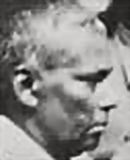
Raman Raghav
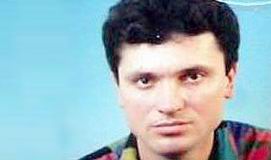
Serial killer Gregory Thompson
Murderer · USA · 1985
Gregory Thompson was diagnosed with undifferentiated schizophrenia, delusions a…
1 victim
Gregory Thompson
Murderer · USA · 1985
Gregory Thompson was diagnosed with undifferentiated schizophrenia, delusions a…
1 victim
 Clinton Cunningham
Murderer · USA · 1991
Clinton Wendell Cunningham was convicted in Oregon and was sentenced to death o…
1 victim
Clinton Cunningham
Murderer · USA · 1991
Clinton Wendell Cunningham was convicted in Oregon and was sentenced to death o…
1 victim
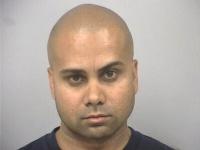
 Salvatore Perrone
Serial killer · USA · 2012
Salvatore Perrone was sentenced to 75 years to life in prison on March 4, 2016.…
3 victims
Salvatore Perrone
Serial killer · USA · 2012
Salvatore Perrone was sentenced to 75 years to life in prison on March 4, 2016.…
3 victims
 Rennie Pratt
Murderer · USA · 2009
Rennie Pratt was convicted of voluntary manslaughter in the shooting death of h…
1 victim
Rennie Pratt
Murderer · USA · 2009
Rennie Pratt was convicted of voluntary manslaughter in the shooting death of h…
1 victim
 Rufus Franklin
Murderer · USA · 1938
Rufus Franklin was an American criminal who served a life sentence in Alcatraz.…
1 victim
Rufus Franklin
Murderer · USA · 1938
Rufus Franklin was an American criminal who served a life sentence in Alcatraz.…
1 victim
 Eric Holmes
Murderer · USA · 1989
Eric D. Holmes was 21 years old at the time of the murders. He had no prior cri…
2 victims
Eric Holmes
Murderer · USA · 1989
Eric D. Holmes was 21 years old at the time of the murders. He had no prior cri…
2 victims
- Gender
- male
- Country
- India
- Location
- Mumbai (then Bombay) , India
- Date of birth
- 1929
- Age at first offence
- 37
- Characteristics
- homeless, history of mental illness
- Victim profile
- Men, women and children
- Method of murder
- B ludgeoned to death with a hard and blunt object while they slept
- Date(s) of murder
- 1966 - 1968
- Years active
- 1966–1968
- Date of arrest
- 1969
- Status
-
Died in custody
Sentence reduced to life imprisonment on 4 August 1987; died at Sassoon Hospital in 1987
Name
Raman Raghav
STATUS
Sentence reduced to life imprisonment on 4 August 1987; died at Sassoon Hospital in 1987
Background
Raman Raghav was a homeless man. He was described as having schizophrenia and a history of mental illness.
The offence
In August 1968, murders in the outskirts of Mumbai (then Bombay) occurred at night. Pavement and hutment dwellers were bludgeoned to death while they slept, using a hard and blunt object. The murders were apparently motiveless, and even when petty gain was involved, the violence inflicted was disproportionate to the gain.
Raman Raghav was said to have confessed to killing men, women, and children selected at random for the sheer pleasure of killing. He was also reported to have killed forty-one men, women, and children, and separately to have admitted killing 23 people in 1966 and almost a dozen in 1968 in the suburbs. It was also stated that, during the similar series of murders in 1965–66, as many as 19 people had been attacked, of whom 9 died.
During interrogation and confession, he described seeing victims sleeping and killing them after hitting them on the head with a hard object until they died, and he removed items from victims including watches and money.
Investigation
A series of brutal murders in the outskirts of Mumbai (then Bombay) rocked the city in August 1968. The Mumbai police and the media realised that a serial killer was operating in the city, and a manhunt began.
Ramakanat Kulkarni, then the Deputy Commissioner of Police CID (Crime), took over the investigation and spearheaded a combing operation.
A similar series of murders had taken place earlier in the Eastern suburbs of Mumbai in 1965–66, when as many as 19 people had been attacked and 9 victims had died.
Raghav was already in police files and had spent five years in prison for robbery; it was stated that no hard evidence could be found against him at that earlier time because none of the survivors had seen him, so he was let go.
During the 1968 investigations, it was said that the police launched a manhunt after renewed killings. It was also stated that tracing persons with no fixed place of residence in a sprawling and congested city like Bombay was difficult.
Raghav’s fingerprints were linked to crime scenes, and his case history included multiple aliases and previous convictions.
A key description used in the arrest account was that a suspicious looking man had been picked up in the area and had been questioned; the named suspect was Raman Raghav, with aliases including "Sindhi Dalwai", "Talwai", "Anna", "Thambi" and "Veluswami" (and elsewhere written as "Sindhi Dalvai" in connection with fingerprints).
The investigating narrative also included a discussion of the ‘geometry of crime’ in which crimes usually occur at a safe distance though not far from the place of residence or work of the culprit, and the area around his residence or place of work is relatively free from his depredations because he was known locally and likely to be identified.
A sub-inspector named Alex Fialho noticed Raghav during patrolling in the area where murders were occurring. Fialho detained and searched him in the presence of two respectable witnesses from the area, as required by law.
Arrest
Sub-inspector Alex Fialho recognised Raman Raghav from file photographs and descriptions. Fialho detained and searched him in the presence of two respectable witnesses.
Raghav gave his name as Raman Raghav. Old records disclosed aliases including "Sindhi Dalwai", "Talwai", "Anna", "Thambi" and "Veluswami". It was stated that his fingerprints with those on record confirmed that the suspect was indeed Raman Raghav alias "Sindhi Dalwai" / "Sindhi Dalvai".
Raghav was described as tall, well-built and dark-complexioned. He was wearing a bush shirt and khaki shorts, and his shoes were full of mud. His clothes had bloodstains.
He carried on his person: a pair of spectacles, two combs, a pair of scissors, a stand for burning incense, soap, garlic, tea dust and two pieces of paper with some mathematical figures. An umbrella was also mentioned in the arrest narrative.
Police fingerprints on record confirmed identity as Raman Raghav alias Sindhi Dalvai.
Raghav was arrested under section 302 IPC on charge of the murder of two persons: (1) Lalchand Jagannat Yadav and (2) Dular Jaggi Yadav at Chinchawli village, Malad, Greater Bombay.
Trial
The preliminary trial was held in the court of Additional Chief Presidency Magistrate.
For a long time, Raghav refused to answer questions. He began to answer after police fulfilled his request for dishes of chicken to eat.
The case was committed to Sessions court, Mumbai.
When the trial started in the court of Additional Session Judge, Mumbai on 2 June 1969, the defence counsel made an application that the accused was incapable of defending himself due to unsoundness of mind. The defence also submitted that at the time of committing the alleged offenses the accused was of unsound mind and incapable of knowing the nature of his acts or that they were contrary to law.
The accused was sent to the Police Surgeon, Mumbai. The Police Surgeon observed him from 28 June 1969 to 23 July 1969. The opinion given was:
"The accused is neither suffering from psychosis nor mentally retarded. His memory is sound, his intelligence average and is aware of the nature and purpose of his acts. He is able to understand the nature and object of the proceedings against him and not certifiably insane."
With this medical opinion, the trial proceeded. The accused pleaded guilty.
During the trial, a psychiatrist of Nair Hospital, Mumbai was cited as a defence witness. The psychiatrist had interviewed the accused in Arthur Road Prison on 5 August 1969 and testified that the accused was suffering from Chronic paranoid schizophrenia for a long time and was therefore unable to understand that his actions were contrary to law.
In defence, it was stated:
"The accused did commit the act of killing with which he is charged. He knew the nature of the act, viz. killing human beings, but did not know, wither it was wrong or contrary to law"
The Additional Sessions Judge, Mumbai, held the accused guilty of murder and sentenced him to death.
Before confirming the sentence, the High Court of Mumbai ordered the Surgeon General, Mumbai, to constitute a Special Medical Board of three psychiatrists to determine (1) whether the accused was of unsound mind, and (2) whether, due to his unsoundness of mind, he was incapable of making his defence.
The Special Medical Board interviewed Raman on five different occasions for about two hours each time.
In the final interview, when they bade him good bye and attempted to shake hands with him, he refused and said he was a representative of 'Kanoon' (God) who would not touch people belonging to this wicked world.
The Special Medical Board report included the following findings: details about childhood history were not available; no reliable history about mental illness in his family was obtainable. It stated that he was always in the habit of stealing since childhood, had hardly any school education, and was known to be reclusive. It stated that since his return from Pune in 1968 he had been living in jungles outside the suburbs of Mumbai.
It stated that X-rays of skull, routine blood examination, serological tests for syphilis, cerebrospinal fluid examination including tests for syphilis, urine and stool examination and EEG examination were non contributory. It stated that he was of average intelligence and that there was no organic disease to account for his mental condition.
It stated that throughout the five interviews he showed ideas of reference and fixed and systematised delusions of persecution and grandeur. The delusions described were:
- That there were two distinct worlds, the world of 'Kanoon' and this world in which he lived.
- A fixed and unshakable belief that people were trying to change his sex, but that they were not successful because he was a representative of 'Kanoon'.
- A fixed and unshakable belief that he was a power or 'Shakti'.
- A firm belief that other people were trying to put homosexual temptations in his way so that he might succumb and get converted to a woman.
- That homosexual intercourse would convert him into a woman.
- That he was "101 percent man". He kept on repeating this.
- A belief that the government brought him to Mumbai to commit thefts and made him commit criminal acts.
- An unshakable belief that there were three governments in the country—the Akbar Government, the British Government, and the Congress Government—and that these Governments were trying to persecute him and put temptations before him.
Sentencing
Raghav was sentenced to death by the Additional Sessions Judge, Mumbai.
Raman declined to appeal. The High Court of Mumbai ordered the Special Medical Board as described above before confirming the sentence.
After the Special Medical Board found him to be of unsound mind, it was stated that his death sentence was held in abeyance and he was sent to Yerwada prison. It was also stated that he was under treatment at the Central Institute of Mental Health and Research.
A panel of doctors later found that he would never be cured. On 4 August 1987, the High Court reduced his sentence to life imprisonment because he was found to be incurably mentally ill.
Appeals
Raman Raghav declined to appeal against the death sentence.
Before confirming the sentence, the High Court ordered the Special Medical Board of three psychiatrists to determine unsoundness of mind and incapacity to make defence.
The High Court’s judgement of 4 August 1987 set aside the death penalty.
Outcome
Raghav’s death sentence was reduced to life imprisonment due to findings that he was incurably mentally ill.
He was lodged at Yerwada jail, Pune, and was under treatment at the Central Institute of Mental Health and Research.
He later died at Sassoon Hospital in 1987. He had been suffering from kidney trouble.
Other details
A police commissioner and reward detail were included: Mr Modak felicitated Sub-inspector Fialho and sanctioned a spot reward of Rs 1,000.
The arrest was described as spreading quickly, with large crowds gathering at Crawford Market where the offices of the Commissioner of Police and the Crime Branch (CID) were located.
A narrative included that Raghav confessed to killings and provided information about weapons and hiding places after being provided with chicken and other items during interrogation.
His requests included: "Murgi" (chicken), a second helping of chicken, hair oil, a comb, a mirror, and he also said: "I would also have liked a prostitute, but I guess, the law does not permit that, while one is in custody," when addressing what he would have liked.
He also asked: ‘Now tell me, what do you want?’
When asked about murders, he responded with ‘Maardaars?’ and stated: ‘Well, I shall tell you all about them,’ and said to "Get a vehicle, an armed guard and two witnesses. The law requires that." He also said he would show the iron akada used for doing khatam and other concealed items.
The confession excerpts included verbatim statements:
“At Poisar, off the Ahmedabad road, I saw a woman and child sleeping inside a hut, where a man was sleeping outside. I hit the man on the head, and he got up shouting. I hit him again till he died. The girl also started shouting and I ran away.”
“On the Malad side of the Ahmedabad road, I saw a hamlet and some stables. A bearded Muslim was sleeping on a cot. The door of the hamlet was not locked. I hit him on the way in and he died on the spot. I took his wristwatch and when I saw some money in his jhabba which was hanging inside, I put the jhabba in my bag. I also took some groundnuts in a bottle, an umbrella, and a torch. Once home, I removed the money from the jhabba and tore it to make hankerchiefs.”
“A few days later I saw a hut in the same area. I peeped inside and saw a woman, and a child. She was wearing a gold necklace. I kept watch until one day I found her sleeping and her husband beside her. I cut the string which fastened the front door and then hit the man with an iron rod until he died. The woman and child were shouting and I hit them both and killed them. I was thinking of sleeping with the woman but someone came and I ran away. The gold necklace turned out to be imitation gold. “
“I found a woman and two children sleeping in a hut. I hit her twice or thrice until she died. I removed her cover and found that she was nude….”
It was stated that Dr. Patkar diagnosed him as suffering from ‘chronic paranoid schizophrenia’ and that Dr. Master concluded that Raghav was ‘normal’.
A statement in the narrative described the Additional Sessions Judge’s reasoning as that the case was “unparalleled and unsurpassed in the history of crime”, and that the penalty given was death.
A part of the narrative described a ‘Murgi’ meal and subsequent interrogation leading to directions to locate a concealed weapon and other items, including an "iron akada" and references to knives, a screwdriver, an iron jimmy, a coloured napkin and a torch.
A named individual Michael was described as having made the akada for Raghav, and it was stated that Michael told police he came from the same district at Raghav in Tamil Nadu and knew him as Tambi. It was stated that Tambi’s roommate had been found dead and Michael had not suspected his friend; Michael said Tambi turned up three days later, refused tea, and objected to drinking tea ‘in the house of a Christian’, and that Tambi flew into a rage and walked out.
A statement in the narrative included that Raghav took the cops on a tour of the Borivili (suburb of Mumbai) hills and produced items including a stove and an umbrella that he had stolen from victims.
It was stated that he agreed to make a full confession in the presence of a magistrate and that when asked why he wanted to confess, he said it was God’s directive.
Legacy details included that Sriram Raghavan produced a 45-minute short film on Raman Raghav starring Raghuvir Yadav in the lead role.
It was also stated that in the mid-1980s another serial killer emerged in Mumbai, terrorising the population of Sion and neighbouring localities, nicknamed "Stoneman", and that he was not captured despite intensive efforts of police.
Spotted an error, or have more information about this case?