Clinton Cunningham
Murderer Brian Kevin Rosenfeld
Murderer · USA · 1985
Brian Kevin Rosenfeld Brian Kevin Rosenfeld was sentenced to three concurrent l…
23 victims
Brian Kevin Rosenfeld
Murderer · USA · 1985
Brian Kevin Rosenfeld Brian Kevin Rosenfeld was sentenced to three concurrent l…
23 victims
 Russell Ellwood
Murderer · USA · 1991
Russell Ellwood was a former taxi driver. Authorities suspected him of killing…
20 victims
Russell Ellwood
Murderer · USA · 1991
Russell Ellwood was a former taxi driver. Authorities suspected him of killing…
20 victims
 Robert Martines Perez
Murderer · USA · 1994
Name: Robert Martines Perez · Other name used in proceedings: Robert Martinez P…
15 victims
Robert Martines Perez
Murderer · USA · 1994
Name: Robert Martines Perez · Other name used in proceedings: Robert Martinez P…
15 victims
 Billy Frank Vickers
Murderer · USA · 1993
Billy Frank Vickers Vickers was executed by lethal injection in Texas on Januar…
14 victims
Billy Frank Vickers
Murderer · USA · 1993
Billy Frank Vickers Vickers was executed by lethal injection in Texas on Januar…
14 victims
 Biswanath Halder
Murderer · USA · 2003
Biswanath Halder was an alumnus of Case Western Reserve University (CWRU) who w…
1 victim
Biswanath Halder
Murderer · USA · 2003
Biswanath Halder was an alumnus of Case Western Reserve University (CWRU) who w…
1 victim
 Carl Folk
Murderer · USA · 1953
Carl J. Folk was executed by asphyxiation-gas in Arizona on March 4, 1955. Carl…
1 victim
Carl Folk
Murderer · USA · 1953
Carl J. Folk was executed by asphyxiation-gas in Arizona on March 4, 1955. Carl…
1 victim
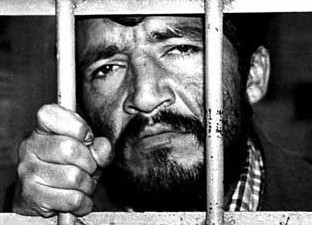 Pedro Alonso Lopez
Serial killer · Peru - Ecuador - Colombia · 1969
Name: Pedro Alonso Lopez · Nationality/Background: Colombian-born · Birth: born…
300 victims
Pedro Alonso Lopez
Serial killer · Peru - Ecuador - Colombia · 1969
Name: Pedro Alonso Lopez · Nationality/Background: Colombian-born · Birth: born…
300 victims
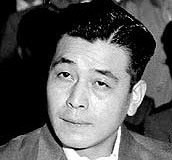 Masaru Okunishi
Mass murderer · Japan · 1961
Masaru Okunishi was a farmer from Kuzuo, a remote mountain village in Nabari ci…
5 victims
Masaru Okunishi
Mass murderer · Japan · 1961
Masaru Okunishi was a farmer from Kuzuo, a remote mountain village in Nabari ci…
5 victims
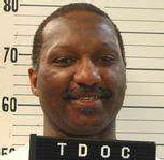 Byron Lewis Black
Murderer · USA · 1988
Byron Lewis Black was convicted in 1989 of three counts of first degree murder…
3 victims
Byron Lewis Black
Murderer · USA · 1988
Byron Lewis Black was convicted in 1989 of three counts of first degree murder…
3 victims
- Gender
- male
- Country
- USA
- Location
- Douglas County, Oregon, USA
- Date of birth
- November 17, 1967
- Age at first offence
- 24
- Characteristics
- rape, mentally ill
- Victim profile
- Shannon Faith, 19
- Method of murder
- St abbing with knife 37 times
- Date(s) of murder
- October 1991
- Years active
- 1991
- Date of arrest
- —
- Status
-
Sentenced to death
Sentenced to death on October 28, 1992
Case information
Clinton Wendell Cunningham was convicted in Oregon and was sentenced to death on October 28, 1992.
Timeline
- October 28, 1992 — Clinton Wendell Cunningham was sentenced to death.
- June 12, 2003 — Clinton Wendell Cunningham’s federal appeal filing is referenced in connection with his 235-page habeas corpus petition in U.S. District Court in Portland; the Oregon case material also includes a filing date in the Court of Appeals of the State of Oregon: June 12, 2003.
- March 27, 2003 — The petition for reconsideration was filed.
Background
Clinton Wendell Cunningham was 37 years old at the time described in connection with his federal habeas corpus petition.
Cunningham admitted killing Shannon Faith, a hitchhiker he agreed to drive from Coos Bay to Eugene in October 1991. The death sentence was based on the prosecutor’s claim—and the jury’s belief—that Cunningham raped Faith and killed her to cover it up.
Cunningham asserted that he had consensual sex with Faith.
Cunningham’s federal appeal claimed that police failed to turn over evidence backing up his claim that Faith attacked him in an alcoholic rage. His attorneys said he had since passed a lie-detector test.
C. Renee Manes, an assistant federal public defender and Cunningham’s lead attorney, said national psychological and psychiatric groups had rejected the concept that someone could be accurately diagnosed as a future danger.
The offence
Cunningham killed Shannon Faith, who was described as a hitchhiker.
The prosecutor’s claim and the jury’s belief were that Cunningham raped Faith and killed her to cover it up.
In Oregon, simply killing someone was described as not enough to earn a death sentence, because at least one of more than a dozen “aggravating” circumstances had to exist. Examples included killing certain categories of people or killing people under certain circumstances, such as during the commission of certain crimes or to conceal the crimes.
The case material states that Cunningham’s federal habeas claims included a constitutional challenge to Oregon’s death penalty law, including Oregon’s separate sentencing proceeding. After the jury convicts a defendant of aggravated murder, jurors had to unanimously agree on answers to four questions to impose the death sentence. The appeal attacked the second question asking “whether there is a probability that the defendant would commit criminal acts of violence that would constitute a continuing threat to society.”
Investigation
Cunningham’s federal appeal claimed that police failed to turn over evidence that backed up his claim that Shannon Faith attacked him in an alcoholic rage.
Post-conviction proceedings and reconsideration (Oregon Court of Appeals)
Clinton Wendell Cunningham sought reconsideration of a decision affirming the post-conviction court’s denial of his petition for post-conviction relief.
The case caption identified:
- Clinton Wendell Cunningham, Appellant, v. S. Frank Thompson, Superintendent, Oregon State Penitentiary, Respondent
- 95C-11416; A107806
- Appeal from Circuit Court, Marion County
- Duane R. Ertsgaard, Judge
The panel stated:
- Before Landau, Presiding Judge, and Deits, Chief Judge, and Brewer, Judge.
The decision language stated:
- “Reconsideration allowed; opinion modified and adhered to as modified.”
Brewer, J. wrote the reconsideration decision.
Tenth assignment of error: failure to impeach Dr. Cochran
Cunningham sought reconsideration of his tenth assignment of error, pertaining to criminal trial counsel’s failure to impeach the testimony of a psychologist, Dr. Cochran, in the penalty phase.
Dr. Cochran was described as a forensic clinical psychologist at the Oregon State Hospital. Cochran testified in the penalty phase that:
- he reviewed the autopsy report and the police investigation reports in Cunningham’s case, as well as Cunningham’s previous juvenile and criminal records;
- he formed the opinion (relevant to future dangerousness) that Cunningham “would enact crimes of violence in the future that would act as a continuing threat to society.”
Later in the penalty phase, after another psychologist, Dr. Wise, testified, Cochran returned and testified regarding frontal lobe dysfunction and other matters to which Wise had testified.
Evidence in the post-conviction proceeding
In the post-conviction proceeding, Cunningham adduced evidence that, in 1994, a defendant in another aggravated murder case had attempted to impeach Cochran’s testimony by challenging Cochran’s qualifications and expertise using evidence derived from records maintained by the Board of Psychologist Examiners, the agency that licensed Cochran.
The records included:
- a letter from a former employer of Cochran indicating that the employer would not rehire Cochran and stating the reasons;
- a letter from the board to Cochran criticizing Cochran’s conduct in regard to a client who was seeking executive clemency;
- a record indicating that, when Cochran first applied for a license, a committee of the board voted not to pass him on an oral examination component of the application;
- a 1990 notice by the board of its proposed suspension of Cochran’s license on the ground that testimony by Cochran in other specified judicial proceedings had violated certain applicable ethical principles.
The state presented evidence in the post-conviction hearing that the defendant in the 1994 case, McDonnell, had been convicted and sentenced to death.
The post-conviction court found Cunningham was not prejudiced by trial counsel’s failure to make a similar attempt to impeach Cochran because:
- at the time of Cunningham’s trial, Cochran was licensed by the board, and the board’s investigation of alleged ethical violations had not been resolved;
- Cochran had been easily rehabilitated by the prosecutor in the 1994 case, resulting in the defendant in that case receiving the death penalty notwithstanding the attempted impeachment.
Arguments on appeal
Cunningham argued that trial counsel’s failure to impeach Cochran based on what Cunningham asserted was available evidence at the time of his criminal trial amounted to a failure adequately to investigate his defense. Cunningham also argued he was prejudiced because Cochran was an “important” witness; Cunningham’s position was that Cochran’s testimony in the penalty phase regarding future dangerousness “undoubtedly influenced” the jury and therefore clearly had a tendency to affect the result.
The state responded that the record of the 1994 criminal trial on which Cunningham relied demonstrated that the defendant in that trial was not able to impeach Cochran successfully. The state argued that:
- nothing about Cochran’s license status at the relevant time suggested he was not a qualified expert;
- Cunningham’s “self-described efforts to keep dangerous criminals locked up would almost certainly appeal to many jurors.”
Appellate reasoning and modification
The appellate court concluded that, even assuming trial counsel failed to investigate and present possible impeachment evidence and that counsel’s performance did not meet the constitutional standard, Cunningham did not demonstrate prejudice.
The appellate court stated it did not view the attempted impeachment evidence “as necessarily tending to affect” the jury’s verdict, citing Horn [ v. Hill , 180 Or App 139, 148, 41 P3d 1127 (2002)] about assessing whether failure had a tendency to affect the outcome in light of the totality of circumstances.
The appellate court stated that the jury in the 1994 case sentenced the defendant to death despite the attempt to impeach Cochran and that this was not a case like Loveless v. Maass.
Additional quoted material about confidentiality and testimony
The appellate discussion included statements that:
- the records were entered in evidence in the 1994 trial as part of the defendant’s offer of proof regarding admissibility of Cochran’s answers to questions about the events described in the records;
- the state did not argue that Cunningham’s trial counsel made a conscious tactical decision not to attempt to impeach Cochran;
- Cochran testified in the 1994 criminal trial that he understood the Board of Psychologist Examiners records relied on by the defendant in attempting to impeach him to be confidential and that he was “answering questions” based on those records only because he was “required to do so.”
The appellate court also recounted that Cunningham’s counsel in the post-conviction hearing testified that the client received the death penalty despite the attempt to impeach Cochran and that the judgment of conviction and sentence were received in evidence.
Reconsideration arguments about the prejudice test
On reconsideration, Cunningham first contended that the opinion misdescribed the prejudice test under Article I, section 11, of the Oregon Constitution by requiring Cunningham to show counsel’s unprofessional performance “necessarily” tended to affect the jury’s verdict. Cunningham argued that the proper test was whether counsel’s errors “have a tendency to affect the result of the prosecution,” citing Krummacher v. Gierloff.
The appellate court agreed that its use of “necessarily” could be misinterpreted. It modified a sentence in the opinion to read:
“Nor do we view the attempted impeachment evidence, as ultimately presented to the jury at the 1994 trial and in light of Cochran's testimony in that trial explaining and refuting it, as having a tendency to affect the jury's verdict.”
Cunningham next argued that the court erred by applying Harris v. Morrow to counsel’s failure to impeach Cochran. Cunningham argued that, under Harris, the court was required to evaluate the entire record of his criminal trial, including evidence “untainted” by the alleged error, to determine whether the evidence “independently and inevitably” would have led to a conviction notwithstanding counsel’s error. Cunningham also argued the court was required to accept the proposed impeachment evidence “at face value,” and that the court improperly weighed persuasiveness.
The appellate court rejected Cunningham’s methodology arguments, stating it was not simply whether counsel’s failure had any negative effect as to that issue, but whether the negative effect, if any, affected the result as a whole.
The appellate court further rejected Cunningham’s contention that it could not weigh the impeachment evidence against contrary evidence presented by the state in the post-conviction proceeding.
The appellate court then added supplementary discussion making explicit that, in determining whether Cunningham was prejudiced, the relevant “circumstances” included both evidence presented in the post-conviction proceeding and the record of Cunningham’s criminal trial.
Supplementary discussion: future dangerousness evidence and experts
The appellate court stated that Cochran in the penalty phase opined it was probable that Cunningham would commit criminal acts of violence that would constitute a continuing threat to society.
The appellate court described Cochran’s bases for that opinion as:
- Cunningham’s “juvenile history and his corrections records in Oklahoma,” and
- records pertaining to the instant offense.
The appellate court listed aspects Cochran found significant, including threats and restraining orders, school fighting and expulsion, abuse of alcohol and drugs, burglaries in which weapons were taken, severe injury to a person named Ridenour, attempted sex with his sister, and that Cunningham had raped two women.
The appellate court also described that Cochran referred to misconduct while incarcerated including possessing contraband, threatening, fighting with, “unprovoked assaults” against, and attempting to rape other inmates; and that Cunningham had been revoked from parole at least three times.
The appellate court described Cochran’s view that the victim suffered multiple stab wounds including defensive wounds indicating she was “fighting or struggling,” and that she was killed “under the situation of a rape.”
The appellate court described Cochran as finding significant Cunningham’s statement to his mother after his arrest for killing the victim that he had no remorse.
The appellate court described Cochran’s conclusions as including that Cunningham was an “assaultive individual. An individual who is quite antisocial in his orientation towards life.” The appellate court further described Cochran believing there was a “sadistic component,” a “prevalent pattern he has of using physical cruelty or violence towards others for establishing dominance and getting other people to be scared of him” and that Cunningham “humiliates and demeans people.”
The appellate court described Cochran’s beliefs that Cunningham had a “fascination with violence, with fighting. With his domination of other people.” It also described Cochran’s view that alcohol played some role in Cunningham’s conduct but that many incidents had been perpetrated in the absence of alcohol.
The appellate court described Cochran as testifying he used the Minnesota Multiphasic Personality Inventory (MMPI), stating that persons who had scores similar to Cunningham typically had a short attention span, were antisocial, tended to “act out,” had poor impulse control, resented authority, and had chronic legal “difficulties.” Cochran testified that Cunningham’s score was “associated with a rapist profile” and with persons who lacked shame, guilt, or remorse.
The appellate court described Cochran’s diagnosis as antisocial personality disorder with “certain sadistic features” and “sexual aggressor features.” It also described Cochran as stating that his diagnosis was supported by evidence relating to runaways, physical fighting, bullying, lying, burglaries, an incident in which Cunningham robbed and maimed Ridenour, and reported rapes of his sister and others.
The appellate court then described Wise, a licensed clinical psychologist with a specialty in neuropsychology, as testifying that he interviewed Cunningham, administered tests including the MMPI and tests of “frontal lobe functioning,” and reviewed “historical” records including school records, records of past criminal behavior, and records of interviews with family members and other persons who knew Cunningham.
The appellate court described that Wise did not expressly testify about the probability that Cunningham would commit criminal acts of violence constituting a continuing threat. Instead, Wise testified Cunningham was impulsive, his history included “a pattern of fights” and “difficulty in stressful situations”; that Cunningham used weapons or threatened persons with weapons; and that Cunningham had “bullying tactics” and engaged in cruel, demeaning, and humiliating behavior. Wise testified the MMPI score indicated impulsivity, “difficulties with authority,” and “difficulties conforming one's behavior to social norms.”
The appellate court described Wise’s diagnosis of antisocial personality disorder as “clearly” and “absolutely” present. The appellate court described Wise’s belief that Cunningham suffered from alcohol abuse and that when he was drinking and confronted with anger, he would not be likely to “think things through.” It also described Wise’s testimony that Cunningham had “organic personality syndrome,” which manifested itself in “difficulty controlling or modu[l]ating one's behavior” and in “outbursts of anger.”
The appellate court described Wise as stating he declined to diagnose Cunningham as suffering from a sadistic personality disorder, while believing Cunningham “certainly has engaged in sadistic kinds of behaviors.” Wise testified that treatment for the organic brain dysfunction focused on changing outward behavior, such as anger management and psychiatric medications, and that drug therapy would reduce “explosiveness,” his “short fuse, the violence and rage that seems to be not well modulated by the frontal lobes.”
The appellate court described Wise as stating that antisocial personality disorder was “very hard to treat” and “the best thing you can do” was to provide a highly structured environment.
On rebuttal, the appellate court described Cochran being asked whether a person suffering from “prefrontal lobe damage” could plan “associated with things like eliminating evidence and fleeing from a [crime] scene * * * and cover up his involvement in a crime.” Cochran responded:
“Probably not.”
The appellate court described Cochran as differentiating organic personality syndrome from antisocial personality disorder, including that antisocial personality disorder involved predatory and quite aggressive behavior, while organic personality syndrome typically involved greater ability to feel guilt and remorse and a lack of hidden motive.
On cross-examination, Cochran agreed organic personality syndrome was treated with drug therapy and that depending on deficits, treatment “does tend to get results to some exten[t].”
The appellate court described testimony in penalty phase relevant to future dangerousness, including:
- Cunningham’s mother’s testimony: an “alcohol problem” and a “bad temper,” expulsion for fighting, threatening her with a knife, threatening to kill her and the whole family, obtaining a restraining order, and that after Cunningham was arrested she said he was “calm” and “felt no remorse.”
- Cunningham’s sister’s testimony: fear of Cunningham “for as long as she could remember,” “always bullying,” hitting her, threats to kill her, threats to kill their mother by “slit[ting] her throat,” and sexual coercion at age eleven or twelve to “forced her to have sex with him.”
- A friend, Willis: threatened to kill her, forced her to perform oral sex, held a knife to her throat and hit her, after she attempted to call someone to help; these actions included “held a knife to her throat” and striking.
- Another friend, Lunn: an incident in 1990 after a party; petitioner jumped onto the bed, held a knife to her throat, forced her to drive him home, forced her outside in the snow while he watched, held a knife “to my side in my ribs,” repeatedly told her he would kill her, and she testified he was “very angry” and she believed he would kill her.
- Former girlfriend, Rogers: shoved and choked her, pushed her down and pulled her pants down, had sex with her “with [her] begging him not to,” warned her not to tell anyone, made “verbal threats” against her two-year-old child, and on another occasion after she drove Cunningham to his mother’s house he put his fist through the window of her car.
The appellate court also described testimony from Oklahoma events and incarceration-related incidents:
- Collins, a police officer in Poteau, Oklahoma: convicted of burglary charges involving theft of weapons; another incident where after Collins arrested Cunningham for driving under the influence, Cunningham attempted to escape, had “a scuffle” with Collins, threatened to kill Collins, and stated he would “burn down [his] house with [his] wife and kids in it.”
- Larry Tustin, an Oklahoma probation and parole officer: placed under supervision for waving a knife at his mother and stepfather; described “poor impulse control” and history of antisocial behavior.
- Brett Tustin: in August 1991, arrested on Oklahoma felony charges of robbery with a dangerous weapon and maiming.
- Daniel Ridenour: in August 1991 driving in Poteau with Cunningham and Cunningham’s brother; after Ridenour got out to use the bathroom, Cunningham ran toward him, grabbed him by the throat, threw him down, straddled his back, held him by his hair, held a knife to his throat while Cunningham’s brother kicked and hit him, then took Ridenour’s billfold, car keys, and knife; Ridenour’s injuries included broken nose, jaw, and cheek bones; four weeks in the hospital; three plastic surgeries.
- Robertson, in 1988 incarcerated with Cunningham in Leflore County jail: Cunningham hit him with a broomstick and fists; resulting in five stitches in chin and other cuts.
- Inmate Bratlie: heard Cunningham state he hated “snitches” and would “[t]ake their heads off.”
- Inmate Thomas: Cunningham hit him in the face three or four times while Thomas slept, fracturing a bone and injuring a nerve; Thomas testified he did not tell authorities because he was afraid.
- Douglas County sheriff’s deputies Linda Backes and Haggin: Linda Backes testified his becoming “upset” was to become “borderline violently upset. * * * He screams and hollers and pounds.” Haggin testified Cunningham told him in a “very threatening manner” that he would “bop [him] upside the head.”
- Jessica Brewer, a former social worker: worked with Cunningham and his family beginning in 1982 due to truancy; when asked about poor impulse control she responded, “He still has poor impulse control. [Petitioner] is an explosive personality.”
The appellate court then stated that, considering the entirety of described testimony in the penalty phase and relevant evidence in the guilt phase, it found compelling evidence demonstrating it was probable Cunningham would commit criminal acts of violence constituting a continuing threat and that even if Cunningham’s trial counsel had impeached Cochran as proposed, such impeachment would not have tended to affect the result.
The appellate court stated reasons including:
- essentially no dispute about the historical circumstances Cochran relied on, which were described by other witnesses and by Wise;
- Wise shared Cochran’s expert opinion that Cunningham had poor impulse control and antisocial personality disorder with sadistic features, and Wise believed antisocial personality disorder was “very hard to treat” with the “best thing you can do” being a highly structured environment;
- Wise testified Cunningham suffered from organic brain injury and that syndrome could be treated through behavior modification and psychiatric medications;
- Cochran implicitly disputed Wise’s diagnosis, including through testimony that for “moderate to severe” prefrontal lobe damage the planning described would be “Probably not,” but Cochran agreed organic personality syndrome was treated with drug therapy and treatment “does tend to get results to some exten[t].”
- even if Cochran’s testimony affected the jury regarding organic personality syndrome, his testimony on treatability reduced that effect regarding future dangerousness; and
- Wise’s view of antisocial personality disorder made whether Cunningham also had organic personality syndrome of “little consequence.”
The appellate court concluded it adhered to its original conclusion that trial counsel’s failure to present impeachment evidence pertaining to Cochran did not have a tendency to affect the outcome.
Outcome
Reconsideration was allowed, the opinion was modified, and it was adhered to as modified.
Spotted an error, or have more information about this case?