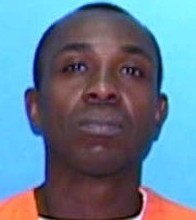
Richard Barry Randolph
Murderer Brian Kevin Rosenfeld
Murderer · USA · 1985
Brian Kevin Rosenfeld Brian Kevin Rosenfeld was sentenced to three concurrent l…
23 victims
Brian Kevin Rosenfeld
Murderer · USA · 1985
Brian Kevin Rosenfeld Brian Kevin Rosenfeld was sentenced to three concurrent l…
23 victims
 Yahweh ben Yahweh
Murderer · USA · 1980
Yahweh ben Yahweh was born and legally named Hulon Mitchell Jr. (October 27, 19…
23 victims
Yahweh ben Yahweh
Murderer · USA · 1980
Yahweh ben Yahweh was born and legally named Hulon Mitchell Jr. (October 27, 19…
23 victims
 Russell Ellwood
Murderer · USA · 1991
Russell Ellwood was a former taxi driver. Authorities suspected him of killing…
20 victims
Russell Ellwood
Murderer · USA · 1991
Russell Ellwood was a former taxi driver. Authorities suspected him of killing…
20 victims
 Robert Martines Perez
Murderer · USA · 1994
Name: Robert Martines Perez · Other name used in proceedings: Robert Martinez P…
15 victims
Robert Martines Perez
Murderer · USA · 1994
Name: Robert Martines Perez · Other name used in proceedings: Robert Martinez P…
15 victims
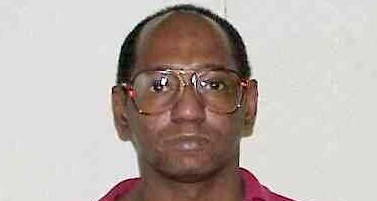 James Earl Slaughter
Murderer · USA · 1983
James Earl Slaughter (DOB 2-3-63) was sentenced to death on December 2, 1983. S…
1 victim
James Earl Slaughter
Murderer · USA · 1983
James Earl Slaughter (DOB 2-3-63) was sentenced to death on December 2, 1983. S…
1 victim
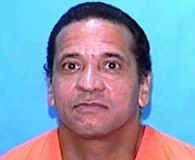 Juan Roberto Melendez-Colon
Murderer? · USA · 1983
Juan Roberto Melendez-Colon was born May 24, 1951. He lived in Brooklyn, New Yo…
1 victim
Juan Roberto Melendez-Colon
Murderer? · USA · 1983
Juan Roberto Melendez-Colon was born May 24, 1951. He lived in Brooklyn, New Yo…
1 victim
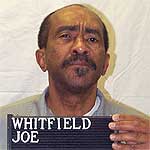 Joseph Whitfield
Murderer · USA · 1988
State of Missouri v. Joseph Whitfield, 939 S.W.2d 361 (Mo. banc 1997) · January…
1 victim
Joseph Whitfield
Murderer · USA · 1988
State of Missouri v. Joseph Whitfield, 939 S.W.2d 361 (Mo. banc 1997) · January…
1 victim
- Gender
- male
- Country
- USA
- Location
- Putnam County, Florida, USA
- Date of birth
- March 3, 1962
- Age at first offence
- 26
- Characteristics
- robbery, rape
- Victim profile
- Minnie Ruth McCollum (convenience store manager)
- Method of murder
- Beating - Strangulation - Stabbing with knife
- Date(s) of murder
- August 15, 1988
- Years active
- 1988
- Date of arrest
- Same day
- Status
-
Sentenced to death
Sentenced to death on April 5, 1989
Case identification
Richard Barry Randolph was sentenced to death on April 5, 1989. He was identified in a Florida Supreme Court opinion (74083, opinion SC93675) as A.K.A. Malik Abdul-Sajjad. He was listed as DC #115769 and DOB: 01/03/62. The case was in the Seventh Judicial Circuit, Putnam County, Case #88-1357. The sentencing judge was The Honorable Robert Perry. Trial counsel was Howard Pearl, Assistant Public Defender. Direct appeal counsel was James R. Wulchak, Assistant Public Defender. Collateral appeals counsel was Rachel Day, CCRC-S.
Timeline
- 08/15/88 — Richard Randolph was convicted and sentenced to death for the murder of Minnie Ruth McCollum; witnesses Terry Sorrell, Dorothy Patilla and Deborah Patilla saw Randolph wearing an employee shirt and locking the front door of the Handy-Way convenience store.
- 09/01/88 — The defendant was indicted on the following counts: Count I: First-Degree Murder; Count II: Armed Robbery; Count III: Sexual Battery with Deadly Weapon; Count IV: Grand Theft.
- 02/23/89 — The defendant was found guilty on all counts charged in the indictment.
- 02/24/89 — Upon advisory sentencing, the jury, by an 8 to 4 majority, voted for the death penalty.
- 04/05/89 — Randolph was sentenced: Count I First-Degree Murder — Death; Count II Armed Robbery — 9 Years; Count III Sexual Battery with Deadly Weapon — 27 Years; Count IV Grand Theft — 9 Years; concurrent with count II.
- 04/21/89 — Randolph filed his Direct Appeal in the Florida Supreme Court.
- 05/03/90 — The Florida Supreme Court affirmed the convictions and sentences.
- 10/09/90 — Randolph filed a Petition for Writ of Certiorari in the United States Supreme Court.
- 11/26/90 — The Petition was denied.
- 04/07/92 — Randolph filed a 3.850 Motion (I) in the circuit court.
- 04/02/93 — The motion was denied.
- 05/01/93 — Randolph filed another 3.850 Motion (II) with the circuit court.
- 06/18/93 — Randolph filed a 3.850 Appeal (I) in the Florida Supreme Court.
- 01/26/98 — He filed an amended 3.850 Motion with the circuit court.
- 02/24/98 — The circuit court denied claims 1 through 19 and 21.
- 04/24/98 — An evidentiary hearing was held for claim 20.
- 05/14/98 — The motion was denied.
- 03/07/96 — The Florida Supreme Court reversed the denial of the 3.850 Motion based on the fact that Randolph’s due process rights were violated by not having the opportunity to cross-examine several witnesses.
- 08/13/98 — Randolph filed a 3.850 Appeal (II) in the Florida Supreme Court.
- 04/24/03 — The Florida Supreme Court affirmed the denial of 3.850 relief.
- 12/27/01 — Randolph filed a Petition for Writ of Habeas Corpus in the Florida Supreme Court.
- 04/24/03 — The Florida Supreme Court denied the petition.
- 06/25/03 — Randolph filed a Petition for Writ of Habeas Corpus in the Florida Supreme Court.
- 11/21/03 — The petition was denied.
- 11/17/04 — Randolph filed a Petition for Writ of Habeas Corpus with the United States District Court; the petition is currently pending.
The offence
On 08/15/88, witnesses Terry Sorrell, Dorothy Patilla and Deborah Patilla saw Randolph wearing an employee shirt and locking the front door of the Handy-Way convenience store. The women questioned Randolph about why the store was closed and where McCollum was. Randolph told the women that McCollum’s car had broken down and McCollum had borrowed his car. He informed the women he had fixed McCollum’s car and was going to pick her up. He then left the store.
The three women looked in the window of the store. They saw that the security camera was pulled out of its normal location and wires were in the trashcan. The women noted the store was in disarray with the trashcan overturned and the counter disordered. They called the sheriff’s office and reported the situation.
Randolph drove to the home of Norma Janene Betts, his girlfriend and the mother of their daughter. Betts testified that Randolph told her he had robbed the convenience store and attacked McCollum. Randolph also told her he was going to a store in Jacksonville to borrow money from the manager of a grocery store and to cash in lottery tickets. According to Betts, he promised to return for her and their daughter and take them to North Carolina.
Randolph was arrested at the grocery store while he was awaiting his money advancement. Detective William Hord testified as to what Randolph told them after his arrest.
Randolph told police he went to the convenience store with a toy gun, which he hid behind the store. He told police that he knew the stores routine and attempted to rob the safe while the manager was attending to the gas pumps and would not see him. McCollum, the manager, returned quickly from the gas pumps and saw Randolph at the safe. A struggle ensued between the two. Randolph claimed he dragged McCollum into the back room and hit her until she stopped moving. When Randolph saw McCollum begin to move again, he took the drawstring out of his hooded sweatshirt and strangled her with it until she stopped moving.
Randolph said he was not able to open the safe, so he took only lottery tickets. At this point, McCollum begin to scream and Randolph hit her until she quieted down. McCollum made noise again, and Randolph stabbed her with a small knife and strangled her again with the drawstring from his sweatshirt.
According to Randolph, he then raped McCollum to make it appear a maniac committed the crime. Randolph put on a Handy-Way uniform, ripped out the store video camera and put it in the trashcan, and left the store. He also told police that on the way to Jacksonville he had thrown away the losing lottery tickets and his bloodied clothes and shoes at a McDonald’s. The police were able to recover the items.
Investigation and discovery
A deputy responded to the call and broke a window to gain entry to the store. The deputy found McCollum, who was alive and moaning, lying on her back with blood coming from the back of her neck and head. McCollum was also naked from the waist down. The deputy had her transported to the hospital immediately.
Medical evidence
Dr. Kirby Bland, a surgeon, testified that McCollum was in a coma upon arrival at the hospital. He determined she had been severely beaten and had received multiple hits to the head. McCollum had many lacerations on her scalp, face and neck. McCollum’s jawbone was fractured. She also had a knife cut to the side of her neck and a stab wound near her left eye. McCollum died six days after the incident from severe brain injury.
Other evidence and examination
A psychologist examined Randolph and testified that several nonstatutory circumstances existed which contributed to the offense. The psychologist testified that Randolph, who was adopted at five months old, had problems getting along with people in school which resulted in him being referred to psychotherapy for a year in the third grade. Randolph’s mother was emotionally unstable while raising him and was hospitalized for psychiatric reasons several times. Randolph’s dad was physically abusive. He disciplined Randolph by tying him and beating him with his hands, a broomstick, and a belt.
The psychologist testified that Randolph graduated from high school and joined the Army. He was honorably discharged for marijuana and crack cocaine use. According to the psychologist, Randolph’s addiction and prolonged use of crack cocaine is responsible for his abnormal personality and criminal behavior on 08/15/88.
Trial
Charges and indictment
The defendant was indicted on 09/01/88 on the following counts:
- Count I: First-Degree Murder
- Count II: Armed Robbery
- Count III: Sexual Battery with Deadly Weapon
- Count IV: Grand Theft
Verdict
On 02/23/89, the defendant was found guilty on all counts charged in the indictment.
Advisory sentencing vote
On 02/24/89, upon advisory sentencing, the jury voted for the death penalty by an 8 to 4 majority.
Sentencing
On 04/05/89, Randolph was sentenced as follows:
- Count I: First-Degree Murder — Death
- Count II: Armed Robbery — 9 Years
- Count III: Sexual Battery with Deadly Weapon — 27 Years
- Count IV: Grand Theft — 9 Years The sentence was concurrent with count II.
Appeals
Direct appeal
Randolph filed his Direct Appeal in the Florida Supreme Court on 04/21/89. He contended that the trial court violated his due process protections and erred in denying his motions for individual voir dire and for a mistrial. He also argued that irrelevant, prejudicial photographs of McCollum’s body were improperly admitted into trial, the state improperly questioned the medical examiner, and the trial court could not have found the murder to be heinous, atrocious or cruel.
Other claims were made, but they were rendered meritless, warranting no discussion. The Florida Supreme Court affirmed the convictions and sentences on 05/03/90.
Petition for writ of certiorari
Randolph filed a Petition for Writ of Certiorari in the United States Supreme Court on 10/09/90. The Petition was denied on 11/26/90.
3.850 motion and appeals
Randolph filed a 3.850 Motion (I) in the circuit court on 04/07/92. The motion was denied on 04/02/93.
On 05/01/93, Randolph filed another 3.850 Motion (II) with the circuit court. On 01/26/98, he filed an amended 3.850 Motion with the circuit court. The circuit court denied claims 1 through 19 and 21 on 02/24/98. An evidentiary hearing was held for claim 20 on 04/24/98. On 05/14/98, the motion was denied.
On 06/18/93, Randolph filed a 3.850 Appeal (I) in the Florida Supreme Court. The main issue raised was conflict of interest of defense attorney, Assistant Public Defender Howard Pearl, who was also a deputy sheriff at the time. Randolph was unaware of this information during his trial.
The Florida Supreme Court reversed the denial of the 3.850 Motion on 03/07/96 based on the fact that Randolph’s due process rights were violated by not having the opportunity to cross-examine several witnesses.
On 08/13/98, Randolph filed a 3.850 Appeal (II) in the Florida Supreme Court. Issues raised were ex parte communication, ineffective assistance of counsel during the penalty phase, denial of a full and fair evidentiary hearing, conflict of interest of his defense attorney, and the unconstitionality of the heinous, atrocious or cruel aggravating factor. The Florida Supreme Court affirmed the denial of 3.850 relief on 04/24/03.
Petitions for writ of habeas corpus
Randolph filed a Petition for Writ of Habeas Corpus in the Florida Supreme Court on 12/27/01. In this petition, Randolph argued ineffective assistance of counsel based on five claims. The Florida Supreme Court denied the petition on 04/24/03.
Randolph filed a Petition for Writ of Habeas Corpus in the Florida Supreme Court on 06/25/03. The petition was denied on 11/21/03.
On 11/17/04, Randolph filed a Petition for Writ of Habeas Corpus with the United States District Court. The petition is currently pending.
People involved
- Richard Barry Randolph — defendant; adopted at five months old; girlfriend-related: mother of their daughter was Norma Janene Betts; trial counsel was Howard Pearl, Assistant Public Defender; direct appeal counsel was James R. Wulchak, Assistant Public Defender; collateral appeals counsel was Rachel Day, CCRC-S.
- Minnie Ruth McCollum — victim; manager of a Handy-Way convenience store in Patatka; died six days after the incident from severe brain injury.
- Terry Sorrell — witness.
- Dorothy Patilla — witness.
- Deborah Patilla — witness.
- Norma Janene Betts — Randolph’s girlfriend; mother of their daughter; testified about what Randolph told her after the offence.
- William Hord — Detective William Hord; testified as to what Randolph told police after his arrest.
- Howard Pearl — Assistant Public Defender; defense attorney at trial; also a deputy sheriff at the time, creating a conflict of interest issue raised on appeal.
- Robert Perry — sentencing judge (The Honorable Robert Perry).
- James R. Wulchak — Assistant Public Defender; direct appeal attorney.
- Rachel Day — CCRC-S; collateral appeals attorney.
- Dr. Kirby Bland — surgeon; testified about McCollum’s injuries and condition.
- Psychologist — examined Randolph and testified about nonstatutory circumstances contributing to the offence.
Other details
Randolph told police he went to the convenience store with a toy gun hidden behind the store and attempted to rob the safe while the manager was attending to the gas pumps. He stated that he was unable to open the safe and took only lottery tickets. He told police that on the way to Jacksonville he threw away losing lottery tickets and his bloodied clothes and shoes at a McDonald’s, and the police were able to recover the items. The case involved evidence that the store security camera was pulled out of its normal location with wires in the trashcan, and the store was described as in disarray with the trashcan overturned and the counter disordered. The deputy broke a window to gain entry to the store.
Spotted an error, or have more information about this case?