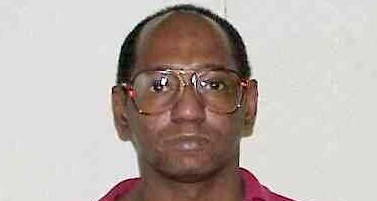
James Earl Slaughter
Murderer Brian Kevin Rosenfeld
Murderer · USA · 1985
Brian Kevin Rosenfeld Brian Kevin Rosenfeld was sentenced to three concurrent l…
23 victims
Brian Kevin Rosenfeld
Murderer · USA · 1985
Brian Kevin Rosenfeld Brian Kevin Rosenfeld was sentenced to three concurrent l…
23 victims
 Marvin Gray
Murderer · USA · 1975
Marvin Gray was convicted killer who claimed responsibility for 23 slayings and…
23 victims
Marvin Gray
Murderer · USA · 1975
Marvin Gray was convicted killer who claimed responsibility for 23 slayings and…
23 victims
 Yahweh ben Yahweh
Murderer · USA · 1980
Yahweh ben Yahweh was born and legally named Hulon Mitchell Jr. (October 27, 19…
23 victims
Yahweh ben Yahweh
Murderer · USA · 1980
Yahweh ben Yahweh was born and legally named Hulon Mitchell Jr. (October 27, 19…
23 victims
 Russell Ellwood
Murderer · USA · 1991
Russell Ellwood was a former taxi driver. Authorities suspected him of killing…
20 victims
Russell Ellwood
Murderer · USA · 1991
Russell Ellwood was a former taxi driver. Authorities suspected him of killing…
20 victims
 Lamont Reese
Murderer · USA · 1999
Lamont D. “Mont” Reese was a 28-year-old black male. He was scheduled to be exe…
3 victims
Lamont Reese
Murderer · USA · 1999
Lamont D. “Mont” Reese was a 28-year-old black male. He was scheduled to be exe…
3 victims
 Isaac Wood
Murderer · USA · 1855
Isaac L. Wood was a Livingston Republican mentioned in July 1858 execution cove…
2 victims
Isaac Wood
Murderer · USA · 1855
Isaac L. Wood was a Livingston Republican mentioned in July 1858 execution cove…
2 victims
 Joseph Fama
Murderer · USA · 1989
Joseph Fama fired the shots that killed Yusef Hawkins, a 16-year-old African Am…
1 victim
Joseph Fama
Murderer · USA · 1989
Joseph Fama fired the shots that killed Yusef Hawkins, a 16-year-old African Am…
1 victim
 Steven Parkus
Murderer · USA · 1985
Steven Parkus was convicted of strangulation in the November 1985 death of Mark…
1 victim
Steven Parkus
Murderer · USA · 1985
Steven Parkus was convicted of strangulation in the November 1985 death of Mark…
1 victim
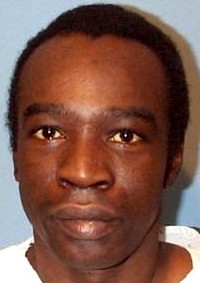 Luther Jerome Williams
Murderer · USA · 1988
Luther Jerome Williams was convicted in 1989 for the murder of John Robert Kirk…
1 victim
Luther Jerome Williams
Murderer · USA · 1988
Luther Jerome Williams was convicted in 1989 for the murder of John Robert Kirk…
1 victim
- Gender
- male
- Country
- USA
- Location
- Jefferson County, Kentucky, USA
- Date of birth
- February 3, 1963
- Age at first offence
- 20
- Characteristics
- armed robbery, convicted rapist
- Victim profile
- Esther Stewart (consignment shop owner)
- Method of murder
- St abbing with knife
- Date(s) of murder
- January 28, 1983
- Years active
- 1983
- Date of arrest
- Next day
- Status
-
Sentenced to death
Sentenced to death on December 2, 1983
Case identification
James Earl Slaughter (DOB 2-3-63) was sentenced to death on December 2, 1983.
The offence
Slaughter entered a clothing store on the afternoon of January 28, 1983 with the intent to rob the store. During the robbery he stabbed and killed the owner.
The victim was Ester Stewart, a Louisville, Kentucky woman who owned a consignment store in Louisville. She worked at a used clothing store in Jefferson County in 1983. Slaughter robbed and executed her by stabbing her multiple times in the chest.
Slaughter’s blood was found on his clothes.
Investigation
Police arrested Slaughter the next day after the stabbing death.
Slaughter confessed to the execution to a fellow inmate.
Trial
Slaughter was sentenced to death for the January 1983 murder of Esther Stewart, who owned “The Clothes Rack” consignment store in Louisville.
Appeals
A U.S. Court of Appeals for the Sixth Circuit opinion and order are referenced as 01-6359/6462 and 01-6359/6462.
On June 14, 2006, a federal appeals court overturned a decision to give a new sentencing hearing to a Kentucky death row inmate, ruling the lawyer for James Earl Slaughter acted reasonably during the initial trial. The 6th Circuit Court of Appeals in Cincinnati voted 2-1 that the lawyer for James Earl Slaughter, 43, did not have an obligation to research his client’s family history.
The decision referenced U.S. District Judge Jennifer Coffman’s 2001 ruling that Slaughter should get a new sentencing hearing because his trial lawyer, Fred Radolovich, failed to find and interview many of Slaughter’s family members or have them testify.
The appeals judges Danny Boggs and Alice Batchelder found Radolovich’s performance “deficient,” but not so bad that it unfairly affected the jury’s decision.
In a dissent, Judge R. Guy Cole said there was a “reasonable probability” that Slaughter would have been sentenced to life in prison if Radolovich had done a better job during the sentencing phase. Cole wrote:
“There is clearly a reasonable probability that the jury would have sentenced Slaughter to life imprisonment had it been presented with the evidence that was presented”
Coffman had found Radolovich had no experience with death-penalty cases and was later indicted for perjury for testifying that he had handled several cases in New York.
Coffman had also written (in granting the hearing) that Radolovich’s failure to thoroughly investigate Slaughter’s background and find family members to testify gave a 1-sided picture of the inmate to jurors. Coffman wrote:
“They saw James Earl Slaughter, in many senses, the man who never was, standing alone and defiant. Slaughter was a man (who) testified recklessly; a man who apparently was so unloved and so uncared for that not a single individual, relative or friend would vouch for him, though his life hung in the balance,”
Kathleen Schmidt of Shepherdsville and assistant public defender Marguerite Thomas of Frankfort were described as Slaughter’s lawyers, and they did not immediately return calls.
Other details
Identity under alias and later appeal efforts
A Kentucky Supreme Court denied an appeal from Jeffrey Leonard, a convicted murderer who sought reconsideration of his conviction based on a claim of ineffective counsel. The appeal was denied in part because the lawyer did not know his real name. Slaughter was convicted under the pseudonym James Earl Slaughter.
The Kentucky Supreme Court had denied a motion in 2007 to overturn Leonard’s conviction on his assertion that his defense attorney had not fully investigated the case to defend him. Justice Mary Noble wrote for a unanimous court and declined to reopen the issue.
Allison Martin, spokeswoman for the state attorney general’s office, said prosecutors were pleased with the ruling. Leonard’s defense attorneys with the Kentucky Department of Public Advocacy did not immediately return calls.
Leonard was described as a brain-damaged Louisville man.
Leonard spent nearly 25 years on Kentucky’s death row for the 1983 murder of Esther Stewart, who owned a consignment store in Louisville.
Before leaving office in 2007, former Gov. Ernie Fletcher commuted Leonard’s sentence to life in prison without the possibility of parole. In commuting Leonard’s death sentence, Fletcher cited concerns about whether his lawyer had been ineffective.
Former attorney and allegations
Leonard was originally represented by former Louisville attorney Ferdinand “Fred” Radolovich. Radolovich surrendered his law license after being charged with perjury for claiming he had handled four death penalty cases before Leonard.
Investigators found Radolovich had actually no experience as a lead attorney in a capital murder case.
The status of the perjury case against Radolovich was described as not immediately available.
Victim
Ester Stewart (also described as Esther Stewart) was from Louisville, Kentucky and owned a consignment store in Louisville, described as “The Clothes Rack.” She was killed in Jefferson County in 1983.
Spotted an error, or have more information about this case?