Matthew James Harris
Serial killer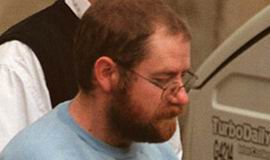 John Justin Bunting
Serial killer · Australia · 1992
John Justin Bunting (born 4 September 1966 in Inala, Queensland) was an Austral…
11 victims
John Justin Bunting
Serial killer · Australia · 1992
John Justin Bunting (born 4 September 1966 in Inala, Queensland) was an Austral…
11 victims
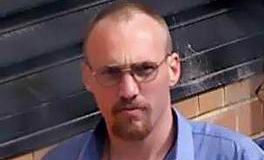 Robert Joe Wagner
Serial killer · Australia · 1992
Robert Joe Wagner (born 28 November 1971 in Parramatta, New South Wales) was an…
10 victims
Robert Joe Wagner
Serial killer · Australia · 1992
Robert Joe Wagner (born 28 November 1971 in Parramatta, New South Wales) was an…
10 victims
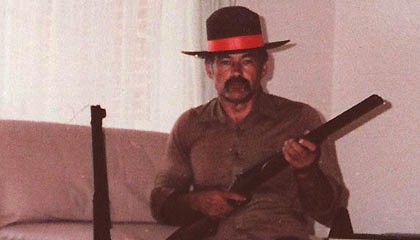 Ivan Milat
Serial killer · Australia · 1989
Ivan Milat was convicted of seven murders and received multiple life sentences.…
7 victims
Ivan Milat
Serial killer · Australia · 1989
Ivan Milat was convicted of seven murders and received multiple life sentences.…
7 victims
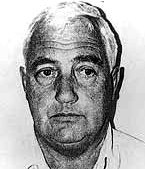 John Wayne Glover
Serial killer · Australia · 1989
John Wayne Glover (26 November 1932 – 9 September 2005) was a British-born Aust…
6 victims
John Wayne Glover
Serial killer · Australia · 1989
John Wayne Glover (26 November 1932 – 9 September 2005) was a British-born Aust…
6 victims
 Peter Dupas
Serial killer · Australia · 1997
Peter Norris Dupas was an Australian serial killer known for violence against w…
6 victims
Peter Dupas
Serial killer · Australia · 1997
Peter Norris Dupas was an Australian serial killer known for violence against w…
6 victims
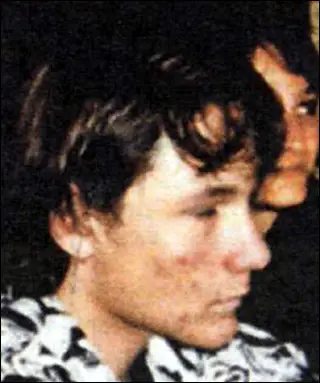 James Vlassakis
Serial killer · Australia · 1997
James Spyridon Vlassakis (born 24 December 1979) was an Australian serial kille…
4 victims
James Vlassakis
Serial killer · Australia · 1997
James Spyridon Vlassakis (born 24 December 1979) was an Australian serial kille…
4 victims
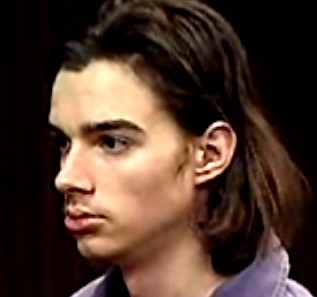 Bryan Kim
Murderer · USA · 2006
Bryan Kim was 19 years old at sentencing and was described as a former Mount Sp…
2 victims
Bryan Kim
Murderer · USA · 2006
Bryan Kim was 19 years old at sentencing and was described as a former Mount Sp…
2 victims
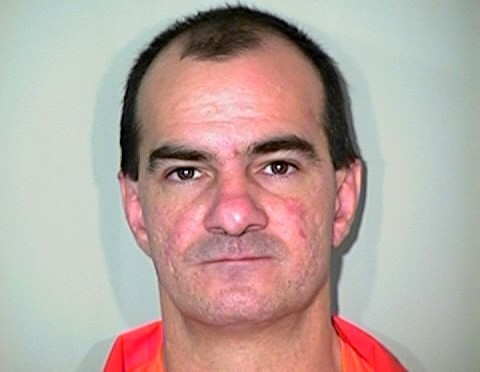 Phillip Bocharski
Murderer · USA · 1995
Phillip Bocharski was convicted in Yavapai County of burglary in the first degr…
1 victim
Phillip Bocharski
Murderer · USA · 1995
Phillip Bocharski was convicted in Yavapai County of burglary in the first degr…
1 victim
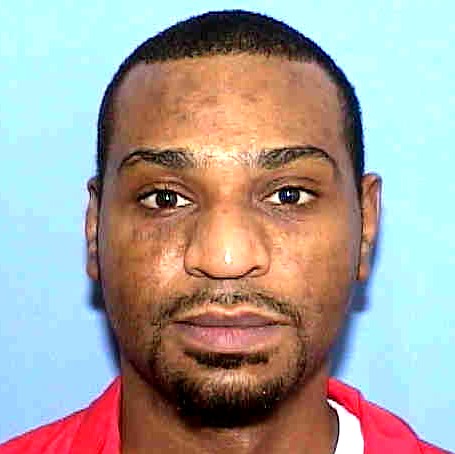 Ronald Chris Foster
Homicide · USA · 1989
Ronald Chris Foster was an African American who was 17 years of age at the time…
1 victim
Ronald Chris Foster
Homicide · USA · 1989
Ronald Chris Foster was an African American who was 17 years of age at the time…
1 victim
 Natasha Cornett
Murderer · USA · 1997
Natasha Wallen Cornett was born on January 26, 1979 in rural eastern Kentucky.…
3 victims
Natasha Cornett
Murderer · USA · 1997
Natasha Wallen Cornett was born on January 26, 1979 in rural eastern Kentucky.…
3 victims
 William Lembcke
Mass murderer · USA · 2000
William Lembcke killed his parents and his sister and brother at their home, th…
4 victims
William Lembcke
Mass murderer · USA · 2000
William Lembcke killed his parents and his sister and brother at their home, th…
4 victims
 Jamie Davis
Murderer · USA · 2010
Jamie Carole Davis was a Lakeland woman who was accused of fatally shooting ano…
1 victim
Jamie Davis
Murderer · USA · 2010
Jamie Carole Davis was a Lakeland woman who was accused of fatally shooting ano…
1 victim
- Gender
- male
- Country
- Australia
- Location
- Wagga Wagga, New South Wales, Australia
- Date of birth
- June 30, 1968
- Age at first offence
- 30
- Characteristics
- robbery, alcohol, drug addict
- Victim profile
- Peter Wennerbom, 62 / Yvonne Ford, 33 / Ronald Galvin
- Method of murder
- Strangulation
- Date(s) of murder
- October-November 1998
- Years active
- 1998
- Date of arrest
- December 1, 1998
- Status
-
Imprisoned
Pleaded guilty; sentenced to 3 concurrent terms of 40 years imprisonment with non-parole periods of 25 years on December 20, 2000
Case details
Matthew James Harris (born 30 June 1968) was an Australian serial killer from Wagga Wagga, New South Wales. He was sentenced after pleading guilty to three counts of murder and one count of armed robbery in company.
Timeline
- 30 June 1968 — Matthew James Harris was born.
- 20 June 1998 — Harris and Kenneth Scott Frazier went to an address in Nordlingen Drive, Wagga Wagga and committed an armed robbery in company at the home of Tran Nguyen.
- 4 October 1998 — Geoffrey George Hall entered the flat of Peter Wennerbom after noticing his front door open and his television sounding as if it was on.
- 1 October 1998 — Peter Wennerbom was killed (death alleged as having occurred on 1 October 1998).
- 17 October 1998 — Yvonne Jean Ford was murdered (death fixed as occurring on 17 October 1998).
- 18 October 1998 — Janice Karen Lowing reported concerns after failing to make contact with Ford at 26 Phillip Avenue, Wagga Wagga.
- 3 November 1998 — Ronald Edward Galvin was killed (death fixed as having occurred on 3 November 1998).
- 1 November 1998 — Ronald Edward Galvin’s father, Cecil Galvin, last saw his son.
- 4 November 1998 — Ronald Galvin failed to meet his father as planned.
- 24 November 1998 — Police went to 9/1 Joyes Place in the course of their investigation of Galvin’s apparent disappearance.
- 1 December 1998 — Police arrested Harris for offences referred to in counts 2 and 3 of the indictment; Harris was interviewed about those matters.
- 1 December 1998 — Robert Allan Simpkin discovered a body between 6 to 8 metres off Church Plains Road, Uranquinty, and notified police.
- 4 October 1998 — Geoffrey George Hall telephoned for an ambulance after finding Peter Wennerbom lying on the floor.
- 8 October 1998 — A pathologist conducted an autopsy on Peter Wennerbom.
- 8 December 1998 — A pathologist conducted an autopsy on Ronald Edward Galvin.
- 7 December 1998 — Harris participated in a “walk around” interview at 26 Phillip Avenue, Wagga Wagga.
- 7 December 1998 — Harris participated in a “walk around” interview in relation to the death of Ronald Edward Galvin.
- 7 December 1999 — NSW Supreme Court Justice Virginia Bell sentenced Harris (the appeal record discussed a sentencing date of 7 April 2000; the “pled guilty to the murders and the robbery” date was 3 December 1999).
- 3 December 1999 — Harris pleaded guilty to the murders and the robbery of Trang Nguyen.
- 7 April 2000 — NSW Supreme Court Justice Virginia Bell sentenced Harris to concurrent terms of 40 years imprisonment with non-parole periods of 25 years in relation to the murders and 3 years imprisonment in relation to the robbery.
- 13 April 2000 — Notice of appeal against the adequacy of the sentences was signed by the Deputy Director of Public Prosecutions.
- 19 April 2000 — The notice of appeal was served on the respondent.
- 2 May 2000 — The matter was mentioned in New South Wales Parliament; it was noted that Harris made statements in a police record of interview and that the sentences were “far too lenient”.
- 20 June 1998 — (already listed above) Armed robbery in company at Nordlingen Drive.
- 20 December 2000 — The NSW Court of Criminal Appeal upheld the appeal, quashed Harris’ sentences in relation to the murders of Ford and Galvin, and substituted them with life sentences.
- 30 November 2023 — The sentencing order directed eligibility to be released on parole on this date based on the non-parole periods set on the murders under the 7 April 2000 sentencing.
People
Matthew James Harris
Harris was the respondent and offender who pleaded guilty and was later sentenced and appealed.
Kenneth Scott Frazier
Frazier was Harris’s co-offender in the armed robbery of Trang Nguyen. Frazier was found guilty at trial and sentenced to a term of imprisonment of fifty four months comprising a minimum term of thirty nine months, and an additional term of fifteen months.
Trang Nguyen
Trang Nguyen was the victim of the armed robbery in company. The robbery involved Trang Nguyen’s home with three young children present.
Peter Wennerbom
Peter Wennerbom was a man 62 years of age with some residual difficulties due to a stroke. He was killed by strangulation.
Elaine de Jong
Elaine de Jong was the sister of Peter Wennerbom. She knew Harris through the Adoption Triangle Organisation and developed daily contact with him.
Yvonne Jean Ford
Yvonne Jean Ford was 33 years of age at the time of her death and had a mild intellectual disability. She was killed by strangulation.
Cherryl Holmes
Cherryl Holmes employed Ms Ford at her dog kennels.
Janice Karen Lowing
Janice Karen Lowing arrived at Ford’s home and later reported her concerns to police.
Senior Constable Christopher Jason Hall
Senior Constable Christopher Jason Hall responded to the report and conducted a search of the premises, locating Ford sitting in the bath.
Ronald Edward Galvin
Ronald Edward Galvin was the neighbour whom Harris killed by strangulation. His father was Cecil Galvin.
Cecil Galvin
Cecil Galvin last saw his son on 1 November 1998 and reported him missing after the pension had not been drawn.
Robert Allan Simpkin
Robert Allan Simpkin discovered a body near Church Plains Road, Uranquinty, and notified police.
Geoffrey George Hall
Geoffrey George Hall noticed that Peter Wennerbom’s front door was open and entered, later telephoning for an ambulance.
Joseph Christie (Senior Constable)
Senior Constable Joseph Christie responded to the call placed by ambulance officers.
Paul Bottrill
Paul Bottrill was a pathologist who conducted autopsies and reported causes of death consistent with strangulation.
Detective Sergeant Peter Mark Spence
Detective Sergeant Peter Mark Spence interviewed Harris about the death of Mr. Wennerbom and later conducted recorded interviews and walk-around interviews.
Detective Sergeant Scott Lawrence Coleman
Detective Senior Constable Scott Lawrence Coleman attended the scene where documents bearing the name of Ronald Edward Galvin were recovered.
Senior Constable Peter Hugh Clarke
Senior Constable Peter Hugh Clarke attended St Vincent’s Hospital, spoke to Harris, and Harris was arrested on discharge.
Two psychologists: Ms Matsuo and Ms Barrier
Ms Matsuo and Ms Barrier examined Harris and prepared reports, including findings about personality disorders and aspects of empathy/remorse and psychological shortcomings.
The offence
Armed robbery of Trang Nguyen (20 June 1998)
On 20 June 1998, Harris, with co-offender Kenneth Scott Frazier, went to an address in Nordlingen Drive, Wagga Wagga and knocked on the door. Tran Nguyen was alone with her three young children. When asked to identify themselves, they said that they were police. Nguyen opened the front door and was confronted by the two men wearing baseball hats. Both were armed with large kitchen knives.
Harris and Frazier managed to push Nguyen out of the way. Nguyen sat on the lounge with her three children. Both men demanded money. She removed $55 from her purse and gave it to Harris. Both men then held knives at her throat and asked for her keycard and PIN, which she did not have. More money was demanded. Nguyen said she only had coins and handed over coins amounting to about $3 to Frazier. Frazier searched the flat while Harris stayed with Nguyen holding a knife to her throat. Nothing more was taken. When Frazier returned, Harris told him to cut the telephone line; he was unsuccessful and pulled it out from the wall. Both men left through the front door. Frazier pushed the knife through the gauze screen door and told Nguyen not to call police. The money stolen was used to purchase alcohol.
Murder of Peter Wennerbom (1 October 1998; discovered 4 October 1998)
Between 7.00pm and 7.30pm on 4 October 1998, Geoffrey George Hall went to 2/2 Jack avenue, Wagga Wagga, where his son lived. Hall was aware that Peter Wennerbom, aged 62 with some residual difficulties due to a stroke, lived in the building next door to his son. As he approached the flats, Hall noticed Wennerbom’s front door was open and that the television sounded as if it was on. Believing this to be unusual, Hall entered the flat and found Wennerbom lying on the floor, then telephoned for an ambulance.
Senior Constable Joseph Christie responded to the call placed by ambulance officers and noticed a bruise on the side of the deceased’s throat that he regarded as suspicious. Paul Bottrill conducted an autopsy on 8 October 1998. In the report dated 16 December 1998, Bottrill gave the opinion that the cause of death was consistent with strangulation. Police later arrested Harris on 1 December 1998 and he agreed to be interviewed in relation to the death alleged to have occurred on 1 October 1998. Harris stated he knew Wennerbom through Elaine de Jong and had visited him on a couple of occasions. Harris said he knocked under the pretext of asking for a drink of water and was invited in, after which he strangled Wennerbom. Harris said he had poor recollection of the exact sequence and gave inconsistent accounts about motive.
At question 139, Harris was asked:
“Q. Did you intend to go to the premises to kill him? A. I don’t, no,... intended to do that, no, I intended to rob, I think.”
Harris was asked to explain his admission:
“Q. You said, `I think I went to rob him', why do you think you went to rob him? A. I don’t know, I just, I don’t know if I went to rob him, I’m not sure, that’s what I’m trying to say, I think, I just went there to kill him”
During discussions with investigating police, Harris said:
“… was an old man, there was no resistance at all. I had total, you know, control over the situation, he, he couldn’t do anything.”
It was known Wennerbom kept relatively large sums of cash at home. No money was found in the unit following discovery of his body. Harris was re-interviewed on 7 December 1998 in the presence of his solicitor, repeating he strangled Wennerbom. He continued to provide contradictory statements regarding motive, suggesting visits might have been for money or cigarettes, and also saying:
“I, at the time I wasn’t interested in robbing him, the only thing I wanted to do was to kill, that was my sole purpose.”
Harris told police:
“Q. Now when you, earlier you said you came here, you were going to ask for some money. Do you remember if you actually got any money from him? A. Oh, no, no, I don’t think, I might have, that, that might have been the reason to come here, but like I said, I ended up asking for water instead. I don’t, didn’t come here to ask him for money, I didn’t, I don’t, I I I might have said that but I don’t think I came here to ask for money. The only reason I came here was because I knew the, I knew him, I knew he lived on his own and I knew I could kill him.”
Elaine de Jong recalled that after Wennerbom’s death, Harris appeared particularly solicitous, helping to clear out his unit and attending his funeral without entering the church, and he appeared depressed.
Murder of Yvonne Jean Ford (17 October 1998)
On 18 October 1998 at 9.15am, Janice Karen Lowing arrived at Ford’s home at 26 Phillip Avenue, Wagga Wagga, to drive her to the boarding kennels where she worked as a part-time dog walker. Lowing knocked on the front door but nobody answered. Lowing returned at about 11.00am, heard Ford’s dog inside, but again failed to make contact. Lowing went to Wagga Wagga police station and reported her concerns.
Senior Constable Christopher Jason Hall responded, searched the premises, and located Ford sitting in the bath. Ford was dead and in a state of nudity. Cherryl Holmes said Ford had a mild intellectual disability, although it did not impair her ability to care for herself and to live independently. Ford was aged thirty-three at the time of death, fixed as occurring on 17 October 1998, sixteen days after the murder of Peter Wennerbom. It was not initially treated as a case of murder; the post mortem examination had been inconclusive.
Elaine de Jong first met Harris through her involvement in the Adoption Triangle Organisation and helped him trace his birth parents who had given him up for adoption. De Jong knew Harris was a heroin addict. Shortly after their first meeting he moved into her family home so she could support his efforts to withdraw from heroin. After six or seven months, he was admitted to a residential rehabilitation program and eventually rented his own apartment. De Jong said she maintained daily contact and developed a very deep friendship.
Harris was not engaged in paid employment but performed voluntary work as a driver with the Community Transport service, which provided transport for elderly and disabled persons in the Wagga Wagga community. This work brought him into contact with Ford.
On 11 November 1998, Harris informed De Jong that he had attempted to commit suicide with a heroin overdose and needed to tell her something. They arranged to meet the next day, but Harris went to Sydney without speaking to her. On 15 November 1998, De Jong located him at his flat and spoke with him briefly.
At about 3.00am on 30 November 1998, De Jong received two telephone calls from Harris. In the second conversation, Harris confessed to having killed the male person missing from next door (Mr. Galvin, the victim mentioned in the third count). De Jong reported the confession to Wagga Wagga police station. Later at about 9.30am the same day, De Jong received a further call in which Harris disclosed he was in Sydney and confessed to killing a lady on Caulfield Cup day at Phillip Avenue. He said it happened in the bath, that he knew the victim as a client of the Community Transport Group, and at about 2.05pm he again telephoned De Jong and announced that he had some heroin and thought it best to “end it all”. Later that evening, Harris overdosed as threatened and was taken to hospital from Embarkation Park in Potts Point.
On 1 December 1998 at approximately 3.00am, Senior Constable Peter Hugh Clarke attended St Vincent’s Hospital, spoke to Harris, and on discharge Harris was arrested and taken into custody. Throughout the day at Sydney Police Centre, he was interviewed about his role in the murders he had confessed to, commencing with Galvin (count 3 in the first indictment). At 5.02pm Detective Sergeant Peter Mark Spence commenced a recorded interview about Ford’s death. During the interview Harris confessed he had strangled Ford while she was in the bath and denied having committed a robbery. He said he had targeted her and went to her flat with the intention of killing her.
On 7 December 1998, Spence conducted a walk around interview with Harris at 26 Phillip Avenue, Wagga Wagga. Harris admitted making a pretence of a sexual advance towards Ford prior to killing her and suggested that they have a bath together. He said:
“I just wanted her to get in the bath so that I could strangle her”.
Harris said Ford rejected the feigned advances but was in the bath with her when he strangled her. He admitted taking advantage of her intellectual disability, and admitted he held her under the water while strangling her. According to him, it took three to four minutes to kill her.
Among other admissions Harris made to police:
“I just went there. I was probably out on one of me walks and I probably had a few drinks, in the area so I just went went to the house ended up there. ... We struck up a bit of a friendship, as, just, just driving her around, and I obviously could tell she was lonely, she was slightly handicapped. I didn’t come, I didn’t come around here for sex, I didn’t come around here for anything, I just came around to say Hello, I live nearby, but then these thoughts started entering my head that I wanted to kill her. .... It could have been her, it could've been anybody. She was just unlucky. ... I just thought she would be easy, to target, she wouldn’t put up a fight or ... she would be relatively easy to kill.”
When asked how he felt at the time:
“Powerful, angry, just anger, pure anger. Not, not that she, there was no sex or anything, I was angry at the world. This is why this whole thing has happened, has started, and it was just my total anger building up from, I don’t know, from the day I was adopted, it’s just all built and built and, and something has set, set me off and I, I killed her.”
A pathologist reviewed the case; in his report of 26 January 1999, Paul Botterill stated the direct cause of death was consistent with manual strangulation.
Murder of Ronald Edward Galvin (3 November 1998)
On 1 December 1998, Robert Allan Simpkin discovered a body between 6 to 8 metres off Church Plains Road, Uranquinty. He returned home and notified police, and later accompanied an ambulance crew to the location. Detective Senior Constable Scott Lawrence Coleman attended and recovered documents from the body bearing the name of Ronald Edward Galvin.
Cecil Galvin last saw his son on 1 November 1998. His son failed to meet him on 4 November 1998 as planned. After the passing of some weeks, Cecil Galvin telephoned the Credit Union and learned his pension had not been drawn, then reported him missing.
Paul Bottrill conducted an autopsy on 8 December 1998. In his report dated 22 January 1999, Bottrill stated the direct cause of death was consistent with strangulation. Galvin’s death was fixed as having occurred on 3 November 1998, within 17 days of the murder of Ford.
Galvin resided at 9/1 Joyes Place. On 24 November 1998, Detective Sergeant Spence and another officer visited the address. The following day they returned and spoke with the respondent who lived next door. While in Harris’s flat, officers noticed a collection of books dealing with the subject of non-fictional murders. Harris said he last saw Galvin on the evening of Melbourne Cup day, sitting on the stairway with a number of persons, including someone he described as:
“ bloke I’ve never seen before”
On 1 December 1998, after Harris’s arrest, Detective Sergeant Spence attended Sydney Central Police Station and interviewed Harris in relation to Galvin’s disappearance. During the interview, Harris admitted killing Galvin by strangulation. He could not recall much detail about the killing or even where it had occurred. He agreed that he disposed of the body at Uranquinty.
On 7 December 1998, Harris participated in a walk around interview in relation to Galvin. Detective Sergeant Spence conducted the interview. Harris found it difficult to recall detail but suggested there had been no ulterior motive. Harris said that, to the best of his recollection, Galvin had invited him in when he went to his flat and asked for a beer. Once inside, Harris said he stood behind Galvin, put him on his knees, and strangled him. He observed:
“only a little bloke”
Harris’s only explanation for the killing was:
“I think it was just of lot of anger, I was getting rid of and it was being projected on him”
He also said that having “got away with” the earlier murders, he “thought well, why not go again?” and repeated this kind of observation more than once. He agreed he used Elaine de Jong’s car the following evening to move the body to where it was ultimately found.
Investigation and arrest
On 1 December 1998, police arrested Harris for the offences referred to in counts 2 and 3 of the indictment and interviewed him about those matters. Harris later agreed to be interviewed in connection with the death of Peter Wennerbom, alleged to have occurred on 1 October 1998. That interview was conducted by Detective Sergeant Peter Mark Spence at Sydney Police Centre.
In connection with Ford’s death, Harris confessed during recorded interviews beginning on 1 December 1998, after he was spoken to at St Vincent’s Hospital by Senior Constable Peter Hugh Clarke.
In connection with Galvin’s disappearance, Detective Sergeant Spence conducted an interview at Sydney Central Police Station on 1 December 1998, during which Harris admitted killing Galvin and agreeing he disposed of the body at Uranquinty.
Trial
Plea
Harris pleaded guilty to the three counts of murder and the armed robbery count.
Co-accused
Frazier was found guilty at trial and sentenced to fifty four months comprising a minimum term of thirty nine months and an additional term of fifteen months.
Sentencing
Counts and penalties at first instance
On 7 April 2000, Justice Virginia Bell sentenced Harris on all counts. On each of the three counts of murder, he was sentenced to 40 years imprisonment directed to be served concurrently, with non-parole periods of 25 years commencing on 1 December 1998. As a consequence, the respondent was eligible to be released on parole on 30 November 2023.
On the count of armed robbery, Harris was sentenced to three years imprisonment, with the sentence fixed to commence on 1 December 1998 and due to expire on 30 December 2001. Bell J declined to set a non parole period in respect of the robbery because it was served concurrently with the murder sentences.
Legislative framework discussed at sentencing and appeal
The maximum penalty for an offence under s 19A Crimes Act 1900 was life imprisonment. The maximum penalty for an offence under s 97(1) Crimes Act 1900 was twenty years imprisonment. The appeal record discussed the Crimes (Sentencing Procedure) Act 1999, including s 61, and also the operation of s 19A(1) of the Crimes Act 1900 and s 21(1) of the Procedure Act.
Other statements made during parliamentary mention
On 2 May 2000, it was noted in New South Wales Parliament that Harris said in a police record of interview:
“… to murder and to keep murdering and to get away with it was an achievement …I'd still be going if I hadn't been caught.”
It was also noted in Parliament that the sentences were “far too lenient”.
Appeals
Appeal by the Director of Public Prosecutions
The Director of Public Prosecutions appealed against the murder sentences on the basis that they were inadequate. The NSW Court of Criminal Appeal upheld the appeal on 20 December 2000, quashed Harris’ sentences in relation to the murders of Ford and Galvin, and substituted life sentences. Chief Justice Wood stated:
“I am of the view that the criminality of the respondent, and the level of his dangerousness, are such that, notwithstanding the principles there discussed, it is necessary for the Court to intervene”.
Trial sentence redetermination issue considered by the Court of Criminal Appeal
The appeal judgment discussed Grounds of Appeal, including arguments about the exercise required under s 61(1) of the Procedure Act, the weight given to subjective circumstances, the assumption about fixing a non parole period, and special circumstances justifying departure from the non-parole rule.
In concluding, Wood CJ said that, although the first count was not sought for life sentence by the Crown Prosecutor at trial, the sentences imposed below should be quashed in relation to the two other counts of murder. In lieu, concurrent sentences of imprisonment for life were imposed, each to date from 1 December 1998. The Court declined to fix a non parole period, stating that it lacked jurisdiction in relation to those sentences to do so. Justice James agreed.
Outcome
The NSW Court of Criminal Appeal upheld the Director of Public Prosecutions’ appeal and quashed Harris’ sentences in relation to the murders of Ford and Galvin, substituting them with life sentences.
Other details
Suicide attempts and drug use
Harris overdosed twice on heroin a few days after Galvin’s murder, and in the early hours of 1 December 1998, the day of his arrest.
Background and assessments used for sentencing
Harris was adopted at about ten months and learned he had been adopted at age ten, becoming unsettled and exhibiting behavioural problems in early teens. Bell J accepted a significant level of emotional deprivation and rejection in childhood, leading him to leave home and live as a “street kid” and as a prostitute, which commenced at about age fifteen. Bell J also noted failed attempts to settle him with foster parents.
In 1991, Harris was sentenced to a minimum term of penal servitude for 2.5 years for the armed robbery of a sex customer. Bell J found his background causally related to the commission of the offences. Bell J noted that in adult life Harris tracked down his natural mother with Elaine de Jong’s assistance but was rejected.
In interviews with police, Harris reported nightmares about his adoptive mother and said:
“… just the thoughts, you know, I’ve always, its on record, I’ve always thought of I’ve wanted to kill my mother and my family and stuff like that. Just being dirty on the world, you know, being dirty on the fact that I was adopted and I was taken in by this family and then rejected by them. ... in the shit with the prostitution and having to lower meself and all that, just all the thoughts.”
He also described thoughts during prostitution:
“I went with so many blokes I could have killed a number of them, but I didn’t, I didn’t, didn’t go through with it, but even then I had the thoughts, you know, these blokes that the, that I was, that I was sleeping with were using me and I using them or whatever, I thought, I wanted to kill them, of course.”
Bell J accepted reports from psychologists Ms Matsuo and Ms Barrier. Ms Barrier’s testing resulted in a schizotypal personality disorder and/or an avoidant personality disorder with prominent depressive schizoid traits. Ms Barrier stated:
“Personality test results describe someone who is `unable to overcome the feelings that life is empty and meaningless, and unable to master the skills to overcome the deficits he sees within himself, he is likely at times to become cranky if not explosive'.”
Ms Barrier added that Harris demonstrated little empathy for victims and had only limited understanding of the enormity of his behaviour.
Ms Matsuo concluded Harris had a schizoid personality disorder and stated:
`Mr. Harris is cognisant of his psychological shortcomings and his lengthy problems with drugs and alcohol. He has already shown himself to be highly motivated to work on his offending issues with psychological programs and his substance abuse issues with AOD counsellors".
Ms Matsuo also stated:
“Taken in context based on his day to day behaviour, Mr. Harris displays few pervasively antisocial traits. He prefers to be alone rather than in large groups but this stems from his feeling of inadequacy and worthlessness. He often denigrates himself in front of the author and has a low self-image. Mr. Harris' history does indicate he has often failed to comply with social norms especially in terms of his drug use, prostitution and his criminal history, however, he does not lack remorse altogether. He has demonstrated significant levels of compassion both in and out of gaol, helping others in need and in particular taking care of young children at his home in Wagga. Mr. Harris' transient disregard for others has occurred as a very specific end to a certain set of psychological circumstances. He believes the reason he felt indifference to the human life that he destroyed may be the indifference he feels towards his own existence. He is not, in terms of his enduring personality type an irritable, aggressive or violent person as assessed by the MCMI-3 - and he is not a person who pervasively shows indifference or contempt for the feelings and suffering of others or explosive anger."
The appeal judgment included further discussion of dangerousness and sentencing principles.
Record of admissions included in sentencing appeal reasons
The appeal judgment quoted a passage from Justice Bell’s findings about dangerousness and Harris’s statements in a walk-through interview about Peter Wennerbom, including:
“The prisoner is a person who has killed people whom he perceived to be vulnerable and, therefore, easy to kill because it made him feel powerful to do so. He told Detective Sergeant Spence in the course of the
walk through' interview relating to the death of Peter Wennerbom that,He had been living a straight life in Wagga' andover months thoughts about killing people came into my head - they were powerful thoughts.' In that same interview, he saidI've always expressed the desire to kill people ever since I was a kid and it made, and it, it sought of excited me. It wasn't like I was getting off on it or anything but it was very powerful and it was revenge on society. It's you know the whole shit'."
Other quotes related to Galvin’s killing explanation
Harris told police that his only explanation was:
He said that having “got away with” earlier murders, he “thought well, why not go again?” and repeated this observation more than once.
Other procedural details
The appeal judgment noted that Harris’s sentencing appeal was confined to sentences imposed in relation to the three counts of murder. The Crown presented an indictment on 3 December 1999 containing three counts of murder pursuant to S 19A Crimes Act 1900 and the matter was stood over for sentence after Harris pleaded guilty. On 24 March 2000, a second indictment was presented containing one count of armed robbery in company pursuant to s 97(1) Crimes Act 1900, to which Harris also pleaded guilty.

Spotted an error, or have more information about this case?