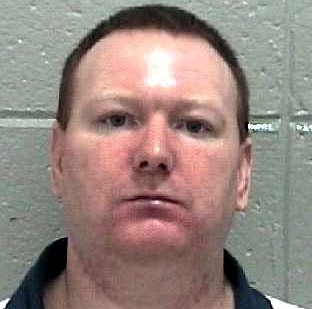
Billy Daniel Raulerson
Murderer Brian Kevin Rosenfeld
Murderer · USA · 1985
Brian Kevin Rosenfeld Brian Kevin Rosenfeld was sentenced to three concurrent l…
23 victims
Brian Kevin Rosenfeld
Murderer · USA · 1985
Brian Kevin Rosenfeld Brian Kevin Rosenfeld was sentenced to three concurrent l…
23 victims
 Russell Ellwood
Murderer · USA · 1991
Russell Ellwood was a former taxi driver. Authorities suspected him of killing…
20 victims
Russell Ellwood
Murderer · USA · 1991
Russell Ellwood was a former taxi driver. Authorities suspected him of killing…
20 victims
 Robert Martines Perez
Murderer · USA · 1994
Name: Robert Martines Perez · Other name used in proceedings: Robert Martinez P…
15 victims
Robert Martines Perez
Murderer · USA · 1994
Name: Robert Martines Perez · Other name used in proceedings: Robert Martinez P…
15 victims
 Billy Frank Vickers
Murderer · USA · 1993
Billy Frank Vickers Vickers was executed by lethal injection in Texas on Januar…
14 victims
Billy Frank Vickers
Murderer · USA · 1993
Billy Frank Vickers Vickers was executed by lethal injection in Texas on Januar…
14 victims
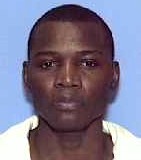 Arthur Lee Burton
Murderer · 1997
Arthur Lee Burton was born on 3/29/70. He received a TDCJ number of 999283. He…
1 victim
Arthur Lee Burton
Murderer · 1997
Arthur Lee Burton was born on 3/29/70. He received a TDCJ number of 999283. He…
1 victim
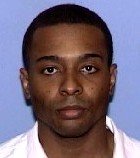 Vaughn Ross
Murderer · USA · 2001
Vaughn Ross was convicted of capital murder in Texas for the deaths of Douglas…
2 victims
Vaughn Ross
Murderer · USA · 2001
Vaughn Ross was convicted of capital murder in Texas for the deaths of Douglas…
2 victims
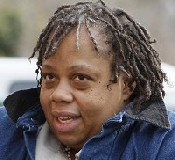 Renee Bowman
Murderer · USA · 2006
Renee Bowman was a foster parent to three adopted daughters. The children were…
2 victims
Renee Bowman
Murderer · USA · 2006
Renee Bowman was a foster parent to three adopted daughters. The children were…
2 victims
 Paul Evans
Murderer · USA
Paul Evans was born on 01/30/72. He was tried in the Nineteenth Judicial Circui…
1 victim
Paul Evans
Murderer · USA
Paul Evans was born on 01/30/72. He was tried in the Nineteenth Judicial Circui…
1 victim
 Andrew Aston
Murderer · United Kingdom · 2001
Andrew Aston was born 22 November 1972 in Birmingham, England. He attacked elde…
2 victims
Andrew Aston
Murderer · United Kingdom · 2001
Andrew Aston was born 22 November 1972 in Birmingham, England. He attacked elde…
2 victims
 Ronald Lee Williams
Murderer · USA · 1988
Ronald Lee Williams was the leader of the “Miami Boys,” a drug-trafficking ring…
4 victims
Ronald Lee Williams
Murderer · USA · 1988
Ronald Lee Williams was the leader of the “Miami Boys,” a drug-trafficking ring…
4 victims
- Gender
- male
- Country
- USA
- Location
- Chatham County, Georgia, USA
- Date of birth
- 1969
- Age at first offence
- 24
- Characteristics
- necrophilia, rape, kidnapping, burglary, drug addict
- Victim profile
- Charlye Dixon, 18, and her fiance Jason Hampton, 19 / Teresa Gail Taylor, 40
- Method of murder
- Shooting ( .22 caliber rifle)
- Date(s) of murder
- May 30/ 31, 1993
- Years active
- 1993
- Date of arrest
- 7 months later
- Status
-
Sentenced to death
Sentenced to death on March 15, 1996
Case information
Defendant: Billy Daniel Raulerson Jr. Age: 27 Court/case references: Raulerson v. The State (S97P1166; S97P1207) (268 Ga. 623) (491 SE2d 791) (1997) Chief Justice: BENHAM, Chief Justice Trial court: Chatham Superior Court Judges: Before Judge Cheatham, Senior Judge
Timeline
- May 31, 1993 — The bodies of Jason Hampton, Charlye Dixon, and Gail Taylor were found in separate locations in Ware County.
- March 15, 1996 — Raulerson was sentenced to death.
- October 10, 1997 — The case was decided.
- November 5, 1997 — Reconsideration was denied.
Background
Billy Daniel Raulerson received three death sentences for the malice murders of teenagers Jason Hampton and Charlye Dixon and the felony murder of Gail Taylor.
The offence
Raulerson was convicted of burglary, kidnapping, necrophilia, and possession of a firearm during the commission of a crime and possession of a firearm during the commission of a felony.
On May 31, 1993, the bodies of Jason Hampton, Charlye Dixon, and Gail Taylor were found in separate locations in Ware County. Each victim had been shot multiple times by a .22 caliber rifle. Gail Taylor suffered a potentially fatal knife wound to her wrist.
The record described semen and spermatozoa found in Charlye Dixon's rectum.
Investigation
Seven months after the victims were found, Raulerson was arrested on unrelated aggravated assault and weapons charges and gave police a blood sample. Analysis of the DNA from the blood sample and from the semen recovered from Ms. Dixon led an expert to conclude that both samples of body fluid originated from the same person.
After receiving the DNA test results, law enforcement officers questioned Raulerson about the three murders, and he admitted killing the three victims.
A search warrant was executed at Raulerson's residence. The search found a fishing rod and reel identified as having been taken from Hampton's pickup truck the night he was killed and parts of a .22 caliber rifle.
A ballistics expert testified that shell casings found near Hampton's body and in Ms. Taylor's home were probably fired from the rifle found in Raulerson's home.
In statements to investigating officers after the DNA test results were known, Raulerson admitted parking his car the evening of May 30, 1993, at a Ware County lakeside “lovers’ lane” near the pickup truck occupied by Hampton and Dixon.
Raulerson stated that he stood on the bed of the pickup truck and shot Hampton several times, then shot Dixon as she attempted to flee. He dragged Hampton's body from the truck and shot him several more times. Raulerson put Dixon and two fishing rods from the pickup truck in his vehicle and drove to a wooded area several miles away, where he shot Dixon again and sodomized her.
Raulerson said his attempt to return to Dixon's body the next day was thwarted by the presence of people at the site. He then drove to a rural section of the county looking for a house to burglarize.
He stopped at a home with no vehicle in the carport. When no one responded to his knock at the door, Raulerson broke into a utility shed and stole meat from the freezer. While loading the meat into his car, he heard someone inside the house, entered the home, struggled with Gail Taylor who was armed with a kitchen knife, and shot her multiple times. He then stole Taylor's purse.
Raulerson told officers that he had stolen the .22 caliber rifle from a Pierce County residence he had burglarized three weeks before the shootings.
Evidence and disputed issues at trial
A directed verdict of acquittal is appropriate when “there is no conflict in the evidence and the evidence introduced with all reasonable deductions and inferences therefrom shall demand a verdict of acquittal or 'not guilty'.” OCGA 17-9-1 (a).
The forensic pathologist who examined Ms. Dixon's body testified that there was nothing indicating that any of the seven gunshot wounds inflicted upon the victim were inflicted after her death.
In his statement to law enforcement officers, Raulerson said he had shot the victim again after he had transported her from the lovers' lane and before he sexually assaulted her.
The appellate decision described a reasonable inference as that the victim was still alive when Raulerson last shot her after he took her from the lovers' lane and before he sexually assaulted her. It found that a verdict of acquittal was not demanded by the evidence and deductions and inferences, so it concluded it was not error for the trial court to deny Raulerson's motion for directed verdict.
Mental retardation evidence
Raulerson presented expert evidence that he was mentally retarded with an IQ of 69.
The State presented expert testimony that Raulerson's IQ at age 15 (nine years earlier) was 83. The State's psychologist opined there was no indication that Raulerson was severely mentally ill.
The appellate decision addressed the defense-of-mental-retardation issue and stated there was no merit to Raulerson's challenge to the constitutionality of OCGA 17-7-131 (c) (3), which requires that the defense of mental retardation be proven beyond a reasonable doubt in order for a jury to return a verdict of “guilty but mentally retarded.” Burgess v. State, 264 Ga. 777 (36) (450 SE2d 680) (1994).
DNA, blood and semen suppression issues (Appeal points 2(a) and 2(b))
Raulerson challenged the trial court’s denial of his motion to suppress the DNA blood and semen comparison evidence, his incriminating statements, and evidence seized from his residence pursuant to a search warrant.
Consent to blood sample (2(a))
Raulerson argued the blood sample was obtained by means of a warrantless, unreasonable search and seizure. He acknowledged that he signed a waiver but argued the State failed to prove consent was freely and voluntarily given.
The appellate decision set out the consent standard and listed relevant factors including age (twenty-four), education (eighth grade education and literate), intelligence, length of detention (twenty-four hours), that constitutional rights were advised, that questioning was not prolonged, and that no physical punishment was used to procure consent. It stated no one factor was controlling.
Raulerson argued he was incapable of giving voluntary consent because he was mentally retarded and limited reading skills prevented a knowing waiver of the search warrant right. The appellate decision stated intelligence was only one factor and that there was no evidence at the suppression hearing that he was mentally retarded; it concluded the evidence did not support his claim that he lacked capacity to consent.
Raulerson also argued his consent was invalid because officers continued to interrogate him after he repeatedly invoked his right to counsel. The appellate decision described that the officers and the lab technician testified at the suppression hearing that Raulerson never asked for an attorney, and that before giving consent Raulerson executed a signed waiver of counsel. It concluded the trial court's conclusion that he did not invoke his right to counsel was supported by evidence.
The appellate decision concluded the evidence at the suppression hearing failed to demonstrate incapacity to consent or that will was overborne, and therefore upheld the trial court’s determination that Raulerson freely and voluntarily consented to the drawing of the blood sample.
Statements made while in custody (2(b))
Raulerson argued that the trial court erred in refusing to suppress his custodial statements. After a hearing under Jackson v. Denno, the trial court determined the statements were freely and voluntarily given after a knowing and intelligent Miranda waiver.
Raulerson argued waiver of counsel was unknowing due to mental retardation. The appellate decision stated the question was for the trial court, accepted the trial court’s finding unless clearly erroneous, and stated Raulerson presented no evidence of mental retardation at the Jackson v. Denno hearing. It described that the jury was authorized to find his expert testimony rebutted. It also stated limited reading ability did not render his confession inadmissible, and pointed to several waiver forms that had been read to and signed by Raulerson.
Raulerson argued his confession was produced by intimidation, describing an interrogating officer becoming angry, brushing his jacket back, revealing his gun. The appellate decision stated suppression for intimidation required it be induced “by the slightest hope of benefit or remotest fear of injury” OCGA 24-3-50, and that the only evidence of intimidating behavior was Raulerson’s testimony. It described the trial court’s decision as a credibility determination not clearly erroneous.
The appellate decision also addressed the Sixth Amendment claim and found no violation because counsel was appointed prior to commencement of criminal proceedings.
Raulerson argued an affidavit of indigence form should be construed as invocation of his Fifth Amendment right to counsel due to mental retardation. The appellate decision stated Edwards v. Arizona required immediate cessation of questioning upon invocation of counsel for Fifth Amendment purposes, but held that the form could not reasonably be read as invocation for Fifth Amendment purposes because it was promulgated to satisfy Sixth Amendment right to counsel after proceedings were instituted. It also stated the record showed Raulerson did not regard the form as a request for counsel because it was completed after he confessed, and that he executed an explicit written waiver of counsel prior to the statement.
Search warrant and seized evidence (2(c))
Raulerson contended the trial court erred when it refused to suppress evidence seized pursuant to a search warrant, arguing the issuing magistrate abandoned neutrality and detached status, including that the magistrate issued the warrant after only cursory consideration in the sheriff’s office in the presence of law enforcement.
The magistrate judge testified it responded to a late night phone call and stopped at the office to obtain forms before meeting law enforcement at the sheriff’s office. The testimony said the magistrate's notes reflected it read the warrant affidavit for four or five minutes before issuing the warrant.
The appellate decision discussed neutrality and detachment, stating it required “severance and disengagement from activities of law enforcement.” It concluded that construing evidence most favorably to the trial court, the magistrate gave sufficient consideration before issuing the warrant. It held Raulerson had not shown the trial court’s finding that the magistrate did not abandon his judicial role was clearly erroneous, and concluded the denial of suppression was not error.
Arrest
Raulerson was arrested on unrelated aggravated assault and weapons charges and gave a blood sample. The appellate decision described this arrest as occurring seven months after May 31, 1993.
Trial
Jury selection issues (Appeal points 3-5)
Raulerson complained the trial court excused a prospective juror for bias against the death penalty. The appellate decision stated that disqualification under Wainwright v. Witt required showing the juror’s views would prevent or substantially impair duties. It held that the venireperson repeatedly stated religious scruples would not permit her to vote for death and that despite attempted rehabilitation she adhered to that position. The court clarified by asking her to tell the court “once and for all” whether she could vote to impose a death sentence, and she stated she could not. The appellate decision concluded the trial court did not err in disqualifying her.
Raulerson also challenged refusal to disqualify another prospective juror. That juror had opined Raulerson was “probably” guilty because he was arrested and charged but later stated he could lay bias aside and afford the presumption of innocence. The appellate decision concluded no manifest abuse of discretion.
The same prospective juror considered police officers “a step above the average citizen in respectability” and would credit an officer’s testimony over another witness; later responses were described as equivocal, and the appellate decision held doubts about impartiality did not demand excusal as a matter of law.
Raulerson argued the trial court restricted voir dire by refusing questions comparing punishment of mentally retarded defendants to defendants of average intelligence. The appellate decision held the opinion was irrelevant under Georgia law because a mentally retarded defendant found by the jury cannot be executed and automatically receives a life sentence. It stated the trial court did not prohibit relevant voir dire to determine bias toward mentally impaired individuals.
Raulerson also argued the trial court erred by refusing to allow questions about whether the O. J. Simpson trial affected attitudes toward the criminal justice system. The appellate decision stated trial court discretion permitted excluding voir dire questions not related to the specific case.
The appellate decision also noted voir dire took five days and filled over 1,400 pages of transcript, and concluded the extensive voir dire and questions permitted discovery of bias or prejudice.
Mistrial issues (Appeal points 6-7)
Raulerson appealed denial of a motion for mistrial based on prosecutor’s reference to inadmissible evidence in opening statement. The appellate decision stated the prosecutor in good faith anticipated the jury would hear gunshots and a scream on a tape of the telephone call made by Gail Taylor to the 911 operator. The trial court later excluded the actual tape though the jury was aware of its existence. The appellate decision concluded no reasonable likelihood the knowledge that Taylor screamed when she was shot affected verdict.
Raulerson also appealed denial of an untimely motion for mistrial based on character being placed in issue in violation of OCGA 24-9-20 (b). The appellate decision stated a prosecution witness testified Raulerson was incarcerated on an unrelated aggravated assault charge when he confessed to the murders. It stated Raulerson sought mistrial at close of evidence but held there was no error because Raulerson opened the door by continuously eliciting responses indicating he was under arrest at the time of interview for unrelated crime.
Similar transactions (Appeal point 8)
Raulerson argued evidence of the Pierce County burglary was improperly admitted as similar transaction evidence because the State failed to show sufficient similarity. The appellate decision held the trial court admitted the crime to show Raulerson’s bent of mind and a planned pattern of criminal behavior rather than random. It described that the burglaries were committed three weeks apart in midmorning in rural areas of adjoining counties and that both houses had carports adjoining the house. It stated Raulerson’s argument that Taylor’s burglary was different because it culminated in her murder lacked merit because he said he intended only to steal and chose Taylor’s residence because he thought no one was at home.
The appellate decision also stated the crimes were related because Raulerson stole the rifle used to kill Taylor and the other two victims in the Pierce County burglary.
Voluntary intoxication instruction (Appeal point 9)
Raulerson argued the trial court erred in refusing a requested instruction on voluntary intoxication. The appellate decision concluded the requested charge was not legally accurate because it implied intoxication defense involved a lack of intent, since intent was separate. It stated the instruction Raulerson requested on inability to form intent was not required and was not authorized because there was no evidence intoxication negated intent. It noted the trial court charged the jury separately on intent and voluntary intoxication and concluded no error.
Psychologist credibility opinion (Appeal point 11)
Raulerson argued the State’s psychologist, Dr. Gerald Lower, improperly expressed an opinion on his credibility. The appellate decision held Lower testified that certain scores on tests administered by Lower indicated Raulerson intentionally failed to perform to best of his ability on the tests.
Sentencing
Raulerson received three death sentences for the malice murders of teenagers Jason Hampton and Charlye Dixon and the felony murder of Gail Taylor.
Aggravating circumstances found (Appeal point 14)
The appellate decision stated the evidence supported the jury’s finding of aggravating circumstances:
- The murder of Charlye Dixon was committed while the offender was engaged in the commission of the murder of Jason Hampton, OCGA 17-10-30 (b) (2).
- The murder of Charlye Dixon was outrageously or wantonly vile, horrible, or inhuman in that it involved torture, depravity of mind, or an aggravated battery to the victim, OCGA 17-10-30 (b) (7).
- The murder of Jason Hampton was committed while the offender was engaged in the commission of kidnapping with bodily injury of Charlye Dixon, OCGA 17-10-30 (b) (2).
- The murder of Jason Hampton was outrageously or wantonly vile, horrible, or inhuman in that it involved torture, depravity of mind, or an aggravated battery to the victim, OCGA 17-10-30 (b) (7).
- The murder of Gail Taylor was committed while the offender was engaged in the commission of a burglary, OCGA 17-10-30 (b) (2).
- The offender committed the offense of murder for the purpose of receiving money or any other thing of monetary value, OCGA 17-10-30 (b) (4).
- The murder of Gail Taylor was outrageously or wantonly vile, horrible, or inhuman in that it involved torture, depravity of mind, or an aggravated battery to the victim, OCGA 17-10-30 (b) (7).
Other sentencing-related issues (Appeal points 12-13 and 15)
Raulerson challenged insufficiency of the OCGA 17-10-30 (b) (2) aggravating circumstance for Dixon and Hampton, arguing intent to kidnap Dixon arose after he killed Dixon. The appellate decision rejected the argument, concluding evidence was sufficient to support a finding that he shot both victims to abduct and sexually violate Dixon, and that the moment when he formed the intent to kidnap Dixon was not controlling.
Raulerson challenged victim impact testimony as exceeding OCGA 17-10-1.2 scope as limited to impact upon victim's family or community. The appellate decision described testimony including:
- A statement from Charlye Dixon’s father that she was a senior honor student in high school who planned to marry Jason Hampton.
- A statement from Jason Hampton’s father that at the time of his death, Jason attended college and planned to marry Dixon.
- A statement by Gail Taylor's son that Taylor was a nurse and the divorced mother of two children. It held the testimony was brief, narrow in scope, and revealed facts already known to the jury, and concluded the trial court did not abuse its discretion.
The appellate decision stated it did not find the death sentence was imposed under the influence of passion, prejudice, or other arbitrary factor under OCGA 17-10-35 (c) (1). It also found the death sentence was not excessive or disproportionate to penalties in similar cases.
Appeals
Claims addressed by the appellate decision
The appellate decision addressed and rejected Raulerson’s claims regarding:
- Denial of directed verdict (discussed through evaluation of acquittal standard and pathologist testimony and Raulerson’s statement about shooting before sexual assault).
- Denial of motion to suppress DNA blood and semen comparison evidence, incriminating statements, and evidence seized from residence under a search warrant.
- Excusal of prospective juror for bias against death penalty.
- Refusal to disqualify another prospective juror.
- Restriction of voir dire questions regarding mentally retarded defendants and a comparison to punishment for average intelligence.
- Refusal to allow questioning about effects of the O. J. Simpson trial.
- Denial of motion for mistrial based on opening statement referencing inadmissible evidence.
- Denial of untimely motion for mistrial regarding character evidence.
- Admission of Pierce County burglary evidence as similar transaction evidence.
- Refusal of requested voluntary intoxication instruction.
- Constitutionality challenge to OCGA 17-7-131 (c) (3).
- Challenge to Dr. Gerald Lower’s opinion on credibility.
- Sufficiency of evidence supporting OCGA 17-10-30 (b) (2) kidnapping-with-bodily-injury aggravating circumstance.
- Scope of victim impact testimony.
- Sufficiency and propriety of aggravating circumstances found.
- Finding no passion/prejudice/arbitrary factor and no disproportionality.
Parties and representation
For appellee: Richard E. Currie, District Attorney from Waycross Circuit; Alexander J. Markowich, Assistant District Attorney; Thurbert E. Baker, Attorney General; Susan V. Boleyn, Senior Assistant Attorney General; Wesley S. Horney, Assistant Attorney General. For appellant: Leon A. Wilson II; John M. Hatfield.
Other details
The record stated that on May 30, 1993, Raulerson parked near a pickup truck occupied by Hampton and Dixon at a Ware County lakeside “lovers’ lane.” It also stated that after finding people at the site the next day, he drove looking for a house to burglarize.
It also stated that the trial court declined to disqualify a prospective juror who initially opined Raulerson was “probably” guilty based on arrest and charges but later said he could afford the presumption of innocence.
The appellate decision referenced the prosecutor anticipating gunshots and a scream on a tape of Gail Taylor’s 911 call, and it described that the trial court later excluded the tape from evidence while the jury knew of its existence.
It referenced the trial court's handling of jury instructions on intent and voluntary intoxication.

Spotted an error, or have more information about this case?