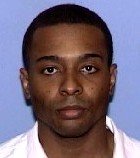
Vaughn Ross
Murderer Russell Ellwood
Murderer · USA · 1991
Russell Ellwood was a former taxi driver. Authorities suspected him of killing…
20 victims
Russell Ellwood
Murderer · USA · 1991
Russell Ellwood was a former taxi driver. Authorities suspected him of killing…
20 victims
 Robert Martines Perez
Murderer · USA · 1994
Name: Robert Martines Perez · Other name used in proceedings: Robert Martinez P…
15 victims
Robert Martines Perez
Murderer · USA · 1994
Name: Robert Martines Perez · Other name used in proceedings: Robert Martinez P…
15 victims
 Billy Frank Vickers
Murderer · USA · 1993
Billy Frank Vickers Vickers was executed by lethal injection in Texas on Januar…
14 victims
Billy Frank Vickers
Murderer · USA · 1993
Billy Frank Vickers Vickers was executed by lethal injection in Texas on Januar…
14 victims
 Kimber Edwards
Murderer · USA · 2000
Kimber Edwards was convicted of first-degree murder for hiring someone to kill…
1 victim
Kimber Edwards
Murderer · USA · 2000
Kimber Edwards was convicted of first-degree murder for hiring someone to kill…
1 victim
 Jade Olmstead
Murderer · USA · 2012
Jade Olmstead (also named Nichole “Jade” Olmstead) — charged and pleaded guilty…
1 victim
Jade Olmstead
Murderer · USA · 2012
Jade Olmstead (also named Nichole “Jade” Olmstead) — charged and pleaded guilty…
1 victim
 Dennis Skillicorn
Murderer · USA / Mexico · 1979
Dennis Skillicorn was sentenced to death for his role in the murder of Richard…
6 victims
Dennis Skillicorn
Murderer · USA / Mexico · 1979
Dennis Skillicorn was sentenced to death for his role in the murder of Richard…
6 victims
 Liz Carroll
Murderer · USA · 2006
Liz Carroll was sentenced to 54 years to life in prison on February 22, 2007. M…
1 victim
Liz Carroll
Murderer · USA · 2006
Liz Carroll was sentenced to 54 years to life in prison on February 22, 2007. M…
1 victim
- Gender
- male
- Country
- USA
- Location
- Lubbock County, Texas, USA
- Date of birth
- September 4, 1971
- Age at first offence
- 30
- Characteristics
- argument
- Victim profile
- Douglas Birdsall, 53, and Viola Ross McVade, 18 (his girlfriend’s sister)
- Method of murder
- Shooting
- Date(s) of murder
- January 31, 2001
- Years active
- 2001
- Date of arrest
- 4 days after
- Status
-
Executed
Sentenced to death on October 1, 2002; executed by lethal injection on July 18, 2013
Case overview
Vaughn Ross was convicted of capital murder in Texas for the deaths of Douglas Birdsall and Viola McVade, whose bodies were found inside Birdsall’s car in a ravine. Both victims had been shot numerous times and both died from gunshot wounds to the head.
Background
Vaughn Ross was born on 09/04/1971. He was Black, male, with black hair, brown eyes, and 5' 06" height; he weighed 150. He had 12 years of education. His occupation was architecture design and clerical work. His native county was Saint Louis, Missouri, and his race was listed as Black.
Ross had no prior prison record listed as “n/a.” His Texas no longer offers a special “last meal” to condemned inmates; instead, the inmate was offered the same meal served to the rest of the unit.
The case involved no co-defendants.
The offence
On 01/31/2001, Ross shot and killed an 18-year-old black female and a 53-year-old white male. The bodies of the victims were found in a car in a ravine.
The victims were identified as Douglas Birdsall and Viola McVade (also referred to as Viola Ross McVade and Viola Ross). Ross had no relation to Viola Ross.
The bodies were found inside Birdsall’s car in a ravine. Both had been shot numerous times and both had died from gunshot wounds to the head.
At a nearby scene connected to the murders, an alley behind Ross’s apartment was described as containing glass shards and two pools of blood. A shell casing recovered from the scene matched shell casings found inside Birdsall’s car.
Investigation
Police investigated a report of shots fired the night before to determine if there was a connection with the murders.
In an alley behind Vaughn Ross’s apartment, police discovered glass shards and two pools of blood. The larger pool of blood was consistent with Birdsall’s DNA profile.
A latex glove tip found inside Birdsall’s car was tested. Blood on the exterior of the glove tip was consistent with Birdsall’s DNA profile. The inside of the glove tip contained DNA consistent with Ross’s DNA.
Police then searched Ross’s apartment with his consent. They found a sweatshirt with a small bloodstain on it. They also found two latex gloves.
Ross stated that he wore latex gloves on the night of the murders because he was going to mop his kitchen floor using bleach.
The murder weapon was not found.
After his arrest, Ross spoke to his mother on a recorded telephone from the Lubbock County Jail. When she asked him whether he committed the crime, he responded that he “might have.”
Forensic testing showed that blood on the ground in the alley and on the sweatshirt matched Birdsall’s DNA. DNA samples found inside the sweatshirt and the glove tip found in Birdsall’s car matched Ross.
Police also found a link between Viola Ross and Birdsall. A mutual friend arranged for Viola Ross and Birdsall to meet, and the friend went riding with Viola Ross and Birdsall in Birdsall’s vehicle. After introducing the two, the friend was dropped off near 10th Street and Avenue U.
Arrest and police interviews
When Ross was interviewed by police on January 31, he admitted he was angry with Viola on the evening of January 30 and that he and Viola argued over the phone.
Police interviewed Ross again on February 2. In that interview, he admitted that he had argued with Viola and had threatened her.
Ross also admitted he had worn latex gloves that night because he was going to mop his kitchen floor and the bleach hurt his hands.
Evidence at the scene and in Ross’s apartment
Inside the car, police found shell casings, glass shards, and a fingertip piece of a latex glove.
Officers observed the victims for at least five minutes and saw no signs of life.
Blood was described as visible on various parts of Birdsall’s body. Viola Ross was described as found in the front passenger seat bent forward at the waist, with blood visible on the back of her jacket, and she had been shot three times in the head at close range.
Prosecution theory
The prosecution contended that Birdsall had been looking for a prostitute and that a friend of McVade introduced him to her that evening. McVade was the intended target, and Birdsall was at the wrong place at the wrong time.
Trial
Ross was convicted of capital murder. The jury answered affirmatively the special punishment issues on future dangerousness and whether Ross caused or anticipated the deaths of the victims, and answered negatively the special issue on mitigating circumstances. Accordingly, the trial court imposed the death sentence.
During the penalty phase, the State presented evidence that on August 9, 2001, during roll call at the Lubbock County Jail, Ross was not wearing his mandatory identification wristband. When asked about the band, Ross threw it into the aisle; the metal brads on the wristband had been altered and removed. When informed that the wristband would be confiscated, Ross became upset and began using profanity towards a jailer. The jailer wrote an incident report about Ross “kind of went crazy” after cursing at a detention officer.
Prior criminal history and probation evidence introduced at punishment
Evidence also showed Ross was placed on probation in Missouri on October 7, 1997, when he pled guilty to:
- a Class B felony for assault, and
- a Class C felony for stealing a motor vehicle.
The victim was Ross’s girlfriend, who was described as stalking him.
According to Ross, on July 13, 1997, the victim pulled out a butcher knife and attempted to stab him, but he took the knife and stabbed her. The victim received injuries described as a laceration to her right arm, stab wounds to her left thigh, nine cut-wounds, three stab wounds, several stitches, and a laceration to the left side of her neck that could have potentially been life-threatening.
The victim stated that Ross told her to give him her neck and that she was going to die. Ross also stole the victim’s car. Ross expressed no remorse for the crime and did not accept responsibility for the incident.
Defence and mitigation evidence at punishment
During the punishment phase, Ross presented testimony from multiple witnesses.
Felix Moore testified that he and Ross were fraternity brothers, that Ross studied architecture, and that Ross had paid for his education by working while attending school. Moore testified he had never seen Ross with a gun or knife and had never seen Ross upset, acting violently, or engaging in “gangster-type behavior.” Moore described Ross as a “peacemaker” and said Ross was “always pretty calm.” Moore said Ross drank alcohol but did not use drugs and had girlfriends.
Tanya Robertson testified for Ross at the punishment phase and described knowing Ross through her sorority and becoming roommates with Ross and Derald Powell. Robertson testified Ross was a diligent student and was not involved with drugs, did not engage in gangster behavior, and rarely drank alcohol. Robertson stated Ross had one girlfriend during the time Robertson was his roommate, and she described their relationship as loving. She described Ross as meek, humble, very calm, very polite, and very nice.
Ross’s mother, Johnnie Ross, testified at the punishment phase about Ross’s background, including that Ross had three sisters—Valeria, Tiffany, and Michelle—and last saw his father, Hershall Sumpton, when he was about eight years old. She testified there were no men living in their home when Ross lived there.
Johnnie Ross testified Ross was born with pneumonia and suffered from asthma. She described Ross’s schooling, church attendance, and that there were no guns in their home. She testified Ross was not familiar with weapons and did not hunt. She also testified Ross did not have trouble with the law as a juvenile, other than a single curfew violation, and did not get into trouble at school.
She testified Ross’s mother was not aware of any drug or alcohol use, Ross was not involved in any gang activity, and as a teenager Ross had a job at a country club. She described Ross as quiet, calm, and laid-back.
Johnnie Ross also testified Ross attended Central Missouri State College and received an Associate of Science degree and a Bachelor of Science degree. She testified that while in college Ross did not use drugs and drank alcohol only socially, and that he was active in his fraternity and president of his chapter during his senior year. After college, she testified Ross had jobs with several architectural firms.
She testified Ross was never in trouble with the law until the 1997 incident with his girlfriend, after which Ross went to Texas Tech to continue his education. She testified Ross paid for his education and did not have any mental problems. She also testified she did not know about Ross being in a car wreck in the 1990s.
After her testimony, defence counsel asked her if she wanted to say anything to the jury. Johnnie Ross lashed out at the jury and said:
“I get to tell these people that I think they have done a horrible job and that they have been unjust to me and my family and my son. I get to tell these people that I do not think you even considered or even tried to consider all the evidence that pointed toward this situation. I think you made your minds up from the beginning and you decided that because you saw, as they hollered and shouted at us, Vaughn Ross sitting there, Black, that that was it. And you made a decision right then and there. You didn't consider what you did to my family. I understand, and I am so sorry about the Birdsalls, about the Rosses, the McVades. But you didn't consider that my son was innocent. You didn't consider what it would do to my son's life or to my family's life. And if I appear angry, it's because I am. Because I don't think you gave him a chance. And I don't think you gave him a chance from the very beginning. ”
When defence counsel asked whether she wanted the jury to give her son a life sentence, she responded:
“No, I do not. That would be foolish for me to want that.”
When pressed, she said neither choice was good, but she “would prefer life over death.”
Specific punishment-phase witness and statements
During the penalty phase of Ross’s trial, the State presented evidence about Ross’s conduct while awaiting trial. A jailer testified Ross removed a mandatory identification wristband, discarded it during roll call, and began cursing him, leading to a disciplinary report because Ross “kind of went crazy.”
Appellate history
State direct appeal
In February 2001, Ross was indicted by a Lubbock County grand jury for capital murder. On September 23, 2002, Ross was convicted of capital murder. On September 27, 2002, Ross was sentenced to death after a separate hearing on punishment. On May 5, 2004, the Texas Court of Criminal Appeals affirmed Ross’s conviction and sentence.
Ross v. State, 133 S.W.3d 618 (Tex.Crim.App. 2004).
State habeas
On January 23, 2003, the Texas Court of Criminal Appeals denied Ross’s state habeas application. Later, state habeas procedural events included findings and conclusions and a remand.
On July 3, 2007, the trial court adopted the State’s proposed findings of fact and conclusions of law and recommended denial of relief: Ex parte Ross, No.2001–435,653–A.
On October 10, 2007, the Texas Court of Criminal Appeals granted a motion to remand and ordered the trial court to re-examine the findings in light of Ross’s proposed findings and conclusions: Ex Parte Ross, No. WR–60,294–01.
On January 23, 2008, the Texas Court of Criminal Appeals adopted the trial court’s findings and conclusions and denied relief: Ex Parte Vaughn Ross, No. WR–60,294–01, 2008 WL 217987 (Tex.Crim.App. January 23, 2008).
Federal habeas
On December 1, 2011, the federal district court denied habeas corpus relief.
Ross v. Thaler, 511 Fed.Appx. 293 (5th Cir. 2013).
On Feb. 5, 2013, the U.S. Court of Appeals Fifth Circuit denied Ross a certificate of appealability.
Claims raised and rulings in appellate proceedings
Ross raised multiple points of error on direct appeal.
The Texas Court of Criminal Appeals affirmed the judgment and overruled the claims, including challenges to evidentiary sufficiency and issues connected to the future-dangerousness special issue.
The Court of Criminal Appeals also addressed errors in the parole charge submitted at punishment, concluding the parole charge was erroneous but that Ross suffered no harm. It further overruled claims about the submission of certain parole charge language without his request, noting a written request was made for Article 37.071, ? 2(e)(2)(B), parole charge and there was no objection during the charge conference.
The Court of Criminal Appeals overruled a request to impeach Liza with polygraph evidence, including discussion that polygraph evidence is inadmissible for all purposes and that the record did not support the reliability arguments.
The Court of Criminal Appeals overruled a denial of a motion for psychiatric examination to determine competency after the guilty verdict, concluding the trial court denied the motion because it had personal observations and found Ross competent.
The Court of Criminal Appeals also overruled claims relating to denial of motions for continuance based on alleged pretrial discovery order violations.
The appellate court affirmed the judgment of the trial court and stated: “The judgment of the trial court is affirmed.”
Certificate of appealability in federal habeas
In federal habeas proceedings, Ross sought a certificate of appealability. The U.S. Court of Appeals stated it denied Ross’s request for a COA, stating Ross had failed to demonstrate a substantial showing of the denial of a constitutional right and/or that the issues were adequate to deserve encouragement to proceed further.
The federal appellate decision discussed that Ross did not argue to the district court that ineffective assistance of state habeas counsel excused the failure to produce trial counsel affidavits, and found the argument forfeited.
The decision further found reasonable jurists could not disagree with the district court’s application of Cullen v. Pinholster, and thus denied the COA.
Timeline
- 01/31/2001 — Ross shot and killed Douglas Birdsall and Viola McVade in Lubbock.
- 01/31/2001 — The bodies of Birdsall and McVade were found inside Birdsall’s car in a ravine; police investigated a report of shots fired the night before.
- 01/31/2001 — Ross was interviewed by police and admitted he was angry with Viola and that he and Viola argued over the phone.
- 02/02 — Police interviewed Ross again; he admitted he had argued with Viola and had threatened her and admitted he had worn latex gloves that night.
- 01/31 — Police searched Ross’s apartment with his consent and found a sweatshirt with a small bloodstain and two latex gloves.
- 09/23/2002 — Ross was convicted of capital murder.
- 09/27/2002 — Ross was sentenced to death after a separate hearing on punishment.
- 05/05/2004 — The Texas Court of Criminal Appeals affirmed Ross’s conviction and sentence.
- 12/01/2011 — The federal district court denied habeas corpus relief.
- 02/05/2013 — The U.S.
- 07/18/2013 — Ross was executed by lethal injection.
- 07/18/2013 — Ross pronounced dead at 6:38 p.m.
Execution and last statement
Ross was scheduled for execution after 6 p.m. on July 18, 2013, pursuant to a court order by Lubbock County's 137th District Court.
During his execution, the lethal dose of pentobarbital was added to the saline drip in his arms at 6:15 p.m., and Ross was visibly sedated. He was pronounced dead at 6:38 p.m.
Ross’s last hope for a reprieve faded at about 5:45 p.m., when the U.S. Supreme Court rejected his application for a stay.
Ross spoke immediately before execution and made the following final statement:
“Who are they? I know this is hard for y'all, but we are going to have to go through it. You know I don't fear death. I know we weren't expecting this, but this is what it is. We know the lies that were told against me in court. We know it's not true. I want y'all to be strong and keep going.”
Other details
Ross was described as having been on death row since October 2002.
The case described the victims’ ages as 53-year-old Douglas Birdsall and 18-year-old Viola McVade.
Texas Tech University dedicated a sculpture to Birdsall at the university library on September 25 titled “Windsong II,” created by Michael Masse and standing seven feet tall. During Birdsall’s tenure at the library, he created an Art in the Library Committee, recommended purchases, and donated artwork.
Lubbock Man Sentenced to Death for Murder of Texas Tech Librarian was dated September 30, 2002 in the text.
The article noted Birdsall’s brother Roger witnessed the execution through a barred death chamber window.
The text noted that the U.S. Supreme Court denied a final appeal roughly half an hour before Ross was taken from his holding cell at 6:03 p.m.
Birdsall’s son, Nathaniel, expressed views about the death penalty, stating:
“I am saddened that the loss of two lives will be needlessly compounded by the taking of a third,”
The record also contained that Matt Powell, the Lubbock County district attorney, said “a guy could never lie to his mama.”
The case record described Douglas Alan Feldman as set to die on July 31 and other executions scheduled in the year, including Michael John Yowell scheduled to die Oct. 9.
Spotted an error, or have more information about this case?