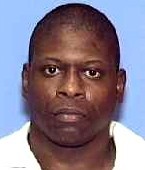
Rodney Reed
Murderer Russell Ellwood
Murderer · USA · 1991
Russell Ellwood was a former taxi driver. Authorities suspected him of killing…
20 victims
Russell Ellwood
Murderer · USA · 1991
Russell Ellwood was a former taxi driver. Authorities suspected him of killing…
20 victims
 Robert Martines Perez
Murderer · USA · 1994
Name: Robert Martines Perez · Other name used in proceedings: Robert Martinez P…
15 victims
Robert Martines Perez
Murderer · USA · 1994
Name: Robert Martines Perez · Other name used in proceedings: Robert Martinez P…
15 victims
 Billy Frank Vickers
Murderer · USA · 1993
Billy Frank Vickers Vickers was executed by lethal injection in Texas on Januar…
14 victims
Billy Frank Vickers
Murderer · USA · 1993
Billy Frank Vickers Vickers was executed by lethal injection in Texas on Januar…
14 victims
 Louisa Jane Taylor
Murderer · United Kingdom · 1882
Louisa Jane Taylor was widowed in 1882 and had a small pension to survive on. S…
1 victim
Louisa Jane Taylor
Murderer · United Kingdom · 1882
Louisa Jane Taylor was widowed in 1882 and had a small pension to survive on. S…
1 victim
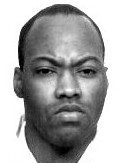 Clyde Smith
Murderer · USA · 1992
Clyde Smith was a Black male who was scheduled to be executed on February 15, 2…
2 victims
Clyde Smith
Murderer · USA · 1992
Clyde Smith was a Black male who was scheduled to be executed on February 15, 2…
2 victims
 Kürt Erich Tetzner
Murderer · Germany · 1929
Kürt Erich Tetzner (also known as Stranelli) was a German businessman born in 1…
1 victim
Kürt Erich Tetzner
Murderer · Germany · 1929
Kürt Erich Tetzner (also known as Stranelli) was a German businessman born in 1…
1 victim
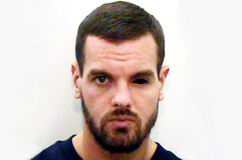 Dale Cregan
Murderer · United Kingdom · 2012
Dale Christopher Cregan (born 6 June 1983) was convicted in the United Kingdom…
4 victims
Dale Cregan
Murderer · United Kingdom · 2012
Dale Christopher Cregan (born 6 June 1983) was convicted in the United Kingdom…
4 victims
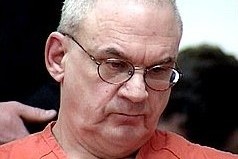 Fred Neulander
Murderer · USA · 1994
Fred Neulander was a rabbi who was convicted of arranging his wife’s murder. He…
1 victim
Fred Neulander
Murderer · USA · 1994
Fred Neulander was a rabbi who was convicted of arranging his wife’s murder. He…
1 victim
- Gender
- male
- Country
- USA
- Location
- Bastrop County, Texas, USA
- Date of birth
- December 22, 1967
- Age at first offence
- 29
- Characteristics
- rape
- Victim profile
- Stacey Stites, 20
- Method of murder
- Strangulation
- Date(s) of murder
- April 23, 1996
- Years active
- 1996
- Date of arrest
- —
- Status
-
Sentenced to death
Sentenced to death on May 29, 1998
Case details
Rodney Reed (TDCJ Number 999271) was born on 12/22/67 and was received into custody on 5/29/98 at the age of 30. His education level was 5/29/98 30 11 years. At the time of the offence he was 28. He was male, with black hair, and weighed 236 with a height of 6-2 and brown eyes. He was from Native County in Native State. His prior occupation was listed as Unknown and his prior prison record was None.
Reed was described as a Texas death row inmate and had been on Texas Death Row since 1998.
The offence
On April 23, 1996, during the nighttime, Reed strangled and killed a 20-year-old white female during an aggravated sexual assault. The victim was Stacey Stites. The body was found on the side of rural Bluebonnet Drive, off FM 1441 near Lake Bastrop. The offence was described as a murder during a rape that involved vaginal and anal rape allegations.
The prosecution theory stated that at some point on Stites' early morning drive to work, Reed accosted Stites, forced his way into her truck while apparently on foot and without the aid of any weapon, and raped and sodomized her before strangling her with the braided leather belt she was wearing, then dumping her body and abandoning the truck at the high school. The prosecution argued this was based on a single piece of evidence: a DNA match.
Stites was scheduled to work a 3:30am shift at the Bastrop HEB. Her body was found after her disappearance in the early afternoon, and it was stated that she was found at 3pm.
Investigation
Reed was identified by DNA taken from the crime scene. The case was described as relying on one piece of evidence: DNA found in a semen sample taken from Stacey’s body at the scene of the crime. It was stated that no other evidence connected Reed to the crime scene.
The documentation described additional forensic material and competing accounts, including a state police report analyzing DNA taken from two beer cans found near Stites' body. That report excluded Reed but pointed to two other men—police officers and friends of Fennell—and it was said the lab report was never provided to the Reed's defense prior to or during the trial.
It was also stated that there were no witnesses who could place Reed anywhere near the time and place of the crime scene, and that there was a lack of other physical evidence tying him to the crime scene. It was stated that there were at least two latent prints on the truck that were never matched to any suspects, and that a single hair found on Stites' back had never been matched to anyone, including Reed. No fingerprints were identified on either the murder weapon or on other pieces of evidence, including Stites' plastic HEB nametag found wedged between her knees.
A medical dispute about evidence and timing included testimony that the semen had been deposited recently, contradicting Reed's testimony that he had sex with Stites nearly 60 hours before the autopsy. Another dispute involved anal dilation and lacerations.
A medical custody and transport controversy was described: police reports said Stites' body was removed no later than 8:55pm on April 23, 1996, but Travis County Medical Examiner's records said the body was not checked into the Austin office until 11pm that night, with a stated expected trip time of no longer than 45 minutes. It was stated that photos at the ME’s office the next day did not coincide with crime scene photos, showing additional wounds, raising questions about chain of custody.
A discussion of nail evidence was also included: it was stated that Stites' fingernails were cut to the quick, roughly and not filed, and that Bayardo told investigators on April 24 that the nails were cut too closely to allow removal of any trace evidence.
Arrest and charges
Reed was arrested on April 4, 1997, and was charged with the rape and murder of Stites. It was stated that he was arrested a year after the murder. Reed was on death row thereafter.
Trial
In May 1998, Reed was tried on two counts of capital murder (it was stated as the first capital trial in Bastrop in nearly 50 years). A Bastrop County jury convicted Reed of the murder of Stacey Stites and he was sentenced to death.
The prosecution's case was described as arguing that the DNA was the crime's "Cinderella's slipper" and that the genetic profile could match only Reed. Special prosecutor Lisa Tanner of the Texas Attorney General's Office was said to have assisted Bastrop D.A. Charles Pennick's prosecution team and to have argued that the case was simple based on DNA.
Reed initially denied knowing Stites but then at trial said the two had been in a relationship. Reed claimed an affair with Stites and testified he had sex with Stites during the early hours of April 22, a full day before her murder. Reed's explanation of the DNA evidence was tied to this claimed relationship.
It was stated that Reed’s court-appointed attorneys did not call additional witnesses prepared to testify about a sexual relationship between Reed and Stites, and that there was a defense argument about interracial dating.
Trial statements and described quotations included:
- Reed's attorney Lydia Clay-Jackson told the jury: "There was interracial dating in this case," and also said: "and you will hear from people who will talk to you about the fact that there was a secret affair."
- Reed attorney Lydia Clay-Jackson told the jury: "There was interracial dating in this case," and also said: "and you will hear from people who will talk to you about the fact that there was a secret affair."
- Clay-Jackson said: "There was interracial dating in this case," and also pointed out the testimony of Jimmy Fennell as the sole evidence that Stites awakened and left for work.
- Clay-Jackson said: "Somebody's Got to Pay."
- Clay-Jackson stated: "One of the things that probably cinched the case was that ... blow-up," and added: "It was supposedly explanatory, but it was just the kind of picture where juries say, this is just so horrible -- somebody's got to pay."
- Clay-Jackson stated: "We spoke, my co-counsel or I spoke, with every single person they gave us as a witness, and it was a double-edged sword."
- Clay-Jackson said: "They would've brought them in ... under [something like] habit or proclivity to show that -- well, see? These bad acts are associated with him."
- Clay-Jackson asked in court: "Did you speak to friends of Jimmy Fennell concerning his whereabouts on the late night hours of April the 22nd or early morning hours of April the 23rd?"
- It was stated that Wardlow replied: "I can recall two or three, yes, ma'am," he said.
- Clay-Jackson stated about the threatened witnesses: "[And] the testimony was different from what she'd told our investigator. [And right] after the trial she was picked up for a DWI."
- One quote attributed to Reed’s first attorney Jimmy Brown included: "Either you're smart all the way through, or you're stupid all the way through, and Rodney's stupid all the way through,"
- Jimmy Brown said: "He didn't use a condom, but he carried nail clippers to cut the fingernails down to the quick?"
- Jimmy Brown also said: "My question to the state was, how is that? Why do you not consider him a suspect? There was no answer."
- Austin attorney Jimmy Brown said: "It was clear he'd failed the polygraph -- not once, but twice,"
- Jimmy Brown added: "My question to the state was, how is that? There was no answer."
- Wardlow was quoted as saying the four or five police interrogations of Fennell were "very adversarial."
- Reed was quoted describing his claimed relationship and final meeting: "Mom, I'm dating this girl and she's engaged to a cop,"
- Sandra Reed quoted her warning: "What?" and then said: "Rodney, if you should ever be caught with that girl, everything could happen to you."
- Sandra Reed said: "I don't want her over here."
- Reed quoted about sex: "We were at the park; we were kind of in between both [inside and outside the truck]. Yes, I had sex with her."
- Reed said: "She took a left and went her way, I went mine,"
- Reed stated: "That was the last time I saw her."
- Jordan Steiker was quoted: "At least you try to get that testimony in without the bad stuff first,"
- Jordan Steiker stated: "I would be skeptical of any decision not to."
- A related quote attributed to Clinton Van Zandt included: "It doesn't jibe for [Reed] to do that,"
- Clinton Van Zandt also stated: "If you try to remove [evidence] from one place and not the other. That's exactly the issue."
- Bryce Benjet was quoted: "Jimmy Fennell has been a sexual predator for years,"
- Bryce Benjet also stated: "What we have been asking for is a chance for a jury to hear all of the facts in this case."
- Fennell's lawyer Bob Phillips was quoted: "questionable in their reliability."
- TDS lawyer Bryce Benjet was quoted: "There was the myth of the liberal federal judge stepping in and stopping death penalty sentences based on moral objections."
- Benjet added: "It was a very state's-rights-based [change]."
- It was stated that Steiker said: "It's a victim's race that has the higher correlation -- prosecutors almost never seek the death penalty in the death of minorities,"
- Steiker added: "Especially in the South, [killing a white person] is treated as the greatest form of rebellion."
- Steiker said: "That's clearly a way in which race plays a role [in death penalty cases]."
- It was stated that Steiker said: "It's viewed as the deserved penalty for blacks who kill whites."
- It was stated that Fennell's lawyer Bob Phillips said: "questionable in their reliability."
- Another quote attributed to Phillips: "I think they had very little confidence in the reliability of these outcries."
Sentencing
Reed was sentenced to death on May 29, 1998.
Appeals
In October of 2005, the Texas Criminal Court of Appeals ordered the case back to the trial court to determine whether the prosecutor's improper conduct—the hiding of evidence that suggested Reed's innocence—violated Reed’s constitutional rights. The state was described as relying on the semen matched to Reed found in Stites’ body.
A March evidentiary hearing involved testimony from:
- Martha Barnett, who testified that she saw Stites and Fennell at a convenience store parking lot around 5 am and that they appeared to be arguing. It was stated that this placed Stites alive with her fiancé two hours after the prosecution’s theory held Reed killed her.
- Mary Blackwell, a police officer in the Dallas area, who testified she was in the same police academy class as Fennell. She stated that Fennell told several class members he would kill his girlfriend by strangling her if she ever cheated on him, and that he said he would use a belt so fingerprints could not be lifted from her neck. It was stated that Stites was found strangled with a belt, and that Blackwell testified she made this information known to the Bastrop County District Attorney’s office during Reed’s trial representation. The office denied knowing of the witnesses until after Reed’s conviction and sentencing.
It was also stated that Reed had a hearing to determine if he was eligible for a retrial and that the Texas Court of Criminal Appeals twice turned back bids by Reed for a new trial, with the latest appeal filed on Tuesday as described in the narrative.
The narrative also described new allegations of sexual misconduct against Jimmy Fennell in Reed's latest appeal. It was stated that Fennell was serving 10 years in prison for kidnapping and improper sexual activity with a person in custody. It was stated that allegations in the appeal included that Fennell forced a woman he met during a traffic stop in July 2007 to have sex with him, that Fennell abused his wife, and that he stalked a woman in Giddings in 1997. It was also stated that Fennell's criminal defense lawyer Bob Phillips called the additional accusations "questionable in their reliability." The narrative further described that the appeal included a vague account of a woman who said she may have seen Reed and Stites together before the killing.
A separate procedural appeal narrative described that in February of a year mentioned in the narrative, Reed’s state habeas appeal was denied because his court-appointed attorney Bill Barbisch failed to file the appeal by the legal deadline. Another narrative stated that in 2001, Bastrop District Judge Harold Townslee granted Reed an evidentiary hearing after DNA analysis was discovered by Reed himself as a newly provided document, but the court ruled it would not have created reasonable doubt.
Other details
Timeline and dated events
- 4/23/96 — Reed strangled and killed Stacey Stites during an aggravated sexual assault; the incident occurred at night.
- 4/24/96 — Travis County Medical Examiner Dr. Roberto Bayardo performed an autopsy on Stacey Stites (autopsy date stated as April 24, 1996 in one narrative).
- 3:30am shift at the Bastrop HEB — Stites was scheduled for a 3:30am shift (time tied to the named shift).
- 11pm — Travis County Medical Examiner records stated the body was not checked into the Austin office until 11pm on April 23, 1996.
- 8:55pm — Stites' body was removed from the crime scene no later than 8:55pm on April 23, 1996.
- 4/4/97 — Reed was arrested and charged with the rape and murder of Stites.
- May 1995 — DNA from a sexual assault case involving Caroline Rivas was referenced as collected and later matched to Reed’s DNA, with the case dropped after she declined to testify to a grand jury.
- May 1998 — Reed was tried on two counts of capital murder and was convicted and sentenced to death.
- 5/29/98 — Reed's record shows 5/29/98 with an age received value and it also aligns with sentencing to death on May 29, 1998.
- 10/2005 — The Texas Criminal Court of Appeals ordered the case back to the trial court.
- March — An evidentiary hearing occurred to determine eligibility for a retrial, with testimony from Martha Barnett and Mary Blackwell described.
- 2002 — The narrative described articles and quotes, including claims about medical evidence and trial events.
- April 24, 2009 — A narrative stated "New claims in Bastrop muder appeal" and described Reed's lawyers citing new allegations of sexual misconduct against Jimmy Fennel.
- 2001 — Bastrop District Judge Harold Townslee granted Reed an evidentiary hearing after the DNA analysis was discovered.
Victim and victim-related details
Stacey Stites was a 20-year-old white female and was described as having a 3:30am shift at the Bastrop HEB. Her mother was Carol Stites, who testified to aspects of the relationship with her fiancé Jimmy Fennell Jr. Stites' body was found on the side of rural Bluebonnet Drive, off FM 1441 near Lake Bastrop.
Stites was also stated to have been raped and strangled on April 23, 1996, before her 3:30 a.m. shift at a Bastrop H E B. It was stated that her body was found near Lake Bastrop.
Named individuals and roles mentioned
- Stacey Stites — victim.
- Rodney Reed — defendant.
- Jimmy Fennell Jr. — Stites' fiancé and described as a Giddings police officer at the time.
- Co-defendants — none were listed.
- DNA and medical witnesses included Travis County Medical Examiner Dr. Roberto Bayardo.
- Another described medical witness was Nueces County Medical Examiner Dr. Lloyd White.
- Special prosecutor Lisa Tanner — described as assisting Bastrop D.A. Charles Pennick's prosecution team.
- Charles Pennick — described as Bastrop D.A.
- Bryce Benjet — described as one of Reed's lawyers.
- Bob Phillips — described as Fennell's criminal defense lawyer.
- John Bradley — described as Williamson County District Attorney in the narrative.
- Williamson County sheriff's investigators and Texas Rangers — described as investigating.
- Judge Reva Towslee Corbett — described as Bastrop County Judge and as the daughter of the judge who presided over Reed’s original trial and conviction.
- Harold Townslee — described as Bastrop District Judge who granted an evidentiary hearing in 2001.
- Bill Barbisch — described as Reed’s court-appointed attorney who failed to file the appeal by a legal deadline.
- Ronnie Reveal — described as someone who told investigators in February 1997 about a conversation with Stites about her boyfriend having a violent temper.
- John Barton — described as a Bastrop Sheriff's investigator who wrote a report about Ronnie Reveal.
- Martha Barnett — described as a witness at the March evidentiary hearing.
- Mary Blackwell — described as a witness at the March evidentiary hearing.
- Lydia Clay-Jackson — described as one of Reed's attorneys.
- Calvin Garvie — described as Reed's co-counsel.
- Jimmy Brown — described as Reed’s attorney.
- Clinton Van Zandt — described as a former FBI profiler.
- Jordan Steiker — described as a UT law professor.
- Ed Salmela — described as a former Bastrop Police Officer and noted as now dead, apparently by suicide.
- David Hall — described as a former Giddings Police Officer and friend/neighbor of Fennell.
- Travis County Medical Examiner’s office — described via Dr. Bayardo and records.
- Dr. Roberto Bayardo — described as performing the autopsy and testifying.
- James Robertson — described as now in the navy and stationed overseas; he was described as a witness in an affidavit.
- Chris Aldridge — described as a cousin of Reed who said he could place Stites and Reed together and provide an alibi.
- Julia Estes — described as a local bar owner whose expected testimony was said to change.
- Sandra Reed — described as Reed's mother.
- Caroline Rivas — described as a former girlfriend of Reed in the 1995 sexual assault case.
- Aida Fennell — described as Fennell's wife.
Methods and evidence described
The victim was strangled with a belt and the prosecution theory included rape vaginally and anally with a braided leather belt. Reed’s identification in the case was based on DNA from a semen sample found in Stites' body. Additional disputed forensic evidence included semen evidence timing and conditions, anal dilation and lacerations, beer can DNA excluding Reed, and chain-of-custody disputes about the body’s transport and condition. Cut fingernails were described as being cut to the quick and not filed.
Publicity and support
Reed was described as being the subject of the documentary film State vs. Reed, produced by Frank Bustoz and Ryan Polomski. It was stated that publicity in the Austin Chronicle and efforts by groups including Amnesty International, Campaign to End the Death Penalty, and Texas Students Against the Death Penalty were associated with events including a hearing to determine eligibility for a retrial.
Statements about eligibility and decision-making
The narrative included that Reed had a hearing to determine if he was eligible for a retrial and that the Texas Court of Criminal Appeals ordered the case back in October 2005 to determine whether the prosecutor’s improper conduct violated constitutional rights. It also included that the Texas Court of Criminal Appeals twice turned back bids for a new trial.
Additional narrative content included in the record
The case narrative also addressed claims that prosecutors withheld evidence and that defense attorneys failed to call witnesses, as well as claims about witness intimidation and the interpretation of medical testimony. It also included discussion of race and death penalty statistics as described by Jordan Steiker and others in the narrative, along with statements that Reed had new court-appointed lawyers from the pro bono Texas Defender's Service preparing a federal habeas appeal.
Spotted an error, or have more information about this case?