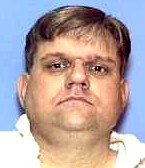
Coy Wesbrook
Mass murderer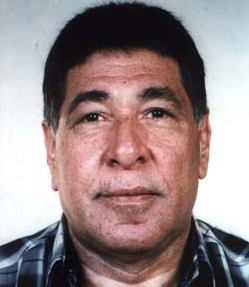 Gameel Al-Batouti
Mass murderer · USA · 1999
Gameel Al-Batouti (also rendered “Gamil ElBatouty” or “El Batouty” in U.S. offi…
216 victims
Gameel Al-Batouti
Mass murderer · USA · 1999
Gameel Al-Batouti (also rendered “Gamil ElBatouty” or “El Batouty” in U.S. offi…
216 victims
 Timothy McVeigh
Mass murderer · USA · 1995
Timothy James McVeigh (April 23, 1968 – June 11, 2001) was a United States Army…
168 victims
Timothy McVeigh
Mass murderer · USA · 1995
Timothy James McVeigh (April 23, 1968 – June 11, 2001) was a United States Army…
168 victims
 Julio Gonzalez
Mass murderer · USA · 1990
Julio Gonzalez was sentenced to 174 twenty-five-year sentences (a total of 4,35…
87 victims
Julio Gonzalez
Mass murderer · USA · 1990
Julio Gonzalez was sentenced to 174 twenty-five-year sentences (a total of 4,35…
87 victims
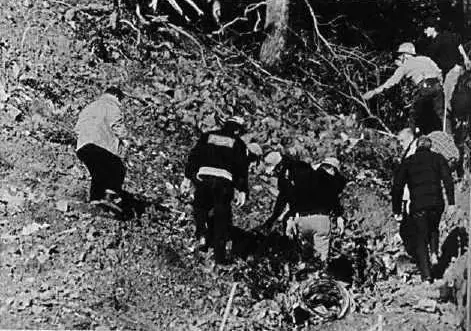 David Burke
Mass murderer · USA · 1987
David Augustus Burke (May 18, 1952–December 7, 1987) was an employee of USAir,…
43 victims
David Burke
Mass murderer · USA · 1987
David Augustus Burke (May 18, 1952–December 7, 1987) was an employee of USAir,…
43 victims
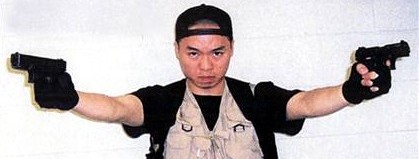 Seung-Hui Cho
Mass murderer · USA · 2007
Seung-Hui Cho was a mass murderer who shot and killed 32 people and wounded man…
32 victims
Seung-Hui Cho
Mass murderer · USA · 2007
Seung-Hui Cho was a mass murderer who shot and killed 32 people and wounded man…
32 victims
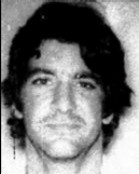 George Jo Hennard
Mass murderer · USA · 1991
George Jo Hennard carried out a mass killing at a Luby’s Cafeteria in Killeen,…
23 victims
George Jo Hennard
Mass murderer · USA · 1991
George Jo Hennard carried out a mass killing at a Luby’s Cafeteria in Killeen,…
23 victims
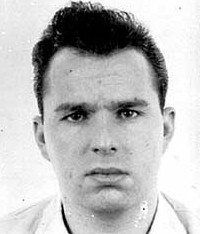 Gary Krist
Murderer ? · USA · 1959
Gary Krist Gary Steven Krist (born April 29, 1945) lived part of his childhood…
4 victims
Gary Krist
Murderer ? · USA · 1959
Gary Krist Gary Steven Krist (born April 29, 1945) lived part of his childhood…
4 victims
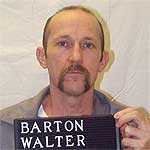 Walter Barton
Murderer · USA · 1991
State of Missouri, Respondent, v. Walter Barton, Appellant. The case was styled…
1 victim
Walter Barton
Murderer · USA · 1991
State of Missouri, Respondent, v. Walter Barton, Appellant. The case was styled…
1 victim
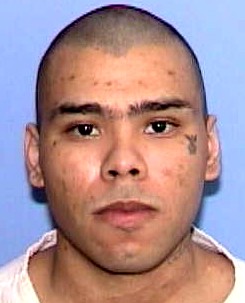 Ramiro Felix Gonzales
Murderer · USA · 2001
Name: Ramiro Felix Gonzales · TDCJ Number: 999513 · Date of Birth: 11/05/1982 ·…
1 victim
Ramiro Felix Gonzales
Murderer · USA · 2001
Name: Ramiro Felix Gonzales · TDCJ Number: 999513 · Date of Birth: 11/05/1982 ·…
1 victim
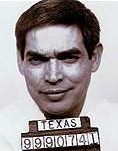 Juan Raul Garza
Murderer · USA / Mexico · 1990
Juan Raul Garza was executed by lethal injection by the U.S. Government at Indi…
8 victims
Juan Raul Garza
Murderer · USA / Mexico · 1990
Juan Raul Garza was executed by lethal injection by the U.S. Government at Indi…
8 victims
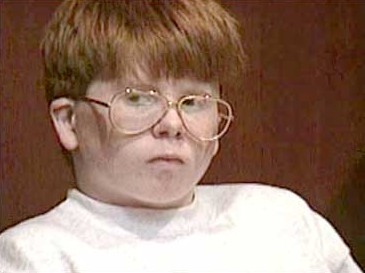 Eric Smith
Homicide · USA · 1993
Eric M. Smith was an incarcerated American criminal. Derrick Robie was a four-y…
1 victim
Eric Smith
Homicide · USA · 1993
Eric M. Smith was an incarcerated American criminal. Derrick Robie was a four-y…
1 victim
 Carlyle Harris
Murderer · USA · 1891
Carlyle Harris was executed by electrocution at Sing Sing Prison on May 7, 1893…
1 victim
Carlyle Harris
Murderer · USA · 1891
Carlyle Harris was executed by electrocution at Sing Sing Prison on May 7, 1893…
1 victim
- Gender
- male
- Country
- USA
- Location
- Houston, Texas, USA
- Date of birth
- February 1, 1958
- Age at first offence
- 39
- Characteristics
- —
- Victim profile
- His ex wife, Gloria Coons , 32 / Anthony Rogers / Antonio Cruz / Kelly Hazlip
- Method of murder
- Arma de fuego (.36-caliber hunting rifle)
- Date(s) of murder
- November 13, 1997
- Years active
- 1997
- Date of arrest
- Same day
- Status
-
Sentenced to death
Sentenced to death on September 2, 1998
Background
Coy Wayne Wesbrook was the appellant in a Texas capital murder case.
He had separated from his estranged wife, Gloria Coons. He arrived at Coons’s apartment believing the meeting was for a possible marital reconciliation.
Wesbrook also had a criminal-case history as described in the opinion: prior prison record none.
During the punishment proceedings, the trial court heard evidence and arguments that included an unadjudicated solicitation offense and other alleged “bad acts.”
The offence
Coy Wayne Wesbrook was charged by indictment for capital murder committed in Harris County on November 13, 1997. The indictment charged capital murder under Tex. Pen. Code § 19.03(a)(7).
Wesbrook’s case involved the deaths of five individuals inside and outside a downstairs apartment in a small complex in the eastern portion of Harris County, and one additional female injury that survived the shooting. The opinion described the victims as:
- A white female, Ruth Money, who was believed to have been shot first while on a couch.
- A second male found inside, Antonio Cruz, who was killed.
- A man found outside or inside, Anthony Rogers, who was killed.
- A last male victim, Kelly Hazlip, who was shot in the abdomen and survived for five days before dying.
- Wesbrook’s estranged wife, Gloria Coons, who died shortly after emergency personnel arrived.
- Another female was injured but survived the shooting.
Wesbrook’s lethal attack occurred after he discovered his estranged wife having sexual contact with two men in the bedroom. Wesbrook then went to his truck, retrieved a .36-caliber hunting rifle, returned to the residence, and fired.
The jury heard that five shots were heard within approximately forty seconds.
Sequence of events at the apartment
Wesbrook believed the group gathering at Coons’s residence involved possible reconciliation. He sat drinking with those present.
At some point in the evening, Wesbrook noticed that his ex-wife and two of the men slipped away. When he entered the bedroom, he found her having sex with both of the men. He then returned with a hunting rifle and began shooting at the residence.
Investigators believed the first victim shot was the female victim on the couch, Ruth Money. Investigators believed she sustained a single wound to her chest from a bullet fired in a downward trajectory that exited her lower back.
The second person shot was either Anthony Rogers, who was found outside, or Antonio Cruz, who was found inside kneeling next to a second couch. The opinion described how Rogers was shot: a bullet passed through his right arm, entered his chest, struck his right lung, and exited the body, with evidence indicating he was shot either just before he attempted to exit the apartment door or as he was exiting.
The opinion described how Cruz was killed: a bullet fired into his ear severed his spinal cord and exited the back of his neck.
The other two remaining victims were believed to have been shot in the apartment bedroom from a distance of approximately two to four feet.
The opinion described that Kelly Hazlip was shot in the abdomen from a distance of about two feet, survived for five days, and then died.
The opinion stated that Coons appears to have held her hand up in a defensive gesture just before Wesbrook fired. The hand suffered extensive damage as the bullet passed through. Bullet and bone fragments were blown back into her face, neck and the right half of her chest and shoulder.
Investigation and arrest
Around two o’clock in the morning on November 13, 1997, 9-1-1 operators in Harris County received several calls reporting gunshots from a downstairs apartment in a small complex in the eastern portion of the county.
Neighbors rushed outside, found one man lying on the ground, and saw Wesbrook armed with a hunting rifle exiting the apartment.
Neighbors described Wesbrook as calm as he walked to his truck, placed the gun inside the cab, and then stood by the tailgate waiting for sheriff’s deputies.
While he waited, Wesbrook was overheard making statements including:
- “I did it. I did it. Let’s get it over with,”
- “I did what I had to do.”
The first deputy on the scene found Wesbrook waiting patiently and also observed a male figure, obviously deceased, lying on the ground nearby. Wesbrook complied with law enforcement demands and was taken into custody.
When law enforcement looked inside the apartment, they found:
- the bodies of a woman lying on a couch,
- a man in a kneeling position on the floor next to a second couch,
- a fourth victim, still alive, lying on the floor.
When the deputy asked Wesbrook who was inside, Wesbrook replied: “My ex-wife, that’s who I came here to get.”
Stepping inside, the deputy found Wesbrook’s estranged wife in the bedroom. Wesbrook, handcuffed at that point, was questioned about the location of the gun. Wesbrook indicated with his head and said: “It’s in my truck.”
With Wesbrook’s consent, investigators searched the truck and recovered the weapon.
A search of the grounds outside the apartment turned up a live round consistent with the bullet used in Wesbrook’s rifle.
A firearms expert testified that Wesbrook’s gun was capable of holding five rounds, four in the magazine and one in the chamber.
The opinion included an account of a conflict about Wesbrook’s statement at an earlier point. Defense counsel pointed out on cross-examination that during an earlier hearing the sheriff’s deputy who testified about Wesbrook’s statement indicated that Wesbrook had replied, “My wife, that’s who I came here to see.”
The opinion also described that a neighbor testified that sometime during the evening Wesbrook’s truck was heard driving off and then returned about thirty minutes later. Wesbrook testified that he and Rogers left together to get more beer, and prosecutors presented an alternative argument that Wesbrook actually left alone in his truck to retrieve his rifle from home. Wesbrook denied this and claimed his rifle always remained in his truck.
The opinion stated that the truck’s keys were finally recovered from the sister of Antonio Cruz, and after Antonio Cruz’s autopsy the sister was allowed to retrieve his belongings and found them in the pocket of his pants.
Trial
Wesbrook was charged with capital murder committed on November 13, 1997 in Harris County.
Guilt/innocence
A verdict of guilty was returned by the jury.
The jury answered the special issues in such a manner that the trial court was obligated to impose a sentence of death. The opinion referenced Art. 37.071, § 2(b),(e) & (g).
Appellate issues addressed
The opinion addressed thirteen points of error. It stated:
- The court affirmed Wesbrook’s conviction and punishment.
- It overruled the points of error it addressed in the order in which they occurred at trial, including sufficiency challenges and instructional issues, as well as other asserted errors.
Points of error two and three: sufficiency
Wesbrook challenged legal sufficiency and factual sufficiency. In his second point of error, he argued the evidence used to establish conviction was legally insufficient because evidence established justification to use deadly force against Antonio Cruz under Tex. Pen. Code § 9.42.
The opinion stated the court disagreed and overruled the second point of error, explaining that even though the trial court decided enough evidence existed to warrant a jury instruction on justification to protect personal property, the evidence of justification was not so strong that it greatly preponderated against the jury’s finding of capital murder to render justification evidence legally insufficient.
In his third point of error, Wesbrook argued factual insufficiency to “establish that [he] intentionally and knowingly caused the death of Gloria Coons and Antonio Cruz.”
The opinion conducted a factual sufficiency review and overruled the third point of error. It described evidence supporting intent or knowledge, including that Wesbrook made sure his weapon was loaded to its maximum capacity, walked into a small apartment armed with a high-powered rifle, and from close range fired a single bullet into vulnerable regions of each of five individuals inside.
The opinion also described Wesbrook’s own testimony as the only contrary evidence about intent. The opinion stated that the jurors were free to place whatever value they wished upon Wesbrook’s testimony and that they apparently rejected his claim of no intent to kill.
The opinion noted the possible competing explanations presented as to motivation, including the rage he felt over his estranged wife’s promiscuity and the need to retrieve his property.
The opinion stated that Wesbrook afterwards stepped outside and proclaimed to the neighbors that he “did it.”
Points of error four and five: constitutional challenge to sudden passion instructions
Wesbrook argued the trial court erred in failing to declare the Texas Death Penalty statute unconstitutional on Eighth and Fourteenth Amendment grounds, including due process and equal protection, and cruel and unusual punishment.
He argued he was denied due process and equal protection and subjected to cruel and unusual punishment because he was prevented from submitting special instructions on “sudden passion” arising out of “adequate cause” at both guilt/innocence and punishment.
The opinion referenced Tex. Pen. Code § 19.02(a),(d). It also discussed that at the time of trial, the issue of sudden passion was solely a punishment issue to be determined only after conviction of murder, and that he could attempt to prove sudden passion at punishment only for murders committed after August 31, 1994.
The court overruled points of error four and five and concluded the trial court properly denied requests at both guilt/innocence and punishment.
The opinion also included an analysis of why it rejected the argument that sudden passion could include killing more than one person, stating that a commonsense reading of the definition of “sudden passion” described killing only one person because the provocation language is couched in singular terms. It stated: Appellant’s contention that the Legislature intended that the defense of “sudden passion” include the murder of more than one person has no merit.
Point of error ten: aggravated assault instruction
Wesbrook argued the trial court erroneously denied his requested jury instruction on the lesser-included offense of aggravated assault.
The opinion described that the evidence supporting an aggravated assault instruction came from Wesbrook’s own testimony, in which he admitted he fired the rifle but denied any intent to kill.
The opinion applied a two-prong test for lesser-included offense instructions and concluded the evidence did not show a rational alternative. It stated it was not evidence from which a jury could not rationally conclude he was at least guilty of homicide.
The opinion overruled the tenth point of error.
Point of error eleven: limiting instruction on extraneous offenses
Wesbrook argued the trial court erred by failing to submit a defense counsel requested limiting instruction regarding extraneous offenses introduced at the guilt/innocence stage.
The opinion stated Wesbrook had been indicted and stood trial for only the deaths of Gloria Coons and Antonio Cruz. Just before the jury began deliberations at the guilt/innocence stage, Wesbrook requested a limiting instruction regarding evidence concerning three other murders that occurred that night as extraneous offenses.
It included the colloquy verbatim:
TRIAL COURT: . . . Any other objections or requests? DEFENSE COUNSEL: Yes, Judge, if I may read into the record a request regarding extraneous offenses and a limiting instruction be given to the jury. We would ask that the Court charge the jury as follows. You are instructed that if there is any testimony before you in this case regarding the defendant having committed offenses other than the offense alleged against him in the indictment in this case, you cannot consider said testimony for any purpose unless you find and believe beyond a reasonable doubt that the defendant committed such other offense, if any were committed, and even then, you may only consider the same in determining the intent of the defendant, if any, in connection with the offense, if any, alleged against him in the indictment in this case and for no other purpose. In other words, judge, there has been testimony that there were killings of three other individuals not named in the indictment, and obviously that would be an extraneous offense or offenses. And we don’t want the jury being able to use that for any purpose other than which the law allows, which is the limiting instruction we’re requesting. TRIAL COURT: Are those the only three extraneouses? DEFENSE COUNSEL: I believe those are the only three. * * * * TRIAL COURT: All right. Mr. Rosenthal, your response? PROSECUTOR: I need to make a telephone call before I can respond to that, Your Honor. TRIAL COURT: My plan would be to overrule that, that request. If you - - if the State wants me to give that, if you want to join in that, I think they’re allowed to consider the totality of the circumstances in deciding and looking at all of those factors and deciding his intent and so forth, so I don’t think that’s a proper charge. If the State feels it’s more prudent to give it, I will give it. So, come back to me and let me know. But unless I hear from you otherwise, I’m going to overrule that request.
The opinion overruled the eleventh point of error, stating evidence of the three additional killings was same transaction contextual evidence admissible without a limiting instruction.
Point of error twelve: mistrial after prosecutor comment in closing argument
Wesbrook argued he was entitled to a mistrial after inappropriate comments by the prosecutor during closing argument referenced a statement he provided to police shortly after arrest but never admitted into evidence or shown to the jury.
The opinion quoted the prosecutor’s comment verbatim:
They know that the evidence is overwhelming. The defendant knows the evidence is overwhelming. His fingerprints is (sic) on the rifle, found in his truck, walking out of the residence with the rifle. He has to come up with some story, and he does, ladies and gentlemen. Two different stories. One to Detective Fikaris and one to you .
The opinion stated defense counsel immediately lodged a successful objection and asked for an instruction to disregard, which the judge complied with, but the judge refused the subsequent request for a mistrial.
The opinion overruled the twelfth point of error. It stated the prosecutor’s comment was inappropriate but concluded the harm did not warrant reversal given the instruction to disregard.
Point of error six: motion to suppress evidence and Sixth Amendment right to counsel
Wesbrook argued the trial court erroneously denied his motion to suppress evidence obtained in violation of his Sixth Amendment right to counsel.
The opinion described that, immediately prior to the punishment stage, counsel filed a motion to suppress certain evidence the State would use to establish future dangerousness. The opinion stated the evidence allegedly established an attempt to solicit the murder of various individuals, including witnesses at Wesbrook’s own trial.
The court held a hearing where two witnesses testified:
- a jailhouse informant identified as Phillip Jones,
- an investigator with the Harris County Sheriff’s office.
The opinion stated the trial court ultimately denied the motion to suppress.
On direct appeal, the opinion addressed this point and concluded a Sixth Amendment violation occurred and then conducted harmless error analysis. It concluded the error was harmless beyond a reasonable doubt and overruled the sixth point of error.
Jailhouse informant evidence
The opinion described Phillip Jones as an occupant of the Harris County Jail who became acquainted with Wesbrook in March of 1998, about three months prior to trial.
During numerous conversations, Wesbrook expressed a desire to hire someone willing to kill his first wife and her common-law husband.
Wesbrook was moved from general population to the infirmary due to health problems.
Jones contacted law enforcement agents through the local Crime Stoppers program and informed a detective from the Houston Police Department about Wesbrook’s hopes to arrange the murder of his first wife and her common-law husband, and offered his services to obtain more information.
In return, the State agreed to provide a good word on Jones’ behalf during the prosecution of pending charges.
The district attorney’s office and police investigators acted in concert to develop a plan to place Jones back with Wesbrook to elicit additional information. Jones was instructed to “arrange” a meeting between Wesbrook and Gary Johnson, an undercover investigator to pose as a hit man.
Jones was transferred to the section of the jail housing Wesbrook and was told to “get into a conversation” and “try to introduce Johnson as a hit man.”
Jones engaged in a conversation about the solicitation. Wesbrook reiterated the desire to have his first wife and her husband killed and added five other individuals to the list, including four witnesses who had testified or were going to testify against him at the guilt/innocence stage of trial.
Wesbrook provided Jones a list of names of those he wanted “taken out” and the type of car each person drove.
Jones managed to contact Johnson over the phone as the “hit-man.” Wesbrook got on the line and talked at length about his desire to have these individuals killed.
The next day, Wesbrook was placed in contact with Johnson again and called off the arrangement, saying he was afraid the conversations were being tape recorded by jailers.
Detective testimony and constitutional analysis
Harry Fikaris, a Harris County detective, testified that Phillip Jones, as an informant, was “working for [him] and the State of Texas in this matter,” and that the objective was to obtain evidence for a solicitation of murder case.
The opinion included Fikaris’s admission that: “There [was] no question in [his] mind” that the information and evidence obtained would be used against Wesbrook during the prosecution of the capital murder case.
The opinion then discussed the Sixth Amendment right to counsel as offense-specific and the circumstances under which the right attaches, including post-indictment interrogations.
It concluded that the State violated Wesbrook’s Sixth Amendment right to counsel by intentionally creating a situation likely to induce incriminating statements without counsel present for the capital murder offense.
The opinion described the reasoning that the informant was not passive but acted based on instructions to deliberately elicit information, and that evidence obtained in violation of the Sixth Amendment was inadmissible at Wesbrook’s capital murder trial.
It further stated that evidence of solicitation obtained before Jones became a state agent could be used at any future punishment proceedings concerning the capital murder offense.
Harmless error finding
The opinion found the punishment error was harmless beyond a reasonable doubt, reasoning that the jury had the crime facts and validly possessed a critical indicator of future dangerousness from Jones’s testimony prior to state agency concerns.
It stated there was no reasonable likelihood that the inadmissible portion of Jones’s testimony moved the jury from nonpersuasion to persuasion on future dangerousness.
Sentencing
The jury’s answers to special issues required the trial court to impose a sentence of death.
Wesbrook was sentenced to death on September 2, 1998.
Appeals
Wesbrook’s direct appeal to the Texas Court of Criminal Appeals was automatic under Article 37.071, § 2(h).
The Texas Court of Criminal Appeals’ panel composition in the opinion was:
- Mansfield, J., delivered an opinion announcing the judgment,
- Keasler, J., joined,
- Meyers, J., delivered an opinion that concurred as to point of error two and otherwise joined,
- Keller, J., concurred as to point of error six,
- McCormick, P.J., joined the opinion of Keller,
- Womack, J., dissented with an opinion, with Price, Holland, & Johnson, JJ., joined.
Other points of error addressed (summary of outcomes)
- Point of error one: the opinion overruled Wesbrook’s claim that the assigned judge who ruled on a motion to recuse trial judge Jan Krocker abused discretion in denying recusal.
- Point of error seven: the opinion overruled Wesbrook’s claim he was entitled to an Article 38.23 jury instruction at punishment.
- Points of error eight and nine: the opinion overruled issues regarding examination of potential jurors on parole and denial of a requested jury instruction on parole eligibility, stating it had addressed these in past cases.
- Point of error thirteen: the opinion overruled Wesbrook’s claim the trial court failed to submit a renunciation instruction at punishment under Tex. Pen. Code § 15.04.
Aftermath
The opinion delivered:
- DELIVERED: September 20, 2000
The court concluded:
- Finding no reversible error, the judgment of the trial court was affirmed.
Other details
Identity and record details
The opinion included the following biographical and case-processing details:
- TDCJ Number: 999281
- Date of Birth: 2/1/58
- Date Received: 9/2/98
- Age (when Received): 40
- Education Level: 8 years
- Date of Offense: 11/13/97
- Age (at the Offense): 39
- County: Harris
- Race: Harris (as written in the record)
- Gender: Male
- Hair Color: Brown
- Height: 5-10
- Weight: 296
- Eye Color: Brown
- Native County: Native
- State: Texas
- Prior Occupation: Unknown
- Prior Prison Record: None
Victim identities and categories
The opinion described the victims by identity where named:
- Gloria Coons (estranged wife; one of the victims; noted in a footnote as appellant’s second wife)
- Ruth Money (female on the couch believed shot first)
- Antonio Cruz
- Anthony Rogers
- Kelly Hazlip
- A female injured but survived the shooting
- A fifth person, the woman’s 28-year-old boyfriend, was critically wounded (described in the case summary portion)
Details about defense narrative
Wesbrook testified on his own behalf.
He told the jury he and his estranged wife Gloria Coons had separated, and he arrived after she had given indications of reconciliation. He claimed he was uncomfortable but agreed to sit and drink.
Wesbrook testified that the group eventually turned to sexual conversation and culminated with Coons walking into her bedroom with Hazlip. A short time later, Coons reappeared with Rogers, whose pants were unzipped, and announced she had just provided Rogers with oral sex and was about to have sex with Hazlip while Hazlip remained in the bedroom.
Wesbrook testified that he was humiliated, left the apartment to get in his truck and leave, and Antonio Cruz followed, briefly talked with Wesbrook, and eventually grabbed the truck’s keys as Wesbrook tried to start the vehicle. Cruz kept the keys and reentered the apartment.
Wesbrook testified that he grabbed his hunting rifle and followed to get the keys back. He claimed he was verbally harassed, threatened, and physically abused by those present. He testified Ruth Money threw a beer at him, and he fired the gun at her in response. He testified Rogers and Cruz rushed toward him and he shot both men, and then he entered the bedroom, saw Coons and Hazlip still having sex, and shot both.
Wesbrook testified that he “lost it” and had no intention of killing any of the people inside that apartment.
Additional procedural details included in the opinion
The opinion stated:
- Defense counsel attempted to file an extraneous offenses limiting instruction at guilt/innocence stage just before deliberations, and the trial court planned to overrule it.
- During closing argument, the prosecutor’s comment was quickly followed by an instruction to disregard from the trial court, which the appellate opinion presumed was complied with by the jury.
- The opinion discussed the denial of an instruction on sudden passion in both guilt/innocence and punishment and concluded it was constitutionally permissible under the legislature’s framework for capital murder sentencing.
- The opinion addressed the denial of a jury instruction on aggravated assault, finding the evidence supported intent or knowledge.
- The opinion addressed the denial of a parole-related voir dire and jury instruction based on prior cases and declined to revisit those issues.
- The opinion addressed renunciation and concluded there was no evidence supporting it because Wesbrook called off the arrangement only due to fear conversations were susceptible to electronic eavesdropping and he did not take affirmative action to prevent the commission of the object offense.
Spotted an error, or have more information about this case?