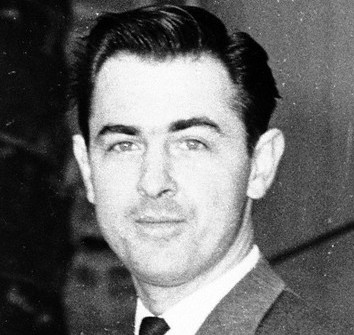
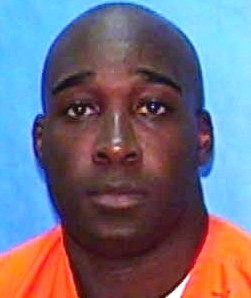
Melvin Rees
Serial killer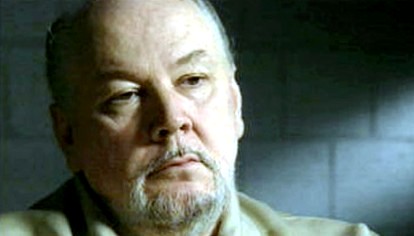 Richard Kuklinski
Serial killer · USA · 1949
Richard “Iceman” Kuklinski was sentenced to life in prison in 1988. He died in…
100 victims
Richard Kuklinski
Serial killer · USA · 1949
Richard “Iceman” Kuklinski was sentenced to life in prison in 1988. He died in…
100 victims
 Ottis Toole
Serial killer · USA · 1961
Ottis Elwood Toole (sometimes misspelled as “Otis”) was an American serial kill…
65 victims
Ottis Toole
Serial killer · USA · 1961
Ottis Elwood Toole (sometimes misspelled as “Otis”) was an American serial kill…
65 victims
 Juan Vallejo Corona
Serial killer · USA · 1960
Juan Vallejo Corona was a native of Mexico, born in 1934. He moved to Yuba City…
25 victims
Juan Vallejo Corona
Serial killer · USA · 1960
Juan Vallejo Corona was a native of Mexico, born in 1934. He moved to Yuba City…
25 victims
 Raymond Fernandez
Serial killer · USA · 1947
Raymond Martinez Fernandez was executed by electrocution at Sing Sing prison in…
17 victims
Raymond Fernandez
Serial killer · USA · 1947
Raymond Martinez Fernandez was executed by electrocution at Sing Sing prison in…
17 victims
 Carroll Edward Cole
Serial killer · USA · 1948
Carroll Edward Cole, also known as “Eddie,” was born in Sioux City, Iowa on May…
15 victims
Carroll Edward Cole
Serial killer · USA · 1948
Carroll Edward Cole, also known as “Eddie,” was born in Sioux City, Iowa on May…
15 victims
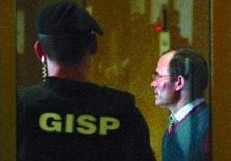 António Luís Costa
Serial killer · Portugal · 2005
24 June 2006 — António Luís Costa was arrested by the Polícia Judiciária. · 4 J…
3 victims
António Luís Costa
Serial killer · Portugal · 2005
24 June 2006 — António Luís Costa was arrested by the Polícia Judiciária. · 4 J…
3 victims
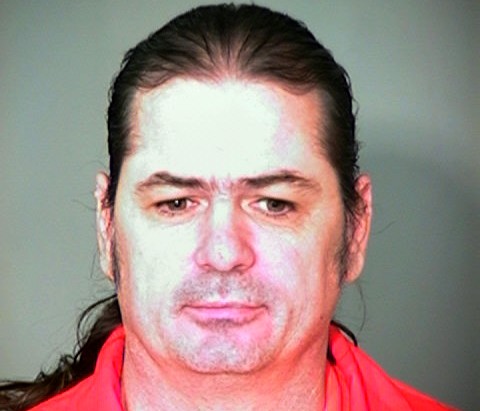 Barry Lee Jones
Murderer · USA · 1994
Barry Lee Jones was charged by the State with sexual assault, three counts of c…
1 victim
Barry Lee Jones
Murderer · USA · 1994
Barry Lee Jones was charged by the State with sexual assault, three counts of c…
1 victim
 John Lawrence Miller
Homicide - Murderer · USA · 1957
John Lawrence Miller was born about 1942 and was a native of Los Angeles. He wa…
3 victims
John Lawrence Miller
Homicide - Murderer · USA · 1957
John Lawrence Miller was born about 1942 and was a native of Los Angeles. He wa…
3 victims
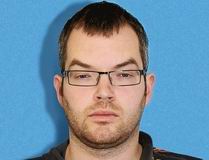 Vincent Tabak
Murderer · United Kingdom · 2010
Vincent Tabak was a Dutch engineer who lived and worked in the United Kingdom s…
1 victim
Vincent Tabak
Murderer · United Kingdom · 2010
Vincent Tabak was a Dutch engineer who lived and worked in the United Kingdom s…
1 victim
 Udo Proksch
Mass murderer · Indian Ocean · 1977
Udo Proksch was an Austrian businessman and industrialist. He was convicted of…
6 victims
Udo Proksch
Mass murderer · Indian Ocean · 1977
Udo Proksch was an Austrian businessman and industrialist. He was convicted of…
6 victims
- Gender
- male
- Country
- USA
- Location
- Maryland/Virginia, USA
- Date of birth
- 19 28
- Characteristics
- rape
- Victim profile
- Margaret Harold / Carroll Jackson, his wife Mildred, and their two daughters, Susan, aged four, and Janet, aged eighteen months
- Method of murder
- Shooting - Beating - Suffocation - Strangulation
- Date(s) of murder
- June 26, 1957 / January 11, 1959
- Years active
- 1957–1959
- Date of arrest
- June 24, 1960
- Status
-
Died in custody
Died in prison in 1995
Case identification
Melvin David Rees, also known as the “Sex Beast”, was convicted and sentenced for the murder of Carroll Vernon Jackson, Jr., along with the murder of Mildred Jackson and their two infant children.
STATUS and sentence history
He was sentenced to life in prison in Maryland in 1961 and sentenced to death in Virginia in 1961. His death sentence was commuted to life in prison in 1972. He died in prison in 1995.
Timeline
- June 26, 1957 — Margaret Harold was shot and later sexually assaulted after being killed during a highway encounter near Annapolis, Maryland.
- January 11, 1959 — The Jackson family—Carroll Jackson, his wife Mildred, and their infant daughters Susan and baby Janet—disappeared after visiting relatives in the Apple Grove area.
- March 4, 1959 — The bodies of Carroll Jackson and the baby were found in adjoining Spotsylvania County; Carroll Jackson was shot through the head and the infant had expired from head blows.
- March 21, 1959 — The bodies of Mildred Jackson and Susan were found buried in Maryland.
- June 24, 1960 — Rees was arrested in West Memphis, Arkansas by agents of the Federal Bureau of Investigation for unlawful flight to avoid prosecution for another murder in Maryland.
- February 1, 1965 — The U.S. Court of Appeals for the Fourth Circuit, sitting en banc, affirmed the discharge of the habeas corpus writ.
- 1972 — The death sentence was commuted to life in prison.
- 1995 — Rees died in prison.
Background
Rees was known as a jazz musician in the Washington, D.C. area.
During the early 1950s, he attended the University of Maryland in College Park, outside of Washington, D.C. Classmates later recalled him as a talented musician with skill with the saxophone, piano, and clarinet. He dropped out before graduating to pursue a musical career and traveled around the D.C. area, playing jazz at local nightclubs.
In 1955, Rees was arrested on charges of assaulting an unidentified thirty-six-year-old woman. He had tried to forcibly place her in his car, but she escaped. The victim did not press charges and the case against Rees was dropped. Friends dismissed the incident until after Rees’s killing spree began.
The offences
Margaret Harold killing and sexual assault
On June 26, 1957, Margaret Harold was in a car with her boyfriend, a U.S. Army sergeant on weekend leave, near Annapolis, Maryland. Rees, driving a green Chrysler, forced them off the road. After exiting the vehicle, Rees gestured for the couple to roll down their car window and displayed a gun. After being refused demands for cigarettes and money, Rees shot Harold point-blank in the face, killing her.
The sergeant fled and ran across several rural fields before reaching a farmhouse where he called police. When officers arrived, they found that Rees had removed the deceased Harold’s clothing and sexually assaulted her after she died, leaving her exposed in the car.
Investigators found an abandoned cinder block-constructed building with a broken basement window not far from the scene of the murder. Inside, investigators discovered violent pornographic images and autopsy photos of female corpses taped all over the walls. They also discovered a yearbook photo of Wanda Tipton. Police contacted and questioned Tipton, who denied knowing a tall, dark-haired man described by the soldier as Harold’s killer. Forensic science in 1957 was described as primitive, and Harold’s murder became a cold case until Rees killed again two years later.
Jackson family disappearance and murders
On January 11, 1959, Carroll Jackson and his wife Mildred, and their infant daughters Janet and Susan, disappeared after visiting relatives in the Apple Grove area.
A female relative driving home from the same Apple Grove reunion came across Carroll Jackson’s abandoned car on the side of the road. The relative called police. Police inspected the car and found no indications of any struggle. A massive search effort to locate the missing family was unsuccessful.
Almost two months later, on March 4, two men gathering brush near Fredericksburg discovered the decomposing body of Carroll Jackson in a ditch in adjoining Spotsylvania County. He had been shot in the back of the head. His hands were tied behind his back. After recovering the body, police discovered that Carroll had been dumped over the eighteen-month-old Janet Jackson; it was later determined that Janet had been dumped alive in the ditch before her father and had suffocated under the weight of his body.
On March 21, the bodies of Mildred and five-year-old Susan were discovered in a forest near Fredericksburg, Maryland. They showed signs of torture and pre-mortem sexual assault.
Investigation and manhunt
Soon after the Jackson family disappeared, a local couple reported a frightening experience with a tall, dark-haired man. The man had driven behind and around them in a blue older-model Chevrolet, flashing headlights and forcing them off the road. The man later got out and menacingly approached the couple; the couple reversed and managed to flee.
After Mildred and Susan Jackson’s bodies were found, detectives discovered an abandoned building near their dump site—reported as the same cinderblock structure searched after Margaret Harold’s killing. Inside, detectives found a red button missing from Mildred’s dress, indicating she had been taken there after being kidnapped. Near the building were fresh tire marks.
Investigators found points of comparison between the Harold and Jackson cases, including the general area of the murders and the brutal sadism of the crimes. They determined both homicides were committed by the same culprit.
The murder investigation became a media sensation. Self-proclaimed psychic Peter Hurkos visited the gravesite of the Jacksons in Falls Church, Virginia and handled their possessions. He allegedly used his powers to accurately describe the murders and the positions in which their bodies were found. Hurkos also visited the site of the Margaret Harold murder and told investigators that the same killer had murdered the Jacksons. Hurkos predicted the case would be solved within two weeks and that the killer would ultimately be indicted for nine murders. Authorities ridiculed Hurkos and his claims, and the Washington Post ridiculed him.
An anonymous source later identified as Glenn Moser of Norfolk, Virginia, sent a letter to Fredericksburg authorities suggesting they look into Rees. Moser said he and Rees had engaged in heady philosophical conversations about whether murder could be acceptable. Rees, under the influence of benzedrine, confided that he considered murder “just another part of the ‘human experience’ that he eagerly wanted to take part in.” Moser reported Rees as saying: “You can't say it's wrong to kill. Only individual standards make it right or wrong.” The discussion took place the day before the Jacksons disappeared. After the Jacksons’ murders, Moser suspected Rees of killing the family. Moser confronted Rees; Rees did not confess but did not deny responsibility and became evasive.
In the anonymous letter, Moser also voiced suspicion about Rees in Margaret Harold’s murder in 1957, saying the two men were working in the Annapolis area as salesmen at the time. Authorities decided to follow the lead and question Rees but found he had moved out of his house and left no forwarding address. Police searched for Rees at jazz clubs where he was known to have performed but were unable to locate him.
A background check revealed Rees had attended the University of Maryland and dated Wanda Tipton, a person of interest in the Margaret Harold investigation. Police questioned Tipton, who admitted having a relationship with Rees but said she broke it off after Rees claimed to be married.
Arrest
Rees was arrested in West Memphis, Arkansas by agents of the Federal Bureau of Investigation on June 24, 1960 for unlawful flight to avoid prosecution for another murder in Maryland. FBI agents went to the home of Rees’s parents in Hyattsville, Maryland. The agents were sent to inform the parents before news reporters reached them, locate the Jackson murder pistol believed to match plastic grips found near Carroll Jackson’s body, obtain additional specified evidence connected with the Jackson and other homicides suspected, and check Rees’s activities near where his parents lived. Rees was known to sleep at the house on occasion.
Trial (Maryland)
Rees was convicted in Maryland for kidnapping of the murder victim’s wife and sentenced to life imprisonment; no appeal was taken in that matter.
He was tried in Maryland for the murder of Margaret Harold in Baltimore in February 1961. The former boyfriend testified and identified him as the man who had approached and shot Margaret Harold. The gun found in Rees’s possession proved to be a match to the bullet that had killed her. Rees was convicted and sentenced to life in prison.
Trial (Virginia)
Rees was tried in Virginia for the first-degree murders of the Jackson family in September 1961 in Spotsylvania County. He was convicted and sentenced to death.
Evidence and legal issues raised on habeas corpus
Rees appealed his Virginia conviction and death sentence via habeas corpus. The Fourth Circuit described his habeas corpus attack as challenging, as unconstitutional, his trial, conviction, and sentence of death in a Virginia court for the murder of Carroll Vernon Jackson, Jr.
The Fourth Circuit noted incursions upon fundamental privileges as charged by Rees, including:
- Admission in evidence of a pistol seized in an illegal search
- Refusal of a change of venue or venire
- Imprisonment during trial in Richmond, 50 miles away, rather than in the jail of Fredericksburg, about 6 miles from the place of trial
- Refusal to interrogate trial jurors about their impressions by or indifference to publicity during the trial relating to the crime.
The Fourth Circuit also described prior conviction: before the Virginia trial, Rees had been convicted in the Federal District Court of Maryland for kidnapping of the murder victim’s wife and sentenced to life imprisonment.
Summary of the murders as recited in the appeal
The Fourth Circuit stated that Carroll Jackson, his wife Mildred, and their two infant children, Susan and baby Janet, left Carroll Jackson’s mother-in-law’s home in Louisa County, Virginia during the late evening of January 11, 1959, driving to their own house in Louisa County. Next morning the car was found midway to their destination on the side of the highway and unoccupied. About two months later, March 4, the bodies of Carroll Jackson and the baby were found in adjoining Spotsylvania County. The infant had expired from head blows. Carroll Jackson had been severely beaten in like manner and fatally shot through the head. The wound was opined by the Medical Examiner of Virginia as coming from a .38 caliber bullet. Near his body were his broken eyeglasses and a pair of plastic gun grips.
Afterwards, on March 21, 1959, the bodies of Mildred Jackson and her other daughter Susan were found buried in Maryland. The Fourth Circuit described both as having been cruelly clubbed about the head and apparently dying from aspiration of blood.
The Fourth Circuit described arrest details: Rees was arrested in West Memphis, Arkansas on June 24, 1960, for unlawful flight to avoid prosecution; his movements on the day of the Jackson tragedy placed him in Spotsylvania County. FBI agents went to the home of Rees’s parents in Hyattsville, Maryland, not far from where bodies had been unearthed, because Rees was known to sleep at the house on occasion. The revolver was found in their residence. The Fourth Circuit stated that the search and seizure and introduction of the pistol in evidence were the “primary and principal violation” pleaded by Rees.
Search and seizure consent dispute
The Fourth Circuit stated that the search and seizure did not violate the Fourth Amendment as applied to state prosecutions. It stated that both parents consented to the search of the premises, with the husband signing formal authorization and the wife giving oral approval. It described Rees’s contention that consent was vitiated through coercion of his parents and addressed the timing of the agents’ visit on June 24, 1960.
Agents reached the home about 3:30 in the afternoon, found no one, waited in a neighboring home, and the father returned at four o’clock. The father was invited into the neighbor’s house; the agents had already informed her of the arrest. When the father later joined, the agents sought consent to search and to ask about the whereabouts of Rees on certain days. The father signed a form prepared at the time stating consent without threats or promises of any kind.
The Fourth Circuit quoted the written permission:
“I, Melvin Davis Rees, Sr., having been informed of my Constitutional right not to have a search made of the premises hereinafter mentioned without a search warrant, and of my right to refuse to consent to such a search, hereby authorize James W. Sibert and Thomas J. Fynee, Jr., Special Agents of the F.B.I., U.S. Department of Justice, to conduct a complete search in my residence located at 3908 Madison Street, Hyattsville, Maryland. These agents are authorized by me to take from my residence any letters, papers, materials, or other property which they may desire. This written permission is being given by me to the above named Special Agents, voluntarily and without threats or promises of any kind.”
During the search, agents went into the attic and found a removable section leading to a crawl space, where an accordion case was located. The accordion case was locked with a padlock and hasp and had a tag bearing the name, address, and telephone number of Dennis J. Werber. The father had no knowledge of its existence or ownership and could not identify it as belonging to Rees. The father assented to its forcible opening. In it, the Fourth Circuit stated that the pistol was found. The Fourth Circuit also described obscene drawings and newspaper pictures of the Jacksons, and an account in the younger Rees’s handwriting of killing Mildred Jackson and daughter Susan and molestation of the former.
The Fourth Circuit stated that the revolver proved to be the gun matching the plastic grips, and blood stains were revealed on the butt. It also stated that none of the papers were admitted in evidence upon objection.
The Fourth Circuit stated it agreed with the District Court’s approval of the opening of the accordion case, and that the tag attributed ownership to Dennis J. Werber. It described Rees as only an occasional visitor at the house, and his concurrence in the search as unnecessary. It also stated the search for specific articles was reasonable and without legal infirmity.
Trial publicity and venue/venire change
The Fourth Circuit addressed denial of a venue or venire change. It acknowledged publicity disseminated throughout the county of trial by press, television, and broadcast. It found the publicity did not rob Rees of a fair trial. It noted that the Jacksons disappeared on the night of January 11, 1959, bodies were discovered in March, and the pistol and indecent written material were not found until June 1960. It also described the federal kidnapping prosecution taking place in Baltimore in March 1961, which the Fourth Circuit said was more than two years after the crime. The Virginia trial began in September 1961.
The Fourth Circuit stated that the trial judge confined potentially injurious publicity and that Rees’s written description of the Maryland crime labeled “Death Diary” in the news was never divulged in either trial. It stated that a venue or venire change in Virginia would not have helped because the same broadcasts extended over the state generally. It described the voir dire as rigorous and searching.
The Fourth Circuit quoted Justice Clark from Irvin v. Dowd:
“It is not required, however, that the jurors be totally ignorant of the facts and issues involved. In these days of swift, widespread and diverse methods of communication, an important case can be expected to arouse the interest of the public in the vicinity, and scarcely any of those best qualified to serve as jurors will not have formed some impression or opinion as to the merits of the case. This is particularly true in criminal cases. To hold that the mere existence of any preconceived notion as to the guilt or innocence of an accused, without more, is sufficient to rebut the presumption of a prospective juror's impartiality would be to establish an impossible standard. It is sufficient if the juror can lay aside his impression or opinion and render a verdict based on the evidence presented in court. * * *”
The Fourth Circuit also stated there was no evidence of mass prejudice against Rees, mob action, threats, inflammatory newspaper editorials or interviews, provocative radio or television commentaries, or a predominant belief in the county that Rees was guilty. It concluded that Rees’s insulation from unfairness due to the pervasive news of the crimes was constitutionally adequate.
Location of confinement during trial
The Fourth Circuit found no prejudice from incarcerating Rees during trial in Richmond instead of a county or city jail closer to the trial courtroom. It described Rees as under two life sentences passed by the Federal court in Baltimore, with custody of the Attorney General of the United States, made available to the State for trial. It stated that the Federal marshal considered only the Richmond penitentiary to provide necessary security against escape and that no deputy marshal was available nearer for surveillance.
Post-trial juror examination
Rees sought post-trial examination of jurors in the habeas corpus hearing, and the District Court refused. The Fourth Circuit described that as impropriety of post-trial “plumbing” of a juryman’s conscience and disavowed any intention to re-canvass juror impartiality.
The Fourth Circuit stated Rees argued for interrogation of jurors about their knowledge before trial of “incriminating information” not admitted in evidence, and the court found the distinction asserted by Rees not sound. It stated “The information” was the news. It said that the judgment a juror expresses in the verdict is not subject to subsequent public sounding and referred to Mattox v. United States and Rakes v. United States.
The Fourth Circuit addressed Rees’s exception about exclusion of testimony of a juror’s neighbor about a conversation before juror service. The conversation repeated a report that Rees before the Jackson murder had once forced a car of June Tuozzo off the road and abducted and assaulted her. The Fourth Circuit stated it thought the statement of the neighbor was admissible but that exclusion was not substantial error. It stated the juror had been questioned extensively on voir dire, and that it was unclear how long prior to acceptance the alleged discussion occurred. It also stated the Tuozzo incident was public knowledge and that it was permitted as evidence in the Maryland trial but rejected in the Virginia trial.
The Fourth Circuit concluded Rees showed no prejudicial error at the habeas corpus hearing. The order of the District Court was affirmed.
Appeals
On February 1, 1965, in the Fourth Circuit en banc decision titled: Melvin Davis Rees, Jr., Appellant, v. C. C. Peyton, Superintendent of the Virginia State Penitentiary, Appellee (Docket number 9410).
The Fourth Circuit’s holding was that discharge of the writ of habeas corpus would be affirmed. It concluded:
- no entrenchment upon Rees’s rights in the criminal trial
- no error in the conduct of the habeas corpus hearing
- denial of relief as to the constitutional issues asserted.
The Fourth Circuit stated “Affirmed.”
Outcome
Rees’s habeas corpus relief was denied, and the Fourth Circuit affirmed the discharge of the writ.
Aftermath and additional allegations described
Authorities and investigators strongly suspected Rees was responsible for additional homicides beyond the ones for which he was convicted. The narrative described alleged victims Mary Shomette, Ann Ryan, Mary Fellers, and Shelby Venable, each described as found raped and slain in separate incidents. The narrative stated Rees was never charged in any of those four murders.
The narrative also stated Rees died in prison in the 1990s and that he was widely nicknamed the “Sex Beast” by newspapers covering the arrest and trial.
It further described that Rees was ordered to undergo psychiatric testing in 1966 and also described the commutation of the death sentence in 1972 after extensive appeals and suspension of all death sentences to evaluate constitutionality.
Other details
The Fourth Circuit decision included discussion of a pistol seized from an accordion case in Rees’s parents’ home at 3908 Madison Street, Hyattsville, Maryland. The Fourth Circuit stated the pistol matched plastic grips found near Carroll Jackson’s body and that blood stains were revealed on the butt.
The Fourth Circuit also referenced a federal kidnapping conviction and sentencing in Maryland in relation to Rees, describing that matter as having no appeal taken.
The Fourth Circuit’s opinion was issued by Albert V. Bryan, Circuit Judge, with the en banc panel including Chief Judge Sobloff and Circuit Judges Haynsworth, Boreman, Bryan, and Bell.
Spotted an error, or have more information about this case?