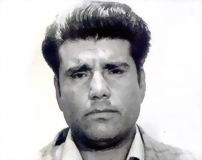
Juan Vallejo Corona
Serial killer Donald Henry Gaskins
Serial killer · USA · 1969
Donald Henry Gaskins, also known as Donald “Pee Wee” Gaskins, was a serial kill…
200 victims
Donald Henry Gaskins
Serial killer · USA · 1969
Donald Henry Gaskins, also known as Donald “Pee Wee” Gaskins, was a serial kill…
200 victims
 Donald Harvey
Serial killer · USA · 1970
Donald Harvey was known as an American serial killer and a self-professed “Ange…
87 victims
Donald Harvey
Serial killer · USA · 1970
Donald Harvey was known as an American serial killer and a self-professed “Ange…
87 victims
 Ottis Toole
Serial killer · USA · 1961
Ottis Elwood Toole (sometimes misspelled as “Otis”) was an American serial kill…
65 victims
Ottis Toole
Serial killer · USA · 1961
Ottis Elwood Toole (sometimes misspelled as “Otis”) was an American serial kill…
65 victims
 Gerald Stano
Serial killer · USA · 1969
Gerald Eugene Stano (September 12, 1951 – March 23, 1998) was executed by elect…
41 victims
Gerald Stano
Serial killer · USA · 1969
Gerald Eugene Stano (September 12, 1951 – March 23, 1998) was executed by elect…
41 victims
 Robert Lewis Collier
Murderer · USA · 1978
Robert Lewis Collier was sentenced to death in August 1978. His death sentence…
1 victim
Robert Lewis Collier
Murderer · USA · 1978
Robert Lewis Collier was sentenced to death in August 1978. His death sentence…
1 victim
 Michael James McNeely
Murderer · USA · 1993
Michael James McNeely was the defendant in a criminal case before the Supreme C…
1 victim
Michael James McNeely
Murderer · USA · 1993
Michael James McNeely was the defendant in a criminal case before the Supreme C…
1 victim
 Curtis Allgier
Murderer · USA · 2007
Curtis Michael Allgier (born August 25, 1979) was a white supremacist skinhead…
1 victim
Curtis Allgier
Murderer · USA · 2007
Curtis Michael Allgier (born August 25, 1979) was a white supremacist skinhead…
1 victim
 Elmo Patrick Sonnier
Murderer · USA · 1977
Elmo Patrick Sonnier (February 21, 1951 - April 5, 1984) was executed by electr…
2 victims
Elmo Patrick Sonnier
Murderer · USA · 1977
Elmo Patrick Sonnier (February 21, 1951 - April 5, 1984) was executed by electr…
2 victims
- Gender
- male
- Country
- USA
- Location
- Yuba City, California, USA
- Date of birth
- 1934
- Age at first offence
- 26
- Characteristics
- rape, rape?, sadist, dismemberment
- Victim profile
- Men (transients and itinerant farmworkers)
- Method of murder
- Shooting - Stabbing - Bludgeoning
- Date(s) of murder
- 1960's - 1971
- Years active
- 1960–1971
- Date of arrest
- May 1971
- Status
-
Life imprisonment
Sentenced to 25 consecutive terms of life imprisonment in January 1973
Case record: Juan Vallejo Corona
Background
Juan Vallejo Corona was a native of Mexico, born in 1934. He moved to Yuba City, California in the early 1950s and later became a labor contractor. He was described as respected and as a solid family man, and he had four daughters.
Corona had a schizophrenia diagnosis in 1956. In 1956, he was placed in an institution after a period of delusions about seeing ghosts, and he was released after being pronounced cured. He later underwent an extensive psychiatric observation period, which delayed a retrial.
Corona was described as a homosexual rape offender and as a sexual sadist. Reports linked some of the killings to signs of homosexuality among the victims. He was also described as having a terrible temper.
In 1970, a young Mexican man was wounded by a machete in a cafe run by Corona’s homosexual brother, Natividad. The victim pressed charges against Natividad and sought $250,000. Natividad fled to Mexico and the case was left unresolved.
The offence
In the spring of 1971, Corona turned to murder. He selected migrant workers connected to his labor contracting business and killed them. The victims were not reported missing.
A search for additional graves found 25 bodies. The victims were men, and the total number of kills was 25. The killings occurred in Yuba City, California.
The bodies were described as showing multiple forms of fatal violence, including stabbed or hacked to death, head injuries caused by a machete, and in some cases signs of homosexual assault. The record also described shooting, bludgeoning, and bludgeoning or stabbing as types of murder. In one description, a deep puncture to the chest was followed by two slashes across the back of the head in the shape of a cross. The bodies were described as being buried face up with arms stretched above their heads, and some were described as having shirts pulled up over their faces or pants pulled down with signs of recent homosexual activity.
One area where bodies were found was referred to as “Graveyard Lane.”
Some bodies had been in the ground for months. Medical examiners estimated that the first murders had occurred around February 1971. The youngest victim was forty and the oldest was sixty-eight. The record stated that 21 victims were identified and their relatives were notified, while four were never given names.
Investigation
On May 19, 1971, a Japanese farmer touring an orchard in the area noticed a freshly dug hole roughly the size of a grave between two fruit trees. One of Corona’s crews was working nearby, and the farmer initially did not report it until later that night when he found the hole filled in. He called police, and on the next morning deputies dug and found the corpse of Kenneth Whitacre.
Kenneth Whitacre was described as having been stabbed, with his throat and head hacked viciously and his upper body stabbed repeatedly. Another description stated that his chest was stabbed, his head was bashed in, and his back of skull was slashed, with deep cuts on his hands as if he had struggled. Pieces of literature were found in his pocket suggesting he might be homosexual, and investigators logged the case as a sex crime.
Four days later, workers reported finding a second grave. The corpse of Charles Fleming was found. In the ensuing search, additional bodies were uncovered. The record stated that deputies spent nine days exhuming bodies from the orchard area, counting 25 bodies before the search was terminated on June 4.
Receipts bearing Corona’s signature were found in graves. Two meat receipts dated May 21 and signed with the name “Juan V. Corona” were found in Melford Sample’s grave, and on June 4 another body was discovered with two bank receipts bearing the same signature. Joseph Maczak’s remains were described as being discovered with two bank receipts bearing the same signature. Additional information in the record stated that in one grave deputies found two receipts dated May 21, and signed Juan V. Corona, and that on June 4 another body was discovered with two receipts with the same signature.
The investigation also involved searches of Corona’s home and office after he was linked to the scenes through the receipts and other circumstances. The record described that aircraft taking infrared photography helped pinpoint suspicious areas.
Sheriff Roy Whiteaker had information about Corona that disturbed him. The record described a Marysville incident involving José Raya, who had been beaten nearly to death in a local café and found bleeding in the bathroom from serious head wounds. The reason Corona became a suspect was linked to his half-brother Natividad owning the café, along with claims that Corona was seen there that evening and that Corona had issues with gay men and a violent rage, and a stint in a mental institution during the 1950s with schizophrenia diagnosis. The record also described a blue-and-white pickup truck in the vicinity of the exhumations resembling Corona’s truck.
Arrest
Corona was arrested for the murders late in the afternoon of May 26 at his home. His wife and four daughters were described as shocked.
Evidence collected
After Corona’s arrest, officers searched his home and office and collected items for evaluation and testing. Items described as found included a posthole digger, a hatchet, a meat cleaver, meat receipts, a ledger containing the names of seven victims in one description and containing the names of thirty-four men in another description, a stained wooden club, a van parked outside that appeared to have bloodstains inside, a shovel, bundles of clothing, a bag of bullets, and an eighteen-inch machete. His Chevrolet Impala was described as having apparent bloodstains inside.
The record also described evidence found at Corona’s office on the Sullivan ranch, where the second body had been unearthed. Items described included a loaded pistol and a long knife printed with the phrase “Tennessee Toothpick.” Additional meat receipts and a smaller knife were also described as found. The ledger was referred to in connection with the case as the “murder book.”
Trial
First trial
The first trial began on September 11, 1972, in the Solano County courthouse in Fairfield, California. Jury selection took several weeks and the trial itself took about three months.
Richard Hawk was described as the defense attorney who took over the case. The record stated that Hawk fired psychiatrists and dismissed their findings, and he instigated a lawsuit against county officials involving improper evidence handling, violation of Corona’s rights, slander, and causing emotional distress.
During the trial, the prosecution was described as having to scramble to complete forensic testing that had not been done months earlier, and the judge was described as angered by issues with blood typing. The record stated that a cigarette butt in a grave with meat receipts tested positive for a blood type that matched neither Corona nor the victim. The record also included a claim that a tire track cast used for comparisons was mixed up with a different case and that the correct cast was located and sent for analysis. A report from the FBI lab in Washington, D.C. was described as indicating an “extreme likelihood” match that was later stated more conservatively as “possible,” with Corona’s van not being ruled out.
The prosecution was described as making an opening statement over two days of the court’s time and using an electronic map exhibit with twenty-five lights. The record also described prosecutorial failure to turn over so many reports to the defense, leading the judge to order the prosecution’s files brought to the courthouse and made completely available to Hawk.
The record stated that jurors deliberated for 45 hours before convicting Corona on all counts. Another part of the record stated that the jury deliberated 46 hours over time through additional votes, with a first ballot of 7 to 5 for acquittal and further votes over the next forty-six hours of deliberation before January 1973 conviction.
Corona was convicted of 25 counts of first-degree murder and received 25 consecutive terms of life imprisonment in January 1973. The record stated that the sentences were consecutive and described parole possibility, with the possibility of parole mentioned in one part.
Jury misconduct and defense claims
The defense tried to place blame on Natividad, and the record stated that no one could document his presence in California during the time of the murders and that Natividad was not even in the country at the time of the murders in one account.
The record described disputes about dating the bodies and confusion in numbering of bodies by the police and morticians. It also described disagreements about whether evidence could be planted and errors in investigation and handling of bodies.
The record stated that Corona remained stoic and mute during the proceedings and that he showed respect to his attorney.
Sentencing
Corona was sentenced to 25 consecutive terms of life imprisonment in January 1973. The record additionally described that he was sentenced to 25 life terms, with parole hearings every four years mentioned later in connection with the restored sentence.
Appeals
After the first trial, Corona awaited an appeal decision. The record stated that in 1978 an appeals court upheld an appeal by Corona citing that his legal team was incompetent and that he would receive a new trial.
Corona was attacked in prison while awaiting the new trial. The record stated that he lost an eye in this incident and never regained sight in one of his eyes.
During the appeal process, Corona underwent extensive psychiatric observation, further delaying a retrial.
The record stated that in 1978 Corona told a Mexican consulate official who visited the prison that he was guilty. The record gave the exact quote:
“Yes, I did it, but I’m a sick man and can't be judged by the standards of other men”.
In the same year, the record stated that Corona agreed to a plea deal by confessing to the murders in a letter to Judge Patton, but he also recanted the contents of this letter.
Second trial and outcome
In February 1982 Corona was back in court for a new trial. The record stated that the retrial took place in Hayward, California, lasted nearly twice as long as the first trial, and included 1,300 exhibits admitted in one account and 620 exhibits in another. The record stated that 175 witnesses took the stand in one account and 135 for the prosecution in another.
In the second trial, Richard Fahey was described as prosecuting again, and a better defense team was described as taking on Corona’s case. The record stated that Corona testified on his own behalf through an interpreter and denied involvement in the crimes.
The jury returned a verdict of guilty after deliberations of fifty-four hours over two weeks. The record described the foreman’s statement to the press after the verdict:
“Afterward,” writes Frasier, “the foreman told the press that the most incriminating piece of evidence against Corona had been the so-called 'death ledger' for which the labor contractor had 'no reasonable explanation.'”
Corona’s sentence of 25 concurrent life terms was restored with parole hearings every four years. The defense attorney requested a third trial based on jury misconduct, but this was denied.
Aftermath and current status
The record described that Corona remained in the California penal system and that he currently resided at Corcoran State Prison in California.
In prison, Corona was attacked by four other inmates. The record stated that they slashed and stabbed him so many times that he nearly died, and that he allegedly confessed the murders to a priest. The record stated that the priest was not allowed to reveal the confession, but that it somehow appeared in some accounts about the case. The record also stated that there were two more confessions.
The record additionally stated that reports issued in December 1973 linked Corona with the death of a twenty-sixth victim, but no new charges were filed.
Other details
The record stated that Corona had a labor contracting business and supplied ranchers with crews on demand. It also described that he did not pay enough for work done based on a few complaints, while ranchers who hired him tended to like and respect him.
The record stated that Corona was taking lessons in painting in prison and hoped to apply for U.S. citizenship. It also described that he spoke only broken English and had an IQ reported as 130 in one account.
The record stated that the defense attorney, Richard Hawk, broke gag order restrictions, and the record stated that Hawk was fined and spent time in jail for it in one part.
The record stated that Corona’s half-brother Natividad was accused in the Marysville assault in 1970 and that José Raya had won a settlement in that case, with Raya identifying Natividad as the attacker.
The record stated that Corona’s prison stabbing occurred after the appeals court ordered a new trial and before the retrial.
The record stated that the search for bodies ended June 4 with a toll of twenty-five, and that all of the victims were migrant workers in one account. It also stated that some people believed there were more victims not yet found.
Spotted an error, or have more information about this case?