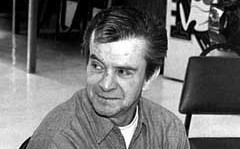
Carroll Edward Cole
Serial killer Richard Kuklinski
Serial killer · USA · 1949
Richard “Iceman” Kuklinski was sentenced to life in prison in 1988. He died in…
100 victims
Richard Kuklinski
Serial killer · USA · 1949
Richard “Iceman” Kuklinski was sentenced to life in prison in 1988. He died in…
100 victims
 Raymond Fernandez
Serial killer · USA · 1947
Raymond Martinez Fernandez was executed by electrocution at Sing Sing prison in…
17 victims
Raymond Fernandez
Serial killer · USA · 1947
Raymond Martinez Fernandez was executed by electrocution at Sing Sing prison in…
17 victims
 Stephen Nash
Serial killer · USA · 1955
Stephen Nash Stephen Nash was executed by asphyxiation-gas in California on Aug…
11 victims
Stephen Nash
Serial killer · USA · 1955
Stephen Nash Stephen Nash was executed by asphyxiation-gas in California on Aug…
11 victims
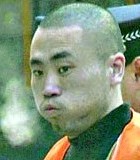 Yang Ning
Mass murderer · Japan · 2003
Yang Ning was a Chinese man sentenced to death over the killing of a family of…
4 victims
Yang Ning
Mass murderer · Japan · 2003
Yang Ning was a Chinese man sentenced to death over the killing of a family of…
4 victims
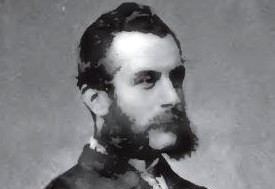 Eugéne-Marie Chantrelle
Murderer · United Kingdom · 1878
Eugéne-Marie Chantrelle was a French-born school teacher who lived in Edinburgh…
1 victim
Eugéne-Marie Chantrelle
Murderer · United Kingdom · 1878
Eugéne-Marie Chantrelle was a French-born school teacher who lived in Edinburgh…
1 victim
 Tim Kretschmer
Mass homicide · Germany · 2009
Tim Kretschmer (26 July 1991 – 11 March 2009) was a 17-year-old graduate of the…
15 victims
Tim Kretschmer
Mass homicide · Germany · 2009
Tim Kretschmer (26 July 1991 – 11 March 2009) was a 17-year-old graduate of the…
15 victims
 Mark Andrew Fowler
Murderer · USA · 1985
Mark Andrew Fowler was executed by lethal injection in Oklahoma on January 23,…
3 victims
Mark Andrew Fowler
Murderer · USA · 1985
Mark Andrew Fowler was executed by lethal injection in Oklahoma on January 23,…
3 victims
- Gender
- male
- Country
- USA
- Location
- Iowa/California/Nevada, USA
- Date of birth
- May 9, 1938
- Age at first offence
- 10
- Characteristics
- cannibal
- Victim profile
- 1 boy and 14 women
- Method of murder
- Drowning / Strangulation
- Date(s) of murder
- 1948 / 1971 - 1980
- Years active
- 1948–1980
- Date of arrest
- 1980
- Status
-
Executed
Executed by lethal injection in Nevada on December 6, 1985
Case record: Carroll Edward Cole
Background
Carroll Edward Cole, also known as “Eddie,” was born in Sioux City, Iowa on May 9, 1938. He was the second son of LaVerne and Vesta Cole. A sister followed in 1939, before the family moved to Richmond, California, with LaVerne seeking work in the local shipyards.
While LaVerne was drafted to serve his country in World War II, Vesta took Cole with her to an apartment in 1943 where she met soldiers and engaged in drunken sex while Eddie waited. Afterward, Vesta beat Eddie and twisted his arms, threatening worse if he ever revealed her transgression. The excursions were repeated with increasingly sadistic punishment until LaVerne returned home at war’s end.
School records indicated that Vesta kept her “whipping boy” at home until age seven, when by law he should have entered first grade at six. After the war ended and LaVerne returned, Vesta continued to harass and punish Eddie over the slightest infraction. Playmates teased him about his “girl’s name,” leaving him in tears. Cole later recalled:
“The kids made quite a thing of taunting me,”
He also said:
“I felt the animosity, withdrawing more and more into myself.”
At home, Cole briefly “blacked out” beneath the porch and awoke to find he had strangled the family’s puppy. He began to fantasize about killing his mother and other females who crossed his path. Despite those daydreams, Cole’s first murder victim was male. Authorities dismissed the strangling as an act with no further consequences.
Cole’s first murder victim was “an ass from school named Duane,” who taunted Cole relentlessly about his name. In 1946, Cole joined his brother and a group of other boys to go swimming at Richmond’s yacht harbor. Duane resumed teasing Cole:
“How does it feel to have a girl’s name, Carroll ?”
As Duane tried to surface, Cole clamped his legs around the other boy’s neck and braced his hands against the nearest log for leverage. Cole later wrote:
“I held him under till I knew he was dead,”
and:
“And when I let him go, he sank.”
Authorities dismissed the drowning as an accident. Cole said he spent several months in fear of imminent arrest, and he recalled:
“I was afraid of the police--with reason, as I thought--but there was no remorse about Duane,”
and:
“I hated him, and I was glad I stood up for myself.”
Cole described the thrill derived from killing as a temporary fix, saying:
“If I thought my life was going to improve,”
he said:
“I was sadly mistaken. Neither at home or at school. I was getting meaner and meaner, fighting all the time in a way to hurt or maim, and my thoughts were not the ideas of an innocent child, believe me.”
In elementary school and junior high, Cole masked his morbid fantasies “to a degree,” but they took a toll. An IQ test administered in February 1953 ranked Cole at the “genius” level of 152, while his grades scraped along that semester at a D+ average. He burglarized liquor stores and drank heavily, dropping out of high school during the middle of his junior year. He worked briefly at a Richmond factory and joined the Navy in February 1957. Drinking and theft of government property sent him to the brig. A San Diego arrest on suspicion of burglary and auto theft led to his discharge on October 4, 1958.
Cole returned to his parents’ home in Richmond and endured abuse from his mother, including “rubbing his nose in the latest abject failure.” He remained with the family, working odd jobs and logging minor arrests, until June 1, 1960. That night, he approached two couples in a parked car while prowling a lover’s lane and attacked them with a hammer. He was convicted of assault with a deadly weapon on June 28 and sentenced to 30 days on the county work farm.
In January 1961, Cole flagged down a Richmond police car and told patrolmen of his urge to rape and strangle women. After several phone calls, officers suggested voluntary self-committal to a mental hospital. Cole entered Napa State Hospital on February 2, 1961 for 90 days’ observation and treatment. Cole wanted help but did not mention Duane’s murder and could not discuss Vesta’s cruelty. Reports from Napa recorded Cole’s fantasy of a “happy childhood,” noting he talked about both parents “in rather glowing terms.” Vesta confirmed the lie when she was interviewed by Dr. R.C. Hitchen.
Another psychiatrist, Dr. L.M. Jones, described the final meeting where staff discussed Cole’s case. The staff made a diagnosis of Anti-Social Sociopathic Personality Disturbance on March 21st and recommended discharge because he was “Not Suitable, Not Mentally Ill,” while recommending he apply for outside psychiatric treatment or voluntary admission to Atascadero State Hospital due to sadistic, abnormal sexual tendencies. Napa staff released Cole on March 25, 1961.
While serving a six-month sentence for auto theft in July 1962, Cole repeated his plea for psychiatric help. Judge Raymond Coughlin signed the committal order on October 6, and Cole entered Atascadero State Hospital 10 days later. At Atascadero, doctors found his test results “very puzzling and contradictory.” Dr. Irwin Hart diagnosed Cole as “a very passive-dependent person with a façade of independence, and confusion concerning sexual identification.”
Cole was transferred to Stockton State Hospital on September 12, 1962. Dr. I.I. Weiss noted:
“He seems to be afraid of the female figure and cannot have intercourse with her first but must kill her before he can do it.”
Weiss diagnosed Cole’s condition as a “schizophrenic reaction, chronic undifferentiated type,” and released him on April 19, 1963 with an “indefinite leave of absence to self.” Cole later said his family was solicitous “to some extent” but wished “I was elsewhere.” His brother Richard had moved to Dallas, and Texas was suggested for a change of scene. LaVerne bought the bus ticket in May 1963 and Cole headed south.
Soon after his release, Cole recalled:
“Prognosis Poor”
He also said:
Cole recalled that his brother spent weeks showing him Dallas through bar and tavern windows. On July 5, 1963, after a failed attempt to strangle a woman he met in a dive, Cole attempted suicide with pills and spent four days in a psychiatric ward.
Soon after, Cole met Neville “Billy” Whitworth, an alcoholic stripper, whom he described as:
“neurotic and unstable, just like me.”
Cole and Billy married in November 1963, soon after her part-time employer Jack Ruby murdered the alleged assassin of President John Kennedy. Their marriage was chaotic from the start, with lust and anger fueled by alcohol, interrupted by arrests for drunkenness and domestic violence. In August 1965, Cole believed Billy was servicing men at the motel where they lived. Cole set the place on fire and was indicted for arson on August 19, convicted and sentenced to two years’ imprisonment in March 1966. Cole served nine months and was released on January 5, 1967.
Cole drifted and had arrests. An Oklahoma City court fined him $20 for “vagrancy by pimping” in April 1967. A month later, he invaded the bedroom of an 11-year-old girl in Lake Ozark, Missouri and tried to strangle her while she slept. Her screams summoned help, and Cole was captured moments later by police. He faced 10 years in prison on a charge of felonious assault with intent to ravish. Cole recalled:
“The public was so aroused,”
and said:
“that in another time frame, I would doubtless have been taken out and lynched.”
He pled guilty to a reduced charge of assault with intent to kill and received a five-year prison term. He was paroled on May 1, 1970, and he said:
“If anything,”
he later admitted:
“I was worse.”
Cole drifted back to San Diego and then to Reno, Nevada. He tried twice to strangle women met in bars but his victims escaped both times. On September 19, 1970, he surrendered to Reno police and confessed his urge to murder women. Cole was detained on disorderly conduct and committed four days later to a state hospital at Sparks, Nevada. Dr. Felix Peebles diagnosed Cole as:
“an anti-social personality with alcoholism, with compulsion to strangle and rape pretty females.”
By October 13, Dr. Peebles changed his diagnosis, describing Cole as:
“a highly manipulative young man who is utilizing his difficulties with the law in the past and his threats of violence upon others to find shelter when he is out of funds or ways to get what he wants.”
Peebles ordered release with file notations:
“Condition on Discharge: The same as on admission”
and:
Under “disposition,” Peebles wrote:
“He was discharged and placed on an Express Bus for Los Angeles where he was to change buses and go on to his home in San Diego, California.”
Cole chose San Diego. He later wrote:
“As a border town,”
and said:
“it’s wild and practically anything goes. Also, being in California, it’s easy to get on welfare, and my record with the state hospitals qualified me for more disability.”
Cole trained as a nurse’s aide but said he was appalled by local hospital conditions and wrote:
“Have you ever seen a patient eaten up with bed sores because someone didn’t care enough to do their job?”
He also wrote:
“And the verbal abuse was something else.”
He considered killing a nurse:
“I often thought of waylaying one of those nurses in the parking lot, killing her for the old folks, but unfortunately our classes were in the daytime.”
After failed attempts at psychiatry, Cole wrote:
“My urges were stronger than ever but I wasn’t concerned about it anymore. I just said to hell with it and waited to see what would happen.”
The offence
Cole committed serial murders across multiple jurisdictions between 1971 and 1980. He strangled his victims.
Cole’s first adult victim was Essie Buck. On May 7, 1971, Cole met Essie Buck in a San Diego tavern and strangled her to death in his car, leaving her body in the trunk overnight. Cole discarded the body on May 9, his thirty-third birthday. Cole later recalled:
“I felt nothing--not elation, guilt, or any of the feelings thought to appease someone like me. Just cold nothing.”
In June 1971, while serving time for theft and drunk driving, Cole was questioned by San Diego homicide detective Robert Ring about Essie Buck. Cole admitted he had slept with Buck but claimed he woke the next morning to find her dead of unknown causes beside him. He claimed he had dumped her body in a panic. Cole wrote in 1985 that Ring bought his explanation:
“It was farfetched,”
and wrote:
“but Ring bought it.”
Two weeks after Buck, Cole claimed he met another hard-drinking woman known only as Wilma and strangled her after a night on the town. Cole buried her corpse in the foothills outside San Ysidro, where it remained undiscovered.
Cole’s third victim followed shortly after Wilma; Cole killed and buried her in similar fashion. Cole later wrote that if he had ever known her name, he had forgotten it years later when he penned an account of the murder from prison.
In late 1971, after Cole’s release in March 1972, he traveled to the San Ysidro Mexican border and picked up two Hispanic women in a bar. When one woman slipped away to relieve herself, Cole bludgeoned her companion with a hammer and then strangled the other woman upon her return. Cole buried both women in the desert; these were described as two more victims who were never found.
In the summer of 1972, Cole met alcoholic barmaid Diana Pashal. Cole and Diana moved in together and both were not monogamous. Cole proposed marriage in July 1973. They married in July 1973. Their first anniversary included Cole fleeing to Nevada with a girlfriend, and Diana forgave him and they agreed no good would come of their relationship in San Diego.
In August 1975, while working oil rigs at Casper, Wyoming, Cole met Myrlene “Teepee” Hamer. He noticed a wedding ring and a disregard for what it meant. After drinking they went for a drive. Cole strangled Hamer in the car and left her on a grassy hillside covered with an old sleeping bag. Her body was recovered by authorities on August 9, and Cole left town the next day, heading west.
In 1976, Cole was charged with mail theft after stealing a $1,500 government check from a fellow patient and trying to cash it. He jumped bail and was recaptured and charged with unlawful flight. He received a one-year sentence in February 1977 for conviction on both counts.
After release and while in Las Vegas, Cole strangled prostitute Kathlyn Blum. Cole dumped Blum’s body in a stranger’s backyard, where police recovered it on May 14, 1977. Cole stayed in town long enough to be jailed for car theft in North Las Vegas on July 19, 1977. He made bail, skipped his September court date, and went to Oklahoma City. Nevada authorities swore out a warrant in December, too late to apprehend him.
Cole drove to Texas and found work at Denver City, described as “dry,” and he drank whatever alcohol he could find. He was arrested for public drunkenness, and a fingerprint check revealed he was wanted in California as a federal fugitive. One week later, he headed back to San Diego wearing chains.
On the night before Thanksgiving in Oklahoma City, Cole met a woman who agreed to spend the night with him. Cole wrote:
“Somewhere in the middle of our making love,”
and said:
“the booze kicked in, or else my mind went blank--I can’t say which.”
On November 24, Cole woke at sunrise and found the woman dead in his bathtub. Cole removed her remains, including severed feet and missing right arm. Cole wrote that he found remnants in his refrigerator and that a steak sliced from the corpse’s buttocks lay in a skillet on the stove. He used kitchen knives and a hacksaw to complete dismemberment, placed remains in plastic garbage bags, and drove them to the city dump where they were presumed burned. Cole wrote:
“That day,”
and said:
“was something else.”
In March 1979, while on probation, Cole continued drinking and trolling for victims. On August 27, 1979, Cole met Bonnie Sue O’Neil in a local bar and took her back to the appliance shop where he was temporarily employed. Cole strangled O’Neil on the spot and dumped her body out back, throwing her clothes into a nearby garbage bin.
On September 17, 1979, Cole strangled Diana at home, wrapped her body in blankets, and stowed it in a closet. A neighbor called police eight days later after reporting Cole scrabbling beneath his house. Patrolmen found him in the crawlspace working on a grave-sized excavation and drove him to a local detox center. Cole was released the next morning and his mother-in-law found Diana’s corpse.
Cole traveled to Las Vegas and found work as a truck driver for a religious charity, picking up donations of clothing and second-hand items. Cole began dating a female coworker, leading to a third marriage later. Cole picked up Marie Cushman, who accompanied him to the Casbah Hotel on November 3, 1979. Cole killed Cushman at the hotel and left her body in the room to be discovered by a maid the next morning.
In November 1980 in Dallas, Cole was identified as killing Wanda Faye Roberts, and he confessed to killing Dorothy King and Sally Thompson.
Wanda Faye Roberts was found on Bryan Street in Dallas at 6:00 a.m. on Wednesday, November 12, 1980. The body was found 45 minutes earlier. The victim was nude from the waist down, with her blouse ripped open, and bruises on her neck suggested strangulation. Her torn slacks lay 20 feet away in a clump of trees. Drag marks and abrasions showed she had been hauled across dirt and gravel after being killed and stripped. Police found a driver’s license in the victim’s pocket identifying her as 32-year-old Wanda Faye Roberts, residing five blocks north. Postmortem tests revealed no sexual assault and that Roberts had been drinking heavily before she died. Police scoured Bryan Street bars and found one where Roberts was known as a regular; the bartender recalled her latest visit and that Roberts left the bar around 2:00 a.m. with another frequent customer known only as “Eddie.” Cole was later identified by the second set of events involving Sally Thompson.
Sally Thompson was brought home to visit at her Dallas apartment by her two sons and a girlfriend before the sons found lights burning in the living room and heard the TV playing, while the door was locked. Knocking and rattling did not yield immediate response, until a stranger opened the door. The stranger was slender, average height, with dark hair and a thin mustache, reeking of whiskey and appearing disoriented. The stranger offered no resistance as the boys pushed past him. The boys found their mother lying on the floor facedown beside the couch with her jeans and panties wadded around her ankles. They fled to a neighbor and summoned police, who found the stranger standing beside Thompson’s corpse and took him into custody without resistance. The man identified himself as Carroll Edward Cole, residing two blocks from the Thompson apartment. Cole said he recalled meeting Thompson at a nearby bar and accepting her invitation to come home for sex; he claimed he had been undressing her when she suddenly collapsed. Paramedics found no signs of violence suggesting possible death from an overdose of alcohol or drugs. Cole was detained until a medical examiner completed the autopsy, and Thompson’s cause of death was listed as “indeterminate,” after which Cole was released. Police later reviewed the Thompson file and noted Cole’s middle name might be shortened to “Eddie” by friends. Det. Robinson also noted Cole’s Lemmon Avenue address was a halfway house for felons on parole within two miles of the Wanda Roberts murder scene, and called the halfway house.
Dorothy King was identified after Cole’s murder confession interrupting an officer-involved shooting investigation. Cole began describing a murder committed on November 9, which matched a case. Dorothy King, 52 years old, was found dead in her apartment on November 11, 1980. The coroner blamed her death on an overdose of alcohol.
Cole was detained and questioned regarding the murder of these women. Police records included that his confession included strangling Dorothy King, Wanda Roberts, and Sally Thompson. The Dallas trial found him guilty on three counts of murder.
Investigation
Detective Gerald Robinson was called to examine Wanda Faye Roberts’ corpse at 6:00 a.m. on Wednesday, November 12, 1980. Roberts was found 45 minutes earlier on Bryan Street. Robinson expected no surprises. Police scoured bars and found a bartender who recalled Roberts leaving the bar around 2:00 a.m. with another frequent customer known only as “Eddie,” filing the clue but having nothing with which to identify a suspect. Robinson had to wait.
Near midnight on November 30, 1980, Sally Thompson’s sons and their girlfriend visited Thompson’s Dallas apartment and found lights burning but the door locked. They knocked and rattled the knob. A stranger opened the door and they pushed past him. They found Thompson lying facedown beside the couch. Police found Cole standing beside Thompson’s corpse and took him into custody without resistance. Cole identified himself as Carroll Edward Cole and said he met Thompson at a nearby bar and accepted her invitation to come home for sex. Paramedics found no signs of violence and suggested possible death from overdose of alcohol or drugs. After autopsy, Thompson’s cause of death was listed as “indeterminate,” and Cole was released.
After reviewing the Thompson file next morning, Det. Robinson noted Cole’s middle name might be shortened to “Eddie” by friends and that Cole’s Lemmon Avenue address was a halfway house for felons on parole. A call to the halfway house indicated Cole arrived in Dallas on October 8, 1980, two days after his release from a federal lockup for mail theft. After missing curfew several times, he left the halfway house on November 3 but called back to negotiate a second chance on the night Roberts was murdered.
Robinson led a team of plainclothesmen to pick Cole up from his workplace at a Toys R Us warehouse. In custody, Cole repeated his story about Thompson and admitted a casual acquaintance with Wanda Roberts. During the interview, Robinson was called to visit an officer-involved shooting. Cole began describing a murder confession that did not match Thompson’s or Roberts’s murders. Robinson realized the details fit a separate murder apparently committed on November 9.
Robinson started from scratch and asked Cole about “that girl in the bar.” Cole replied:
“Which one?"
Cole provided details that matched Dorothy King’s death. Robinson then took notes as Cole admitted strangling Dorothy King, Wanda Roberts, and Sally Thompson during December 1, 1980.
The investigation also addressed discrepancies in earlier medical examiners’ findings and San Diego authorities’ statements. Deputy Coroner Jay Johnson told reporters:
“I don’t believe there’s anything to it,”
and Lt. John Gregory said:
“The coroner conducted thorough autopsies,”
and that the man would have to have been some sort of expert to have strangled these women without leaving any bruise marks. Dallas psychiatrists examined Cole to determine if he was fit for trial, and doctors agreed he was legally sane.
Cole’s trial began on April 6, 1981 before Judge John Mead, with Cole as the sole defense witness.
Arrest
Cole was detained and questioned regarding the murders of these victims and was released in some instances, including being released after the Thompson autopsy listing cause of death as “indeterminate.” Later, he was booked into Dallas City Jail on three counts of first-degree murder after his confession during investigation into the Dallas murders.
Trial
Cole’s trial began on April 6, 1981 before Judge John Mead. Cole appeared as the sole defense witness. Under oath, Cole told the jury a story of childhood abuse inflicted by his sadistic, adulterous mother and described a morbid obsession with women who betrayed their husbands or lovers. Cole told the jury:
“I think,”
and:
“I’ve been killing her through them.”
Cole said the Dallas slayings were “pretty fuzzy,” and he added three more victims to his formal tally. Prosecutor Mary Ludwick blamed the cannibalism confession on Cole’s “tendency to grossly exaggerate” and a wild bid for an insanity plea. The panel deliberated barely 25 minutes before convicting Cole on three counts of murder.
On April 9, 1981, Judge Mead spared his life with a sentence of life imprisonment.
Sentencing
On April 9, 1981, Judge John Mead sentenced Cole to life imprisonment on three counts of murder.
Later, Cole waived extradition and entered a guilty plea in Nevada to capital murder charges. On August 16, Cole appeared before Judge Myron Leavitt and pled guilty on two counts of first-degree murder. Attorney Tom Pitaro was appointed as “standby” counsel over Cole’s objections. Pitaro protested Cole’s “attempt to commit legal suicide” and argued Cole had no right to determine his own punishment and thereby “undermine the integrity of the court.” Pitaro said that for the good of society at large, Cole should be granted leave to search for mitigating circumstances.
Cole responded:
“I believe in capital punishment,”
and:
“I don’t see where [Pitaro] is going to come up with this stuff, because there’s nothing good about me.”
Cole’s penalty hearing convened on October 12, 1984 before a panel of three judges. Judge Leavitt joined with Richard Legarza and Norman Robinson. District Attorney Dan Seaton called witnesses, including detectives from Las Vegas, Dallas, Missouri and Wyoming. Two officers from San Diego testified, but their descriptions were said to have added nothing to the presentation.
Cole capped testimony on October 12 and told the judges:
“within about five more years [he] would be eligible for parole”
in Texas (false), and:
“if not that, I got very ample chances to escape from the Texas Department of Corrections.”
The panel sentenced Cole to die for Marie Cushman’s murder. Execution was barred in Kathlyn Blum’s death because Nevada had no death penalty in May 1977. Cole was transferred from Las Vegas to Nevada’s state prison at Carson City on November 6, 1984.
Appeals
For the next eleven months after his sentencing, Cole resisted outside attempts to file appeals on his behalf. Nevada’s Supreme Court affirmed his death sentence on October 22, 1985. Judge Leavitt convened a hearing three weeks later fixing the date of execution as December 6. On December 5, three other death row inmates filed an appeal with the state supreme court on Cole’s behalf declaring him “legally insane,” but the court rejected the petition in a special nighttime session.
Outcome
Cole completed a handwritten autobiography that ran to some 100,000 words and granted permission for a Las Vegas neurosurgeon to study his brain after death in an effort to explain his violent life. On December 4, Cole was moved to a seven-by-seven-foot “last night cell,” under 24-hour suicide watch. At 1:43 a.m. on December 6, Cole entered the execution chamber with selected witnesses. At 2:05 a.m., he was strapped to the table with needles inserted in both arms. Warden George Sumner signaled for the execution to proceed and a lethal cocktail of chemicals flowed into Cole’s veins. Cole’s body convulsed at 2:07 a.m. and then relaxed. The prison’s physician pronounced him dead three minutes later.
After the execution, Dan Seaton told TV cameras:
“It is enjoyable to see the system work.”
Cole’s execution was carried out by lethal injection in Nevada on December 6, 1985.
Aftermath
Cole’s execution was carried out by lethal injection after Nevada’s death chamber had been returned to service due to gas leaks. State legislators voted for lethal injection in 1983, completing the changeover. Cole was described as Nevada’s first inmate to receive the needle. Cole refused to appeal in any way and resisted outside appeals after sentencing.
Other details
Cole was diagnosed and treated by mental health authorities multiple times, and his file recorded:
“Prognosis: Poor. Condition on release: Same as on admittance. Treatment: Express bus ticket to San Diego, California.”
A later federal prison medical report filed in August 1980 stated:
“There is no evidence of psychosis or neurosis in Mr. Cole. Diagnostically he may be described as a character disorder. It is unlikely that major personality changes will occur. He does not appear motivated for any sort of treatment at this time.”
Cole also received a six-month jail sentence plus three years’ probation contingent on full-time employment and participation in an alcoholic rehab program on March 8, 1978.
In 1978, Cole reunified with Diana and said:
“We got along fine,”
and said he had been sleeping on the couch until she invited him into the bedroom.
In describing his confessions, Cole told the jury and judges that he strangled his victims and discussed eating cannibalism. At his trial in 1981, Cole attempted an unsuccessful insanity defense by falsely claiming he cannibalized one of the victims.
Cole’s guilty plea in Nevada involved two counts of first-degree murder, and the death sentence was imposed for Marie Cushman’s murder; execution was barred for Kathlyn Blum’s death because Nevada had no death penalty in May 1977.
Cole was described as having murdered victims across California, Nevada, Texas, Wyoming, and Oklahoma, and it was recorded that he strangled his victims. Some victims were stripped and sexually abused after death, and Cole claimed he was drunk during killing sprees. Cole stated that “loose women” reminded him of his mother and that he killed through victims.
Spotted an error, or have more information about this case?