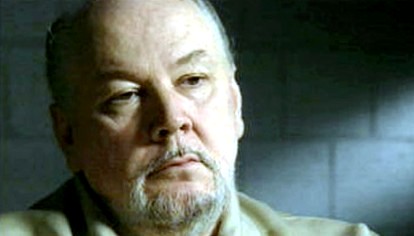
Richard Kuklinski
Serial killer Raymond Fernandez
Serial killer · USA · 1947
Raymond Martinez Fernandez was executed by electrocution at Sing Sing prison in…
17 victims
Raymond Fernandez
Serial killer · USA · 1947
Raymond Martinez Fernandez was executed by electrocution at Sing Sing prison in…
17 victims
 Carroll Edward Cole
Serial killer · USA · 1948
Carroll Edward Cole, also known as “Eddie,” was born in Sioux City, Iowa on May…
15 victims
Carroll Edward Cole
Serial killer · USA · 1948
Carroll Edward Cole, also known as “Eddie,” was born in Sioux City, Iowa on May…
15 victims
 Stephen Nash
Serial killer · USA · 1955
Stephen Nash Stephen Nash was executed by asphyxiation-gas in California on Aug…
11 victims
Stephen Nash
Serial killer · USA · 1955
Stephen Nash Stephen Nash was executed by asphyxiation-gas in California on Aug…
11 victims
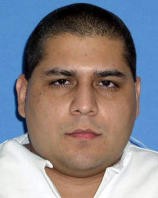 Robert Madrid Salazar
Murderer · USA · 1997
Robert Madrid Salazar was a Black male described as 27 years old at the time of…
1 victim
Robert Madrid Salazar
Murderer · USA · 1997
Robert Madrid Salazar was a Black male described as 27 years old at the time of…
1 victim
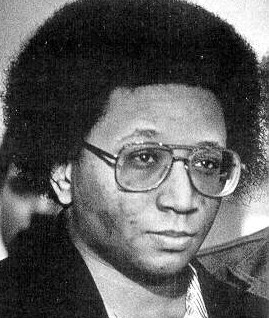 Wayne Williams
Serial killer? · USA · 1979
Wayne Bertram Williams was sentenced to two consecutive terms of life imprisonm…
24 victims
Wayne Williams
Serial killer? · USA · 1979
Wayne Bertram Williams was sentenced to two consecutive terms of life imprisonm…
24 victims
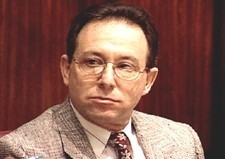 Bruce Rich
Murderer · USA · 1995
Name: Bruce Rich Bruce Rich was accused of killing his parents so that he could…
2 victims
Bruce Rich
Murderer · USA · 1995
Name: Bruce Rich Bruce Rich was accused of killing his parents so that he could…
2 victims
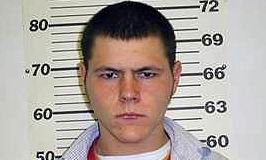 Matthew Slocum
Murderer · USA · 2011
Matthew Slocum was sentenced to 88 years to life in state prison for the shotgu…
3 victims
Matthew Slocum
Murderer · USA · 2011
Matthew Slocum was sentenced to 88 years to life in state prison for the shotgu…
3 victims
 Matej Curko
Murderer · Slovakia · 2010
Matej Curko was an alleged cannibal. · May 10, 2011 — Matej Curko died in a fir…
2 victims
Matej Curko
Murderer · Slovakia · 2010
Matej Curko was an alleged cannibal. · May 10, 2011 — Matej Curko died in a fir…
2 victims
 David Lee Holland
Murderer · USA · 1985
David Lee Holland was convicted for the capital murder of Helen Barnard while i…
2 victims
David Lee Holland
Murderer · USA · 1985
David Lee Holland was convicted for the capital murder of Helen Barnard while i…
2 victims
- Gender
- male
- Country
- USA
- Location
- New Jersey/New York, USA
- Date of birth
- April 11, 1935
- Age at first offence
- 14
- Characteristics
- history of mental illness, torture
- Victim profile
- Men
- Method of murder
- Several
- Date(s) of murder
- 1949 - 1986
- Years active
- 1949–1986
- Date of arrest
- —
- Status
-
Died in custody
Sentenced to life in prison, 1988; died in prison on March 6, 2006
Case record: Richard Kuklinski
Status
Richard “Iceman” Kuklinski was sentenced to life in prison in 1988. He died in prison on March 6, 2006.
Background
Richard “Iceman” Kuklinski was born April 11, 1935, and he died March 5, 2006, at the age of 70. He grew up as the second of four children born to Stanley and Anna Kuklinski of Polish origin. Stanley Kuklinski worked at a railroad as a brakeman. Stanley was an alcoholic who regularly beat his wife and children. Anna Kuklinski worked at a meat processing plant. She was extremely strict and a devout Catholic, and she often beat Richard Kuklinski as well.
When Kuklinski was five years old, his older brother Florian was killed by Stanley during one of his many beatings. After discovering he had killed his son, Stanley ordered Anna to call the hospital and report that Florian had fallen down the stairs and hit his head. Stanley then left his family, leaving Richard to fend for himself.
By age 16, Kuklinski was known for an explosive temper and willingness to kill. His “number one pet peeve” was loudmouthed people because they reminded him of his father. He stated that he abused animals as a young child, including killing cats and dogs by torturing them.
Kuklinski’s older brother Florian was killed by Stanley, and Stanley had been ordered to report that Florian had fallen down the stairs and hit his head.
Kuklinski stated that he would hurt someone just for making him feel bad about something.
The offender’s affiliations and methods
Kuklinski associated with the Gambino crime family through his relationship with mobster Roy DeMeo. He stated that he started doing robberies and other assignments for the family, including pirating pornographic tapes. He stood out amongst associates due to his killing ability, and he was described as standing 6 feet 5 inches and weighing 300 lb.
Kuklinski stated that DeMeo put him to the test. DeMeo took Kuklinski out in his car, parked on a city street, and selected an apparently random target: a man out walking his dog. DeMeo told Kuklinski to kill the target. Kuklinski walked toward the man; when he passed him, he turned and shot the man in the back of the head. Kuklinski became DeMeo’s favorite enforcer.
Over the next thirty years, Kuklinski claimed he killed numerous people by gun, strangulation, knife, or poison. The exact number was said to never be settled by authorities. Kuklinski claimed he had killed between 33 and 200 individuals.
Kuklinski favored cyanide because it killed quickly and was hard to detect in a toxicology test. He claimed to have administered it by injection, by putting it on a person’s food, by aerosol spray, or by spilling it on the victim’s skin. He also claimed a disposal method of placing bodies in a 55-gallon oil drum. Other claimed disposal methods included dismemberment, burial, or placing a body in the trunk of a car and crushing it in a junkyard. He also claimed to have left bodies sitting on park benches on more than one occasion.
Despite Kuklinski’s claims of frequent killing for DeMeo, none of DeMeo’s later government witnesses were described as claiming Kuklinski was involved in the murders they committed.
Kuklinski was photographed on one occasion at the Gemini Lounge. He reportedly visited the club to purchase a handgun from the Brooklyn crew.
Kuklinski claimed responsibility for the 1983 murder of Roy DeMeo. Other evidence and testimony described in the record pointed to Joseph Testa and Anthony Senter, along with DeMeo’s supervisor in the Gambino family, Anthony Gaggi, as the murderers.
Kuklinski stated that while he was allegedly a career hit man, he met and married Barbara Pedrici. He later fathered two daughters and a son. His family and neighbors were described as believing he was a successful businessman.
Kuklinski was sometimes described as leaving the house at any time of the day or night to do a job, including during dinner.
He had been nicknamed “The Polack” by Italian associates because of his Polish heritage. He earned the nickname “Iceman” after allegedly freezing victims’ corpses in an industrial freezer to disguise the time of death. He claimed he used a Mister Softee ice cream truck for this purpose, while the FBI was described as doubting the veracity of this claim. He later told author Philip Carlo that he got the idea from a hitman nicknamed “Mister Softee,” who drove a Mister Softee truck to appear inconspicuous.
The record described how Kuklinski’s method was uncovered when he failed to let one victim properly thaw before disposing of the body on a warm summer’s night, and the coroner found chunks of ice in the corpse’s heart.
Kuklinski became friendly with Robert Pronge, the man nicknamed Mister Softee. Pronge was described as a military-trained demolitions technician. The record stated it was from Pronge that Kuklinski learned methods of using cyanide. Kuklinski also stated that Mister Softee was “extremely crazy”.
In 1984, Robert Pronge was found shot to death in his truck. The killer was described as never being found.
First murder: Charley Lane
In 1948, when Kuklinski was 13, he ambushed and beat Charley Lane, the leader of a small gang of teenagers known as “The Project Boys,” who had bullied him. Following a particularly bad beating, Richard sought revenge by attacking Charley Lane with a thick wooden dowel, beating him to death. Kuklinski denied wanting to kill Lane. The bully did not wake up.
Kuklinski then dumped Lane’s body off a bridge in South Jersey after removing his teeth and chopping off his finger tips with a hatchet to prevent identification. The body was never found.
Kuklinski then went in search of the other boys in the gang. He seized a metal pole from a trash can and beat all of them nearly to death.
Kuklinski stated in an HBO documentary, “Ice Man: Confessions of a Mafia Hit Man” (1992), that it was the day he killed Charley Lane that he learned it was “better to give than to receive”.
State and federal manhunt
Authorities caught up with Kuklinski in 1986 and based their case almost entirely on the testimony of an undercover agent. New Jersey State Police detective Pat Kane started the case 6 years prior to the arrest. The investigation involved a joint operation with the New Jersey Attorney General’s office and the Bureau of Alcohol, Tobacco and Firearms. Special Agent Dominick Polifrone had undercover experience specializing in Mafia cases.
Detective Kane recruited Phil Solimene, a close friend of Kuklinski, who introduced undercover agent Polifrone to Kuklinski. The Bureau agent acted like he wanted to hire Kuklinski for a hit and recorded Kuklinski speaking in detail about how he would do it.
When state police and federal agents went to arrest Kuklinski, they blocked off his street, and it took multiple officers to bring him down. During the arrest, Mrs. Kuklinski was also arrested and charged with gun possession because the car was registered under her name. When Mrs. Kuklinski was arrested, a police officer put his boot on her back while detaining her. The record stated this enraged Kuklinski and was one of the reasons they needed multiple officers to bring him down.
Incarceration and death
In 1988, a New Jersey court convicted Kuklinski of five murders and sentenced him to consecutive life sentences, making him ineligible for parole until age 110. The record additionally described that he was taken to Trenton State Prison in Trenton, New Jersey. It also stated his brother was serving a life sentence for murder at the same place.
In 2003, he pleaded guilty to the 1980 murder of NYPD detective Peter Calabro and drew another 30 years.
During incarceration, Kuklinski granted interviews to prosecutors, psychiatrists, criminologists, writers, and television producers about his criminal career, upbringing, and personal life.
Two documentaries featuring interviews of Kuklinski by Dr. Park Dietz aired on HBO after interviews in 1991 and 2001.
Kuklinski claimed in an interview that he would never kill a child and “most likely wouldn’t kill a woman”. According to one of his daughters, Kuklinski told her that he would have to kill her and her two siblings should he happen to beat her mother to death in a fit of rage. At the same time, the record stated that his wife Barbara said he never actually did hurt the children.
Kuklinski confessed he once wanted to use a crossbow to carry out a hit but not without “testing” it first. While driving, he asked a random man for directions, shot him in the forehead with the crossbow, and stated that the arrow “went half-way into his head.” He also claimed on multiple occasions that he kidnapped victims, bound their hands and feet with tape, and left them in a cave in the wilderness where they were eaten alive by rats attracted by the victims’ cries. Kuklinski claimed he filmed these deaths as proof to the buyer that the people did suffer before death.
Kuklinski confessed that he only regretted one murder, which he deemed particularly cruel. As he was about to kill a man, the man began praying to God for his life. Kuklinski told him that he would give God 30 minutes to save him, but once the time was up, he would be killed. Forcing the man to wait 30 minutes for his demise struck Kuklinski as his most sadistic murder.
Kuklinski died at age 70 at 1:15 a.m. on March 5, 2006. He was in a secure wing at St. Francis Medical Center in Trenton, New Jersey at the time, and the timing of his death was labeled suspicious in the record. He had been scheduled to testify that former Gambino underboss Sammy Gravano ordered him to murder New York Police Department Detective Peter Calabro. The record stated Kuklinski had admitted to murdering Calabro with a shotgun on the night of March 14, 1980. He denied knowing Calabro was a police officer but said he would have murdered him regardless.
At the time Kuklinski was scheduled to testify, Gravano was described as already incarcerated for an unrelated charge, serving a 19-year prison sentence for running an ecstasy ring in Arizona.
Kuklinski also stated to family members that he thought “they” were poisoning him.
A few days after Kuklinski’s death, prosecutors dropped all charges against Gravano, saying that without Kuklinski’s testimony there was insufficient evidence to continue.
At the request of Kuklinski’s family, forensic pathologist Michael Baden examined the results of Kuklinski’s autopsy to determine if there was evidence of poisoning. Baden concluded he died of natural causes.
The record also stated that federal law prevented a corrections spokeswoman from releasing a cause of death.
Involvement with Jimmy Hoffa disappearance
In April 2006, news reports surfaced that Kuklinski had confessed to author Philip Carlo that he was part of a group who kidnapped and murdered famed union boss Jimmy Hoffa. During an earlier HBO interview, the record said Kuklinski denied any knowledge of Hoffa’s fate.
Kuklinski claimed he had only heard rumors that Hoffa had been killed, put in a barrel, placed into a Japanese car which was compacted with other cars, and shipped overseas.
Trial and sentencing details
In 1988, Kuklinski’s trial for the murders of Daniel E. Deppner and Gary Smith began on January 25, 1988. The prosecution team was described as Bob Carroll and Charles Waldon, and they sought the death penalty. The case was described as circumstantial because no witnesses were described as seeing Kuklinski commit a murder.
The record described a witness, Rich Patterson, who admitted he had once unknowingly helped Kuklinski transport a corpse near where they went horseback riding. The man had been killed in his apartment one weekend early in 1983 while he was away. The likely victim was Daniel Deppner. Detectives searched beneath cleaned carpet for blood after receiving this information.
The record also described that the witness said he had seen Tupperware containers in the apartment after that weekend consistent with those in Kuklinski’s home. The record stated that this could mean Kuklinski brought food there and scrubbed blood from the carpet.
The prosecution described calling Barbara Deppner to testify. She was described as being afraid of Kuklinski. She recalled her ex-husband telling her that Kuklinski intended to kill Smith and she told what she knew about the victims being hidden in hotels. Danny described events afterward as described in the record.
The record stated that the live-in companion and former foreman of the car-theft ring, Percy House, testified that Kuklinski admitted to both murders. Defense Attorney Neal M. Frank tried to discredit this witness. The record stated Kuklinski used his finger to point an imaginary gun at the man, and that the jury gave credibility to the witness.
Agent Polifrone took the stand and described his encounters with Kuklinski. Parts of the tapes were played for the jury, including a description of how to use cyanide in food and discussion of how long it took one victim to die and how he needed more to take care of “rats.” The record stated Frank claimed the statements were braggadocio intended to impress the agent.
The record stated that the autopsy showed no indication of cyanide in the two allegedly poisoned victims. The prosecutor hired New York medical examiner Michael Baden, who explained cyanide degrades in a body into natural elements of carbon and nitrogen, and that after a few days there was no detectable trace or even odor. However, the record stated the fact it was used shows up in lividity—pinkish spots on the skin indicating oxygen starvation. This was described as consistent with photos of both corpses.
Pathologist Geetha Natarajan indicated ligature marks consistent with strangulation.
The jury deliberated for four hours and found Kuklinski guilty on May 25, 1998. The record stated he did not receive the death penalty due to absence of eyewitness testimony that could definitively place the murders directly in his hands.
As a bargaining tool for sentencing and to save expense of a second trial, the DA said they would drop charges against Barbara Kuklinski and one of their children (a drug charge) if Kuklinski confessed. The record stated that he confessed in the cases of Malliband and Masgay. It also stated he agreed to show where he had last seen Hoffman but could not take it any further. He claimed he had no idea who removed the drum containing the body.
Kuklinski received two life sentences, each requiring a minimum of thirty years, and this was described as applying also for Malliband and Masgay. The record described that this meant he would be 111 years old before parole consideration. The record further stated Kuklinski was taken to Trenton State Prison in Trenton, New Jersey.
Additional case elements described in the record
The record described an “Operation Iceman” in which a task force was formed and included the Bureau of Alcohol, Tobacco, and Firearms, the New Jersey Attorney General’s Office, and the New Jersey State Police Organized Crime Task Force. It described that an undercover agent used the name Michael Dominick Provenzano, “Dom.” It described that it took over a year and a half to connect with Kuklinski. It also described that they met at the Vince Lombardi truck stop on the New Jersey Turnpike and used pagers and pay phones to initiate contact.
The record described that Dom asked Kuklinski for help killing a “rich Jewish kid” who would bring cash for packages of cocaine, with a plan to poison an egg sandwich with the “cyanide” Dom brought, described in the record as quinine. The record described that on December 17, 1986, Kuklinski claimed a van was prepared for the hit.
The record described that Kuklinski’s wife, Barbara, was ill that morning and that he urged her to get into the car so he could take her to get checked out. It described that Barbara became leverage because she was described as having beaten and threatened before and because police intended to charge her with gun possession due to a handgun found in the car.
The record described that Barbara had been dropped from charges and that a drug charge against one child was also dropped as part of the bargaining described.
Other murders and disposal cases included in the record
The record included details about murders beyond the first murder, including killings described through poison, shootings, strangulation, and burial or drum disposal.
Gary T. Smith (1982)
The record described cyanide being used with hamburgers at the York Motel near the Lincoln Tunnel. The record stated that Kuklinski brought hamburgers to room 31 and wrapped burgers, with Smith wolfing down one burger and then choking. It stated Deppner used a lamp cord around Smith’s throat, tightening it until Smith no longer breathed. It stated Kuklinski signaled Deppner for the next step and that Smith was placed beneath mattress and box springs. The record stated that after complaints about odor, the body was found and identified as Gary Smith. The cause of death was described as “undetermined,” with pinkish spots on the skin noted and photographed.
Daniel E. Deppner (1983)
The record stated that Deppner’s whereabouts were signaled in May 1983 when a man on a bicycle noticed a large shape wrapped in green garbage bags. The record described the dumpsite as just over three miles from a ranch where the Kuklinski family often went riding. From photos the record described law enforcement possessing, they were able to identify Deppner. It stated that Deppner was found wrapped in garbage bags and that pinkish spots on the skin were noted and photographed.
George W. Malliband, Jr. and Louis Masgay
The record described a killing involving George W. Malliband, Jr., and Louis Masgay, including a narcotics- or business-related context for Malliband and a cash-related context for Masgay. It stated that Kuklinski froze one of the bodies for months to confuse investigators about the time of death, and that he froze the body of one victim after the death.
Paul Hoffman (spring 1982)
The record described Kuklinski killing pharmacist Paul Hoffman, 51, in the spring of 1982. It stated Hoffman had been pestering him to get a shipment of Tagamet, and Hoffman was said to bring $25,000. The record described that Hoffman went to Kuklinski’s rented garage in North Bergen, New Jersey, and was never seen again by his family. The record stated Kuklinski eventually admitted shooting and beating Hoffman with a tire iron and cementing the pharmacist into another steel drum. It stated Kuklinski left the drum outside a motel next to a hot dog stand in Little Ferry, New Jersey. It stated that the drum was later removed and that to this day Hoffman’s body was never found.
Roy DeMeo (claimed 1983 murder)
The record stated Kuklinski claimed to have been responsible for Roy DeMeo’s 1983 murder, while available evidence and testimony indicated other associates.
Robert Pronge (Mister Softee) (1984)
The record stated Robert Pronge was found shot to death in his truck in 1984 and that the killer was never found.
Calabro murder, Gravano case, and related quotes in record
The record stated that Kuklinski admitted murdering NYPD detective Peter Calabro with a shotgun on the night of March 14, 1980. It stated Kuklinski did not know Calabro was a police officer but said he would have murdered him regardless.
It stated that Kuklinski pleaded guilty to Calabro’s murder in early 2003 and drew another 30 years. The record described that a week later, Bergen County Prosecutor John L. Molinelli brought murder charges against Gravano. The record further described that Kuklinski was scheduled to testify that he met Gravano at a New Jersey diner, received a shotgun and about $30,000 to kill Calabro, and that Gravano kept in touch by walkie-talkie in Kuklinski’s description.
The record included statements by prosecutor John L. Molinelli and an attorney named Peter Quijano, plus comments attributed to Philip Carlo and Anthony Bruno, and a judge reference to Judge Kuechenmeister in a later section.
The record also included the quote: “But this much is sure: Without Kuklinski, the case against Gravano has all but collapsed.” The record also included the quote: “I regret that a jury is not going to have an opportunity to determine who killed this police officer,” said Molinelli. The record also included the quote: “Perhaps in the weeks, months and years ahead, further information may be learned which may shed further light upon this matter.” The record also included the quote by lawyer Peter Quijano: “We had every confidence in the world that the evidence would have shown Gravano was completely innocent of this crime,” and “But we are somewhat disappointed that we didn’t have the opportunity to vindicate him of these shameless accusations.” The record included the quote by Philip Carlo: “He was healthy and robust and he got sick all of a sudden,” and “Family members believe he was poisoned.” It also included a quote attributed to Philip Carlo: “He also suffered from dementia and could not even remember his wife’s phone number or the names of his three children,” Carlo said.
The record also included remarks attributed to retired Special Agent Dominick Polifrone: “[Expletive] him,” and “He is lucky he had this long life he had in prison. He should have died a long time ago.”
Quotes attributed to Kuklinski included in the record
Kuklinski stated in the HBO documentary “Ice Man: Confessions of a Mafia Hit Man” (1992) that it was “better to give than to receive”.
The record included Kuklinski’s quote: “extremely crazy” about Mister Softee.
The record included a quote in which Kuklinski said his “system” for death timing via freezing involved earning the “Iceman” nickname.
The record included a quote about methods of murder from Richard “Iceman” Kuklinski: “MY FRIEND, THERE’S MORE THAN ONE WAY TO DO IT...THERE’S MORE THAN ONE WAY TO SKIN SOMETHING.”
The record included Kuklinski’s crossbow statement, quoting that the arrow “went half-way into his head.”
The record included Kuklinski’s statement: “You spray it on someone’s face,” and “and they go to sleep.”
The record included Kuklinski’s quote to Philip Carlo: “I’m not the Iceman, I’m the Nice Man”.
Notes on related people mentioned in the record
- Joseph Kuklinski was described as Kuklinski’s older brother and as a convicted rapist and murderer.
- Sammy “The Bull” Gravano was described as a former Gambino crime family underboss and was charged in relation to ordering Kuklinski to kill Detective Peter Calabro.
- Peter Quijano was described as a lawyer for Gravano.
- John L. Molinelli was described as the Bergen County Prosecutor.
- Philip Carlo was described as an author who had been in constant contact with Kuklinski and wrote biography material.
- Anthony Bruno and Katherine Ramsland were described in connection with biographies and writing about Kuklinski.
- Michael Baden was described as a forensic pathologist who concluded Kuklinski died of natural causes.
- Dr. Park Dietz was described as interviewing Kuklinski for HBO documentaries.
Timeline (dated events)
- 1948 — Kuklinski, age 13, ambushed and beat Charley Lane; Lane’s body was later described as never found.
- 1984 — Robert Pronge, nicknamed Mister Softee, was found shot to death in his truck.
- 1986 — Kuklinski was arrested; the record described multiple agencies coordinating an undercover operation.
- December 17, 1986 — The undercover operation described as “Operation Iceman” reached the point where Kuklinski claimed a van was prepared for the hit.
- January 25, 1988 — Kuklinski’s trial for the murders of Daniel Deppner and Gary Smith began.
- May 25, 1988 — The jury found Richard Kuklinski guilty.
- 1988 — A New Jersey court convicted Kuklinski of five murders and sentenced him to consecutive life sentences.
- Spring 1982 — Paul Hoffman, 51, was killed by Kuklinski and his body was never found.
- Early 2003 — Kuklinski pleaded guilty to the murder of NYPD detective Peter Calabro.
- March 14, 1980 — The record described the night Kuklinski admitted to murdering Peter Calabro with a shotgun.
- March 5, 2006 — Kuklinski died at 1:15 a.m. in a secure wing at St. Francis Medical Center in Trenton, New Jersey.
- March 6, 2006 — The record’s status field described his death as occurring on March 6, 2006.
- April 2006 — News reports surfaced that Kuklinski confessed to Philip Carlo about the Jimmy Hoffa disappearance and fate.
Outcome
Kuklinski was convicted in 1988 and sentenced to consecutive life sentences. He was not eligible for parole until age 110 per the record. In 2003 he pleaded guilty to Peter Calabro’s murder and received an additional 30 years.
After Kuklinski’s death, prosecutors dropped all charges against Sammy Gravano, saying there was insufficient evidence to continue without Kuklinski’s testimony.
Forensic pathologist Michael Baden concluded Kuklinski died of natural causes.
Other details
The record described Kuklinski’s parole ineligibility as until age 110, and also described a later timeline stating parole ineligibility until age 111.
The record described that Kuklinski was charged with five murders after being captured in December 1986 and that he was convicted in 1988.
The record described that Kuklinski pleaded guilty in 1988 to robbery and shooting deaths of two Pennsylvania businessmen, and that he froze one of the bodies for months.
The record described that he was involved in interviews and documentaries on HBO including “America Undercover,” “The Iceman Confesses,” and “The Iceman Tapes: Conversations With a Killer.”
The record included references to books and authors including The Ice Man and The Iceman, and a bibliography listing works including Baden’s Unnatural Death, Bruno’s The Iceman, Evans’s The Casebook of Forensic Detection, and Mustain and Capeci’s Murder Machine.
The record included a catalog-style “DISPOSITION” statement referring to “Consecutive life terms with 60-year minimum on each of four counts, 1988.”
The record also included a line that “DISPOSITION: Consecutive life terms with 60-year minimum on each of four counts, 1988 .”
Spotted an error, or have more information about this case?