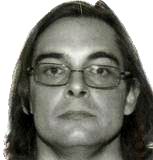
James Ritchie
Serial killer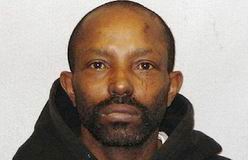 Anthony Sowell
Serial killer · USA · 2007
Anthony Edward Sowell (born August 19, 1959) was an American serial killer iden…
11 victims
Anthony Sowell
Serial killer · USA · 2007
Anthony Edward Sowell (born August 19, 1959) was an American serial killer iden…
11 victims
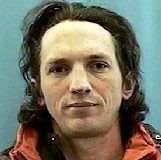 Israel Keyes
Serial killer · USA · 2011
Israel Keyes (January 7, 1978 – December 2, 2012) was an American criminal who…
8 victims
Israel Keyes
Serial killer · USA · 2011
Israel Keyes (January 7, 1978 – December 2, 2012) was an American criminal who…
8 victims
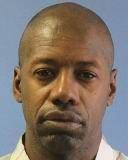 Darren Vann
Serial killer · USA · 2013
Darren Deon Vann — suspected perpetrator; arrested in October 2014; confessed t…
7 victims
Darren Vann
Serial killer · USA · 2013
Darren Deon Vann — suspected perpetrator; arrested in October 2014; confessed t…
7 victims
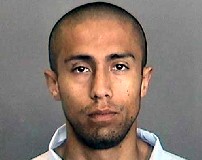 Itzcoatl Ocampo
Serial killer · USA · 2011
Itzcoatl Ocampo was a former Marine accused in Orange County of brutally murder…
6 victims
Itzcoatl Ocampo
Serial killer · USA · 2011
Itzcoatl Ocampo was a former Marine accused in Orange County of brutally murder…
6 victims
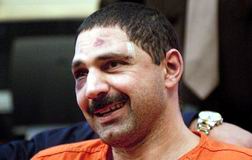 Elias Abuelazam
Serial killer · USA · 2009
Elias Abuelazam (born August 28, 1976) was an Israeli convicted murderer and su…
5 victims
Elias Abuelazam
Serial killer · USA · 2009
Elias Abuelazam (born August 28, 1976) was an Israeli convicted murderer and su…
5 victims
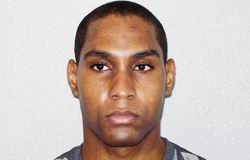 Jason Thomas Scott
Serial killer · USA · 2008
Jason Thomas Scott was a man dubbed as the "mother-daughter killer" after killi…
5 victims
Jason Thomas Scott
Serial killer · USA · 2008
Jason Thomas Scott was a man dubbed as the "mother-daughter killer" after killi…
5 victims
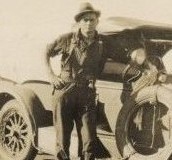 John Rowles
Murderer · 1929
John Rowles was the subject of an investigation that connected multiple disappe…
3 victims
John Rowles
Murderer · 1929
John Rowles was the subject of an investigation that connected multiple disappe…
3 victims
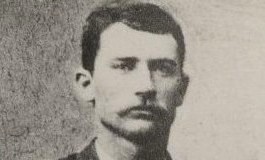 Henry Newton Brown
Murderer · USA · 1870
Henry Newton Brown — 19th century gunman; orphan; raised by relatives in Rolla,…
6 victims
Henry Newton Brown
Murderer · USA · 1870
Henry Newton Brown — 19th century gunman; orphan; raised by relatives in Rolla,…
6 victims
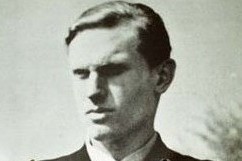 Walter Seifert
Mass murderer · Germany · 1964
Committed suicide by poisoning himself with cyanide the same day; died next day…
10 victims
Walter Seifert
Mass murderer · Germany · 1964
Committed suicide by poisoning himself with cyanide the same day; died next day…
10 victims
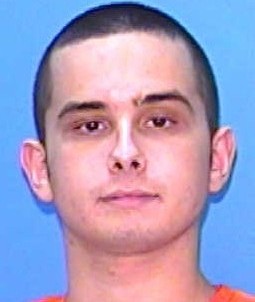 Randy Schoenwetter
Murderer · USA · 2000
Name: Randy Schoenwetter Date of birth: 10/27/81 Eighteenth Judicial Circuit: B…
2 victims
Randy Schoenwetter
Murderer · USA · 2000
Name: Randy Schoenwetter Date of birth: 10/27/81 Eighteenth Judicial Circuit: B…
2 victims
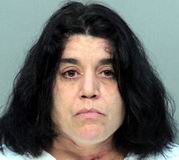 Yudenia Rodriguez
Murderer · USA · 2013
Yudenia Rodriguez, the accused. · Sonia Santiesteban, 65, Rodriguez’s mother an…
1 victim
Yudenia Rodriguez
Murderer · USA · 2013
Yudenia Rodriguez, the accused. · Sonia Santiesteban, 65, Rodriguez’s mother an…
1 victim
- Gender
- male
- Country
- USA
- Location
- Anchorage, Alaska, USA
- Date of birth
- November 4, 1976
- Age at first offence
- 40
- Characteristics
- serial rapist, gang
- Victim profile
- Brianna Foisy, 20, and Jason Netter Sr., 41 / Treyveonkindell Bobby Dwayne Thompson, 21 / Kevin S. Turner, 34, and Bryant C. De Husson, 25
- Method of murder
- Shooting (.357 Colt Python)
- Date(s) of murder
- July 3 - August 28, 2016
- Years active
- 2016
- Date of arrest
- —
- Status
-
Died in custody
Killed during a shootout with members of the Anchorage Police Department in downtown Anchorage on November 12, 2016
Overview
James Dale Ritchie (November 4, 1976 – November 12, 2016) was known in the media as the "Anchorage Serial Killer" and was described as an American serial killer. Throughout 2016, he murdered upwards of five individuals in and around Anchorage, Alaska, most of whom were in parks or along bike paths. After his death, a Colt Python handgun on his person was connected to the string of murders he committed throughout the year.
Other details
Ritchie grew up in the Wonder Park neighborhood of Anchorage, Alaska. He attended East Anchorage High School, where he was noted as being a standout athlete and played on the 1994 state championship football and basketball teams alongside future professional athletes Trajan Langdon and Mao Tosi. Ritchie scored 1200 on his SAT and was recruited by West Virginia University football team and left for college, after which he fell out of contact with his family.
After a semester at West Virginia University, Ritchie dropped out and returned to Alaska. In 1995, he became involved in drug trade and dog fighting. By 1998, Ritchie was an active drug dealer and had adopted the street name "Tiny". Over the following seven years, he was arrested a number of times, predominantly for drug-related offenses.
Ritchie was arrested for the last time in Alaska in 2005. Police apprehended him while committing home invasion, with plastic handcuffs and two handguns in his possession. He pleaded no contest in that case. After serving two years in custody, he resided in Alaska until 2013. He then moved to Broadway, Virginia, where his parents had been living at the time. Save for a pair of moving violations, Ritchie had no court appearances and was observed by police as being a law-abiding citizen.
Following a breakup with his girlfriend, he returned to Alaska in March 2016. Police said he was not homeless and may have resided at more than one location. The FBI and APD task force looked to trace his activities in Virginia and Nevada prior to returning to Alaska in 2016. Investigators had not considered him a suspect due to his lack of run-ins with the law over the decade prior.
Timeline
- July 3, 2016 — Ritchie shot and killed Brianna Foisy (21) and Jason Netter Sr. (41) along a bike path near Ship Creek, west of N Post Road and Viking Drive, east of Anchorage.
- July 5, 2016 — The deaths of Foisy and Netter were ruled a double homicide by the Anchorage Police Department.
- July 29, 2016 — Ritchie shot and killed Treyveonkindell Thompson (21) between Duben Avenue and Bolin Street, in East Anchorage.
- August 28, 2016 — Ritchie shot and killed Kevin Turner (34) and Bryant De Husson (25) at Valley of the Moon Park in Downtown Anchorage.
- September 3, 2016 — Residents were described as alarmed by unsolved outdoor homicides in Anchorage, with victims found on trails, in parks, or on isolated streets.
- September 6, 2016 — Anchorage Mayor Ethan Berkowitz hosted a press conference addressing that gang violence was largely responsible for the record-breaking number of murders in the city.
- November 12, 2016 — Ritchie was killed during a shootout with Officer Arn Salao and Sergeant Marc Patzke of the Anchorage Police Department in downtown Anchorage.
- November 13, 2016 — Police reported that an Anchorage police officer who was shot multiple times downtown was expected to survive, and that the suspect was killed.
- November 14, 2016 — Police reported the wounded officer was in stable condition and recovering after surgeries.
- November 15, 2016 — Police reported that the gun used to attempt to kill Officer Salao was the same Colt Python .357 linked to five homicides in Anchorage in 2016.
- April 26, 2017 — Anchorage Police Department spokesperson Renee Oistad announced that sufficient probable cause was determined to confirm Ritchie was solely responsible for five murders and that the cases were closed.
The offence
Ritchie committed his first two confirmed murders during the early morning hours of July 3, 2016. He shot Brianna Foisy (21) and Jason Netter Sr. (41). The two bodies were discovered together along a bike path near Ship Creek by a bicyclist at 7:45 a.m.
Netter was noted for having extensive run-ins with the law, often regarding his drug-related activity, as well as his child support issues with his two daughters, one of whom changed her name. Foisy was homeless and had fallen into substance abuse as well, with her denying intervention offered by her adoptive mother, Marcella Foisy. The nature of Foisy and Netter Sr.'s relationship was not determined or disclosed. On July 5, the deaths of Foisy and Netter were ruled a double homicide by the Anchorage Police Department.
The third recorded murder took place on July 29, 2016. Shortly after 3 a.m., Ritchie shot the son of his childhood friend Bobby Thompson, twenty-one year-old Treyveonkindell Thompson, multiple times while he was riding his bicycle home from work, between Duben Avenue and Bolin Street, in East Anchorage. Awoken by the sound of gunfire, several residents in the area spotted Ritchie and subsequently called the police. Grabbing Thompson's bicycle, Ritchie wheeled it away from the scene and brought it to his home, where it was spotted but not identified as being involved in a crime by witnesses. Police arrived at Bolin Street, where they found Thompson, who was pronounced dead at the scene shortly after.
During the early hours of August 28, 2016, Ritchie shot dead Kevin Turner (34) and Bryant De Husson (25) in the Valley of the Moon park. An undisclosed female passerby walking through the park discovered De Husson's body along the trail at 1:42 a.m. Police discovered Turner's bullet-riddled body under the pavilion in the park shortly after arriving. Turner was suffering from schizophrenia and bipolar disorder and was homeless at the time, as he had not fared well at assistant living facilities recently. De Husson was described as a notable environmental activist in Anchorage, and his father Gordon De Husson suspected he was on a late night bicycle ride on his new Schwinn to meet a friend when he encountered the fatal encounter between Ritchie and Turner. There was no relation between De Husson and Turner.
Investigation
After Foisy and Netter were ruled a double homicide on July 5, the Anchorage Police Department reviewed hours of surveillance footage and released images of two unidentified men who were persons of interest for the investigation.
Under Sergeant Slawomir Markiewicz's direction, witnesses were interviewed after Thompson's murder, and enough testimonials were given that a composite sketch of the suspect—who would later be positively identified as Ritchie—was created. Shortly after Thompson's murder, the Alaska State Crime Lab confirmed that the same murder weapon responsible for the Foisy and Netter Sr. murders was also responsible for Thompson's murder.
Following the murders of Turner and De Husson, the Alaska State Crime Lab confirmed the murder weapon used to kill Turner and De Husson had also been used in the Foisy, Netter and Thompson homicides. Recognizing a modus operandi displayed by the string of murders, the Anchorage Police Department released an advisory notice for citizens to avoid isolated trails after dark.
Following the Valley of the Moon killings, a Federal Bureau of Investigation involvement was described as being brought on to assist with the investigation. On September 6, Anchorage Mayor Ethan Berkowitz hosted a press conference that addressed that gang violence was largely responsible for the record-breaking number of murders in the city, though he refused to acknowledge the evidence lending towards the serial killer theory.
The FBI offered a $10,000 reward leading to the apprehension of the suspect responsible for Thompson's murder, while refusing to comment on any connection to the other murders, due to the concern that acknowledging that a weapon tying all the crimes together would run the risk of prompting the killer to dispose of it. The joint APD and FBI task force received upwards of 175 tips over the following two months, and none of the tips pertained to Ritchie.
In reporting around the unsolved homicides, police were described as releasing few details on any of the cases and not saying how the victims died in the rest of the cases, while stating investigators had not made any clear connections among the victims. A police spokeswoman, Jennifer Castro, was described as stating police always try to determine if unsolved crimes are related. The common denominators described were that the deaths occurred outdoors, in the early hours, and in isolated places like trails and unoccupied streets.
The victims' families found out about the connection between cases prior to a Tuesday morning press conference, according to Billy Ray Turner, Kevin Turner's brother. On Monday night, police contacted Kevin Turner's family and told them to come to a conference the next morning. Billy Ray Turner said it was the first time they'd heard from law enforcement since shortly after his brother was killed, and detectives told him not to go digging, not being specific about details.
Anchorage Mayor Ethan Berkowitz said police briefed him Monday afternoon on the revelation about the weapon used in the five unsolved homicides and that he was previously unaware of any connection between the slayings. He said he had "actively stayed away" from pursuing information from police about the cases.
Lt. John McKinnon said police had withheld the fact that the same gun had been used in the five homicides—even from the families of the victims—over concerns releasing it would compromise the investigation. McKinnon described that police were trying to preserve the evidence, believing that the strategy led to recovery of the gun after Saturday's shooting. APD Chief Chris Tolley said the gun used to attempt to kill officer Salao was the same gun used in five other homicides in Anchorage in 2016. Anchorage Police Department spokeswoman Renee Oistad later wrote that homicide detectives were able to establish Ritchie possessed the .357 Colt Python before any of the killings and that he acted alone.
After seventy-eight hours of investigation and contacting the victims' families, Anchorage Police Department Chief Chris Tolley hosted a press conference in which he announced the connection between the homicides and the attempt on Officer Salao's life. Lieutenant John McKinnon confirmed the investigation had revealed a connection between the murders, but that the task force withheld it from the public out of concern that Ritchie would have disposed of the Colt Python had he realized it was being sought.
Arrest / detention
No arrest was described in relation to the murders. The event sequence culminated in Ritchie's death during the shootout on November 12, 2016.
Trial
No trial, verdict, or sentence was described for Ritchie.
Sentencing
No sentencing was described because Ritchie was killed in the November 12, 2016 shootout.
Outcome
Following Ritchie’s death, the Colt Python on his person was sent to the Alaska Crime Lab, where it was confirmed to have been the murder weapon responsible for the deaths of Brianna Foisy, Jason Netter Sr., Treyveonkindell Thompson, Kevin Turner and Bryant De Husson. With Oistad's April 26, 2017 announcement, the cases were closed.
The firearm was described as having been purchased in 1971. The weapon was not registered to Ritchie, and the original owner was questioned by Anchorage Police Department, with the intent of discovering how it found its way into Ritchie's possession.
Ritchie was immediately identified as being the assailant responsible for Thompson's murder due to witnesses and the identification of his photo identification matching the composite sketch. While the Anchorage Police Department continued to collect evidence implicating Ritchie’s involvement in the other homicides tied to the Colt Python, the FBI looked to trace his activities in Virginia and Nevada prior to returning to Alaska in 2016.
On April 26, 2017, Anchorage Police Department spokesperson Renee Oistad announced that sufficient probable cause was determined to confirm that Ritchie was solely responsible for the five murders and therefore a confirmed serial killer. Oistad wrote:
"The revolver Ritchie had in his possession in November was linked to five homicides cases as the murder weapon," APD spokeswoman Renee Oistad wrote. "Homicide detectives were able to establish Ritchie possessed the .357 Colt Python before any of the killings and that he acted alone."
In an email just after 5 p.m. on April 26, Oistad said "all involved agencies are declining to further comment on these cases," and APD "does not wish to discuss investigative techniques that could potentially interfere or compromise future investigations." FBI spokeswoman Staci Feger-Pellessier said in a text message:
the FBI "provided safe street task force members and help from our Behavioral Analysis Unit" in the investigation, but would not provide further details. "I can't answer why they (APD) referred to us" for questions.
Aftermath
Officer Arn Salao survived after being shot. Sergeant Marc Patzke and Salao returned fire during the confrontation that killed Ritchie. Salao was taken to an area hospital and moved out of intensive care unit after seven hours of surgery.
Police reported that several days earlier and in related context, an Alaska police officer in Fairbanks (Sgt. Allen Brandt) had been shot while responding to a report of gunfire and later died after complications from surgery to remove bullet fragments from his eye.
Arrest / detention history (pre-2016)
Ritchie’s prior criminal encounters with police were described as including the following:
- In 1998, officers following up on a drug sale investigation encountered Ritchie in an Anchorage apartment. Officers greeted him by his street name of "Tiny". He immediately reached for his waistband when officers came into the apartment, and a loaded semiautomatic handgun fell out of his pant leg, according to charging documents. A search revealed ammunition on Ritchie, along with folded bills and a baggie filled with several rocks of crack cocaine. Officers found an electronic scale in the bedroom, and the owner of the apartment told police Ritchie and her son were apparently selling drugs. Ritchie pleaded no contest to felony misconduct involving a controlled substance in the third degree and was sentenced to three years probation.
- In 1999, on parole, Ritchie was pulled over for driving erratically near Columbine Street and DeBarr Road. Ritchie told officers he had been drinking tequila and beer and taken two Prozac pills. Officers found crack in the glove box and a loaded .45-caliber semiautomatic handgun in the passenger seat, as well as an open beer on the passenger floor of the car, according to court records. Ritchie pleaded no contest to fourth-degree misconduct involving a controlled substance and was sentenced to three years probation.
- In 2000, Ritchie filed for a business license for a vending machine servicing operation called Ritchie Enterprises, using his parents' address. It was unclear whether it got off the ground.
- From 2002 to 2005, Ritchie was arrested several times for parole violations, mostly serving time for those violations in halfway houses, according to state Department of Corrections spokesperson Corey Allen-Young.
- In 2005, Ritchie was arrested for first-degree burglary after police responded to a report of an East Anchorage break-in. Officers found a large wad of money on Ritchie totaling almost $5,500 and eight zip ties in his front coat tied into a set of "flex cuffs." Two guns were later found in the house occupants of the residence said did not belong to them. Ritchie pleaded no contest in the case. Allen-Young said Ritchie spent just over two years in custody before being released on Nov. 16, 2007. Ritchie had not been in correctional custody in Alaska since then, Allen-Young said.
- The last time Ritchie applied for a Permanent Fund dividend was in 2009, according to public records. The last time he had a listed address in Anchorage was a house on Lane Street, in the Russian Jack neighborhood, in 2011.
Police reports also described that it was unclear whether Ritchie actually played college football.
Known victims
Ritchie’s Colt Python was described as being connected through ballistics with crime scenes including two double homicides, one homicide, and the attempted murder of a police officer. The victims named were:
- Brianna Foisy, 20 — shot and killed on July 3, 2016, along a bike path near Ship Creek, west of N Post Road and Viking Drive, east of Anchorage.
- Jason Netter Sr., 41 — shot and killed on July 3, 2016, along a bike path near Ship Creek, west of N Post Road and Viking Drive, east of Anchorage.
- Treyveonkindell Bobby Dwayne Thompson, 21 — shot and killed on Bolin Street on July 29, 2016, in East Anchorage.
- Kevin S. Turner, 34 — shot and killed on August 28, 2016, at Valley of the Moon Park, in Downtown Anchorage.
- Bryant C. De Husson, 25 — shot and killed on August 28, 2016, at Valley of the Moon Park, in Downtown Anchorage.
- Officer Arn Salao — shot and wounded on November 12, 2016, at 5th Street and Cordova Street, in Downtown Anchorage. Salao and Sergeant Marc Patzke returned fire and killed Ritchie.
Shooting incident on November 12, 2016
Officer Arn Salao was responding to an unrelated report of unpaid taxi cab fares when he spotted Ritchie walking down the street at 4:30 a.m. Salao pulled up alongside Ritchie and asked if he had spotted the crime. Ritchie continued walking prompting Salao to repeat the question over his megaphone. Without warning, Ritchie drew his Colt Python and opened fire on Salao, hitting him at least four times, resulting in damage to his bones, intestines and liver.
Salao exited his patrol car and returned fire while also engaging Ritchie in a physical confrontation. Simultaneously, Sergeant Patzke of the K9 Unit spotted the confrontation and fired upon Ritchie, who was killed by a number of gunshot wounds.
Police described the call and timing as coming in at 4:36 a.m. In later reporting, police also described the incident as a clear and intentional ambush and that the shooting began as the officer was initiating a stop. Police stated that the suspect was declared deceased at the scene.
Quotes (verbatim)
"all involved agencies are declining to further comment on these cases,"
APD "does not wish to discuss investigative techniques that could potentially interfere or compromise future investigations."
the FBI "provided safe street task force members and help from our Behavioral Analysis Unit" in the investigation, but would not provide further details.
"I can't answer why they (APD) referred to us" for questions,
"We know from our investigation in the last 78 hours that the gun used to attempt to kill officer Salao was the same gun used in five other homicides here in Anchorage in 2016,"
"It is so critical that we get to the staffing levels to make the streets as safe as possible, because ultimately that is the goal," Chief Tolley said.
"If we had made a big deal about it, then it might have gotten lost or disposed of," McKinnon said.
"Without the ballistics and that gun, we had no evidential way of tying these cases together," Castro said. "That's how important that gun is."
"I want to know where was he shot, how long was he alive, did he suffer? These are the things I'd like to know," Billy Ray Turner said.
"I think it's inappropriate for the civilian authority to intervene in a police investigation," Berkowitz said.
Berkowitz also said he did not think the police erred in withholding the information, or inappropriately prioritized an investigation over public safety.
"I would suspect that the police had access to all kinds of psychological understandings of what a person who is engaged in this kind of behavior would do and how they would behave, and shaped their investigation accordingly," Berkowitz said.
"I think it's a vast oversimplification to think that the police should have compromised their investigation simply to inform the public about the course of their investigation. There's a real possibility the wrong communication at the wrong time could have jeopardized public safety."
Letter from Ritchie to a judge (verbatim)
Ritchie wrote in a letter to the judge in his case:
"lay in bed every night thinking about how I've ruined my life. Then I sit up crying wishing I could go back to when I was in high school."
He also wrote:
"I want to finish college, raise a family and buy a house,"
and:
"Instead as a felon I'll never be able to get a good job."
He wrote further:
"I want to finish college, raise a family and buy a house," he wrote.
Spotted an error, or have more information about this case?