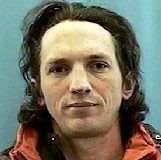
Israel Keyes
Serial killer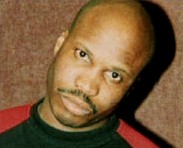 Maury Troy Travis
Serial killer · USA · 2001
Maury Troy Travis (born October 25, 1965; died June 10, 2002) was an American s…
17 victims
Maury Troy Travis
Serial killer · USA · 2001
Maury Troy Travis (born October 25, 1965; died June 10, 2002) was an American s…
17 victims
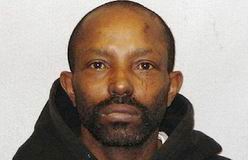 Anthony Sowell
Serial killer · USA · 2007
Anthony Edward Sowell (born August 19, 1959) was an American serial killer iden…
11 victims
Anthony Sowell
Serial killer · USA · 2007
Anthony Edward Sowell (born August 19, 1959) was an American serial killer iden…
11 victims
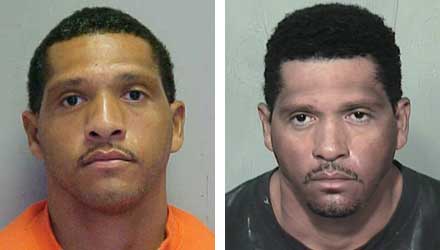 Mark Goudeau
Serial killer · USA · 2005
Mark Goudeau was a suspected serial killer from Phoenix, Arizona, who was charg…
9 victims
Mark Goudeau
Serial killer · USA · 2005
Mark Goudeau was a suspected serial killer from Phoenix, Arizona, who was charg…
9 victims
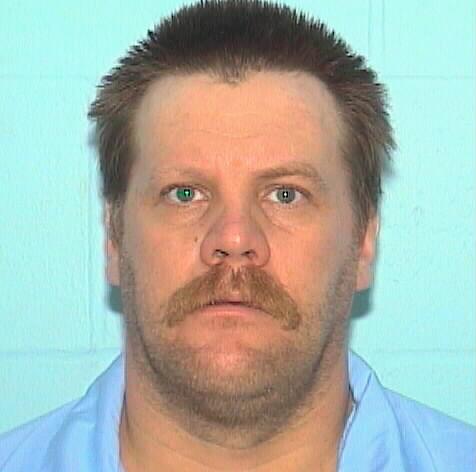 Larry Bright
Serial killer · USA · 2003
Larry Bright Larry Bright pleaded guilty to seven counts of First Degree Murder…
8 victims
Larry Bright
Serial killer · USA · 2003
Larry Bright Larry Bright pleaded guilty to seven counts of First Degree Murder…
8 victims
 Darren Vann
Serial killer · USA · 2013
Darren Deon Vann — suspected perpetrator; arrested in October 2014; confessed t…
7 victims
Darren Vann
Serial killer · USA · 2013
Darren Deon Vann — suspected perpetrator; arrested in October 2014; confessed t…
7 victims
 Dale Hausner
Serial killer · USA · 2005
Dale Hausner was convicted of six counts of first-degree murder, 18 attempted f…
6 victims
Dale Hausner
Serial killer · USA · 2005
Dale Hausner was convicted of six counts of first-degree murder, 18 attempted f…
6 victims
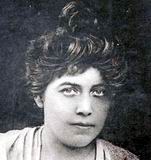 Marguerite Steinheil
Murderer? · France · 1908
Marguerite Jeanne “Meg” Japy Steinheil was a French woman born in Beaucourt on…
2 victims
Marguerite Steinheil
Murderer? · France · 1908
Marguerite Jeanne “Meg” Japy Steinheil was a French woman born in Beaucourt on…
2 victims
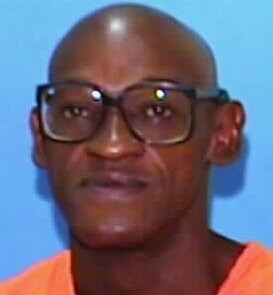 Jerry Haliburton
Murderer · USA · 1981
Jerry Haliburton was born on 09/19/54. The case occurred in the Fifteenth Judic…
1 victim
Jerry Haliburton
Murderer · USA · 1981
Jerry Haliburton was born on 09/19/54. The case occurred in the Fifteenth Judic…
1 victim
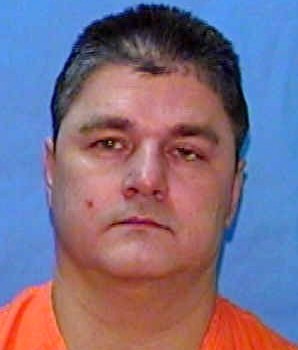 Richard Eugene Hamilton
Murderer · USA · 1994
Richard Eugene Hamilton (date of birth: 02/16/63) was sentenced to death on 06/…
1 victim
Richard Eugene Hamilton
Murderer · USA · 1994
Richard Eugene Hamilton (date of birth: 02/16/63) was sentenced to death on 06/…
1 victim
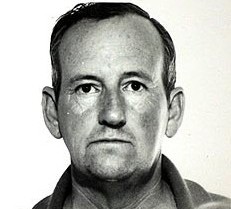 Mack Ray Edwards
Serial killer · USA · 1953
Mack Ray Edwards was an American serial killer who murdered at least six childr…
6 victims
Mack Ray Edwards
Serial killer · USA · 1953
Mack Ray Edwards was an American serial killer who murdered at least six childr…
6 victims
 Martha Ann Johnson
Murderer · USA · 1977
Martha Ann Johnson (also known as Martha Ann Bowen) was an American serial kill…
4 victims
Martha Ann Johnson
Murderer · USA · 1977
Martha Ann Johnson (also known as Martha Ann Bowen) was an American serial kill…
4 victims
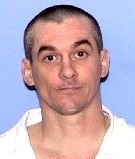 William Irvan
Murderer · USA · 1987
Name: William Irvan TDCJ Number: 999472 Date of Birth: 07/11/1966 Gender: Male…
1 victim
William Irvan
Murderer · USA · 1987
Name: William Irvan TDCJ Number: 999472 Date of Birth: 07/11/1966 Gender: Male…
1 victim
- Gender
- male
- Country
- USA
- Location
- Alaska/Vermont/New York/Washington, USA
- Date of birth
- January 7, 1978
- Age at first offence
- 33
- Characteristics
- rape, dismemberment, serial rapist
- Victim profile
- Samantha Koenig, 18 / Bill and Lorraine Currier
- Method of murder
- Strangulation
- Date(s) of murder
- 2011 - 2012
- Years active
- 2011–2012
- Date of arrest
- March 13, 2012
- Status
-
Died in custody
Committed suicide in his cell by cutting his wrists and choking himself with a bed sheet on December 2, 2012
Case record: Israel Keyes
Israel Keyes (January 7, 1978 – December 2, 2012) was an American criminal who confessed to being a serial killer, rapist, arsonist, burglar, and bank robber. He committed suicide in jail at the Anchorage Correctional Complex after confessing to Koenig’s murder and other violent crimes.
Timeline
- 1996–1998 — Keyes said he sexually assaulted a teenage girl in Oregon; he let the victim go.
- 1998–2000 — Keyes served in the U.S. Army at Fort Lewis, Fort Hood, and in Egypt.
- 2001 — Keyes was discharged from Fort Lewis Army Base in Washington state.
- 2007 — Keyes started a construction business in Alaska, Keyes Construction.
- February 1 — Samantha Koenig, 18, was abducted from her place of employment in Anchorage, Alaska.
- June 2, 2011 — Keyes flew from Alaska to Chicago, rented a car, and drove almost 1,000 miles to Essex, Vt.
- June 2011 — Bill and Lorraine Currier of Essex, Vermont disappeared after leaving work.
- June 8, 2011 — Keyes reportedly broke into the Curriers’ home and tied them up before driving to an abandoned farmhouse.
- April 2009 — The FBI confirmed Keyes robbed the Community Bank branch in Tupper Lake, New York.
- March 2012 — Keyes was arrested in Texas.
- March 15 — Keyes was jailed since March on federal charges connected with Koenig’s disappearance and death.
- October 23, 2012 — Federal agents and Anchorage crime scene investigators scoured Keyes’s prior home in West Anchorage as part of ongoing investigations.
- December 2, 2012 — Keyes was found dead in his Anchorage jail cell in an apparent suicide; he committed suicide in his cell by cutting his wrists and choking himself with a bed sheet.
- December 26, 2012 — The case details were published with interviews and statements from investigators.
- December 8, 2012 — Interview statements were published about Keyes’s answers to motive questions.
- December 5, 2012 — The FBI released additional details about Koenig’s abduction, ransom note communications, and disposal of her body.
Background
Keyes was born in Richmond, Utah in 1978 and was raised in a Mormon family. He was homeschooled. His family moved to the Aladdin Road area north of Colville, Washington, where they became neighbors and friends with the family of Chevie Kehoe, and occasionally attended a Christian Identity church. Keyes later rejected religion entirely and identified as an atheist shortly before his arrest.
Keyes served in the U.S. Army from 1998 through 2000 at Fort Lewis, Fort Hood, and in Egypt. He served in the U.S. Army for three years, including a brief stint in Egypt, and was discharged from Fort Lewis Army Base in 2001.
Keyes started a construction business in 2007 in Alaska, Keyes Construction, working as a handyman, contractor, and construction worker. Investigators later associated him with cache planning and body disposal items across the United States.
He lived in Anchorage, Alaska, including living with his daughter and a girlfriend in the Turnagain neighborhood. Neighbors described him as living quietly and doing handyman work.
Keyes told authorities he almost killed a young couple and an Anchorage police officer at a beach overlook about a month before killing the Curriers in Vermont. Keyes said he was hiding in the park with a gun and a silencer and ready to ambush his victims and that he stopped when a second police officer arrived on the scene. He described this as preventing trouble for “the cop guy” because backup showed up. The silencer wound up in a stockpile of murder supplies that Keyes stashed in upstate New York near a home he owned there. Keyes admitted to placing several such caches around the country.
Keyes’s plan for travel and killing was described as involving leaving Alaska and working as an itinerant contractor making repairs in hurricane-struck areas of the United States, which officials said would allow him to move and commit murders.
In interviews, Keyes said there was “no one who knows me or who has ever known me, who knows anything about me, really,” and he said, “There’s no one who knows me or who has ever known me, who knows anything about me, really,” and also that “He was well-known in Anchorage as a really good handyman.”
Other details
Investigators said Keyes planned murders long ahead of time, took extraordinary action to avoid detection, and did not have a victim profile. Officials said he always killed far from home and never in the same area twice. On murder trips, Keyes kept his mobile phone turned off and paid for items with cash, and he had no connection to any of his victims.
In the Currier murders, investigators said he flew to Chicago and rented a car to drive the 1000 additional miles to Vermont. Investigators also said he used the murder kit he had hidden two years earlier to perform the murders.
Investigators said Keyes admired Ted Bundy and shared several similarities with him, including that both were heavy drinkers and methodical and intelligent, with a feeling of possession over victims. The accounts also described differences: Bundy’s murders were spread throughout the country mainly because he lived in many different areas; Keyes’s approach included intentional efforts to avoid detection. Bundy was described as targeting “attractive young women” with hair parted down the middle, while Keyes had “no particular type of victim.”
Keyes told investigators he was “two different people,” and in one reported statement he said:
“There's no one who knows me or who has ever known me, who knows anything about me, really,”
He also threatened to withhold information if his name got out.
FBI behavioral analysis described him as a loner who did not have a clear pattern in selecting victims, varying in gender and age, and investigators said he “could have ultimately answered” how many additional victims there were.
The offence
Kidnapping and murder of Samantha Koenig (Anchorage, Alaska)
Samantha Koenig was an 18-year-old barista working in Anchorage, Alaska. Keyes kidnapped Koenig from her place of employment. Police said Keyes stole her debit card and other property. Authorities said Koenig was abducted from the coffee stand, taken away at gunpoint, and was murdered the following day.
Authorities stated Keyes sexually assaulted Koenig before he murdered her. After Koenig’s death, investigators said Keyes left on a cruise out of New Orleans and left Koenig’s body in a shed. When he returned home, he took a photograph of her body with a 4-day-old issue of the Anchorage Daily News, maintaining the illusion that she was still alive in his ransom demand.
Authorities said Keyes demanded US$30,000 in ransom. FBI accounts described that Keyes posed Koenig’s body to make it appear she was still alive and took a Polaroid photo of her tied up, with a newspaper dated Feb. 13. The FBI said Keyes typed a ransom note demanding $30,000 from Koenig’s family on the back of a photocopy of the photo and sent a text message to Koenig’s boyfriend on her cellphone with directions where he had left the note at a local dog park.
After demanding ransom, Keyes dismembered Koenig and disposed of her body in Matanuska Lake north of Anchorage. FBI accounts described that Keyes dismembered Koenig’s body and disposed of the remains in a frozen lake north of Anchorage after cutting a hole in the ice with a chain saw. Koenig’s body was recovered from the lake in April after Keyes told authorities of its location.
FBI statements released additional details about the abduction: a surveillance camera showed Koenig being led away from the coffee stand by an apparently armed man wearing a hooded sweatshirt. Another video sequence showed Keyes returning for Koenig’s cellphone late that night, leaving Koenig bound in his truck, followed four minutes later by a man identified by the FBI as Koenig’s boyfriend. The videos were described as showing Keyes and another person, with Koenig later breaking away and Keyes chasing and tackling her and pointing his gun at her, telling her she should not do anything to make him kill her.
Police stated that Keyes removed the battery from Koenig’s cellphone to avoid being tracked. Authorities said Keyes removed items from a truck to disguise it and later reinstalled them. Police said a light switch was close to a panic button but Koenig never pushed it because she was too afraid.
Authorities said Keyes used Koenig’s cellphone to send text messages intended to conceal the abduction and communicate with Koenig’s boyfriend and the coffee stand owner. Prosecutors said Keyes used Koenig’s cellphone to send text messages and made withdrawals from automated teller machines in Alaska, Arizona, New Mexico, and Texas before his arrest in Texas.
Prosecutors said Keyes sent a ransom demand after returning to Anchorage on Feb. 17.
Investigators said Koenig was the only known victim in Alaska.
Murder of Bill and Lorraine Currier (Essex, Vermont)
Bill and Lorraine Currier of Essex, Vermont disappeared after leaving work in June, 2011. Authorities said Keyes reportedly broke into the Curriers’ home on the night of June 8 and tied them up before driving to an abandoned farmhouse. Authorities stated Bill Currier was shot before Lorraine Currier was sexually assaulted and strangled.
The accounts stated that their bodies had not been found after their disappearance. The bodies were described as never found after the house was demolished and taken to a landfill. Keyes told investigators he hid their bodies in an abandoned farmhouse in Essex, Vt., but it had been torn down by the time investigators got that information.
Authorities said Keyes used a “murder kit” he had hidden near their home, including a handgun and various supplies. Authorities said he used these supplies during the murder of the Curriers. After the murders, Keyes moved most of the items to a new hiding place in Parrishville, New York, where they remained until after his arrest.
Other confessed murders and disposal patterns
Keyes admitted to killing four people in Washington State; investigators described these claims as the subject of an active investigation by the FBI as well as police in Washington state. Authorities said he confessed to killing at least one murder in New York State and also planned additional murders long ahead of time.
FBI accounts described that Keyes confessed to killing eight people across the United States, with authorities believing the number was less than 12 based on details he provided. In some accounts, Keyes confessed to the Curriers and Koenig along with five other people, but details for those other victims were described as scarce, and he did not identify the other victims or say where their remains were located beyond general locations described by authorities.
Authorities also said Keyes could not identify victims by name, limiting the number of homicides definitively pinned to him.
Investigation and arrest
After the kidnapping and death of Samantha Koenig, authorities described that Keyes’s demanded ransom was paid. Police tracked withdrawals from Koenig’s account as Keyes moved throughout the American Southwest. During that time, investigators described a decision not to release surveillance video of Koenig’s abduction as controversial.
Keyes was arrested in Texas after using Koenig’s debit card, which was previously used in New Mexico and Arizona. Keyes was extradited to Alaska, where he confessed to Koenig’s murder.
According to the Anchorage Daily News, Keyes was in custody and awaiting trial for federal charges connected to Koenig’s kidnapping and death, with his trial scheduled to begin in March 2013. Authorities said the U.S. Attorney’s Office had not yet decided whether to seek the death penalty.
The March arrest followed a traffic stop in Lufkin, Texas. Keyes was described in one account as being charged with financial fraud and as having been brought to Anchorage. The accounts described that agents found Koenig’s debit card and cellphone (with the battery removed to prevent tracking) in his possession or vehicle, and he confessed after interrogation.
Sentencing
No sentencing occurred because Keyes died by suicide before trial outcomes.
Appeals
No appeals were reported.
Outcome
Israel Keyes committed suicide in his jail cell on December 2, 2012. He was found dead after guards discovered him.
Police and officials described that he was arrested in Texas in March on suspicion connected to Koenig’s disappearance and death. Investigators later continued to seek identification of victims and possible connections to unsolved murders and missing persons cases.
Mary Rook, FBI supervisor in Alaska, said:
“We're going to continue to run down leads and continue our efforts to identify his victims so we can bring some closure to the families,”
Aftermath
Keyes was survived by at least one child, a school-age daughter.
Authorities said the criminal investigation would continue indefinitely because there would be unknowns, even if there was no prosecution. Kevin Feldis, assistant U.S. attorney leading the prosecution, said:
“It gives us no pleasure to dismiss the charges against Mr. Keyes, but that's what the law requires,”
Feldis also stated:
“because there will inevitably be many, many unknowns,”
In one account, Koenig’s case received attention including supporters raising a reward fund and holding candlelight vigils.
In another account, Keyes’s burial was reported to occur in Washington state on Sunday (following his death).
Spotted an error, or have more information about this case?