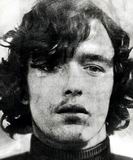
David McGreavy
Murderer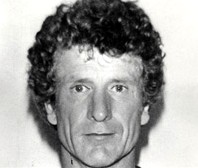 Arthur Hutchinson
Murderer · United Kingdom · 1983
Arthur Hutchinson was an English murderer and rapist who committed three murder…
3 victims
Arthur Hutchinson
Murderer · United Kingdom · 1983
Arthur Hutchinson was an English murderer and rapist who committed three murder…
3 victims
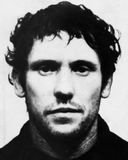 Barry Prudom
Murderer · United Kingdom · 1982
Barry Prudom was the prime suspect in the killings of police officers after pol…
3 victims
Barry Prudom
Murderer · United Kingdom · 1982
Barry Prudom was the prime suspect in the killings of police officers after pol…
3 victims
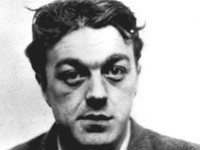 Harry Maurice Roberts
Murderer · United Kingdom · 1966
Name: Harry Maurice Roberts Birth year: 1936 Birthplace: Kennington, London, En…
3 victims
Harry Maurice Roberts
Murderer · United Kingdom · 1966
Name: Harry Maurice Roberts Birth year: 1936 Birthplace: Kennington, London, En…
3 victims
 Ronald Jebson
Murderer · United Kingdom · 1970
Ronald Jebson (born 1939) was a convicted pedophile who was also known as Ronal…
3 victims
Ronald Jebson
Murderer · United Kingdom · 1970
Ronald Jebson (born 1939) was a convicted pedophile who was also known as Ronal…
3 victims
 Colin Pitchfork
Murderer · United Kingdom · 1983
Colin Pitchfork was born in 1961 in Bristol, England. He was described as a loc…
2 victims
Colin Pitchfork
Murderer · United Kingdom · 1983
Colin Pitchfork was born in 1961 in Bristol, England. He was described as a loc…
2 victims
 Robert Spahalski
Serial killer · USA · 1990
Robert Spahalski was sentenced to 100 years in prison on December 13, 2006. Spa…
4 victims
Robert Spahalski
Serial killer · USA · 1990
Robert Spahalski was sentenced to 100 years in prison on December 13, 2006. Spa…
4 victims
 Daniel Plata Estrada
Murderer · USA · 1995
Daniel Angel Plata Estrada was convicted of capital murder on October 14, 1996.…
1 victim
Daniel Plata Estrada
Murderer · USA · 1995
Daniel Angel Plata Estrada was convicted of capital murder on October 14, 1996.…
1 victim
 Patricia Allanson
Murderer? · USA · 1974
Patricia Taylor Allanson Patricia Allanson was born in 1937. She grew up as “Pa…
3 victims
Patricia Allanson
Murderer? · USA · 1974
Patricia Taylor Allanson Patricia Allanson was born in 1937. She grew up as “Pa…
3 victims
 Kimberly Renee Poole
Murderer · USA · 1998
Kimberly Renee Poole was a 21-year-old housewife and mother in the Winston-Sale…
1 victim
Kimberly Renee Poole
Murderer · USA · 1998
Kimberly Renee Poole was a 21-year-old housewife and mother in the Winston-Sale…
1 victim
- Gender
- male
- Country
- United Kingdom
- Location
- Worcester, Worcestershire, West Midlands, England, United Kingdom
- Date of birth
- 1950 or 1951
- Age at first offence
- 23
- Characteristics
- child killer, torture
- Victim profile
- Paul Ralph, 4, and his sisters Dawn, 2, and Samantha, 9-month-old
- Method of murder
- Paul was strangled with a length of wire. Dawn’s throat was cut. Samantha died from a compound fracture to the skull, caused by beating.
- Date(s) of murder
- April 13, 1973
- Years active
- 1973
- Date of arrest
- Same day
- Status
-
Life imprisonment
Sentenced to multiple life terms with minimums of 20 years in July 1973
Case record: David McGreavy
Background
David McGreavy was born in 1950 or 1951. He was an English convicted murderer who killed three small children in the United Kingdom in 1973.
McGreavy was in the news in 2013 when an anonymity order was lifted based on findings that there was a public interest in his application for parole and that there was no immediate danger to his life. As of 2013, he was being held in vulnerable prisoners' unit, where he had spent most of his 40 years in prison.
He was given multiple life sentences with a minimum term of 20 years, and he served many years beyond that minimum tariff. He was eligible for parole after exceeding his 20-year minimum life sentence imposed in July 1973.
Publicity surrounding the case had been a key reason for an anonymity order that was issued during parole proceedings and was later lifted.
The offence
McGreavy killed three children in Worcester in April 1973 while babysitting. The victims were a four-year-old boy, a two-year-old girl, and a nine-month-old baby. The offences included impaling the children’s bodies on garden railings.
The murders were described as grisly, and McGreavy’s only explanation was that the baby would not stop crying.
The children were identified as:
- Paul Ralph, four
- Dawn Ralph, two
- Samantha Ralph, nine-month-old
Clive and Dorothy Urry’s family home was involved in the wider account, and McGreavy was described as a family friend and lodger at Dorothy’s family home. McGreavy was also described as a lodger with the children’s parents and as someone who had been left in charge of the children.
The account described the victims’ deaths in these ways:
- Paul was strangled with a length of wire.
- Dawn’s throat was cut.
- Samantha died from a compound fracture to the skull, caused by beating.
The killings culminated with McGreavy impaling the children’s bodies on an iron fence or metal-spiked garden railings on railings outside the house.
McGreavy was described as “the Monster of Worcester,” and the case was widely covered in the media for decades, including continued sporadic coverage.
Investigation
After the deaths were discovered, a police officer found the bodies impaled on some metal-spiked garden railings between gardens at 1.20am. McGreavy was found at 3.05am in nearby Lansdowne Road, interviewed in a police car, and then taken to a police station.
McGreavy was interviewed in a police car and then taken to a police station. The next afternoon he began to cry and put his head between his knees.
McGreavy said: “It was me, it wasn’t me. She wouldn’t stop crying. I put my hand across her face and carried on from there.”
Arrest and confession
McGreavy was arrested nearby two hours after the bodies were found and confessed to the killings.
After the murders were discovered, McGreavy had admitted it.
Trial
He was sentenced to life imprisonment.
At sentencing, the judge said: “There is only one sentence I can pass, and that is life imprisonment. “But in this case, so appalling to the Crown, and in the public interest so grave as to risk any repetition, I recommend the sentence should not elapse before 20 years.”
The case involved multiple life terms with minimums of 20 years.
Sentencing
In July 1973, McGreavy was sentenced to life imprisonment for the murders of the three children.
His sentence included:
- multiple life terms
- minimum term of 20 years
- July 1973 was when the minimum life sentence was imposed
He served the 20-year minimum tariff and continued in custody thereafter.
Appeals
In 2009, an anonymity order was issued by the High Court of Justice during parole board proceedings.
The anonymity order was resisted by the British press and the Press Association, supported by the Secretary of State for Justice, on arguments that setting such a precedent would prevent coverage of dangerous criminals.
The gagging order was lifted on 21 May 2013. Lord Justice Pitchford of the Court of Appeal of England and Wales and Mr Justice Simon of the High Court of Justice discharged the anonymity order.
During the 2013 proceedings, there was discussion of arguments that were made about whether renewed hostility from other prisoners was likely and whether there was any real and immediate threat to McGreavy’s life.
Guy Vassall-Adams, counsel for the press, told the court: “That doesn’t even give you the half of it.” He said: “...the full facts are exceptionally horrific by even the standard of murders, yet the order restricted the media from stating that there were three sadistic murders.” He said: “the arguments about whether the media should be allowed to endanger his life or imperil his chances of rehabilitation did not apply.” He also said: “The injunction protects confidential information, which is the new identities. It doesn't prevent the media reporting what is already public.” He also said: “People will be outraged to find out that his case is being held in secret. It is hardly a way for the public to be reassured that the justice system is on their side and not that of the criminals.”
McGreavy’s counsel Quincy Whitaker told the High Court that naming him would put him in danger from other prison inmates and that he had already been the victim of a serious assault.
Quincy Whitaker argued: “a serious likelihood of a serious attack” on McGreavy if his identity were revealed. She argued that this would infringe his rights under the 1998 Human Rights Act to not have his life endangered or be subject to inhuman or degrading treatment.
The High Court ruling included that McGreavy had spent much of his sentence in vulnerable prisoners’ units because of danger to his safety on ordinary prison wings. It also included that he had shown a fine ability as an artist.
Outcome
The High Court withdrew McGreavy’s right to anonymity on 21 May 2013.
McGreavy was described as being in a vulnerable prisoners’ unit and monitored closely.
He had been repeatedly attacked and threatened with violence in prison, with the High Court ruling describing assaults and threats.
As of 2013, he remained eligible for parole consideration after exceeding his minimum tariff.
Aftermath
Following the lifting of the anonymity order, Dorothy Urry and family members were described as remaining affected by the murders and as speaking publicly about release and identity.
Dorothy Urry (mother of the victims) said: “He might as well have killed me.” “I lost my children, my husband, my home, my sanity – everything – because of him. I won’t find peace until he is dead and I am laid to rest with my babies.”
Dorothy Urry said: “I cannot believe it. This man took three children's lives. He should have got the electric chair.” “Why should this man be let out of prison? He is still torturing me and this pain is going to be with me until the day I die.”
Dorothy Fields-Urry (former sister-in-law of Mrs Urry) said: “He is the scum of the earth for what he did and he should never be let out,” and added: “It was unbelievable what he did to those children – I think it was the worst thing that I have ever heard.” She also said: “I don’t think he has shown any remorse for what he has done and he should stay in prison until he dies.”
Hazel Nicholls said: “He should never be let out again – never. Life should mean life after what he did.” She also said: “He should not be able to “hide” behind a new identity or be transferred to open prison conditions.” “Why should he have any freedom at all? He never gave those poor kids any freedom,” and: “He should have been hanged, there’s no doubt about it, he knew what he was doing.”
Worcester MP Robin Walker said: “It’s one of those cases people feel extremely strongly about, given it is such a hideous crime.” “It is one of those cases where people feel life should mean life.” “I find it very difficult to understand how the court can decide that people could be released or moved into a more open system.”
Prison history and conditions
As of 2013, McGreavy had been held in vulnerable prisoners’ unit where he spent most of his 40 years in prison.
He was described as having spent time in protected conditions and being segregated where monitored.
The High Court described incidents involving prison violence:
- In 1975, he was the victim of a serious assault.
- In May 1995, an attempt was made by prisoners to attack him in an open prison; the attempt was thwarted.
- In 1978, he was threatened with violence.
- In January 1991, his cell was fouled when he had been back in closed conditions for only four days.
- In 1994, he was threatened with violence after press reports.
- In 1996, he was assaulted by prisoners.
- In 2005, he was threatened with violence after press reports.
The narrative also described that he had previously spent two years in an open prison until “hostile media coverage” led to him being returned to closed conditions “for his own safety.”
He had been transferred to category D open conditions as long ago as 1994, and the transfer to Leyhill Prison in south Gloucestershire broke down after other inmates learned of his offence. He was subsequently returned to category C closed prison conditions, though he retained category-D status.
Parole and legal status during 2009–2013
McGreavy’s eligibility to apply for parole was described, and in 2009 he applied again for parole and it was denied in that account.
In February 2009, he unsuccessfully challenged the Home Secretary’s decision that he must remain in category C conditions while undertaking further assessments and work. The bid was rejected by Mr Justice Silber.
During that case, the judge made the anonymity order that lasted until it was lifted in 2013.
McGreavy applied for, and was granted, an anonymity order after publication.
In 2013, the Parole Board again was expected to consider whether McGreavy was ready to be reintegrated into society, and Dorothy had written a letter begging them to keep him behind bars.
Other details
McGreavy was described as having engaged in painting and as having successfully adjusted and accepted rehabilitation.
In 2006, McGreavy was photographed on day release in Liverpool visiting a hostel from Ford Open Prison.
A newspaper account described Dorothy Urry’s involvement and how she was not allowed to go back to her home because it was a crime scene, and she was not even allowed to see the bodies in the mortuary.
Dorothy Urry said: “All I wanted was to see my babies one last time. I wanted to hold them in my arms and say goodbye. I kept thinking someone was going to tell me there had been a terrible mistake and they were someone else’s children, or that David had lied.” “I blamed myself for what happened. I still do. If I hadn’t been at work they would still be here. But I couldn’t understand how it had happened. David was amazing with the children and even shared a room with Paul. I can’t recognise the man who did those things to my children.”
Dorothy Urry described her reaction after the murders and said: “The doctor had prescribed sedatives and anti-depressants and one night I swallowed them all.” “I passed out thinking I was going to join my children but Ann found me.” “When I woke up on the hospital ward the next day it was like losing them all over again. I haven’t been truly happy a single day since they died.”
Dorothy Urry described her later life, including that in 1978 she married Frank Harry and that she had complications with her third pregnancy and could not have any more children.
Dorothy Urry said: “Seeing Ann’s two children every day was tearing me apart. I couldn’t take the fact they were still there and my babies weren’t.” “I couldn’t even stand to be around children, especially in my own family.” “I don’t go to nieces’ and nephews’ birthdays or christenings. It’s not that I don’t love them, but seeing them is a constant reminder that my three are gone.” “It makes me think about what they would look like now. I wonder who they would have married, whether I would be a grandmother. All those things I had to look forward to have been taken away.”
A narrative included that McGreavy lodged at the home of Clive and Dorothy Ralph in March 1973 after getting to know Mr Ralph at the Vauxhall public house in Rainbow Hill, where they both drank.
A narrative described the evening before the murders and said: “Clive left David with the children and came to pick me up at 11 o’clock.” “But when we pulled up at the house, a policeman was on the doorstep.” “At the station they told us all three had been murdered and David had admitted it.”
In one account, it stated that in 2013 McGreavy was being held in a vulnerable prisoners' unit and had spent most of his 40 years behind bars in protected conditions.
A narrative included that in 2009 an anonymity order was issued by the High Court of Justice during parole board proceedings, resisted by the British press, and supported by the Secretary of State for Justice.
A narrative included that the gagging order was lifted on 21 May 2013 by Lord Justice Pitchford and Mr Justice Simon.
Spotted an error, or have more information about this case?