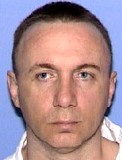
Donnie Lee Roberts
Murderer Brian Kevin Rosenfeld
Murderer · USA · 1985
Brian Kevin Rosenfeld Brian Kevin Rosenfeld was sentenced to three concurrent l…
23 victims
Brian Kevin Rosenfeld
Murderer · USA · 1985
Brian Kevin Rosenfeld Brian Kevin Rosenfeld was sentenced to three concurrent l…
23 victims
 Russell Ellwood
Murderer · USA · 1991
Russell Ellwood was a former taxi driver. Authorities suspected him of killing…
20 victims
Russell Ellwood
Murderer · USA · 1991
Russell Ellwood was a former taxi driver. Authorities suspected him of killing…
20 victims
 Robert Martines Perez
Murderer · USA · 1994
Name: Robert Martines Perez · Other name used in proceedings: Robert Martinez P…
15 victims
Robert Martines Perez
Murderer · USA · 1994
Name: Robert Martines Perez · Other name used in proceedings: Robert Martinez P…
15 victims
 Billy Frank Vickers
Murderer · USA · 1993
Billy Frank Vickers Vickers was executed by lethal injection in Texas on Januar…
14 victims
Billy Frank Vickers
Murderer · USA · 1993
Billy Frank Vickers Vickers was executed by lethal injection in Texas on Januar…
14 victims
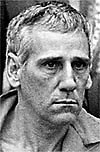 James Rodney Johnson
Murderer · USA · 1991
James Rodney Johnson was executed by lethal injection in Missouri on January 9,…
4 victims
James Rodney Johnson
Murderer · USA · 1991
James Rodney Johnson was executed by lethal injection in Missouri on January 9,…
4 victims
 Misty Stoddard
Murderer · USA · 2012
Misty Stoddard was a 37-year-old resident of Sarasota County. She was the stepm…
1 victim
Misty Stoddard
Murderer · USA · 2012
Misty Stoddard was a 37-year-old resident of Sarasota County. She was the stepm…
1 victim
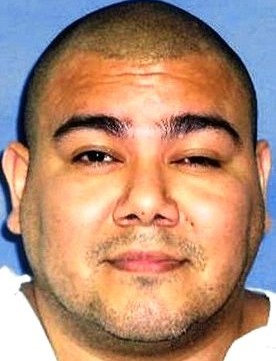 David Martinez
Murderer · USA · 1994
David Martinez was convicted and sentenced to death for the 1994 capital murder…
2 victims
David Martinez
Murderer · USA · 1994
David Martinez was convicted and sentenced to death for the 1994 capital murder…
2 victims
 Reginald Love Powell
Murderer · USA · 1986
Reginald Love Powell was the defendant. Freddie Miller and Lee Miller were the…
2 victims
Reginald Love Powell
Murderer · USA · 1986
Reginald Love Powell was the defendant. Freddie Miller and Lee Miller were the…
2 victims
- Gender
- male
- Country
- USA
- Location
- Louisiana/ Texas, USA
- Date of birth
- February 9, 1971
- Age at first offence
- 20
- Characteristics
- drugs, drug addict, alcoholic
- Victim profile
- A man / Vickie Bowen (his girlfriend)
- Method of murder
- Shooting
- Date(s) of murder
- 1991 / October 15, 2003
- Years active
- 1991–2003
- Date of arrest
- —
- Status
-
Executed
Sentenced to death in Texas on October 28, 2004; executed by lethal injection in Texas on October 31, 2012
Background
Donnie Lee Roberts was convicted in Texas of capital murder and was sentenced to death.
Roberts was 41 at the time of his execution on October 31, 2012.
The offence
Roberts was executed for fatally shooting his girlfriend, Vicki Bowen, at her East Texas home.
Authorities stated that Roberts apparently met Bowen at a bar and moved in with her at her Lake Livingston home, about 75 miles northeast of Houston. Their relationship soured because Roberts was not working and was abusing drugs and alcohol. Authorities stated that Roberts shot Bowen after she refused his demand for money.
A medical examiner determined Bowen was killed with two gunshots to her head.
At the time of Bowen’s death, Roberts and Bowen lived together.
Investigation
On October 16, 2003, Bowen did not show up for work. A co-worker went to check on her and found Bowen’s body wrapped in a blanket and lying in a pool of blood. The front door of the home was open when the co-worker entered after knocking and receiving no answer.
The investigation found blood spatters in the living room on the coffee table, the couch, and the walls. Bowen was still in the scrubs she had worn at work the previous day and was lying face down with her head turned to the side.
It was immediately apparent from an examination of the scene that Bowen’s television and her son’s truck were missing.
The police found Roberts after tracking down the stolen truck. It was later determined that Roberts had taken the truck, the television, Texans/Titans football tickets, jewelry, a Western Union money order, a .22 rifle, and a .22 pistol. Authorities stated that Roberts sold the football tickets for one hundred dollars.
The Western Union money order was found in the residence where Roberts had parked his truck. The television and the jewelry were never recovered.
Authorities stated that Roberts bought cocaine from Edwin Gary on October 15, 2003, on three different occasions, with the last involving trading the .22 caliber pistol. Roberts apparently abandoned the .22 rifle, later determined to be the murder weapon, a few blocks from where he was found.
Roberts gave a confession. In the confession, authorities stated that Roberts acknowledged “a crack cocaine problem” and said he would go to bars, get drunk, and then look for drugs. The confession included:
“I pointed the gun at her and I told her just give me some money.”
Later in the interview, Roberts stated:
“I pointed the gun at her and I said, ‘if you'd just give me some money.' And she said ‘No.' And then I said, ‘Look, it doesn't have to be this way.' That's all I remember saying to her. And the next thing I know, I shot her.”
Roberts told authorities that he made several trips from the house where Bowen was shot, collecting property that he took into town to sell and trade for crack.
Roberts also surprised detectives by confessing to the shotgun death of a man that had happened a decade earlier in Natchitoches Parish, Louisiana. Louisiana authorities initially believed the victim, Al Crow, had died of asphyxiation in a fire at the camper trailer where he was living but reopened the case after Roberts’ disclosure. Authorities stated that they found shotgun pellets and determined it was a homicide. Roberts was charged with murder but was not tried for Crow’s death.
At the time of Roberts’ arrest for the October 2003 slaying of Bowen, he had violated probation for a robbery conviction in Louisiana by fleeing to Texas after dropping out of a drug treatment program.
Arrest
Roberts was arrested at a suspected crack house in Livingston after a truck missing from Bowen’s home was spotted there the same day Bowen’s body was discovered.
District Attorney Lee Hon stated:
“He was cooperative and confessed several times.” He also stated: “He was saying he wanted the death penalty.”
Trial
Roberts was convicted of capital murder. The Texas Court of Criminal Appeals’ opinion stated that, pursuant to the jury’s answers to the special issues set forth in Texas Code of Criminal Procedure, Article 37.071, §§2(b) and 2(e), the trial judge sentenced him to death.
On direct appeal, Roberts raised sixteen points of error, and the Texas Court of Criminal Appeals found them to be without merit and affirmed.
During trial, Roberts testified and tried to blame Bowen for the gunfire. He testified that he was acting in self-defense by grabbing a .22-caliber rifle after seeing Bowen reach down inside a couch to locate a pistol kept there.
Roberts’ testimony included a different sequence of events than his confession. He claimed that he picked up the .22 rifle because it was out of place near the door. He also claimed that he saw what looked like a .22 pistol in Bowen’s pocket and that Bowen moved her hand to her pocket to reach for it. He further testified that he “must have chambered a round into the .22 rifle at that time,” but he did not remember if he pulled the safety off. He also claimed he did not remember his gun firing but said he knows it did.
Roberts admitted he took items of Bowen’s property later, but he testified that he did not intend to rob Bowen at the time he shot her.
In his argument on the factual sufficiency issue, Roberts’ brief as quoted in the Texas opinion included:
“It may seem bold to claim that the evidence is insufficient to prove capital murder where the defendant said he pointed a gun at the victim and told her to give him the money.”
He also argued:
“no other evidence to show that a robbery took place.”
He claimed the request for “the money” was for twenty dollars that Bowen typically left for him in the morning, and he asserted that they shared expenses and that testimony at a pre-trial hearing established he gave Bowen ninety-five percent of his pay when he was working.
The Texas Court of Criminal Appeals stated that Roberts began with his own admission that he pointed a gun at Bowen and demanded money from her immediately before he killed her. It also noted that “give me the money” was characterized by Roberts in videotaped description, but that the court found the videotape showed that Roberts said “give me some money.”
The court’s reasoning included that, even if Roberts’ demand had been treated as previously agreed-upon payments, Bowen could decide not to continue advancing sums to support Roberts’ drug habit. The court stated that Roberts’ belief that Bowen should continue giving him money did not absolve him of intent to take money he knew did not belong to him, or of the threat and use of deadly force to accomplish that objective.
The Texas Court of Criminal Appeals found the evidence factually sufficient to establish the underlying offense of robbery.
Expert testimony on alcohol and cocaine
Roberts attempted to present expert testimony during the punishment phase through medical doctor Katherine McQueen, a medical doctor who conducted clinical research in the treatment of alcohol and drug disorders and more specifically with regard to treating “alcohol and cocaine dual dependence.”
The trial court conducted a gatekeeping hearing. During that hearing, Dr. McQueen expressed an opinion that:
“the event would not have occurred without both his diagnoses [alcohol and cocaine dependence] and the presence of [these] substances.”
When asked by the prosecutor:
“So is this another way of saying that you believe that alcohol dependence and cocaine dependence caused him to commit capital murder,” she replied: “I would not say that.” When asked for clarification, she stated: “There is a correlation.”
The prosecutor asked what scientific literature supported her opinion, and Dr. McQueen specified an anthology of articles but was unable to identify individual authors without looking at notes or the book itself. She stated that:
“lifetime patterns of violence are significantly higher in people who are dependent on both substances.”
Dr. McQueen also testified she could not quote exact percentages without the studies in front of her. She also stated there was an error rate but did not specify it. The trial court ultimately ruled that Dr. McQueen could testify that she reviewed records, that she thought Roberts had alcohol and cocaine addiction, and that studies showed people with alcohol and cocaine addictions had a higher propensity for violence. When Roberts’ question sought clarification about an opinion on whether it had “some bearing on this offense,” the trial court replied:
“That’s correct. The jury can infer whatever they want to from the evidence from that, Counsel.”
During the sentencing testimony, Dr. McQueen testified that she had reviewed evidence and explained physiological mechanisms and a connection between substance use and dependence with violent acts. She testified that studies showed:
“a statistically significant increase in the level of violent activity” and later: “There is a very strong connection between substance use and dependence and violent acts and, in particular, between dependence on both alcohol and cocaine and violent acts.”
The trial court prevented a later question that began:
“So in your - your opinion, Dr. McQueen, was there some or is there some relationship to Donnie Roberts' dependence on alcohol, dependence on cocaine, dependence on a combination thereto in relationship to the events of the - of October 15 th of 2003?” The objection was sustained.
During cross-examination, Dr. McQueen acknowledged she was not a psychiatrist or psychologist, and she admitted that personality played a role in both substance abuse and criminal behavior. She testified that:
“It would surprise me if any of them had” when asked how many subjects of a study involving correlation between alcohol and cocaine dependence and violence had committed murder.
In the same cross-examination, the State asked:
“And there is no scientific data out there or anywhere that you are aware of that cocaine abuse or alcohol abuse or the combination of those two predisposes people to commit murder that aren't already inclined to commit murder; isn't that true?” Dr. McQueen replied: “In a - there are - there is evidence that up to 80 percent of people who are convicted of capital murder have alcohol and drug dependence.” The State asked: “There is not any research there that supports a cause and effect relationship between the two, is there?” She replied: “No.” The Texas Court of Criminal Appeals affirmed the trial court’s restriction on the expert’s ultimate opinion.
Victim impact testimony (extraneous offense and charged offense)
Roberts argued his attorney was ineffective for failing to object to extraneous offense victim impact testimony. Elizabeth Thomas testified. The Texas Court of Criminal Appeals described her testimony as covering emotional impact from the robbery Roberts had committed in Baton Rouge a few years earlier.
The Texas Court of Criminal Appeals held the testimony was admissible because it was evidence of the effect of the extraneous offense on its victim, rather than victim impact evidence of the charged offense.
Roberts also raised points related to victim impact and character evidence from the victim’s parents and the victim’s son concerning the charged offense, including claims about prejudicial volume and content limits. The Texas Court of Criminal Appeals overruled these points.
Execution impact testimony
Roberts argued the trial court erred by excluding execution-impact testimony. Defense witness Teresa Breaux testified about Roberts’ role in her life. After that, defense counsel asked the witness how Roberts’ death penalty would affect her. The prosecutor objected and the trial court sustained the objection.
Sentencing
Roberts was sentenced to death by lethal injection.
The Texas Court of Criminal Appeals stated that, pursuant to the jury’s answers to special issues under Article 37.071 §§2(b) and 2(e), the trial judge sentenced Roberts to death.
Appeals
On direct appeal, the Texas Court of Criminal Appeals affirmed the trial court’s judgment, delivered April 18, 2007.
Roberts’ federal habeas corpus petition was denied, and the Fifth Circuit Court of Appeals affirmed the district court’s denial.
The Fifth Circuit described that it affirmed the district court’s denial of habeas relief, including:
- procedural default of the limitation on Roberts’ expert testimony claim in the first instance and alternate failure on the merits,
- rejection of an ineffective assistance claim on the merits,
- procedural barring of an execution impact testimony claim.
The Fifth Circuit also stated that the district court granted a certificate of appealability for three sentencing-related claims.
Outcome
Roberts was executed by lethal injection in Texas on October 31, 2012.
The execution occurred in a death chamber viewing area. Roberts expressed apologies and hopes to see Vicki Bowen in heaven.
In the death chamber, Roberts told Bowen’s father, who was seated close to a glass window,:
“I'm really sorry. I never meant to cause you all so much pain,” and he stated: “I hope you can go on with your life. I loved your daughter. I hope to God he lets me see her in heaven so I can apologize to her and see her and tell her.”
Roberts also asked two of his friends who watched through another window to tell his own daughter he loved her.
Roberts repeated that he was sorry and took several deep breaths as the lethal dose of pentobarbital began taking effect. He snored briefly before slipping into unconsciousness and was pronounced dead 23 minutes later.
The related execution report also quoted Roberts as saying:
“I am truly sorry. I never meant to cause y’all so much pain,” and he continued: “Not one day as passed that I wish I could take it back. After today, I hope you can go on. I hope this brings you closure. God knows I didn’t want to do what I did, I loved your daughter. I hope to God he lets me see her in heaven so I can apologize to her.”
The report stated the United States Supreme Court refused to review Roberts’ case earlier in the week, and no additional appeals were filed to try to block the lethal injection.
Bowen’s relatives declined to speak with reporters after the execution.
Other details
Roberts had been housed at the Texas Department of Criminal Justice Polunsky Unit, where the state’s male death row is housed, located just outside Livingston and not far from where Bowen was killed.
Earlier on Wednesday before the execution, Roberts was moved about 45 miles west to the Huntsville Unit, where the execution was carried out.
The execution report stated Roberts became the 12th inmate put to death in Texas that year.
The execution report stated three more Texas prisoners were set to die in November, including one next week.
Authorities stated Roberts’ Louisiana robbery conviction was for a Mother’s Day 2001 convenience store holdup in Baton Rouge, Louisiana, where Roberts threatened to slice the throat of the female clerk.
The Texas Court of Criminal Appeals’ opinion also described evidence used in the punishment phase, including testimony and issues raised on appeal. It also discussed Roberts’ claim that he had acted in self-defense by grabbing a .22-caliber rifle, his unemployment at the time of the shooting, and missing items including Texans/Titans football tickets, jewelry, and a Western Union money order.
Spotted an error, or have more information about this case?