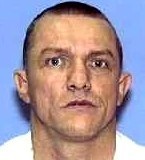
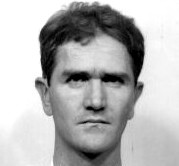
Robert Brice Morrow
Murderer Russell Ellwood
Murderer · USA · 1991
Russell Ellwood was a former taxi driver. Authorities suspected him of killing…
20 victims
Russell Ellwood
Murderer · USA · 1991
Russell Ellwood was a former taxi driver. Authorities suspected him of killing…
20 victims
 Robert Martines Perez
Murderer · USA · 1994
Name: Robert Martines Perez · Other name used in proceedings: Robert Martinez P…
15 victims
Robert Martines Perez
Murderer · USA · 1994
Name: Robert Martines Perez · Other name used in proceedings: Robert Martinez P…
15 victims
 Billy Frank Vickers
Murderer · USA · 1993
Billy Frank Vickers Vickers was executed by lethal injection in Texas on Januar…
14 victims
Billy Frank Vickers
Murderer · USA · 1993
Billy Frank Vickers Vickers was executed by lethal injection in Texas on Januar…
14 victims
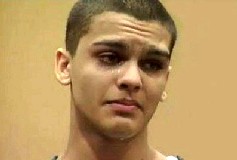 Dominic Culpepper
Homicide · USA · 2001
Dominic Culpepper was 14 years old when he fatally beat 16-year-old Frank Wesle…
1 victim
Dominic Culpepper
Homicide · USA · 2001
Dominic Culpepper was 14 years old when he fatally beat 16-year-old Frank Wesle…
1 victim
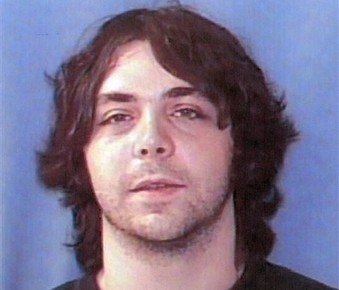 Wesley Higdon
Mass murderer · USA · 2008
Wesley Neal Higdon was a 25-year-old press operator from Henderson. He was desc…
5 victims
Wesley Higdon
Mass murderer · USA · 2008
Wesley Neal Higdon was a 25-year-old press operator from Henderson. He was desc…
5 victims
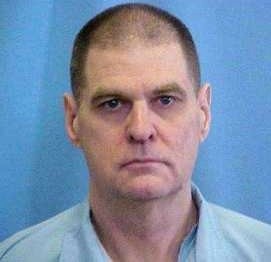 Cecil Sutherland
Murderer · USA · 1987
Cecil Sutherland was convicted of aggravated kidnaping, aggravated criminal sex…
1 victim
Cecil Sutherland
Murderer · USA · 1987
Cecil Sutherland was convicted of aggravated kidnaping, aggravated criminal sex…
1 victim
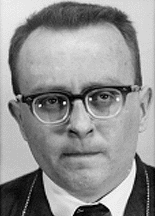 Victor Harry Feguer
Murderer · USA · 1960
Victor Harry Feguer (born in 1935) was executed by hanging in Iowa (federal exe…
1 victim
Victor Harry Feguer
Murderer · USA · 1960
Victor Harry Feguer (born in 1935) was executed by hanging in Iowa (federal exe…
1 victim
 Elena Skordelli
Murderer · Cyprus · 2010
Elena Skordelli (born c. 1968) was a Cypriot television presenter. In 2009 she…
1 victim
Elena Skordelli
Murderer · Cyprus · 2010
Elena Skordelli (born c. 1968) was a Cypriot television presenter. In 2009 she…
1 victim
 Jesús Lozano Velásquez
Mass murderer · Colombia · 2000
Jesús Lozano Velásquez was involved in the Reminiscencias dance club shooting,…
11 victims
Jesús Lozano Velásquez
Mass murderer · Colombia · 2000
Jesús Lozano Velásquez was involved in the Reminiscencias dance club shooting,…
11 victims
- Gender
- male
- Country
- USA
- Location
- Liberty County, Texas, USA
- Date of birth
- June 3, 1957
- Age at first offence
- 39
- Characteristics
- kidnapping, rape
- Victim profile
- Lisa Allison, 21
- Method of murder
- Beating - Stabbing with knife
- Date(s) of murder
- April 3, 1996
- Years active
- 1996
- Date of arrest
- June 19, 1996
- Status
-
Executed
Executed by lethal injection in Texas on November 4, 2004
Case record: Robert Brice Morrow
Timeline
- April 3, 1996 — Lisa Allison left her parents’ home to take her father’s car to a car wash and did not return.
- April 4, 1996 — Lisa Allison’s body was found floating in the Trinity River.
- August 14, 1996 — A Liberty County grand jury indicted Robert Brice Morrow for the capital murder of Lisa Allison.
- July 21, 2003 — The U.S. District Court for the Eastern District of Texas, Tyler Division entered an order and judgment granting the state’s motion for summary judgment and denying Morrow habeas corpus relief.
- September 18, 2003 — The district court denied Morrow permission to appeal.
- May 11, 2004 — The U.S. Court of Appeals for the 5th Circuit denied Morrow’s request for permission to appeal.
- October 18, 2004 — The U.S. Supreme Court denied Morrow’s petition for writ of certiorari.
- November 4, 2004 — Robert Brice Morrow was executed by lethal injection in Texas.
Background
Robert Brice Morrow was convicted of capital murder and sentenced to death in Texas for the abduction and murder of 21-year-old Lisa Allison in 1996.
At the time of the offence, Lisa Allison was a college student home in Liberty, Texas for spring break. Her family said she was planning to drive her car to Houston the following day for a date and that her car wash trip was to use her father’s car.
The offence
Lisa Allison left her parents’ home in Liberty, Texas, during the early evening hours of April 3, 1996, to wash her father’s car at a nearby car wash. She did not return.
A witness, Bryan McNeill, testified that he saw Lisa Allison at the car wash on April 3, 1996. McNeill noticed a car on the side of the road “let out a man” who crossed the street toward the car wash. Although McNeill did not get a full-face view of the man and never positively identified Robert Brice Morrow, McNeill’s description was consistent with Morrow’s appearance at that time. McNeill testified that he heard a “short, startling scream” from the car wash area. He then saw the man laying on top of Lisa Allison in the passenger side of her car. Because Allison did not seem to be struggling, McNeill dismissed the scream as being nothing more than someone being surprised. McNeill watched as the man got up and Allison slid behind the steering wheel. The man sat in the passenger seat and the two drove away toward the Trinity River. McNeill testified that he could not see the man’s hands during the incident.
Authorities found Lisa Allison’s body floating in the Trinity River the next day after she disappeared. Her throat had been cut and she had been severely beaten. The record described her as having forty-two separate injuries, and testimony and autopsy evidence described death as resulting from a combination of several skull fractures and a severed jugular vein. The record also stated that Allison’s death included a large cutting wound to her neck that severed her jugular vein.
Morrow previously talked of committing a kidnapping, rape, and murder from the car wash. Prior to the offence, Morrow told a fellow oil worker that it would be easy to abduct a woman from a service station with a knife, take her money and jewelry, and sell the items for drugs. Morrow also said he could have sex with the woman and that he would “take care of her.”
Testimony also described other elements used at trial. The record stated that Allison was a random victim and that she did not know Morrow. It also stated that Morrow denied kidnapping and murdering Allison at trial.
Investigation
Authorities discovered Lisa’s car abandoned within two miles of Morrow’s home. Numerous blood stains and types of evidence were found in the vehicle and at a well site near where the body was discovered.
Hair and blood samples taken from the car wash location and at the well site were described as matching Lisa Allison’s and/or Morrow’s samples. Other blood samples taken from the car matched Morrow. One stain was described as consistent with a mixture of Morrow’s and Lisa Allison’s blood, with a statistical probability of the blood coming from a different pair of 1 in 20.9 million.
A forensic expert, Gustavo DeLeon, testified in trial that autopsy tests revealed Allison had blood—though not semen—in her mouth and rectum.
Evidence presented at trial included a tape of an interview an officer had with Morrow after he killed Lisa Allison. In that interview, Morrow admitted to killing other people in gang-related activity, including that he stated he killed some Cubans in a drug deal that went bad.
Arrest
The record stated that Morrow was arrested while illegally walking in the street, and later described his arrest as occurring on July 29, 1996, near a crack house in Houston’s Fourth Ward. It stated that a computer check showed police he was wanted for Lisa Allison’s slaying. After being picked up and taken to the City Jail, Morrow gave statements that police were unable to confirm in parts, and he gave inconsistent versions of events.
One account in the record said that when police questioned Morrow on June 19, 1996, about 2½ months after Allison’s slaying, he told them he had been drinking all day and described a series of locations and an individual. Police testimony described that police could not confirm parts of his story, and that when he agreed to give a written statement he changed parts of his story and omitted a name.
Trial
A Liberty County grand jury indicted Morrow on August 14, 1996, for the capital murder of Lisa Allison.
A jury found Morrow guilty of capital murder on November 13, 1997. After a separate punishment hearing, the court sentenced Morrow to death on November 17, 1997.
Testimony at trial included accounts by several witnesses:
- Bryan McNeill testified to observing the man cross toward the car wash, hearing a “short, startling scream,” seeing the man on top of Lisa Allison, and watching the man and Allison drive away toward the Trinity River.
- Dane Schisler testified that he dropped Morrow off across the street from the car wash shortly before the kidnapping took place.
- Brad Keaton testified that he saw Morrow walking down the road in front of Keaton’s house around midnight on the night of the offence, that Keaton observed scratches on Morrow’s arms and blood on his clothes, and that Morrow said he was bloody because he had been in a car wreck.
- Cecil Smith testified that Morrow told him, prior to Allison’s death, that it would be easy to abduct a woman from the car wash at knife point, rob her, and sell the items for drug money. The record said Morrow added that he would “take care of her,” and that Smith testified he told his counselor about the conversations.
- Other testimony included statements by a jail inmate who testified that he overheard Morrow talking about the murder to another inmate and said Morrow described a friend striking the woman with a tire tool and the pair leaving her near the Trinity River. The record included a question by Assistant District Attorney Steve Greene: “Whose idea was it to go back and make sure Lisa Allison was dead?” and a response attributed to the witness: “Robert Morrow.”
The record stated that Lisa Allison’s mother testified about her growing panic as Lisa failed to return on April 3, 1996, and about attempting to call Lisa without an answer. The record said Lisa left about 8:30 p.m. to wash her father’s car and that the family filed a missing-person report after advice from a friend.
The jury deliberated briefly; the record stated that “a jury took just 13 minutes” to sentence Morrow to death following his capital murder conviction. It also stated that after a 10-week trial, the jury took 13 minutes to decide he should be put to death.
Morrow’s federal habeas proceedings included claims that his trial counsel had been constitutionally ineffective in failing to object to questions and comments by the prosecutor during Morrow’s cross examination of him.
Sentencing
Appeals
Morrow filed a state application for writ of habeas corpus in the trial court on September 8, 1999. The trial court entered findings of fact and conclusions of law recommending that Morrow be denied relief. The Texas Court of Criminal Appeals adopted those findings and conclusions and denied relief on June 21, 2000.
The U.S. Supreme Court denied Morrow’s petition for writ of certiorari on October 2, 2000.
Morrow filed a federal habeas petition in the U.S. District Court for the Eastern District of Texas, Tyler Division, on October 2, 2001. On July 21, 2003, the district court granted the state’s motion for summary judgment and denied Morrow habeas corpus relief. On September 18, 2003, the district court denied Morrow permission to appeal. The U.S. Court of Appeals for the 5th Circuit denied Morrow’s request on May 11, 2004. The U.S. Supreme Court denied Morrow’s petition for writ of certiorari on October 18, 2004.
The habeas procedural section described that Morrow sought a certificate of appealability on claims of ineffective assistance of counsel for failing to make multiple objections during the prosecutor’s cross examination of him, and that the Court of Appeals denied Morrow’s request for a certificate of appealability.
Outcome
Robert Brice Morrow was executed by lethal injection in Texas on November 4, 2004.
The record described execution-related details:
- The execution was delayed briefly as prison workers had difficulty finding suitable veins.
- Prison officials selected veins at the top of each hand for the needles.
- Morrow was pronounced dead at 6:35 p.m. CST.
During his final statement, Morrow addressed Lisa Allison’s parents by name and said:
“I would like to tell you that I am responsible, and I am sorry for what I did and the pain I caused.”
The record also stated that Morrow expressed love to his friends, told them he had been blessed that they stood by him, and urged them to stay strong. He said:
“Set me free, warden. Father, accept me.”
The record stated that as he waited for the lethal drugs to take effect, he turned again toward the victim’s relatives and added:
“I do hope my death brings you all some closure.”
He then blurted:
“I feel it”
and gasped slightly three times.
Aftermath
The record stated that days before his execution, Morrow admitted that he lied during the trial when he claimed an alibi, and he admitted beating and slashing Lisa Allison to death. He also claimed that Lisa had gone with him willingly from the car wash to smoke crack cocaine and argued that without another crime along with the slaying on April 3, 1996, his case should not qualify under state law for the death penalty.
The record described responses from Lisa Allison’s parents and the Liberty County district attorney, including Mike Allison and Mike Little. It included statements by Mike Little characterizing Morrow’s account as “totally preposterous” and describing tests finding no trace of any drugs in Lisa’s system at the time of death.
The record also described that Lisa Allison had previously survived thyroid cancer and had been close to completing a degree in hotel management at the University of Nevada, Las Vegas.
Other details
Morrow’s age was described as 47 at execution, and the record described him as a former oilfield roughneck.
A background section in the record stated that Morrow grew up in a home with an abusive, alcoholic father. It also said Morrow ran away to join a carnival at age 9, returned a few years later, and dropped out in the 10th grade.
The record stated Morrow had prior criminal history including:
- A felony conviction in South Carolina for two counts of breaking and entering and grand larceny, with a sentence not to exceed six years.
- Convictions in New Orleans, Louisiana, for carrying a concealed weapon (three-year sentence) and burglary (four-year sentence, concurrent with the three-year sentence).
- A conviction for forgery in Liberty, Texas (five years probation), followed by a probation violation that led to a sentence to 30 months in the Texas Department of Corrections.
Other convictions described in the record included time in Louisiana and South Carolina for burglary, grand larceny, and carrying a weapon illegally, and misdemeanor convictions for marijuana possession, marijuana delivery, and failure to identify a fugitive.
The record described jail threats by Morrow, including testimony from James Lindsey, James Lindsey’s testimony that Morrow threatened to escape and indicated he could easily break out due to the small size of the jail, and testimony by Kenneth Nunn that Morrow threatened to kill him with a high-powered rifle. The record also said other officers testified Morrow threatened them.
Spotted an error, or have more information about this case?