Howard Wilson
Murderer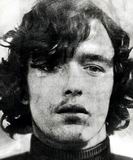 David McGreavy
Murderer · United Kingdom · 1973
David McGreavy was born in 1950 or 1951. He was an English convicted murderer w…
3 victims
David McGreavy
Murderer · United Kingdom · 1973
David McGreavy was born in 1950 or 1951. He was an English convicted murderer w…
3 victims
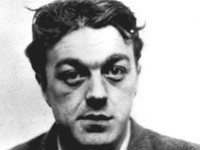 Harry Maurice Roberts
Murderer · United Kingdom · 1966
Name: Harry Maurice Roberts Birth year: 1936 Birthplace: Kennington, London, En…
3 victims
Harry Maurice Roberts
Murderer · United Kingdom · 1966
Name: Harry Maurice Roberts Birth year: 1936 Birthplace: Kennington, London, En…
3 victims
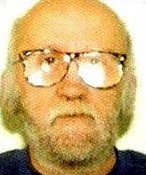 Ronald Jebson
Murderer · United Kingdom · 1970
Ronald Jebson (born 1939) was a convicted pedophile who was also known as Ronal…
3 victims
Ronald Jebson
Murderer · United Kingdom · 1970
Ronald Jebson (born 1939) was a convicted pedophile who was also known as Ronal…
3 victims
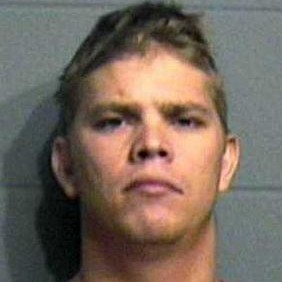 Eric Hanson
Mass murderer · USA · 2005
Eric Hanson — defendant; self-employed mortgage broker of Naperville; convicted…
4 victims
Eric Hanson
Mass murderer · USA · 2005
Eric Hanson — defendant; self-employed mortgage broker of Naperville; convicted…
4 victims
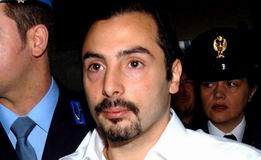 Nicola Sapone
Murderer · Italy · 2004
Nicola Sapone was one of the members of the suspected satanic cult “The Beasts…
3 victims
Nicola Sapone
Murderer · Italy · 2004
Nicola Sapone was one of the members of the suspected satanic cult “The Beasts…
3 victims
 Courtney Matthews
Mass murderer · USA · 1994
Courtney Matthews, 19, was a soldier at nearby Fort Campbell and worked at a Ta…
4 victims
Courtney Matthews
Mass murderer · USA · 1994
Courtney Matthews, 19, was a soldier at nearby Fort Campbell and worked at a Ta…
4 victims
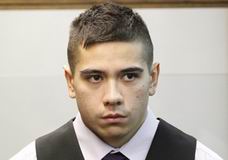 Shayd Robinson
Murderer · New Zealand · 2012
Shayd Robinson was convicted of murder for stabbing Aaron Hadfield during an al…
1 victim
Shayd Robinson
Murderer · New Zealand · 2012
Shayd Robinson was convicted of murder for stabbing Aaron Hadfield during an al…
1 victim
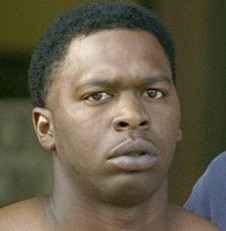 Anthony Bell
Spree killer · 2006
Anthony Bell was convicted of killing his wife and four in-laws in a May 2006 s…
5 victims
Anthony Bell
Spree killer · 2006
Anthony Bell was convicted of killing his wife and four in-laws in a May 2006 s…
5 victims
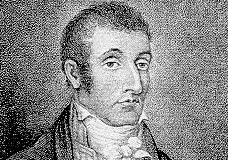 John Bellingham
Assassin · 1812
John Bellingham murdered Spencer Perceval, the British Prime Minister and Chanc…
1 victim
John Bellingham
Assassin · 1812
John Bellingham murdered Spencer Perceval, the British Prime Minister and Chanc…
1 victim
- Gender
- male
- Country
- United Kingdom
- Location
- Linwood, Glasgow, Scotland, United Kingdom
- Date of birth
- 1938
- Age at first offence
- 31
- Characteristics
- attempt to collect insurance money, former mental patient, to avoid arrest
- Victim profile
- Detective Constable Angus Mackenzie and PC Edward Barnett
- Method of murder
- Shooting
- Date(s) of murder
- December 30, 1969
- Years active
- 1969
- Date of arrest
- Same day
- Status
-
Released
Pleaded guilty. Sentenced to life in prison in February 1970. Released on September 30, 2002
Background
Howard Wilson was a former policeman.
In 1969, Wilson was broke and desperate, and he decided to rob a bank. He recruited others for a bank-robbery group, including Ian Donaldson and John Sim. John Sim was an ex-cop and ex-prison warder. They were members of Bearsden Shooting Club and legally bought a Russian Vistok .22 pistol from the club president.
A separate gang activity was described as the gang carrying out the Williamwood bank robbery a few months earlier, along with a fourth man. The subsequent whereabouts of the fourth man were unknown, and there was a rumour that he was buried in the pillars of the Kingston Bridge.
Howard Wilson wrote a novel, Angels of Death.
The offence
On 30 December 1969, the Clydesdale Bank in Linwood, Glasgow was held up by three armed robbers.
The robbers locked the staff in the bank and made their getaway with £14,000. The robbers drove to Wilson’s flat in Allison Street, where they intended to share out the loot. While they were trying to unload their haul from the car, they were noticed by Inspector Andrew Hyslop.
The way the men were behaving made Hyslop suspicious. He radioed for backup. A sergeant and three constables arrived within a few minutes, and the five men proceeded to the flat.
Inside the flat, the officers found a suitcase full of coins and notes and started to conduct a proper search of the flat. At that point, Howard Wilson pulled out a gun and shot Inspector Andrew Hyslop at close range in the face.
Before he could be subdued, Wilson shot two of the other officers as well. One officer was killed, and another was fatally injured. Wilson and his accomplices were arrested.
In one account of the incident, Inspector Andrew Hyslop spotted Wilson while Hyslop was across the way in a shop. Hyslop was described as knowing Wilson from his time in the police, and Hyslop decided to look closer. Hyslop radioed his colleagues to meet him at the flat and went up the close. The narrative stated that Howard Wilson greeted Hyslop, invited him in, and offered him a drink, and that Wilson gave Hyslop permission to look in one of the cases. As Hyslop opened it and discovered it was packed with bank notes, Wilson pulled a gun, stuck it in Hyslop’s face, and pulled the trigger; it jammed. Wilson fired again and sent a bullet into Hyslop’s skull.
In that account, constables Sellars, MacKenzie and Barnett ran into the room. A trained marksman shot MacKenzie and Barnett in the head. Sellars was described as narrowly escaping and taking refuge in the bathroom. MacKenzie was described as still alive, and Wilson was described as placing the gun to his forehead and firing, producing a fatal shot. The narrative then stated that Wilson placed the barrel of his gun on Hyslop’s head, and that another officer, a DC Campbell, barged into the room, sussed the score immediately, and dived on Wilson. The narrative stated that the gun went off but the last bullet crashed into the ceiling. The narrative added that MacKenzie was dead and that Barnett died soon after. It also stated that Hyslop survived but bullet fragments remained in his skull and ruined his health until his death.
The incident was described as taking place in Glasgow’s south side, with the officers spotting Wilson acting suspiciously outside a flat near Craigie Street police office. It was described as Wilson pulling out the same gun he had used in an earlier bank robbery that day and shooting all three. Another account described the robbery as the Linwood bank robbery in Glasgow on 30 December 1969, with two police officers shot dead and a third seriously injured.
Investigation
Inspector Andrew Hyslop recognised Wilson as a former policeman with “some ten years’ service.” The narrative stated that the officers searched the flat after backup arrived and that they found a suitcase full of coins and notes.
Arrest
Wilson and his accomplices were arrested following the shootings in the flat.
Trial
Howard Wilson appeared in Edinburgh High Court in February 1970 charged with murder.
Wilson was found guilty and sentenced to life imprisonment.
A separate account stated that Wilson eventually pleaded guilty to two charges of murder and that he became Scotland’s only cop turned cop killer of modern times.
The BBC account stated that Wilson was found guilty of shooting and killing Constable Edward Barnet and Detective Constable Angus McKenzie in a Glasgow flat while trying to resist arrest in 1969. It also stated that Inspector Andrew Hyslop survived the incident despite being shot in the face.
In another account, Wilson’s team were found guilty only of robberies and were sentenced to 12 years each, while Wilson accepted full responsibility for the murders.
Sentencing
Wilson was sentenced to life imprisonment in February 1970.
Another account stated that he was sentenced to 25 years with a recommendation he serve 25 years in jail.
It was also stated that the trial in 1970 included a recommendation that Wilson serve 25 years in jail.
Appeals
No appeals were stated.
Outcome
Wilson spent 33 years in prison after pleading guilty to the two murders. He was released in 2002.
The BBC account stated that Wilson was released from Castle Huntly prison in Perthshire on a Monday, and it noted his release date as Monday in the piece. The case summary also stated that he was released on September 30, 2002.
Aftermath
The BBC account stated that the Scottish Executive said the decision to release Wilson was taken by the Parole Board after deciding if he was a risk to public safety.
The Scottish Police Federation (SPF) expressed concern about the decision and believed that with such a crime, life should mean life. Norrie Flowers, SPF chairman, was quoted as saying: “This was a pretty horrific case, even though it was 32 years ago. But when you look at it from the perspective that this was a former police officer who murdered two police officers, and attempted to murder another police officer, there were three ruined lives. We just feel that anyone who murders a police officer should never be released. Life should mean life.”
Mr Flowers added: “The relatives of all the people that were murdered have got a life sentence of their won to deal with, so we think at the very least the killer should also serve that sentence.”
Two officers involved in capturing Wilson were awarded the George Cross.
Wilson wrote a novel, Angels of Death, after he took up writing in prison.
The narrative also stated that women and kids policemen’s families demonstrated in George Square calling for the return of the death penalty, which had been abolished two weeks before the murders. It stated that politicians were horrified and considered giving in to the women’s demands. One narrative said that Wilson was so difficult to manage he ended up in the cages at Porterfield Prison, Inverness, ironically along with Jimmy Boyle, who he had once staked out as a cop. It also stated that Wilson at first fought the system in riots and attacks on screws, and later settled down in jail.
Other details
Constable Edward Barnet and Detective Constable Angus McKenzie were identified as the officers killed during the incident.
Inspector Andrew Hyslop survived the incident despite being shot in the face.
A narrative stated that Wilson was 64 at the time of release.
A separate account described an earlier bank robbery at the British Linen Bank in Williamwood in one day in July 1969, where Wilson and his crew obtained £20,876 by putting ammonia in the staff’s eyes.
A separate narrative stated that on 23 December 1969, Archibald McGeachie disappeared from his home and had never been seen again, and it included claims about the Kingston Bridge construction and that only Howard Wilson was capable of dumping someone in a concrete stanchion.
Spotted an error, or have more information about this case?