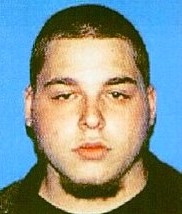
Jacob Robida
Murderer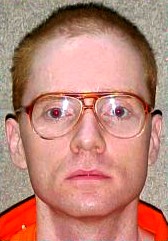 Robert Glen Jones
Murderer · USA · 1996
Defendant: Robert Glenn Jones (ADC#070566) · Co-defendant: Scott Nordstrom (ADC…
7 victims
Robert Glen Jones
Murderer · USA · 1996
Defendant: Robert Glenn Jones (ADC#070566) · Co-defendant: Scott Nordstrom (ADC…
7 victims
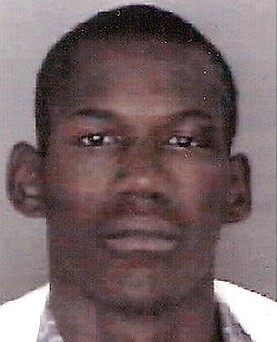 Joshua Wayne Andrews
Murderer · USA · 2000
Joshua Wayne Andrews was a serial killer accused of killing several people in V…
5 victims
Joshua Wayne Andrews
Murderer · USA · 2000
Joshua Wayne Andrews was a serial killer accused of killing several people in V…
5 victims
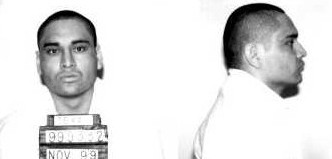 Juan Carlos Alvarez
Murderer · USA · 1998
Juan Carlos Alvarez, born on March 9, 1977, in San Luis, Mexico, was a Hispanic…
5 victims
Juan Carlos Alvarez
Murderer · USA · 1998
Juan Carlos Alvarez, born on March 9, 1977, in San Luis, Mexico, was a Hispanic…
5 victims
 Leon Davis Jr.
Murderer · USA · 2007
Leon Davis Jr. was sentenced to death on April 29, 2011, for the execution-styl…
5 victims
Leon Davis Jr.
Murderer · USA · 2007
Leon Davis Jr. was sentenced to death on April 29, 2011, for the execution-styl…
5 victims
 Raymond Lee Oyler
Murderer · USA · 2006
Raymond Lee Oyler was convicted for starting the 2006 Esperanza fire in Riversi…
5 victims
Raymond Lee Oyler
Murderer · USA · 2006
Raymond Lee Oyler was convicted for starting the 2006 Esperanza fire in Riversi…
5 victims
 Bradley Mullins
Homicide · USA · 2005
Bradley Mullins was 19 during a trial in Tennessee for conduct involving drag r…
1 victim
Bradley Mullins
Homicide · USA · 2005
Bradley Mullins was 19 during a trial in Tennessee for conduct involving drag r…
1 victim
 Jessie Misskelley
Homicide · USA · 1993
Jessie Misskelley was sentenced to life plus 40 years in prison on February 4,…
3 victims
Jessie Misskelley
Homicide · USA · 1993
Jessie Misskelley was sentenced to life plus 40 years in prison on February 4,…
3 victims
 Kevin Kincy
Murderer · USA · 1993
March 26, 1993 — Jerome Harville was found fatally shot in the head and stabbed…
1 victim
Kevin Kincy
Murderer · USA · 1993
March 26, 1993 — Jerome Harville was found fatally shot in the head and stabbed…
1 victim
 Pressley Bernard Alston
Murderer · USA · 1995
Pressley Bernard Alston was convicted of first-degree murder, armed robbery, an…
1 victim
Pressley Bernard Alston
Murderer · USA · 1995
Pressley Bernard Alston was convicted of first-degree murder, armed robbery, an…
1 victim
 Adrienne Hickson
Murderer · USA · 2005
Adrienne Emily Hickson was a 24-year-old law student and had been a student at…
1 victim
Adrienne Hickson
Murderer · USA · 2005
Adrienne Emily Hickson was a 24-year-old law student and had been a student at…
1 victim
- Gender
- male
- Country
- USA
- Location
- Massachusetts/Arkansas, USA
- Date of birth
- J une 13, 1987
- Age at first offence
- 19
- Characteristics
- hate crime, kidnapping, police officer, shooting spree, rape, rape?, rapist
- Victim profile
- Jim Sell, 63 (Gassville police officer) / Jennifer Rena Bailey, 33 (his female companion)
- Method of murder
- Shooting ( 9mm handgun)
- Date(s) of murder
- February 4, 2006
- Years active
- 2006
- Date of arrest
- —
- Status
-
Died in custody
Shot in the head twice in a shootout with police; died in a hospital in Springfield, Missouri on February 5, 2006
Case overview
Jacob D. Robida (June 13, 1987 – February 5, 2006) was a Massachusetts teenager who attacked three patrons at a New Bedford gay bar on February 2, 2006. He fled the state and drove to Charleston, West Virginia, where he allegedly kidnapped a female companion and drove southward, attempting to cross the Mexican border. He was halted by authorities in Norfork, Arkansas, where he murdered his female companion and a police officer. Robida was shot in the head twice in a shootout with police and died in a hospital in Springfield, Missouri at 03:38 CST on February 5, 2006.
Timeline
- February 2, 2006 — Robida attacked three patrons at Puzzles Lounge, a gay bar in New Bedford, Massachusetts.
- February 2, 2006 — Robida fled after the bar attack; authorities treated the incident as a hate crime and began a manhunt.
- February 4, 2006 — Robida’s green Pontiac was seen about 1500 miles away in Arkansas; Jim Sell initiated a traffic stop in Gassville.
- February 4, 2006 — Robida opened fire and killed Officer Jim Sell; police pursued him and later he exchanged gunfire with police in Norfork.
- February 4, 2006 — During the gunfight, Robida shot and killed Jennifer Rena Bailey at point blank range.
- February 5, 2006 — Robida died in a hospital in Springfield, Missouri at 03:38 CST.
The offence
Attack at Puzzles Lounge (New Bedford, Massachusetts)
In the early hours of Thursday, February 2, 2006, eighteen year-old Jacob Robida allegedly entered a gay bar in New Bedford, Massachusetts, fifty miles (93 km) south of Boston. Dressed in black, he entered the Puzzles Lounge, a popular local bar, around midnight. Robida proceeded to order a drink using a fake ID indicating his age was twenty-three.
After downing his first drink, he asked the bartender if the lounge was a gay bar. The bartender confirmed it was. After finishing his second drink, Robida allegedly swung a hatchet at a patron’s head, injuring him. Other patrons tackled him and relieved him of the hatchet. Robida then produced a handgun and began shooting, wounding at least three more people. Robida fled the scene; both the hatchet and a machete were later recovered by authorities in the bar.
Police treated the incident as a hate crime. In total, four people were seriously hurt in the attack. Court documents later described that Robida was hunting homosexuals when he walked into Puzzles Lounge around midnight, and that after asking “Is this a gay bar?,” he allegedly began chopping at a patron with a hatchet, triggering a melee that ended with Robida wildly firing a handgun.
Court documents also described that Robida returned home at about 1 a.m., where his mother, Stephanie Oliver, noticed he was bleeding from the head. He then left and was not seen since.
Victims of the bar attack
Police identified three victims as Robert Perry of Dartmouth, Alex Taylor of Fairhaven, and Luis Rosado of New Bedford. Their conditions were unknown last night at the time investigators were describing the incident.
A sister of Robert Perry, who asked for anonymity because the suspect was still at large, said Perry worked as an emergency medical technician in the Boston area and had four sons. She stated:
“It’s a shame that it had to happen to him, because he is the nicest guy you could ever meet”
Investigation
Evidence and materials found during searches
Local authorities immediately began a manhunt for Robida and raided his mother’s home in New Bedford. They talked to his mother, who told them that she last saw Robida at 1:00 am bleeding from the head and that he left soon after.
Authorities found weapons of all types, including hatchets, knives, a few handguns, as well as a shotgun. When police entered Robida’s bedroom, they found “Nazi regalia” and anti-Semitic writings all over his bedroom walls, as well as a makeshift coffin.
Police also found homemade posters slurring gays, African-Americans, and Jews; neo-Nazi literature and skinhead paraphernalia; a makeshift coffin; and an empty knife sheath. The attack drew national attention and widespread condemnation from local and national civil rights groups and politicians.
Massachusetts State Trooper Paul Dockrey described investigators trying to learn if the deaths were part of a suicide pact between Robida, 18, and his passenger, Jennifer Rena Bailey, 33.
Manhunt and nationwide alert
The manhunt expanded beyond Massachusetts after local authorities contacted the FBI. Flyers were distributed all over Massachusetts depicting Robida and stating he was driving a 1999 green Pontiac. Law enforcement agencies nationwide were alerted to look out for Robida.
Investigators searched for Robida after the bar attack that left three men wounded, one critically. The hatchet used in the attack was found outside the bar, but detectives believed Robida still had the gun.
Details from court documents about the bar incident
Court documents and witness accounts described Robida walking into Puzzles around midnight wearing a black-hooded sweatshirt and black pants that concealed a knife, hatchet, and handgun. One unidentified witness recognized him as Jake, a classmate from New Bedford High, and was suspicious because she knew he was not gay.
Robida flashed identification apparently fake and ordered Captain Morgan rum on the rocks. He asked the bartender if Puzzles was a gay bar. He asked another patron about gay bars in the area, was told there was a lesbian bar nearby, and replied, “No, this is the one I want,” according to court documents.
The court documents described that Robida struck a man from behind with the hatchet and attacked a second man, with a furious struggle as other patrons tried to subdue him. A patron hit Robida on the head with a pool cue, according to the bartender who identified himself only as Phillip because the suspect was at large.
Court records described that Robida was wrestled to the ground, then pulled out a handgun and opened fire, hitting one man next to him and another man, Rosado, who was walking out of the bathroom. The bartender said Robida, on his way out, pointed the gun at his face and pulled the trigger, but the gun failed to fire.
The court records described that Rosado suffered a gunshot to the chest, another victim had multiple lacerations, and another had a severe facial laceration and a gunshot wound to the back. Police found the hatchet in the bar and a knife on the ground outside. The gun was not recovered.
Clarence Patton, acting executive director of the National Coalition of Anti-Violence Programs, said:
“Again and again we have seen that as efforts to marginalize or, in the case of Massachusetts, remarginalize our community escalate, sick and violent people take those efforts as license to step up violence against lesbian, gay, bisexual, and transgendered people”
Bristol District Attorney Paul F. Walsh Jr. said:
“At first blush, our inclination would be that it is a hate crime”
Walsh also said:
“The attack seemed random. We have no evidence to believe he knew these people.”
The bartender was quoted as saying:
“This is not an isolated incident” “I feel lost. You don’t expect someone to go into the bar and start attacking people because of who they are.”
Capture and gunfight (Arkansas)
Traffic stop and shooting of Officer Jim Sell
In the afternoon of 4 February 2006, Robida’s green Pontiac was seen about 1500 miles away in Arkansas. Jim Sell, 63, a Gassville police officer, initiated a traffic stop. After conversing for about half a minute, Robida opened fire with a 9mm handgun, killing the officer.
Baxter County Sheriff John Montgomery said:
“When he wrecked he started firing at our officer and a state police officer and the officers returned fire”
Police pursued him and laid spike traps, but this failed to stop the vehicle. Robida fled about eighteen miles and stopped in Norfork, Arkansas, where he exchanged gunfire with police. During the gunfight, he shot his female companion, Jennifer Rena Bailey, age 33, of Charleston, West Virginia, at point blank range, killing her.
Alleged kidnapping and context involving Bailey
After Bailey’s death, Robida attempted to commit suicide, shooting himself in the head. Authorities believed Robida had picked her up earlier in the week at her home in West Virginia for some unknown reason. It was reported that Robida lived with her in West Virginia in 2004.
Investigators were checking e-mails and Internet correspondence between Robida and Bailey to determine whether Bailey went willingly or as a hostage. West Virginia State Police Sgt. C.J. Ellyson said Robida lived in West Virginia with Bailey from sometime in 2004 to February 2005. Ellyson said:
“We’re trying to trace down their steps and find out when they hooked up, if she invited him over willingly or if she was abducted”
A friend of Bailey’s, Craig Dickinson, believed she was abducted and said:
“She would never leave her kids” “I will guarantee she did not know what happened in Massachusetts.”
Walsh said he had not yet concluded whether Bailey was coerced or a willing participant, although her actions suggested she chose to go with Robida. Walsh said:
“None of these things are classic symptoms of kidnap victims” “We don’t know if she was doing that under duress”
Bailey’s father, Ronnie Dunlap, said he believed his daughter was abducted and said:
“We’re pretty well sure she was abducted” “Me and her mother both know that and the evidence will show that.”
Dunlap stated that his daughter would not have voluntarily left her three young children to accompany Robida. He also said:
“They’ve got it backwards, like she was leaving with him and making arrangements to go, and it’s just a lie.”
Medical treatment and death
After the gunfight, authorities airlifted Robida over a hundred miles to Springfield, Missouri for medical treatment. He died of his injuries not long afterwards.
Massachusetts prosecutor Paul F. Walsh Jr. said:
“He shot himself”
Walsh Jr. later said about ballistic evidence:
“The ballistic evidence confirms our earlier suspicions that he was planning not to get out of this alive, and to take down whoever was around him.”
Massachusetts State Trooper Paul Dockrey said:
“There’s no doubt it is a murder-suicide” “What we’re trying to backtrack is if she was aware that this was going to be the end of the road.”
Dockrey also described actions at the scene:
“When cornered by police after the ensuing chase, Robida first tried to shoot at the officers through the windshield of his car” “That failed and he took the gun, put it against Bailey’s head and pulled the trigger” “She slumped in the front seat, and police started shooting at Robida” “Just then, Robida put the gun to his own head, and later died at a Springfield, Mo., hospital.”
Other details
Weapons, notes, and personal materials
Authorities found that Robida had a swastika tattooed on his hand and that he told friends how he hated Jews and African-Americans, while being known to have friends who were gay. Police found a 20-gauge shotgun and a .222-caliber rifle in the trunk, which they believed were taken in a break-in in West Virginia.
Police found cans of soda, pouches of instant soup, small bags of chips, a loaf of bread, and two lightly packed bags. Robida’s black suitcase contained a couple of pairs of jeans and sweatshirts, mostly black. Authorities said Bailey had a bottle of shampoo in her backpack and that the items did not appear to indicate she and Robida planned a long trip.
Police found a scrap of paper with a Massachusetts cellphone number on it, but investigators did not know whose number it was. Massachusetts State Police had a computer specialist combing through Robida’s home computer and had not yet read through his e-mails.
Handwritten note to his mother
After the gay bar attack, Robida went to his home on County Street in New Bedford, where he washed up and left a handwritten note for his mother, Stephanie Oliver. Police found the note before Oliver and she never saw it.
In the note, Robida told his mother he loved her and wrote:
“I had to go out by my means.”
Walsh said Oliver wanted to know about the note and he had to read it to her:
“She’s a nice woman who just had no grasp on what was going on with her son, his computer, and his room.”
Funeral and community response
Wreaths and flower arrangements were placed at the scene of Sell’s shooting and residents brought sympathy cards to the police department. A funeral service was scheduled for Friday.
Walsh said he and others from Massachusetts planned to attend the funeral. He said:
“This is our case, and that officer gave his life basically solving our case” “There is a sense that he is one of us.”
School and childhood welfare
Robida attended New Bedford High School, according to court documents. School officials would not say if he was currently enrolled. He graduated in 2001 from New Bedford’s Junior Police Academy, a program designed to teach discipline to 12- to 14-year-olds, though officers there said they did not recall anything specific about him.
In 2000, state social service workers investigated a neglect complaint involving Robida but concluded that no action needed to be taken, according to Denise Monteiro, spokeswoman for the Department of Social Services.
Claims of mental state, background, and online presence
Robida was described as a high school dropout. Authorities described him as armed, dangerous, and mentally unstable.
A MySpace biography described that Robida maintained a personal website showing main interests to be Neo-Nazism and the rap group Insane Clown Posse. He considered himself to be a Juggalo, described as a term coined by Insane Clown Posse to mean “a follower of the Dark Carnival cult,” and he made references to the Juggalo sub-culture on the site.
Insane Clown Posse response
On February 7, 2006, Insane Clown Posse posted a response to events Robida was involved in, expressing regret over them. The response reviled Robida’s actions. ICP’s manager, Alex Abbiss, wrote the response.
Alex Abbiss was quoted saying:
“Today I’d like to speak out about the incident which took place in New Bedford, Mass. First, I’d like to say that we’d like to extend our condolences to the victims and their families in this tragedy. Our prayers are with you. And with that said, I would now like to address the whole issue. This guy had problems. Anyone going into a bar swinging an axe and shooting a gun would have to realize that they would get caught and/or get killed, and that this would be the last action they took for the rest of their lives, and would clearly have to be insane and out of their mind to do this...in my opinion, the perpetrator of this crime committed these acts not because he was a Juggalo, but because he was a neo-Nazi. He subscribed to an ideology of racism and bigotry, and was quite clearly, in my opinion, out of his mind. Anyone that knows anything at all about Juggalos knows that in no way, shape, or form would we ever approve of this type of bullshit behavior.”
Public statements and external commentary
A teenager suspected of the bar attack was described as glorifying Naziism by friends, though friends said he never expressed any specific prejudice against gays. Heather Volton, 22, of Fall River, Massachusetts, who had known Robida for more than a year, said:
“This is insane” “That kid never so much as raised his voice at me ... This is all pretty much a shock to me, like everyone else.”
US Representative Barney Frank, who represented New Bedford, said:
“This is the vicious act of one degenerate; it’s not a city problem” “This is in no way reflective of any significant opinion in New Bedford.”
Nationwide discussions about influence of video games
A Miami lawyer, Jack Thompson, attempted to blame Postal and Grand Theft Auto for “influencing” Jacob Robida’s actions.
Outcome
Robida was fatally wounded during the shootout with police after the killings of Officer Jim Sell and Jennifer Rena Bailey. He died in a Springfield, Missouri hospital on February 5, 2006.
Spotted an error, or have more information about this case?