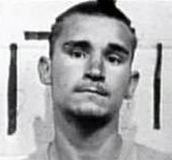
Jessie Misskelley
Homicide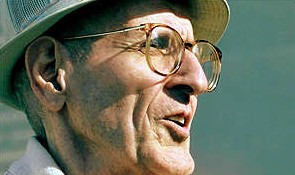 Jack Kevorkian
Homicide · USA · 1990
Jack Kevorkian (born May 26, 1928) was a controversial American pathologist. He…
130 victims
Jack Kevorkian
Homicide · USA · 1990
Jack Kevorkian (born May 26, 1928) was a controversial American pathologist. He…
130 victims
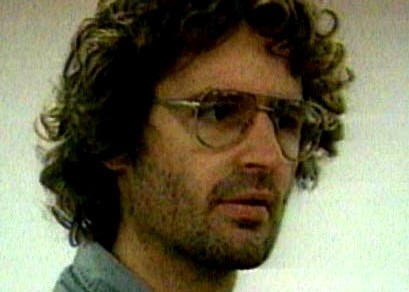 David Koresh
Homicide · USA · 1993
David Koresh (born Vernon Wayne Howell; August 17, 1959 – April 19, 1993) led t…
79 victims
David Koresh
Homicide · USA · 1993
David Koresh (born Vernon Wayne Howell; August 17, 1959 – April 19, 1993) led t…
79 victims
 Todd Hall
Homicide · USA · 1996
Todd Hall was described by neighbors as "mentally slow" and was said to have su…
9 victims
Todd Hall
Homicide · USA · 1996
Todd Hall was described by neighbors as "mentally slow" and was said to have su…
9 victims
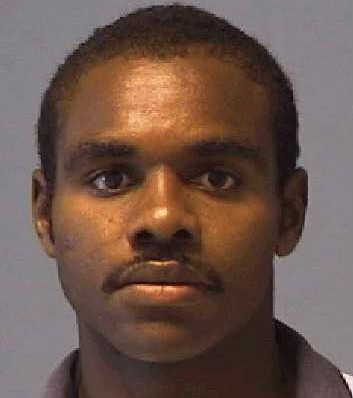 Clinton Bankston
Homicide · USA · 1987
15 August 1987 — Ann Morris (63), her sister Sally Nicholson (59), and Sally’s…
5 victims
Clinton Bankston
Homicide · USA · 1987
15 August 1987 — Ann Morris (63), her sister Sally Nicholson (59), and Sally’s…
5 victims
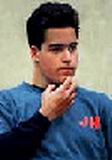 Joshua Jenkins
Homicide · USA · 1996
Joshua Jenkins was a 15-year-old American killer who killed five members of his…
5 victims
Joshua Jenkins
Homicide · USA · 1996
Joshua Jenkins was a 15-year-old American killer who killed five members of his…
5 victims
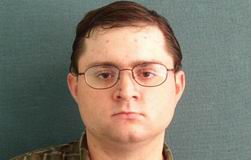 Andrew Lackey
Murderer · USA · 2005
Andrew Lackey · October 31, 2005 — Athens Police Department received and record…
1 victim
Andrew Lackey
Murderer · USA · 2005
Andrew Lackey · October 31, 2005 — Athens Police Department received and record…
1 victim
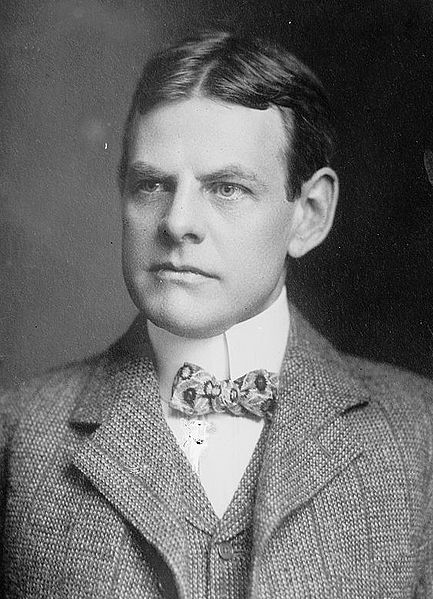 Fitzhugh Goldsborough
Murderer · USA · 1911
Fitzhugh Coyle Goldsborough shot American journalist and novelist David Graham…
1 victim
Fitzhugh Goldsborough
Murderer · USA · 1911
Fitzhugh Coyle Goldsborough shot American journalist and novelist David Graham…
1 victim
 Sabine Hilschenz
Murderer · Germany · 1988
Sabine Hilschenz was a German woman convicted of infanticide involving eight of…
9 victims
Sabine Hilschenz
Murderer · Germany · 1988
Sabine Hilschenz was a German woman convicted of infanticide involving eight of…
9 victims
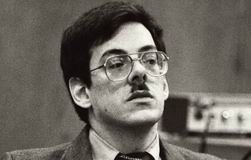 Frank Spisak
Serial killer · USA · 1982
Frank W. Spisak Jr. was a transvestite who was wanted to be Hitler. He was friz…
3 victims
Frank Spisak
Serial killer · USA · 1982
Frank W. Spisak Jr. was a transvestite who was wanted to be Hitler. He was friz…
3 victims
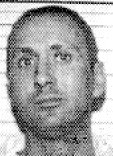 Ronald Turney Williams
Murderer · USA · 1975
Ronald Turney Williams was 38 years old when FBI agents wounded him in a Manhat…
3 victims
Ronald Turney Williams
Murderer · USA · 1975
Ronald Turney Williams was 38 years old when FBI agents wounded him in a Manhat…
3 victims
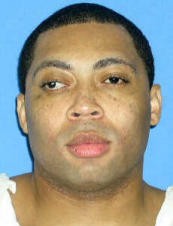 Daroyce Mosley
Mass murderer · USA · 1994
DaRoyce Lamont Mosley was convicted of capital murder for the death of Patricia…
4 victims
Daroyce Mosley
Mass murderer · USA · 1994
DaRoyce Lamont Mosley was convicted of capital murder for the death of Patricia…
4 victims
- Gender
- male
- Country
- USA
- Location
- West Memphis, Arkansas , USA
- Date of birth
- July 10, 1975
- Age at first offence
- 18
- Characteristics
- juvenile (17), rape?
- Victim profile
- Three eight-year-old boys (Stevie Branch, Michael Moore and Christopher Byers)
- Method of murder
- St abbing with knife - Drowning
- Date(s) of murder
- May 5, 1993
- Years active
- 1993
- Date of arrest
- June 4, 1993
- Status
-
Life imprisonment
Sentenced to life plus 40 years in prison on February 4, 1994
Case record: Jessie Misskelley
Status
Jessie Misskelley was sentenced to life plus 40 years in prison on February 4, 1994.
Background
Jessie Miskelley Jr. (born July 10, 1975) was one of the three members of what has been called the West Memphis 3 (Miskelley, Damien Echols, and Jason Baldwin). They were accused and convicted of a triple homicide in West Memphis, Arkansas of 8-year-olds Michael Moore, Christopher Byers and Steven Branch.
At the time of their arrests, Jessie Misskelley was 17 years old, Jason Baldwin was 16, and Damien Echols was 18. Baldwin and Misskelley had previous records for minor juvenile offenses (for vandalism and shoplifting, respectively) and Misskelley had a reputation for being hot-tempered and engaging in frequent fistfights. Misskelley and Echols had dropped out of high school, but Baldwin earned above-average grades and demonstrated a talent for drawing and sketching, and due to encouragement from a school counselor, was considering studying graphic design in college.
Echols and Baldwin were close friends, due in part to their similar tastes in music and fiction, and due to a shared distaste for the prevailing cultural climate of West Memphis, which was politically conservative and strongly Evangelical Christian. Baldwin and Echols were acquainted with Misskelley from school, but were not close friends with him.
Echols’ family was poor, with frequent visits from social workers, and he rarely attended school. His tumultuous relationship with an early girlfriend culminated when the two ran off together. After breaking into a trailer during a rain storm, the pair were arrested, though only Echols was charged with burglary. Police heard rumors that the young lovers had planned to have a child and sacrifice the infant; based on this story, they had Echols institutionalized for psychiatric evaluation. He was diagnosed as depressed and suicidal, and was prescribed the antidepressant imipramine. Subsequent testing demonstrated poor math skills, but also showed that Echols ranked above average in reading and verbal skills.
Echols spent several months in a mental institution in Arkansas, and afterwards received “full disability” status from the Social Security Administration. During Echols’ trial, Dr. George W. Woods testified (for the defense) that Echols suffered from:
“... serious mental illness characterized by grandiose and persecutory delusions, auditory and visual hallucinations, disordered thought processes, substantial lack of insight, and chronic, incapacitating mood swings.”
At the time of his arrest, Echols was working part-time with a roofing company and expecting a child with his new girlfriend, Domini Teer.
The offence
Disappearance and discovery of the victims
Three 8-year-old boys—Stevie Branch, Michael Moore and Christopher Byers—were reported missing on May 5, 1993. The first report to the police was made by Byers’ adoptive father, John Mark Byers, around 7:00 pm. The boys were last seen together by a neighbor, who reported that they had been called by Terry Hobbs, the stepfather of Steve Branch, around 6:00. Hobbs later denied seeing the boys at all on May 5.
Initial police searches made that night were limited. Friends and neighbors also conducted an impromptu and unsuccessful search that night, which included a cursory visit to the location where the bodies were ultimately found. A more thorough police search for the children began around 8:00 am on the morning of May 6, aided by Crittenden County Search and Rescue personnel, along with several others. Searchers canvassed all of West Memphis, but focused primarily on Robin Hood Hills, where the boys were reported last seen.
Despite a human chain making a shoulder-to-shoulder search of Robin Hood Hills, searchers found no sign of the missing boys. Search and Rescue personnel broke for lunch at 1:00 pm, but police and others continued searching. Around 1:45pm, Juvenile Parole Officer Steve Jones spotted a boy’s black shoe floating in a muddy creek that led to a major drainage canal in Robin Hood Hills. A subsequent search of the ditch found the bodies of three boys.
Condition of the bodies and injuries
The bodies were stripped naked and hogtied with their own shoelaces: their right ankles tied to their right wrists behind their backs, the same with their left limbs. Their clothing was found in the creek, some of it twisted around sticks that had been thrust into the muddy ditch bed. The clothing was mostly turned inside-out; two pairs of the boys’ underwear were never recovered.
Christopher Byers also had deep lacerations and injuries to his scrotum and penis, most likely caused by post-mortem animal predation. The original autopsies were inconclusive as to time of death, but the Arkansas medical examiner determined that Byers died of blood loss, and Moore and Branch drowned. A later review of the case by a medical examiner for the defense determined that the boys had been killed between 1:00 am and 5:00 am on May 6, 1993.
The official interpretation of the crime scene forensics for the case remained controversial. Prosecution experts claimed Byers’ wounds were the results of a knife attack and that he had been purposely castrated by the murderer; defense experts claimed the injuries were more probably the result of post-mortem animal predation.
Police suspected the boys had been raped or sodomized; later expert testimony disputed this finding despite trace amounts of sperm DNA found on a pair of pants recovered from the scene. Police believed the boys were assaulted and killed at the location they were found; critics argued that the assault, at least, was unlikely to have occurred at the creek. Byers was the only victim with drugs in his system; he was prescribed Ritalin in January 1993, as part of an attention-deficit disorder treatment. (The initial autopsy report describes the drug as Carbamazepine.) The dosage was found to be at sub-therapeutic level, which is consistent with John Mark Byers’ statement that Christopher Byers may not have taken his prescription on May 5, 1993.
Investigation
Background of parties and connections
Stevie Branch was the son of Steve and Pam Branch, who divorced when he was an infant. Pam was awarded custody, and Steve was allowed visitation with the boy only when Pam was also present. She later married Terry Hobbs. When Stevie was murdered, his biological father owed over $13,000 in child support, and was under investigation for state tax violations.
Christopher Byers was born to Melissa DeFir and Ricky Murray. After divorcing Murray, Melissa married John Mark Byers, who later adopted her two sons. John Mark Byers had a long criminal history, including charges for making “terroristic [death] threats” against his first wife, and multiple drug and theft offenses. John Mark Byers was a frequent paid informant for the West Memphis Police Department (WMPD), and, when the boys were murdered, was under Federal investigation for suspected grand theft from the U.S. Postal Service.
The elder Byers admitted whipping Christopher with a belt only a few hours before the boys went missing, because Christopher had tried to break into his own home (Christopher was not allowed a house key, and the empty house was locked when he arrived home after school). According to Crittenden County Prosecutor John Fogelman, police and other officials suspected John Mark Byers of committing the murders the day the victims were discovered.
Michael Moore was the son of Todd and Dana Moore. Of the three murdered boys, Michael’s parents were the only ones still married and who never had any serious criminal charges or investigations made against them.
Suspects and prior records
At the time of their arrests: Baldwin and Misskelley had previous records for minor juvenile offenses (for vandalism and shoplifting, respectively) and Misskelley had a reputation for being hot-tempered and engaging in frequent fistfights.
Chris Morgan and Brian Holland
Early in the investigation, the WMPD briefly regarded two West Memphis teenagers as suspects: Chris Morgan and Brian Holland, both with drug offense histories, had abruptly departed for Oceanside, California four days after the bodies were discovered. Morgan was presumed to be at least casually familiar with all three murdered boys, having previously driven an ice cream truck route in their neighborhood.
Morgan and Holland were arrested in Oceanside on 17 May 1993 and both took polygraph exams administered by California police. Examiners reported that both men’s charts indicated deception when they denied involvement in the murders. During subsequent questioning, Morgan claimed a long history of drug and alcohol use, along with blackouts and memory lapses. He furthermore claimed that he “might have” killed the victims but quickly recanted this part of his statement. California police sent blood and urine samples from Morgan and Holland to the WMPD, but there was no indication WMPD investigated Morgan or Holland as suspects following their arrest in California. The relevance of Morgan’s recanted statement would later be debated in trial, but was eventually barred from admission as evidence.
“Mr. Bojangles” sighting and alleged alternate suspect
The sighting of a black male as a possible alternate suspect was implied during the beginning of the trial. Local West Memphis police officers stated that on the evening of 5 May 1993, at 8:42 pm, workers in the Bojangles’ restaurant about a mile from the crime scene (a direct route through the bayou where the children were found) in Robin Hood Hills reported seeing a black male “dazed and covered with blood and mud” inside the ladies’ room of the restaurant. The defense referred to this man as “Mr. Bojangles.” The man was bleeding from his arm and brushed against the walls. The man had defecated on himself and on the floor. The police were called, but the man left the scene.
Officer Regina Meeks responded about 45 minutes later. By then, the man had left and police did not enter the restroom on that date. The following day, when the victims were found, Bojangles’ manager Marty King called police twice to inform them of his suspicions.
During Regina Meek’s testimony during the Echols/Baldwin Trial, after the second telephone call, police gathered evidence from the restroom. Investigators wore their same shoes and clothes from the Robin Hood Hills crime scene into the Bojangles restaurant bathroom, conceivably contaminating that scene.
Police detective Bryn Ridge later stated he lost the blood scrapings taken from the walls and tiles of the restroom. A hair identified as belonging to an African-American male was later recovered from a sheet used to wrap one of the victims.
Investigative handling and criticism
Misskelley’s former attorney Dan Stidham cited multiple substantial police errors at the crime scene, characterizing it as “literally trampled, especially the creek bed.” Stidham stated that the bodies had been removed from the water before the coroner arrived to examine the scene and determine the state of rigor mortis, allowing the bodies to decay on the creek bank and to be exposed to sunlight and insects. Stidham called the coroner’s investigation “extremely substandard.” He said a small amount of blood was found at the scene that was never tested.
HBO’s documentaries “Paradise Lost: The Child Murders at Robin Hood Hills” (1996) and “Paradise Lost 2: Revelations” (2000) were said to indicate that no blood was found at the crime scene, indicating that the location where the bodies were found was not necessarily the location in which the murders actually happened. After the initial investigation, police failed to control disclosure of information and speculation about the crime scene.
Mara Leveritt, investigative journalist and author of Devil’s Knot, said:
“Police records were a mess. To call them disorderly would be putting it mildly.”
Leveritt speculated that the local police force was overwhelmed by the crime. She stated that police refused an unsolicited offer of aid and consultation from the violent crimes experts of the Arkansas State Police and that critics suggested this was due to the WMPD being investigated by the Arkansas State Police for suspected theft from the Crittenden County drug task force. Leveritt further noted that physical evidence was stored in paper sacks obtained from a supermarket rather than containers of known and controlled origin.
Leveritt also described that police speculated about the assailant, quoting the juvenile probation officer as speculating that Echols was “capable” of committing the murders, saying:
“it looks like Damien Echols finally killed someone.”
One expert in the film Paradise Lost 2: Revelations stated that human bite marks could have been left on at least one of the victims. The potential bite marks were said to have been noticed years after the trials and not inspected by a board-certified medical examiner until four years after the murders. The defense’s expert testified that the mark in question was not an adult bite mark, consistent with state experts concluding there was no bite mark. State experts examined the actual bodies for marks and others conducted expert photo analysis of injuries. The conclusion was that if the marks were bite marks, they did not match the teeth of any of the three convicted.
Interviews, interrogation, and confessions
Police interviewed Echols two days after the bodies were discovered; during a polygraph examination, he denied any involvement. The polygraph examiner claimed Echols’ chart indicated deception, but when asked to produce the record, the examiner indicated he had no written record.
On 10 May 1993, Detective Bryn Ridge questioned Echols, asking Echols to speculate as to how the three victims died. Ridge’s description of Echols’ answer was abstracted as: He stated that the boys probably died of mutilation, some guy had cut the bodies up, heard that they were in the water, they may have drowned. He said at least one was cut up more than the others. Purpose of the killing may have been to scare someone. He believed that it was only one person for fear of squealing by another involved.
At trial, Echols testified that Ridge’s description of the conversation (which was not recorded) was inaccurate.
Throughout the course of the trial and afterward, many teenagers came forward with statements regarding being questioned and polygraphed by the local police, including that Durham was aggressive and verbally abusive if they did not say what was expected. After the test, when asked what he was afraid of, Echols replied:
“The electric chair.”
After a month had passed with little progress, police continued to focus on Echols, interrogating him more frequently than any other person, while claiming he was not regarded as a direct suspect but a source of information.
On 3 June, police interrogated Jessie Misskelley Jr. Misskelley’s IQ was reported to be 72, making him borderline mentally retarded. He was questioned alone; his parents were not present during the interrogation. Misskelley’s father gave permission for Misskelley to go with police, but did not explicitly give permission for his minor son to be questioned or interrogated. Misskelley was questioned for roughly twelve hours; only two segments, totaling 46 minutes, were recorded.
Misskelley quickly recanted his confession, citing intimidation, coercion, fatigue, and veiled threats from police. Dr. Richard Ofshe testified during Misskelley’s trial that the brief recording of Misskelley’s interrogation was a “classic example” of police coercion.
Critics were described as stating that Misskelley’s confession was inconsistent with particulars of the crime scene and murder victims, including an “admission” that Misskelley “watched Damien rape one of the boys.” Police had initially suspected the boys were raped due to dilated anuses, but forensic evidence was said to have proved that the murdered boys had not been raped at all and that the dilated anuses were a normal post-mortem condition.
After his conviction, a police officer alleged that Misskelley had confessed to her, but no reliable details were said to have been provided.
The Arkansas Supreme Court determined that Misskelley’s confession was voluntary and that he understood the Miranda warning and its consequences. Misskelley specifically said he was “scared of the police” during his first confession.
Portions of Misskelley’s statements were leaked to the press and reported on the front page of the Memphis Commercial Appeal newspaper before any of the trials began.
Eight months after his original confession, on February 17, 1994, Misskelley made another statement to police with his lawyer Dan Stidham in the room, continually advising Misskelley not to say anything. Misskelley ignored this advice and detailed how Damien and Jason abused and murdered the boys, while he watched until he decided to leave.
Dan Stidham later wrote a detailed critique of what he asserted were major police errors and misconceptions during their investigation.
Vicki Hutcheson
Vicki Hutcheson, a new resident of West Memphis, later recanted her testimony, stating her statements were fabricated due in part to coercion from police.
On 6 May 1993, the day the murder victims were found, Hutcheson took a polygraph exam by Detective Don Bray at the Marion Police Department to determine if she had stolen money from her West Memphis employer. Hutcheson’s young son, Aaron, was present and proved such a distraction that Bray was unable to administer the polygraph. Aaron was described as a playmate of the murdered boys and mentioned to Bray that the boys had been killed at “the playhouse.” When the bodies were discovered near where Aaron indicated, Bray asked Aaron for further details. Aaron claimed that he had witnessed murders committed by Satanists who spoke Spanish. Aaron’s further statements were said to be inconsistent and unable to identify Baldwin, Echols or Misskelley from photo line-ups. There was no “playhouse” at the location Aaron indicated.
A police officer leaked portions of Aaron’s statements to the press, contributing to the belief that the murders were part of a satanic rite.
On or about 1 June 1993, Hutcheson agreed to police suggestions to place hidden microphones in her home during an encounter with Echols. Misskelley agreed to introduce Hutcheson to Echols. During their conversation, Hutcheson reported that Echols made no incriminating statements. Police said the recording was “inaudible,” but Hutcheson claimed the recording was audible.
On 2 June 1993, Hutcheson told police that about two weeks after the murders were committed, she, Echols and Misskelley attended an esbat in Turrell, Arkansas. Hutcheson claimed that at the esbat a drunken Echols bragged about killing the three boys. Hutcheson was unable to recall the esbat location and did not name any other participants. Hutcheson was never charged with theft. She claimed she implicated Echols and Misskelley to avoid facing criminal charges and to obtain a reward for the discovery of the murderers.
Arrest and pretrial
Misskelley was arrested in connection to the murders on May 5, 1993. He confessed to the murders, which inculpated the other two accused.
Under the “Bruton rule,” his confession could not be admitted against his co-defendants and thus he was tried separately.
Trial
Pleas and separate trials
Misskelley was tried separately. Echols and Baldwin were tried together in 1994. Under the “Bruton rule,” Misskelley’s confession could not be admitted against his co-defendants and thus he was tried separately. They all pled innocent.
Misskelley conviction
On February 5, 1994, Misskelley was convicted by a jury of one count of first-degree murder and two counts of second-degree murder. The court sentenced him to life plus 40 years in prison.
The conviction was appealed and affirmed by the Arkansas Supreme Court.
Sentencing
The court sentenced Misskelley to life plus 40 years in prison. It was described that he received two 20-year sentences in addition to the life sentence.
Appeals
The convictions were upheld on direct appeal. In May 1994, the three appealed their convictions, and the convictions were upheld on direct appeal.
In November 2010, the Arkansas Supreme Court ruled that the cases of Misskelley, Damien Echols and Jason Baldwin should be reviewed in a court hearing to determine whether they should be given a new trial. On November 4, 2010, the Arkansas Supreme Court ordered a lower judge to consider whether newly-analyzed DNA evidence might exonerate three men convicted in the 1993 murders of three West Memphis Cub Scouts. The justices also said a lower court must examine claims of misconduct by the jurors who sentenced Damien Echols to death and Jessie Misskelley and Jason Baldwin to life in prison.
In early December 2010, Circuit Court Judge David Laser was selected to replace David Burnett, who was elected to the state Senate, as judge in the appeal hearings. The hearings were described as tentatively scheduled for July 2011.
Evidence and new physical evidence (2007-2010)
In 2007, DNA collected from the crime scene was tested. None was found to match DNA from Echols, Baldwin, nor Misskelley.
A hair “not inconsistent with” Terry Hobbs, stepfather to Stevie Branch, was found tied into the knots used to bind one of the victims. The prosecutors, while conceding no DNA evidence ties the accused to the crime scene, were described as saying:
“The State stands behind its convictions of Echols and his codefendants.”
On 29 October 2007, papers were filed in federal court by Damien Echols’ defense lawyers seeking a retrial or his immediate release. The filing cited DNA evidence linking Terry Hobbs (stepfather of one of the victims) to the crime scene, and new statements from Hobbs’ now ex-wife.
Also presented in the filing was new expert testimony that the “knife” marks on the victims were the result of animal predation after the bodies had been dumped.
On 10 September 2008, Circuit Court Judge David Burnett denied the request for a retrial, citing the DNA tests as inconclusive. That ruling was appealed to the Arkansas Supreme Court, which heard oral arguments on September 30, 2010.
Foreman and jury misconduct (2008)
In July 2008, it was revealed that Kent Arnold, the jury foreman on the Echols/Baldwin trial, discussed the case with an attorney prior to deliberations and advocated for the guilt of the West Memphis Three as a result of the inadmissible Jessie Misskelley statements. Legal experts were described as agreeing the issue had strong potential to result in reversal of convictions of Jason Baldwin and Damien Echols, and if reversed, the State was expected to retry them.
In October 2008, Attorney (now Judge) Daniel Stidham, who represented Jessie Misskelley in 1994, testified at a postconviction relief hearing. Stidham testified under oath that Judge David Burnett approached the then-deliberating jury in the Misskelley matter at approximately 11:50 a.m. and advised them they would be breaking for lunch. Stidham testified that the foreman answered “we may almost be done,” and Judge Burnett responded:
“well, you'll still have to return for sentencing.”
Stidham testified that when the foreman asked “what if we find him not guilty?”, Judge Burnett closed the door without answering.
Stidham testified that his failure to request a mistrial based on this exchange was ineffective assistance of counsel and that Misskelley’s conviction should therefore be vacated.
Outcome
Convictions affirmed (direct appeal) and subsequent review order
Misskelley was convicted in February 1994 and sentenced to life plus 40 years.
On November 4, 2010, the Arkansas Supreme Court reversed and remanded all three cases for hearings as to whether new trials should be ordered, including review of newly-analyzed DNA evidence and juror misconduct claims.
Other details
Reports on case advocacy and advocates’ claims
Advocates argued that the three were wrongly convicted. The mother of one of the victims, Pamela Hobbs, had come to believe the prosecution case was flawed, given new DNA evidence. The record described divided families about whether the West Memphis Three were guilty.
In August 2007, Pamela Hobbs, mother of victim Steven Branch, and John Mark Byers, adoptive father of Christopher Byers, joined those who questioned the verdicts, calling for a reopening and further investigation of evidence.
In late 2007, John Mark Byers announced that he believed that Echols, Misskelley, and Baldwin were innocent. He was quoted as:
“I believe I would be the last person on the face of the earth that people would expect or dream to see say free the West Memphis 3,”
and:
“From looking at the evidence and the facts that were presented to me, I have no doubt the West Memphis 3 are innocent.”
Where Misskelley was located in 2010
As of 2010, Jessie Echols currently resided in the Varner Unit of the Arkansas Department of Correction. The record also stated that he had the Arkansas Department of Correction # 103072 and entered the system on February 4, 1994.
Additional disputed details described in the record
The record described multiple claims and disputes around crime scene handling, forensic interpretation, and interrogation.
It stated that police had initially suspected the boys had been raped or sodomized, but that forensic evidence later proved conclusively that the murdered boys had not been raped at all and that dilated anuses were a normal post-mortem condition.
It also described inconsistencies claimed by critics between Misskelley’s statements and crime scene findings, including claims that Misskelley stated he watched Damien “rape one of the boys,” and claims that experts disputed the existence of rape or sodomy injuries.
Knife details associated with John Mark Byers
John Mark Byers gave a knife to cameraman Doug Cooper, who was working with documentary makers Joe Berlinger and Bruce Sinofsky while they were filming the first Paradise Lost feature. Cooper informed them of his receipt of the knife on December 19, 1993. After the documentary crew returned to New York, Berlinger and Sinofsky discovered blood on the knife. HBO executives ordered them to return the knife to the West Memphis Police Department. The knife was not received at the West Memphis Police Department until January 8, 1994.
Byers initially claimed the knife had never been used. Blood was found on the knife and Byers stated he had used it only once, to cut deer meat. When told the blood matched both his and Chris’ blood type, Byers said he had no idea how that blood might have gotten on the knife. During interrogation, West Memphis police suggested Byers might have left the knife out accidentally, and Byers agreed. Byers later stated he may have cut his thumb.
Further testing produced inconclusive results due to the small amount of blood and because both John Mark Byers and Chris Byers had the same HLA-DQα genotype. John Mark Byers agreed to and passed a polygraph test during filming of Paradise Lost 2: Revelations, and the documentary indicated he was under the influence of psychoactive prescription medications that could have affected test results.
It was also stated that, according to the record, possible teeth imprints were submitted by Echols, Misskelley and Baldwin, and no matches were found. It described that Byers had his teeth removed in 1997 and gave inconsistent reasons for their removal.
After an expert examined autopsy photos and noted what he thought might be the imprint of a belt buckle, the elder Byers revealed to police that he had spanked his stepson shortly before the boy disappeared.
The record also stated that Melissa Byers contacted Christopher’s school a few weeks before the murders, expressing concerns that her son was being sexually abused.
It added that a fact not revealed until after the trial was that John Mark Byers had acted as a police informant on several occasions. It stated his prior conviction for 1988 terroristic threats had been expunged in May 1992 upon completion of probation, despite other criminal charges that were said to have caused revocation of probation.
Vicki Hutcheson recantation
In October 2003, Hutcheson gave an interview to the Arkansas Times stating every word she had given to police was fabricated. She asserted police insinuated that if she did not cooperate they would take away her child. She claimed that when she visited the police station, photographs of Echols, Baldwin and Misskelley were on the wall and were used as dart targets. She also claimed an audio tape police said was “unintelligible” and eventually lost was perfectly clear and contained no incriminating statements.
Judicial and procedural events described
The record stated that in September 2008 Judge David Burnett denied Echols’ application for a hearing on new DNA evidence. The Arkansas Supreme Court heard oral argument on Burnett’s decision on September 30, 2010. On November 4, 2010, the Arkansas Supreme Court reversed Burnett’s interpretation of the DNA statute as too narrow and remanded all three cases for hearings on whether new trials should be ordered.
Defamation-related legal events involving Terry Hobbs
In 2010, district Judge Brian S. Miller ordered Terry Hobbs to pay $17,590 to Dixie Chicks singer Natalie Maines for legal costs stemming from a defamation lawsuit Hobbs filed against the band. Miller dismissed a suit Hobbs filed over Maines’ remarks at a 2007 Little Rock rally implying Hobbs was involved in killing his stepson. The judge was described as saying Hobbs voluntarily injected himself into a public controversy over whether three teenagers convicted of killing the three 8-year-old boys had been wrongfully condemned.
Filmmaking and publications referenced
The record stated that documentaries and publications had been critical of the verdict. It referenced two films: “Paradise Lost: The Child Murders at Robin Hood Hills” and “Paradise Lost 2: Revelations.”
It referenced books including Blood of Innocents by Guy Reel and Devil’s Knot by Mara Leveritt. It stated that in 2005, Damien Echols completed his memoir, “Almost Home, Vol 1.”
Verbatim statements and quotations included in the record
- Dan Stidham cited police errors, calling the crime scene “literally trampled, especially the creek bed.”
- Stidham called the coroner’s investigation “extremely substandard.”
- Mara Leveritt quoted: “Police records were a mess. To call them disorderly would be putting it mildly.”
- The probation officer’s statement was quoted: “it looks like Damien Echols finally killed someone.”
- Stidham testified that Judge Burnett responded: “well, you'll still have to return for sentencing.”
- Echols’ feared punishment quote after a test: “The electric chair.”
- The prosecutors’ quoted statement: “The State stands behind its convictions of Echols and his codefendants.”
- John Mark Byers was quoted: “I believe I would be the last person on the face of the earth that people would expect or dream to see say free the West Memphis 3,” and “From looking at the evidence and the facts that were presented to me, I have no doubt the West Memphis 3 are innocent.”
- The record quoted Chief Inspector Gary Gitchell replying on a scale of one to ten how sure he was: “Eleven.”
- The record also quoted Gitchell on camera: “There's never been a moment that I've ever doubted that we did not arrest the right individuals. Never in my mind. There's never been a doubt.”
Spotted an error, or have more information about this case?