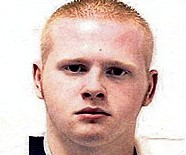
Bradley Mullins
Homicide Todd Hall
Homicide · USA · 1996
Todd Hall was described by neighbors as "mentally slow" and was said to have su…
9 victims
Todd Hall
Homicide · USA · 1996
Todd Hall was described by neighbors as "mentally slow" and was said to have su…
9 victims
 Joshua Jenkins
Homicide · USA · 1996
Joshua Jenkins was a 15-year-old American killer who killed five members of his…
5 victims
Joshua Jenkins
Homicide · USA · 1996
Joshua Jenkins was a 15-year-old American killer who killed five members of his…
5 victims
 Alex Baranyi
Homicide · USA · 1997
Alex Baranyi and David Anderson were 17-year-old high-school dropouts from Bell…
4 victims
Alex Baranyi
Homicide · USA · 1997
Alex Baranyi and David Anderson were 17-year-old high-school dropouts from Bell…
4 victims
 David Anderson
Homicide · USA · 1997
David Anderson was convicted by a jury of four counts of aggravated first-degre…
4 victims
David Anderson
Homicide · USA · 1997
David Anderson was convicted by a jury of four counts of aggravated first-degre…
4 victims
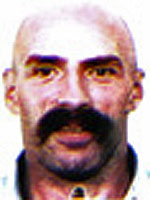 Billy Ray Hamilton
Murderer · USA · 1980
Billy Ray Hamilton died on October 22, 2007. He was convicted of murder in thre…
3 victims
Billy Ray Hamilton
Murderer · USA · 1980
Billy Ray Hamilton died on October 22, 2007. He was convicted of murder in thre…
3 victims
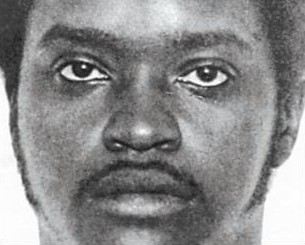 Syvasky Poyner
Spree killer · USA · 1984
Syvasky Lafayette Poyner challenged three Virginia state court judgments that s…
5 victims
Syvasky Poyner
Spree killer · USA · 1984
Syvasky Lafayette Poyner challenged three Virginia state court judgments that s…
5 victims
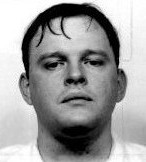 Gene Wilford Hathorn
Murderer · USA · 1984
Applicant: Gene Wilford Hathorn, Jr. · Court of Criminal Appeals of Texas cause…
Gene Wilford Hathorn
Murderer · USA · 1984
Applicant: Gene Wilford Hathorn, Jr. · Court of Criminal Appeals of Texas cause…
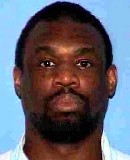 Geoffrey Griffin
Serial killer · USA · 2000
Geoffrey Griffin (also referred to as Geoffrey T. Griffin) was convicted of kil…
7 victims
Geoffrey Griffin
Serial killer · USA · 2000
Geoffrey Griffin (also referred to as Geoffrey T. Griffin) was convicted of kil…
7 victims
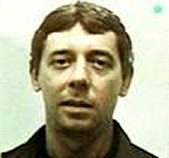 Pierre Lebrun
Mass murderer · Canada · 1999
Pierre Lebrun committed suicide by shooting himself on April 6 1999, after carr…
4 victims
Pierre Lebrun
Mass murderer · Canada · 1999
Pierre Lebrun committed suicide by shooting himself on April 6 1999, after carr…
4 victims
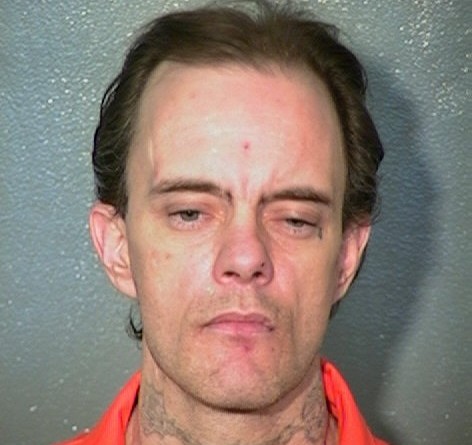 Charles David Ellison
Murderer · USA · 1999
Charles David Ellison was sentenced to death on February 17, 2004. Charles Elli…
2 victims
Charles David Ellison
Murderer · USA · 1999
Charles David Ellison was sentenced to death on February 17, 2004. Charles Elli…
2 victims
- Gender
- male
- Country
- USA
- Location
- Washington County, Tennessee, USA
- Date of birth
- 1986
- Age at first offence
- 19
- Characteristics
- motive unclear
- Victim profile
- Cortney Hensley, 17
- Method of murder
- Drag racing cause fatal crash
- Date(s) of murder
- September 24, 2005
- Years active
- 2005
- Date of arrest
- Same day
- Status
-
Imprisoned
Sentenced to 15 years in prison in 2007 after conviction of vehicular homicide and felony reckless endangerment
Case record
Background
Bradley Mullins was 19 during a trial in Tennessee for conduct involving drag racing that led to a fatal crash. The crash killed 17-year-old homecoming queen Cortney Hensley. Cortney Hensley was a student at David Crockett High School and had been crowned homecoming queen. Her best friend, 17-year-old Courtney Beard, was also injured.
The offence
On Sept. 24, 2005, Cortney Hensley and Courtney Beard were driving home after picking up homecoming pictures. They stopped at a red light on a busy street. A red Ford Mustang driven by Bradley Mullins entered the intersection while drag racing, and it slammed into Beard’s Honda CRV.
Court TV reporting described the crash as occurring at high speed, with the Mustang estimated at about 125 mph in one account and about 130 mph in another. The crash sent the Honda about 250 feet and caused the car to burst into flames. Cortney Hensley died in the crash. Courtney Beard suffered burns over 30 percent of her body and spent about a month and a half in a hospital bed.
A second driver, David Phillips, was also charged and tried with Mullins. Phillips, 39, was described as riding or being present in a red Dodge Viper, and the parties disputed whether Phillips was involved in drag racing against Mullins.
Investigation
The prosecution argued that the drag race caused the crash. A Washington County jury heard opening statements during the trial of Bradley Mullins and David Phillips.
Witnesses were expected to testify that they saw Phillips challenge Mullins to a race at about 11:40 p.m. by inching up and revving the engine of his red Dodge Viper while they waited at a red light. When the light turned green, the cars raced off.
Trial
The trial began with jury opening statements. Bradley Mullins and David Phillips were charged with second-degree murder, an alternate count of vehicular homicide, and two counts of attempted murder. The attempted murder charges stemmed from injuries to Courtney Beard and a female friend of Mullins who was riding with him when the crash occurred.
Prosecutor Al Schmutzer declined to comment on the case before opening statements were discussed further in later reporting. During his opening remarks, Schmutzer said Mullins kept drag racing down a busy street instead of slowing down or steering away from traffic, and that the crash killed Cortney Hensley.
Schmutzer asked for convictions for second-degree murder for causing Hensley’s death and second-degree attempted murder for severely injuring Beard.
Schmutzer described the sequence as follows: around 11:30 p.m., Mullins was at a red light in his Ford Mustang “squealing his tires,” while Phillips sat in his red Dodge Viper “revving his engine and inching up a little.” When the light turned green, the cars took off. Schmutzer said that after police began pursuing with lights flashing, Phillips slowed down and Mullins accelerated toward the girls, who had “no idea what was about to happen.” Schmutzer said that when Mullins finally hit the brakes it was too late, and described the Mustang as “fishtailed and jerked back,” crashing with enough force to drive the Honda almost the length of a football field. Schmutzer said the Honda’s gas tank ruptured, and sparks from the broken gas shift ignited the car.
Schmutzer said that, although Mullins and his girlfriend riding with him were able to get away with no major injuries, “Beard and Hensley weren’t so fortunate.” Schmutzer said people at the scene pulled Beard out of the burning car, but did not know there was another person inside:
“But they didn’t know there was another person in there,” Schmutzer said. “It was an inferno and it was too late.”
Schmutzer said good samaritans and police officers who arrived shortly after the crash were unable to save Hensley.
Bradley Mullins’ attorney, Don Spurrell, asked the jury to sort out what happened in the minds of the men, arguing that the accident was not the result of a conscious choice and describing it as a “drag race gone bad.” Spurrell also argued that Mullins had always accepted responsibility for the crash but disagreed with the second-degree murder charge. Spurrell said:
“There is no prior conduct, no ill will and absolutely nothing to suggest he intended this to happen,” Spurrell said.
“He was simply not motivated to kill anybody, and the state's suggestion that he did so knowingly is simply preposterous.”
Spurrell said the tragic accident resulted from a series of events and described that approach with the phrase:
“The confluence of events created what otherwise, with slight variation, would not have been so severe,” Spurrell said
Spurrell also said:
“He was induced by the actions of an older man in a Viper,” Spurrell said.
“[Phillips] egged him on and all the evidence will support the fact that Mr. Phillips had a propensity to do so.”
During the opening and trial coverage, Phillips’ attorney, Richard Pectol, said Phillips was not drag racing and that his client was present at the scene. Pectol said:
“It's not against the law to drive a Viper,” Pectol said.
Pectol said Phillips challenged anticipated testimony of eyewitnesses by asserting that testimony could only be believed if the definition of a drag race was “two cars sitting next to each other at a traffic light.” Pectol said:
Pectol stated that three police officers saw a Mustang smoke up its tires and take off at a high rate of speed and that none of the three mentioned a Viper at the scene. Pectol said:
“Our proof and the state's proof indicates that three police officers saw a Mustang smoke up its tires and take off at a high rate of speed,” defense lawyer Richard Pectol said. “None of the three officers make any mention of a Viper being at the scene.”
Pectol said it was Mullins who unsuccessfully attempted to lure Phillips into racing that night, and that Phillips stayed at the scene and gave a voluntary statement. Pectol quoted Phillips’ statement to the police as:
“[Phillips] tells the police that the driver of the Mustang tried to get him to race and that he shook his head no,” Pectol said.
Pectol said witnesses at the scene would support Phillips’ statement.
Spurrell asked the jury to filter through a complicated story and sort out what happened. During closing arguments, Spurrell said Mullins “has always accepted criminal responsibility for this act.” Spurrell said:
“Of course he didn't exercise judgment. He was reckless beyond belief,” Spurrell said.
“He's guilty of being reckless, but not of knowingly killing Hensley or injuring Beard.”
During closing arguments described in later reporting, Schmutzer argued that both men knew that by engaging in a race on a busy street, their conduct was reasonably certain to cause death or serious bodily harm. Schmutzer also argued:
“Both of them wanted to escape getting caught,” Schmutzer told the jury.
“[Phillips] chose to back off and Mullins chose to flee.”
Verdict and convictions
After deliberating for seven and a half hours, the jury chose not to convict Bradley Mullins, 19, and David Phillips, 39, of second-degree murder for killing Cortney Hensley.
The jury convicted both men of vehicular homicide for killing Cortney Hensley and of reckless aggravated assault for causing the severe burns that Courtney Beard suffered during the fiery crash.
The jury also found both men guilty of reckless endangerment and drag racing. Mullins was convicted of vehicular homicide and felony reckless endangerment, and the jury findings included reckless aggravated assault and drag racing.
Sentencing
The reporting described that at their sentencing on July 31 they could face up to 15 years in prison. Judge Robert Cupp could also sentence them to as little as probation.
Later in the case information provided here, Bradley Mullins was sentenced to 15 years in prison in 2007.
Appeals
Phillips’ attorney, Richard Pectol, said Phillips was disappointed by the jury’s verdict, and that Phillips still had hope and his family had hope that the convictions would be overturned on appeal. Pectol also said he found it hard to believe that the jury disregarded that three police officers who witnessed the race never mentioned it in their reports, which were written hours after the crash.
Mullins’ attorney, Don Spurrell, said that after the verdict was read, Mullins “just came and hugged me, crying.” Spurrell said:
“I'm not sure he even knows what happened,” Spurrell said.
“I think the kid is very confused as to what's going to happen. He's still scared and probably hasn't slept well for two weeks.”
Other details
The charge structure included second-degree murder (with vehicular homicide as an alternate count), and two counts of attempted murder.
The reporting also stated that neither Phillips nor Mullins had a criminal record according to their lawyers. It also stated that neither had been offered a chance to plead guilty to lesser charges in the case according to their lawyers.
The reporting noted that Spurrell and Pectol both believed their clients should have separate trials, although Judge Bob Cupp denied a previous motion. The reporting added that both attorneys filed letters with Judge Bob Cupp urging that the issue be reconsidered, but neither expressed confidence that separate trials would be granted.
The reporting included a description of the victims on homecoming night: Cortney Hensley and Courtney Beard, and stated that Hensley was killed in a crash the next day while Beard was severely injured.
Spotted an error, or have more information about this case?