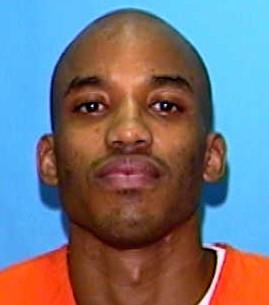
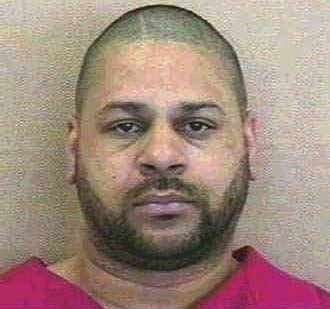
Pressley Bernard Alston
Murderer Brian Kevin Rosenfeld
Murderer · USA · 1985
Brian Kevin Rosenfeld Brian Kevin Rosenfeld was sentenced to three concurrent l…
23 victims
Brian Kevin Rosenfeld
Murderer · USA · 1985
Brian Kevin Rosenfeld Brian Kevin Rosenfeld was sentenced to three concurrent l…
23 victims
 Russell Ellwood
Murderer · USA · 1991
Russell Ellwood was a former taxi driver. Authorities suspected him of killing…
20 victims
Russell Ellwood
Murderer · USA · 1991
Russell Ellwood was a former taxi driver. Authorities suspected him of killing…
20 victims
 Robert Martines Perez
Murderer · USA · 1994
Name: Robert Martines Perez · Other name used in proceedings: Robert Martinez P…
15 victims
Robert Martines Perez
Murderer · USA · 1994
Name: Robert Martines Perez · Other name used in proceedings: Robert Martinez P…
15 victims
 Billy Frank Vickers
Murderer · USA · 1993
Billy Frank Vickers Vickers was executed by lethal injection in Texas on Januar…
14 victims
Billy Frank Vickers
Murderer · USA · 1993
Billy Frank Vickers Vickers was executed by lethal injection in Texas on Januar…
14 victims
 Stephanie Lazarus
Murderer · USA · 1986
Stephanie Lazarus was a former Los Angeles police detective who was convicted o…
1 victim
Stephanie Lazarus
Murderer · USA · 1986
Stephanie Lazarus was a former Los Angeles police detective who was convicted o…
1 victim
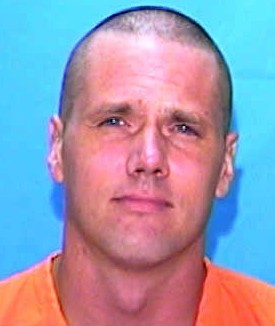 Edward Zakrzewski
Murderer · USA · 1994
Edward Zakrzewski, II was convicted and sentenced to death for the murders of h…
3 victims
Edward Zakrzewski
Murderer · USA · 1994
Edward Zakrzewski, II was convicted and sentenced to death for the murders of h…
3 victims
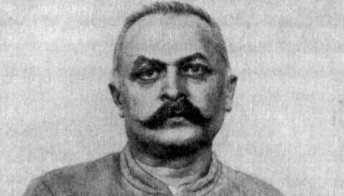 Ernst Wagner
Spree killer · Germany · 1913
Ernst August Wagner (September 22, 1874 – April 27, 1938) was a German spree ki…
14 victims
Ernst Wagner
Spree killer · Germany · 1913
Ernst August Wagner (September 22, 1874 – April 27, 1938) was a German spree ki…
14 victims
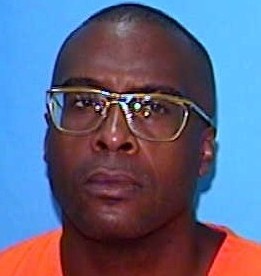 Chadwick Willacy
Murderer · USA · 1990
Chadwick Willacy was born on 09/23/67. His case involved the Eighteenth Judicia…
1 victim
Chadwick Willacy
Murderer · USA · 1990
Chadwick Willacy was born on 09/23/67. His case involved the Eighteenth Judicia…
1 victim
 Wayne Donald Horton
Serial killer · USA · 1972
Wayne Donald Horton was a native of Las Vegas, born in 1956. He died in prison…
4 victims
Wayne Donald Horton
Serial killer · USA · 1972
Wayne Donald Horton was a native of Las Vegas, born in 1956. He died in prison…
4 victims
- Gender
- male
- Country
- USA
- Location
- Duval County, Florida, USA
- Date of birth
- October 20, 1971
- Age at first offence
- 24
- Characteristics
- robbery
- Victim profile
- James Lee Coon
- Method of murder
- Shooting (.32 caliber revolver)
- Date(s) of murder
- January 22, 1995
- Years active
- 1995
- Date of arrest
- May 25, 1995
- Status
-
Sentenced to death
Sentenced to death January 12, 1996
Case information
Pressley Bernard Alston was convicted of first-degree murder, armed robbery, and armed kidnapping of James Lee Coon. He was sentenced to death for first-degree murder and received consecutive life sentences for armed robbery and armed kidnapping.
Alston was born 10/20/71. He was sentenced in the Fourth Judicial Circuit, Duval County. The case number was 95-5326-CF. The Florida Supreme Court opinion number was 87275, SC02-1904, DC # 709795.
The sentencing judge was The Honorable Aaron K. Bowden. The trial attorney was Alan Chipperfield – Assistant Public Defender. The attorney for direct appeal was Teresa J. Sopp – Private Attorney. The attorney for collateral appeal was Frank Tassone – Private.
Timeline
- 01/22/95 — James Lee Coon was last seen leaving a Jacksonville hospital and his car, a red Honda Civic, was found abandoned behind a convenience store the next day.
- 01/23/95 — Gwenetta Faye McIntyre returned to Jacksonville and encountered Alston and his half brother Dilianjan Ellison in a red Honda Civic at a convenience store.
- 05/25/95 — Gwenetta Faye McIntyre contacted the sheriff’s department; detectives interviewed her and later secured consent to search her home; detectives retrieved, among other things, McIntyre’s .32 caliber revolver; police arrested Ellison and later arrested Alston.
- 05/25/95 — Alston was read his rights, signed a constitutional rights waiver form, and confessed both orally and in writing.
- 05/26/95 — Alston was taken to the jail across the street from the police station; a “walk-over” was recorded on videotape by a television news reporter while he made inculpatory remarks.
- 05/26/95 — Later during the morning, detectives resumed their search for Coon’s body; the body was discovered within approximately ten minutes of returning to the area.
- 06/08/95 — The Defendant was indicted.
- 12/01/95 — The jury found the defendant guilty on all counts.
- 12/14/95 — Upon advisory sentencing, the jury voted 9 to 3 for the death penalty.
- 01/12/96 — Alston was sentenced: Count I First-Degree Murder – Death; Count II Armed Robbery – Life; Count III Armed Kidnapping – Life.
- 01/26/96 — Alston filed his Direct Appeal in the Florida Supreme Court.
- 09/10/98 — The court affirmed the judgment and sentence of death.
- 11/05/99 — Alston filed a 3.850 motion in the State Circuit Court.
- 10/09/01 — A status conference was held, and the presiding judge found Alston incompetent to proceed in post-conviction relief.
- 03/20/03 — An evidentiary hearing was held and Alston was found competent to proceed.
- 07/01/02 — Alston filed a Petition for Writ of Habeas Corpus in the Florida Supreme Court.
- 12/20/02 — The Florida Supreme Court remanded the petition to hold a hearing to determine whether Alston would seek a Durocher hearing and waive all further postconviction appeals.
- 06/12/03 — The State Circuit Court entered an order discharging counsel and dismissing all postconviction proceedings.
- 10/15/03 — The Florida Supreme Court ordered briefs to be filed addressing waiver of appeals and the 06/12/03 order by the Circuit Court.
- 11/17/03 — A Supplemental Initial brief was filed.
- 12/11/03 — An amended Supplemental Initial brief was filed.
- 01/13/04 — A Supplemental Answer brief was filed.
- 10/14/04 — The Florida Supreme Court affirmed the competency and waiver of appeals order of the Circuit Court.
- 04/05/04 — Alston filed a Petition for Writ of Habeas Corpus in the U.S. District Court, Middle District; it was amended on 10/28/04 and 03/15/06.
- 04/05/04 — Petition filed in the U.S. District Court, Middle District.
- 03/15/06 — U.S. District Court petition was amended.
- 09/10/98 — Per curiam decision date.
Background
James Lee Coon was last seen January 22, 1995, while visiting his grandmother at the University Medical Center in Jacksonville. Coon’s red Honda Civic was discovered the next day abandoned behind a convenience store and a missing persons report was filed shortly thereafter.
Gwenetta Faye McIntyre testified that on January 19, 1995, appellant was living at her home when they had a disagreement and she left town. On January 23, 1995, the day after Coon’s disappearance, McIntyre returned to Jacksonville. Despite their previous differences and the incident at the convenience store, appellant continued to live with McIntyre.
Alston suffered from bi-polar disorder and had been diagnosed with bi-polar disorder prior to criminal proceedings. He had been on psychotropic medication for the condition. In the competency proceedings, evidence included that Alston had twelfth-grade education, his concentration and attention span were good, he read adequately, and he performed in “the average intellectual range per [the] RAIT test.”
The offence
Alston was convicted of first-degree murder, armed robbery, and armed kidnapping of James Lee Coon.
Coon was kidnapped after being driven from the hospital. Alston and his half brother Dilianjan Ellison planned to commit a robbery. The group took personal property from Coon and drove him to Heckscher Drive. Ellison then took Coon’s wallet and the cash split totaled between $80 and $100.
When others approached the scene, the defendant, Ellison, and Coon drove off to another location, where they shot Coon to death. The trial court found multiple aggravators including prior violent felonies, robbery/kidnapping and pecuniary gain, avoiding a lawful arrest, HAC, and CCP. The trial court did not find any statutory mitigators. It considered nonstatutory mitigators including a deprived and violent childhood, cooperation with law enforcement, low intelligence and mental age (little weight), bipolar disorder (little weight), and ability to get along with people and treat them with respect (no weight).
Investigation and arrest
On May 25, 1995, McIntyre went to the sheriff’s office to talk with several detectives, including Detectives Baxter and Roberts. After the interview, police secured McIntyre’s consent to search her home. Police retrieved, among other things, McIntyre’s .32 caliber revolver from her home.
Based on the information McIntyre provided and evidence gathered from her home, police arrested Ellison and later arrested Alston later that day.
At the police station, Alston was read his rights and signed a constitutional rights waiver form. Detectives told Alston they had the murder weapon, knew about the incident at the convenience store, and that Ellison was in custody. Alston confessed, both orally and in writing.
Confession details
Alston stated that during the week preceding Coon’s disappearance, he had been depressed due to employment and relationship problems. He and Ellison planned to commit a robbery on Saturday, January 21, 1995, but they did not find anyone to rob. On Sunday, January 22, 1995, they saw Coon leave the hospital in his red Honda Civic. Alston stated that he and Ellison made eye contact with Coon and Coon “pulled up to them.”
Alston said Ellison rode in the front seat and Alston in the back. After Ellison pointed a revolver at Coon and took Coon’s watch, Alston told Coon to continue driving. They rode out to Heckscher Drive and stopped. Ellison took Coon’s wallet and Alston and Ellison split the cash found inside, totaling between $80 and $100.
Alston searched Coon’s car while others approached; the three drove away. They drove to another location where Alston and Ellison shot Coon to death.
Following the confession, Alston agreed to show detectives the location of Coon’s body. Alston directed Detectives Baxter, Roberts, and Hinson, along with uniformed police, to a remote, densely wooded location on Cedar Point Road. Detective Baxter testified that a continuous drive from the University Medical Center to where Coon’s body was found, a distance of approximately twenty miles, takes twenty-five to thirty minutes.
During the ensuing search, Detective Hinson asked appellant what happened when appellant took Coon into the woods. Alston replied:
“We had robbed somebody and taken him in [the] woods and I shot him twice in the head.”
Because of darkness and the thickness of brush, police were unable to find Coon’s body and terminated the search for the remainder of that evening. On the way back to the police station, at Alston’s request, he was taken to his mother’s house. When Detective Baxter mentioned that Alston was arrested regarding the Coon investigation, Alston’s mother asked, “Did you kill him?” Alston replied:
“Yeah, momma.”
By then it was 3:30 on the morning of May 26, 1995. During the “walk-over” recorded on videotape by a television news reporter, Alston made several inculpatory remarks in response to questions from reporters.
During the morning of May 26, 1995, detectives resumed their search; at that time, Alston was again advised of constitutional rights. After he waived his rights and directed detectives to the area searched the previous day, the body was discovered within approximately ten minutes. The remains of Coon were skeletal. The skull was apparently moved from the rest of the skeleton by animals.
Three bullets were recovered from the scene:
- One was found in the victim’s skull.
- One was in the dirt where the skull would have been had it not been moved.
- Another was inside the victim’s shirt near his pocket.
Using dental records, a medical expert positively identified the remains as those of James Coon. The expert testified that the cause of death was three gunshot wounds, two to the head and one to the torso. The expert stated he deduced a wound to the torso from the bullet hole in the shirt and explained that the absence of any flesh or soft tissue made it impossible to prove that the bullet found inside the shirt had penetrated the torso. The expert further testified that Coon was likely lying on the ground when shot in the head.
A firearm expert testified the bullets recovered at the scene were .32 caliber, the same caliber as the weapon retrieved from McIntyre’s home. The expert testified:
“there was a ninety-nine percent probability that the bullet found in the victim’s skull came from McIntyre’s revolver.”
The firearm expert also testified that because the bullet found in the dirt and the bullet found inside Coon’s shirt had been exposed for such a long period, a positive link between those two bullets and McIntyre’s revolver was impossible.
Statements after discovery of body
Later during the day that Coon’s body was found, Alston contacted Detective Baxter from the jail and asked the detective to meet with him. Alston did not make a written statement at this meeting. Detective Baxter testified that Alston stated he did not kill Coon but that Ellison and someone named Kurt killed Coon. Alston stated he initially placed the blame on himself because he wanted to be “the good guy.” Detective Baxter told Alston he did not believe him and began to leave. Alston asked Detective Baxter to stay and told him that he lied about Kurt because he heard that Ellison was placing the blame on him. Alston then stated that he shot Coon twice in the head and that Ellison shot him once in the body.
On June 1, 1995, Alston requested Detectives Baxter and Roberts come to the jail. The detectives took him to the homicide interrogation room, advised him of his rights, and Alston signed a constitutional rights form and gave a second written statement.
In the second statement, Alston stated that Ellison and Kurt initially kidnapped Coon during a robbery. Alston stated Ellison sought out appellant to ask him what to do with Coon, who had been placed in the trunk of his own car. Alston said that when he opened the trunk, Coon was crying and begged:
“Oh, Jesus, Oh Jesus, don’t let anything happen, I want to finish college.”
Alston said he told Ellison that “the boy will have to be dealt with, meaning kill[ed],” because he could identify them. Alston said Kurt left and never came back. Thereafter, Alston and Ellison drove to Cedar Point Road. Once all three were out of the car, Alston gave Ellison the gun and told him:
“You know what's got to be done.”
Alston said Ellison took the weapon, walked Coon into the woods, and shot Coon once. Alston said he walked into the brush and, wanting to ensure death, shot Coon, who was lying face down on the ground. Alston stated Ellison also fired another round.
Police located the person appellant had called Kurt. After interrogating Kurt, police concluded he was not involved in Coon’s murder.
Trial
Charges and indictment
Alston was indicted on June 8, 1995, for:
- Count I: First-Degree Murder
- Count II: Armed Robbery
- Count III: Armed Kidnapping
Verdict
On December 1, 1995, the jury found Alston guilty on all counts.
Penalty phase
Upon advisory sentencing on December 14, 1995, the jury by a 9 to 3 majority voted for the death penalty.
The penalty-phase findings included these aggravators found by the trial court:
- The defendant was convicted of three prior violent felonies.
- The murder was committed during a robbery/kidnapping and for pecuniary gain.
- The murder was committed for the purpose of avoiding a lawful arrest.
- The murder was especially heinous, atrocious, or cruel (HAC).
- The murder was cold, calculated, and premeditated (CCP).
The trial court considered nonstatutory mitigators:
- Appellant had a horribly deprived and violent childhood.
- Appellant cooperated with law enforcement.
- Appellant has low intelligence and mental age (little weight).
- Appellant has a bipolar disorder (little weight).
- Appellant has the ability to get along with people and treat them with respect (no weight).
Sentencing
On January 12, 1996, the court sentenced Alston as follows:
- Count I: First-Degree Murder — Death
- Count II: Armed Robbery — Life
- Count III: Armed Kidnapping — Life
The trial court imposed consecutive life sentences on the armed robbery and armed kidnapping counts and, after weighing the relevant factors, concurred with the jury’s recommendation of death.
Videotape “walk-over” evidence
Alston sought to exclude videotape of the “walk-over” from the police station to the jail on the morning of May 26, 1995.
The audio portion of the tape provided the following exchange:
Reporter: Did you do it? Did you know who he was? [Appellant]: Huh?
Reporter: Did you know who Mr. Coon was? [Appellant]: No, I didn’t know who he was.
Reporter: They got the wrong guy? [Appellant]: They got the right one.
Reporter: So you did it? Did you admit to it? [Appellant]: Naw, I ain’t admit to it, but under the circumstances –
Reporter: What -- what kind of circumstances, pal? Why’d you do it? [Appellant]: He was just a victim of circumstance.
Reporter: Just somebody you came across? [Appellant]: Just a victim of circumstance.
Reporter: And that’s it, huh? [Appellant]: That’s it.
Reporter: Got any remorse, any regrets? [Appellant]: I got a whole lot.
Reporter: Got a whole lot of what? [Appellant]: Regrets, remorse.
Reporter: Doesn’t help him out now, does it? [Appellant]: Naw, It ain't gonna help me either. It ain't gonna help me either when I get to death row.
Reporter: What'd you like to say to his mother, his family? [Appellant]: I can't say that I'm sorry. I can't say that. Um, I really can't say nothing, 'cause I don't know what they would accept.
Reporter: You can't what? [Appellant]: I really can't say anything, 'cause I don't know what they would accept. They probably wouldn’t wanta hear a man -- anything from a man like me. Want me to smile?
Reporter: You think it's funny? [Appellant]: Naw. Naw, I don't think it's funny.
The trial court denied suppression of the videotape, finding the evidence compelling and highly probative and that its prejudicial effect did not outweigh probative value under section 90.403.
Trial motions and appellate issues
Motion to suppress confession
Alston argued his statements were involuntary and asked to suppress statements given on May 25 and 26, 1995. He argued cumulative factors included not being informed of the nature of the charges contemporaneously with being taken into custody, not properly understanding rights, inducement using a “Christian burial speech,” and police telling him that if he cooperated they would speak with the judge and state attorney.
The appellate court addressed that issue and rejected the suppression claim.
At the suppression hearing, Detective Baxter testified:
“A. I related to Pressley Alston that Ms. Coon obviously needed closure in this case. Again, my viewpoint or perspective at that time was trying to get him to show us where the body was, and this was after I told him I didn’t really care whether he confessed, just take me to the body. I felt Mrs. Coon needed closure because her son was still missing, and I expressed the things about his daughter. I said, ‘You have a daughter. The fact if somebody has taken your daughter and you don’t see her again, you don’t get any closure, so I think so it’s important from Mrs. Coon’s aspect if you can take us to his body, that would give her some closure in her son’s death.’ Q. But you didn’t promise him anything in taking you to the body? A. Certainly not. Q. You were appealing to his conscience when you made these statements about Ms. Coon? A. I wasn’t appealing to nothing, I was just trying to be truthful with him. Q. Did you tell him Ms. Coon would appreciate it if he took you to his body? A. No, I just told him -- I just spoke of closure. Again, I’m not speaking for [the prosecutor], and I’m not speaking for Ms. Coon.”
Alston also testified at the suppression hearing. The appellate court summarized that Alston stated that when he refused to talk, detectives told him he would find himself on death row unless he cooperated; he also stated Detective Baxter told him detectives did not need his confession because they had Ellison’s signed confession and McIntyre was prepared to testify; Alston further stated that in exchange for divulging the location of the body, Detective Baxter promised both that he and Ms. Coon would testify on appellant’s behalf and that the State would be lenient.
The appellate court cited its decisions and concluded there was no error in the denial of suppression.
Motion for instruction about psychotropic medication
Alston alleged the trial court erred in denying a defense request to inform the jury he was taking psychotropic medication.
Defense counsel filed a motion under Florida Rule of Criminal Procedure 3.210 alleging incompetence due to inappropriate behavior, extreme depression, and appellant not understanding advice; the trial court ordered mental health expert examinations and the experts declared appellant competent.
Later counsel filed a motion under Florida Rule of Criminal Procedure 3.215(c) seeking an instruction that:
“[Appellant] is being administered psychotropic medication under medical supervision for a mental or emotional condition. Psychotropic medication is any drug or compound affecting the mind, behavior, intellectual functions, perception, moods, or emotion and includes anti-psychotic, anti-depressant, anti-manic, and anti-anxiety drugs.”
The appellate court addressed that issue and rejected the claim.
The trial court’s ruling at trial included:
“I have kept an eye on Mr. Alston throughout the proceedings, I have not seen any bizarre or inappropriate behavior. I’m looking for it, as I indicated earlier, and he’s just showing the normal range of reactions of a person accused of a crime, and your request is denied.”
Expert testimony on identification of remains
Alston alleged the court erred in allowing Dr. Floro to testify as to identification of the victim based on forensic odontology and dental records, which Alston argued were hearsay. The appellate court rejected that claim, stating Dr. Floro’s reliance on antemortem dental records was permissible.
Directed verdict on armed robbery
Alston argued for acquittal on the armed robbery count due to insufficient evidence. The appellate court rejected the claim, citing Alston’s written confession that he and Ellison planned to rob Coon and took Coon’s wallet while Coon was held at gunpoint, and that the $80 to $100 was split.
Independent act instruction
Alston alleged the trial court erred in failing to give an independent act instruction. The appellate court rejected the request, noting the trial court determined it was argumentative and covered by standard instructions.
Continuance of penalty phase
Alston alleged the trial court erred by denying a request to delay the penalty phase until codefendant Ellison could be tried and sentenced. The appellate court rejected the motion, noting the record demonstrated Alston played a dominant role and that Ellison would not have testified favorably given Ellison told police it was Alston who shot Coon.
Caldwell argument on judge and jury roles
Alston alleged improper jury instructions on relative roles of judge and jury in death sentencing. The appellate court rejected the claim as having no merit, stating the instructions adequately stated the law.
Victim-impact evidence and related instruction
Alston argued victim-impact evidence was improperly admitted, specifically testimony of Sharon Coon, the victim’s mother, and that victim-impact evidence instructions were erroneous. The appellate court rejected those claims and upheld the instructions.
Photograph of victim
Alston alleged the court erred in permitting the State to exhibit a full-color graduation photograph of the victim during penalty phase closing argument. The appellate court rejected the claim.
Aggravating factors challenges
Alston alleged error in finding three of five aggravators: avoiding arrest, HAC, and CCP. The appellate court affirmed the findings.
For “avoid arrest,” the trial court found the murder was committed to avoid or prevent a lawful arrest and described the sequence: defendant and accomplice took James Coon from a hospital where he had been visiting an ill relative, drove him after taking personal property, and thereafter executed him because defendant realized James Coon could identify him and his accomplice.
For HAC, the trial court found:
“The aggravating circumstance specified by Florida Statute Section 921.141(5)(h) was established beyond a reasonable doubt in that the capital felony was especially heinous, atrocious, or cruel. This was not a ‘routine’ robbery wherein the decedent was killed simultaneously with the robbery. James Coon was forced into his own vehicle, spent more than thirty (30) minutes inside the vehicle with his two (2) assailants, repeatedly begged for his life, was taken out of the vehicle in a remote location in Jacksonville, and vividly contemplated his death for a minimum of thirty (30) minutes. The words of James Coon are haunting, ‘Jesus, Jesus, please let me live so I can finish college.’ The defendant’s accomplice shot the decedent once, and it appears that this shot was not fatal. After the accomplice came back to the defendant who did not go out into the woods initially with the accomplice and the decedent, the defendant inquired as to whether James Coon was dead. The accomplice responded that he assumed that he was as he had shot him once. Not content with this assurance from the accomplice, the defendant took the firearm from the accomplice and went to the victim who was alive, moaning, and James Coon held up his hand as if to fend off further attacks. The defendant then shot James Coon at least two (2) times, and there is no question that James Coon was then rendered dead. It is difficult for the court to imagine a more heinous, atrocious, or cruel manner of inflicting death upon an innocent citizen who just happened to be in the path of this defendant who was then a predator looking for money or other things of value. Execution-style murders are not HAC unless the state presents evidence to show some physical or mental torture of the victim. Hartley v. State , 686 So. 2d 1316 (Fla. 1996), cert. denied , 118 S. Ct. 86 (1997); Ferrell v. State , 686 So. 2d 1324 (Fla. 1996), cert. denied , 117 S. Ct. 1443 (1997). Regarding mental torture, this Court, in Preston v. State , 607 So. 2d 404 (Fla. 1992), upheld the HAC aggravator where the defendant ‘forced the victim to drive to a remote location, made her walk at knifepoint through a dark field, forced her to disrobe, and then inflicted a wound certain to be fatal.’ Id. at 409. We concluded that the victim undoubtedly ‘suffered great fear and terror during the events leading up to her murder.’ Id. at 409-10. In this case, we find that the trial court’s findings are supported by competent, substantial evidence. Accordingly, we find no error with the trial court’s legal conclusion that this murder was especially heinous, atrocious, or cruel.”
For CCP, the trial court found:
“The aggravating circumstance specified by Florida Statute Section 921.141(5)(i) has been established in that the murder was committed in a cold, calculated, and premeditated manner without any pretense of moral or legal justification. The essential facts justifying the conclusion that this statutory factor has been established have been outlined in part. This was a crime of heightened calculation and premeditation. The defendant could have stopped at kidnapping and robbery. He could have taken the defendant’s motor vehicle and other valuables and left James Coon to pursue his life as an exemplary citizen of this community. Instead the defendant confined James Coon in his own motor vehicle and forced James Coon to contemplate his death while the defendant decided what to do with him. Certainly the defendant had more than ample time to reflect upon his actions, and there was absolutely no suggestion that he was under the influence of any intoxicants or the domination or pressure of another. Indeed it appears that the defendant was with his brother, his accomplice, and they were celebrating the defendant’s brother’s sixteenth (16th) birthday. This was an outrageous crime without even a scintilla of evidence suggesting moral or legal justification. This statutory aggravating circumstance was established beyond a reasonable doubt.”
The appellate court rejected Alston’s CCP challenge.
Alston also argued insufficient weight to mitigating factors and that the death sentence should not be imposed due to mental age, asserting Dr. Risch testified his mental age was between thirteen and fifteen. The appellate court rejected those claims and rejected disproportionality.
Co-defendant
Dilianjan Ellison, the codefendant, was convicted of 3rd Degree Murder and False Imprisonment, each carrying a sentence of 14 years. Ellison was also convicted of Grand Theft Auto with a sentence of five years.
Other criminal conduct while in custody
While in custody for the robbery, kidnapping, and murder of James Lee Coon, Alston escaped and committed an armed robbery on 08/11/95.
Appeals
Alston filed his Direct Appeal in the Florida Supreme Court on 01/26/96. His appeal claims included error in failing to suppress his confession and in failing to suppress media video footage allegedly prejudiced and misrepresented him. He also claimed error when the trial court denied the defense request to tell the jury he was on psychotropic medication and denied a request to delay the penalty-phase until his co-defendant could be tried and sentenced. Lastly, he argued the finding of three aggravating factors.
The Florida Supreme Court affirmed the judgment and sentence of death on 09/10/98.
In the appeal, the court stated:
“We have on appeal the judgment and sentence of the trial court imposing a death sentence upon Pressley Alston. We have jurisdiction. Art. V, § 3(b)(1), Fla. Const.”
The court stated it affirmed the judgment and sentence.
Alston raised seventeen issues on appeal, including challenges to suppression of confession, admission of the videotape “walk-over,” medication instruction, expert testimony on identification, sufficiency for armed robbery, independent act instruction, denial of delaying penalty-phase, jury instructions on judge and jury roles, victim-impact evidence and related instruction, use of a photograph of the victim, and challenges to aggravators, mitigation weighing, mental age argument, and disproportionality.
Outcome
The Florida Supreme Court affirmed Alston’s first-degree murder conviction and sentence of death, and affirmed his armed robbery conviction. It did not disturb his armed kidnapping conviction or his armed robbery and armed kidnapping sentences.
The court concluded:
“In conclusion, we affirm appellant’s first-degree murder conviction and sentence of death. We also affirm appellant’s armed robbery conviction. We do not disturb appellant’s armed kidnapping conviction or appellant’s armed robbery and armed kidnapping sentences, which appellant did not challenge. It is so ordered.”
Aftermath and collateral proceedings
On 11/05/99 Alston filed a 3.850 motion in State Circuit Court. A status conference was held 10/09/01 and the presiding judge found Alston incompetent to proceed in his post-conviction relief.
Alston was diagnosed with bi-polar disorder prior to criminal proceedings and was on psychotropic medication. On 03/20/03 an evidentiary hearing was held and Alston was found competent to proceed.
On 07/01/02 Alston filed a Petition for Writ of Habeas Corpus in the Florida Supreme Court. On 12/20/02 the Florida Supreme Court remanded the petition to the Fourth Circuit Court to determine whether Alston would seek a Durocher hearing and waive all further postconviction appeals.
On 06/12/03 the State Circuit Court entered an order discharging counsel and dismissing all postconviction proceedings. On 10/15/03 the Florida Supreme Court ordered briefs on the waiver of appeals and the 06/12/03 order. A Supplemental Initial brief was filed on 11/17/03 and amended on 12/11/03. A Supplemental Answer brief was filed on 01/13/04. On 10/14/04 the Florida Supreme Court affirmed the competency and waiver of appeals order of the Circuit Court.
On 04/05/04 Alston filed a Petition for Writ of Habeas Corpus in the U.S. The petition was amended on 10/28/04 and 03/15/06. The petition was pending.
Spotted an error, or have more information about this case?