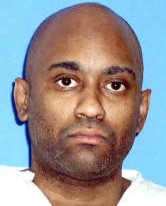
Kevin Kincy
Murderer Brian Kevin Rosenfeld
Murderer · USA · 1985
Brian Kevin Rosenfeld Brian Kevin Rosenfeld was sentenced to three concurrent l…
23 victims
Brian Kevin Rosenfeld
Murderer · USA · 1985
Brian Kevin Rosenfeld Brian Kevin Rosenfeld was sentenced to three concurrent l…
23 victims
 Russell Ellwood
Murderer · USA · 1991
Russell Ellwood was a former taxi driver. Authorities suspected him of killing…
20 victims
Russell Ellwood
Murderer · USA · 1991
Russell Ellwood was a former taxi driver. Authorities suspected him of killing…
20 victims
 Robert Martines Perez
Murderer · USA · 1994
Name: Robert Martines Perez · Other name used in proceedings: Robert Martinez P…
15 victims
Robert Martines Perez
Murderer · USA · 1994
Name: Robert Martines Perez · Other name used in proceedings: Robert Martinez P…
15 victims
 Billy Frank Vickers
Murderer · USA · 1993
Billy Frank Vickers Vickers was executed by lethal injection in Texas on Januar…
14 victims
Billy Frank Vickers
Murderer · USA · 1993
Billy Frank Vickers Vickers was executed by lethal injection in Texas on Januar…
14 victims
 Bai Ningyang
Mass murderer · China · 2006
Bai Ningyang carried out an attack at a kindergarten in Shiguan village in Gong…
12 victims
Bai Ningyang
Mass murderer · China · 2006
Bai Ningyang carried out an attack at a kindergarten in Shiguan village in Gong…
12 victims
 Jose Angel Moreno
Murderer · USA · 1985
Jose Angel Moreno Jose Angel Moreno was sentenced to death on January 14, 1987.…
1 victim
Jose Angel Moreno
Murderer · USA · 1985
Jose Angel Moreno Jose Angel Moreno was sentenced to death on January 14, 1987.…
1 victim
 Frank Silva Roque
Murderer · USA · 2001
Frank Silva Roque was born July 8, 1959. He was a Boeing aircraft mechanic at a…
1 victim
Frank Silva Roque
Murderer · USA · 2001
Frank Silva Roque was born July 8, 1959. He was a Boeing aircraft mechanic at a…
1 victim
 Cornelius Alan Goss
Murderer · USA · 1987
Name: Cornelius Alan Goss · May 20, 1987 — 66-year-old Carl Leevy, a sporting g…
1 victim
Cornelius Alan Goss
Murderer · USA · 1987
Name: Cornelius Alan Goss · May 20, 1987 — 66-year-old Carl Leevy, a sporting g…
1 victim
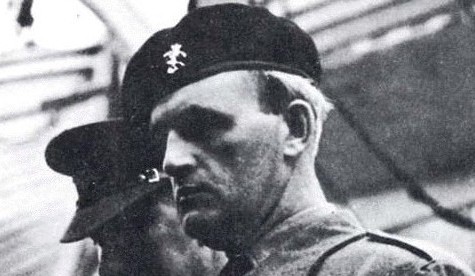 Frederick Emmett-Dunne
Homicide · Germany · 1953
Defendant: Frederick Emmett-Dunne Victim: Sergeant Reginald Watters Other named…
1 victim
Frederick Emmett-Dunne
Homicide · Germany · 1953
Defendant: Frederick Emmett-Dunne Victim: Sergeant Reginald Watters Other named…
1 victim
- Gender
- male
- Country
- USA
- Location
- Harris County, Texas, USA
- Date of birth
- January 31, 1968
- Age at first offence
- 25
- Characteristics
- robbery
- Victim profile
- Jerome Samuel Harville (male, 31)
- Method of murder
- Shooting (.25-caliber revolver)
- Date(s) of murder
- March 26, 1993
- Years active
- 1993
- Date of arrest
- April 6, 1993
- Status
-
Executed
Executed by lethal injection on March 29, 2006 in Texas
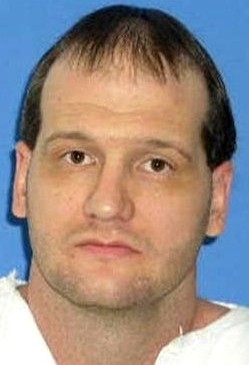
Case record: Kevin Kincy
Timeline
- March 26, 1993 — Jerome Harville was found fatally shot in the head and stabbed several times in his Houston home after co-workers became concerned when he did not show up at work.
- April 6, 1993 — An FBI agent spotted Kevin Kincy speeding in Harville’s Honda Accord on Interstate 10 near the Louisiana border; police arrested Kincy after a high-speed chase into Louisiana.
- July 26, 1993 — Kincy was indicted by a Harris County grand jury for the capital murder of Jerome Harville.
- Nov. 2, 1995 — After a separate punishment hearing, the court assessed Kincy’s punishment at death.
- January 21, 1998 — The Texas Court of Criminal Appeals affirmed Kincy’s conviction and sentence.
- July 20, 1998 — Kincy filed a state application for writ of habeas corpus in the trial court.
- November 21, 2001 — The Texas Court of Criminal Appeals adopted the trial court’s findings and conclusions and denied relief.
- August 29, 2002 — Kincy filed a federal habeas corpus petition in a Houston federal district court.
- June 19, 2003 — The district court denied Kincy’s federal writ petition.
- February 25, 2004 — The 5th U.S. Circuit Court denied Kincy permission to appeal.
- October 4, 2004 — The U.S. Supreme Court denied certiorari review.
- March 27, 2006 — Reports described Kincy as scheduled to be executed Wednesday, March 29, 2006.
- March 29, 2006 — Kincy was executed by lethal injection in Texas; he was pronounced dead at 6:26 p.m.
Background
Kevin Christopher Kincy was convicted in Houston, Texas for the murder of Jerome Harville during a robbery.
Kincy was described as a former pizza delivery man and as having an extensive criminal record. At the time of his arrest in Louisiana, Kincy was on parole for delivery of cocaine. The narrative also stated that, at the time of his arrest, he was free on bond on a weapons charge and that he had other convictions beginning at age 18.
Kincy’s cousin, Charlotte Kincy, was Charlotte Kincy was described as his cousin and as co-defendant; she pleaded to a 40-year prison term and was described as having been charged as part of the capital murder case that resulted in Kincy’s death sentence.
Jerome Harville was described as a 31-year-old Exxon industrial hygienist and as having worked for three years as an industrial hygienist at an Exxon refinery in Baytown. Harville was also described as the former boyfriend of Charlotte Kincy. After Harville’s death, Exxon offered a $5,000 reward for information on his killer.
The offence
On March 26, 1993, Jerome Harville’s co-workers became concerned when he did not show up at work and could not be reached at home or by pager. They drove by Harville’s Houston house in the late afternoon. When there was no answer at the door, they peered into the house through a window and observed that the furniture was in disarray. They contacted the sheriff’s department.
A deputy entered the house through the unlatched front door and discovered Harville’s body in the bedroom. Harville had been fatally shot in the head with a .25 caliber gun and stabbed several times. His home had been ransacked and a large amount of property had been taken.
The property taken included Harville’s Honda Accord, pagers, stereo equipment, a television, a microwave oven, furniture, and a Ruger 9 mm pistol. Police found two .25-caliber shell casings near the body. Police stated there appeared to be no forced entry.
Investigators observed small dots or impressions on some furniture in a pattern similar to rubber or plastic bumps found on the bottom of some types of gloves. Investigators also recovered the stolen 9mm weapon at a pawn shop and traced it back to John Byrom, a friend of Kincy. Byrom testified that Kincy asked him to hold the 9mm for him and that Kincy told him he had taken the 9mm from a house where he had killed a man. Byrom agreed to hold the gun but instead pawned it.
Police later recovered the murder weapon, a .25-caliber pistol. When police executed a search warrant at Kincy’s apartment, they found a magazine for a .25-caliber pistol and three white gloves with orange raised dots which appeared to match the dot-like impressions found on furniture at the murder scene.
At trial, Terkisha Dawson testified that Kincy and Charlotte Kincy spoke of their plan before the murder. Dawson testified that Kincy and Charlotte planned to rob a man and steal his car and possessions. Dawson testified that Charlotte was romantically involved with the man and had been accepting money from him, and that the plan was for Charlotte to seduce the man in his home to prevent him from setting his alarm. Dawson’s testimony also stated that Kincy would then enter the home and kill the man. Dawson later testified that Kincy phoned her after the murder and laughed as he described surprising Harville, shooting him in the head, and putting a pillow over his head. Dawson also testified that Charlotte admitted to stabbing Harville several times.
Keenan Mosley testified that Kincy displayed a gun stolen from Harville, made a list of pros and cons about chances of getting caught, and mentioned having worn gloves. Mosley testified that she observed Kincy with a Honda Accord and a large amount of home appliances and equipment.
Byron Brown, Kincy’s co-worker, testified that in March 1993 he accompanied Kincy and Charlotte Kincy to a house. Brown entered a bedroom and saw a man lying on the floor, and he later realized the man was dead. Brown testified that upon realizing the man was dead, he became frightened and left the house.
A separate account described the offence as a plan in which Harville would be distracted by his girlfriend while her cousin sneaked into the home, and stated that Harville was killed by a head shot while his cousin stabbed him several times. That account also stated that after Harville was shot, Charlotte Kincy stabbed him several times and the pair ransacked the home and stole numerous items including furniture and his car.
Investigation
Police linked Kincy to the crime by locating both the murder weapon and Harville’s stolen gun.
On April 6, 1993, an FBI agent spotted Kevin Kincy speeding in Harville’s Honda Accord on Interstate 10 near the Louisiana border. Police arrested Kincy after a high-speed chase into Louisiana.
The narrative described a chase that ended in Westlake, Louisiana, with a flat tire after Kincy crashed through a police roadblock as officers fired at him. The narrative also stated that Kincy denied any knowledge of the Harville killing, but items he threw out the window of the speeding car led police to his cousin, Charlotte.
Arrest
On April 6, 1993, Kevin Kincy was arrested after a high-speed chase into Louisiana following an FBI sighting of Kincy driving Harville’s Honda Accord on Interstate 10 near the Louisiana border.
Trial
Kincy was charged with capital murder of Jerome Harville.
The evidence presented at trial included testimony from Dawson, Mosley, Byrom, and Byron Brown. Dawson testified that Kincy and Charlotte discussed a plan to rob the man and steal his car and possessions, and that Charlotte seduced the victim to prevent him from setting his alarm. Dawson also testified that Kincy phoned her after the murder, laughing as he described the shooting and afterwards actions involving a pillow over the victim’s head, and that Charlotte also admitted to stabbing Harville several times.
Byrom testified that Kincy asked him to hold the 9mm for him, told him he had taken it from a house where he had killed a man, and that Byrom pawned the gun.
Mosley testified regarding the stolen gun, a list of pros and cons concerning chances of getting caught, and mention of gloves; she also testified that she observed Kincy with a Honda Accord and large amounts of home appliances and equipment.
Byron Brown testified about accompanying Kincy and Charlotte to the house and observing a man lying on the floor.
A witness testified that Kincy called her after the murder and said he had “won a lot of money,” a 9mm gun and a car at Harville’s house; the witness testified that Kincy laughed and said he had come in, surprised the victim, shot him in the head, and put a pillow over his head, and that Kincy’s cousin Charlotte Kincy also laughed and said she had stabbed Harville.
Witness invocation and plea deal details
Both Kincy and Charlotte Kincy were charged with capital murder. The State agreed to reduce Charlotte’s charge to first degree aggravated robbery in exchange for Charlotte’s guilty plea and her promise to testify against Kincy at trial. The plea bargain further stated that if Charlotte chose not to testify or failed to testify truthfully, the agreement would be void and the State would be free to reinstate the capital murder charges. The plea bargain did not purport to guarantee Charlotte a specific sentence.
Charlotte was not called as a witness in the guilt/innocence phase of Kincy’s trial. During the punishment phase, Kincy indicated he wished to call Charlotte as a witness. Charlotte was sworn in and, on advice of counsel, invoked her Fifth Amendment privilege against self-incrimination. Kincy’s attorney objected on waiver grounds, and the trial court allowed Charlotte to invoke her privilege. Kincy’s attorney then stated that if she had testified, Charlotte would have verified that she was “the organizer, the planner, the schemer” behind the crime.
Sentencing
After a separate punishment hearing, the court assessed Kincy’s punishment at death on Nov. 2, 1995.
Appeals
Kincy appealed his conviction and sentence to the Texas Court of Criminal Appeals, which affirmed on January 21, 1998.
Kincy filed a state application for writ of habeas corpus in the trial court on July 20, 1998. The trial court entered findings of fact and conclusions of law recommending denial of relief. The Texas Court of Criminal Appeals adopted those findings and conclusions and denied relief on November 21, 2001.
Kincy filed a federal habeas corpus petition in a Houston federal district court on August 29, 2002. The district court denied the federal writ petition on June 19, 2003.
Kincy requested permission to appeal from the 5th U.S. Circuit Court of Appeals, and on February 25, 2004 the 5th Circuit denied permission to appeal.
Kincy filed a petition for writ of certiorari in the U.S. Supreme Court, and certiorari review was denied on October 4, 2004.
In addition, Kevin Kincy appealed the district court’s dismissal of his suit for injunctive relief pursuant to 42 U.S.C. § 1983 alleging that the method of execution used by Texas, lethal injection, may cause excruciating pain in violation of the Eighth and Fourteenth Amendments. The appeals court affirmed the dismissal of the complaint and denied his request for a stay.
Outcome
Kevin Kincy was executed by lethal injection in Texas on March 29, 2006.
On the day of his execution, he was visited by his mother. The narrative stated that it was the first time he had seen her since she was arrested on a charge involving marijuana found in her van after she left the prison property.
Kincy made a brief statement that included: “I love my children. I love my family,” and “That's it.”
In the moments before the lethal drugs took effect, Kincy pursed his lips into a kiss and smiled and nodded to a Swiss woman who married him by proxy. The woman and a female companion wept. Kincy was pronounced dead at 6:26 p.m., eight minutes after the lethal drugs began to flow.
Other details
Kincy’s criminal past included convictions for possession of marijuana, theft, delivery of cocaine, burglary of a motor vehicle, attempted murder, and a federal charge of unlawful transportation in interstate commerce of a stolen motor vehicle. The federal unlawful transportation charge was described as a conviction for stealing Harville’s car and leading police on the high speed chase between Texas and Louisiana.
The narrative described Kincy as having an extremely poor prison disciplinary history, including assaults on officers and other inmates and sexual misconduct, with more than thirty disciplinary violations.
Jeff Miller, a Houston Police Department officer, testified that on March 14, 1993, he clocked Kincy on his radar gun speeding and pulled him over. Miller testified that when he walked up to the car, Kincy reached under the seats. Miller told Kincy to stop doing that and asked Kincy what he was looking for. Kincy said he was looking for his driver’s license. Miller then testified that Kincy stepped out of the car and started to reach under the seat again; Miller prevented him and placed him in the police car. Miller testified that he looked under the front seat and found a loaded .25 caliber pistol and three small envelopes of marijuana. Kincy was charged with felony possession of a firearm for this offense.
Terskisha Dawson testified that after Harville’s murder, Kincy took her and Christie Durham to a Chinese restaurant. Dawson testified that Kincy was in possession of the 9mm Ruger. Dawson also testified that as they left the restaurant, some men outside made flirtatious comments and sounds toward Dawson and Durham. Dawson testified that Kincy became angry, turned around, lifted up his shirt to show the men the gun, and stated that they better not say or do anything or he would shoot them. Dawson further testified that she later saw Kincy at Westwood Mall in possession of the gun. Dawson testified that Kincy, who was in his car in the parking lot, pointed the gun out the window and up into the air, shot 3-5 times, and drove off at high speed while several people were in the parking lot at the time.
John Byrom testified that Kincy gave him the 9mm Ruger to have it fitted for a silencer and that Kincy gave Byrom $100 up front for the silencer. Byrom testified that Kincy said: “there’d be plenty more guns and a lot of money to be made.” Byrom also testified that Kincy told him he was going to rob some dope houses, one in Louisiana and one in Houston, and needed a getaway driver; Byrom testified that Kincy asked him to be the driver and Byrom declined.
At the time of his execution, Kincy was 38. The narrative stated that he was on parole for delivery of cocaine when he was arrested in Louisiana following a police chase for the stabbing and shooting of Jerome Harville at his home outside Jacinto City.
The narrative identified Hosea Harville, 83, as the murder victim’s father and included the statement: “They can hang him,” and “He killed a good man.”
The narrative also included a statement from Kincy’s mother, Dorothy Robertson, 49: “Absolutely not. My son truly would never do something like that unless he was forced or dragged. It would take something terrible to make him do something like that,” and “Kevin is too compassionate.” It also stated that Robertson had been arrested in connection with marijuana in her van and that she contended she was duped and that the arrest was a continuation of harassment.
The narrative included that Kincy’s lawyers filed federal appeals challenging the drugs used in the execution as unconstitutionally cruel and that the U.S. Supreme Court rejected the argument in a ruling about 1 1/2 hours before his scheduled punishment.
It also described that on the last day Kincy spent time with his mother before transfer to the Huntsville Unit and that Texas Department of Public Safety troopers were added to the normal security for his trip to Huntsville. It stated that there were no unusual incidents and that Kincy was reported as very quiet in a holding cell adjacent to the death chamber.
Kincy was said to have been executed in Huntsville, Texas. The narrative also stated that he was the seventh convicted killer executed in Texas that year and that at least a dozen more inmates had death dates in the coming months, including three in April and five in May.
Spotted an error, or have more information about this case?