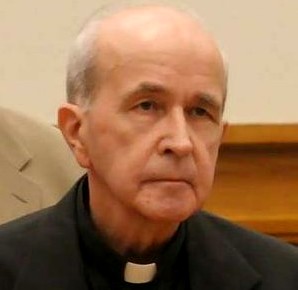
Rev. Gerald Robinson
Murderer Ervil LeBaron
Murderer · USA · 1972
Ervil Morrell LeBaron (1925 to August 16, 1981) was the leader of a polygamous…
35 victims
Ervil LeBaron
Murderer · USA · 1972
Ervil Morrell LeBaron (1925 to August 16, 1981) was the leader of a polygamous…
35 victims
 Brian Kevin Rosenfeld
Murderer · USA · 1985
Brian Kevin Rosenfeld Brian Kevin Rosenfeld was sentenced to three concurrent l…
23 victims
Brian Kevin Rosenfeld
Murderer · USA · 1985
Brian Kevin Rosenfeld Brian Kevin Rosenfeld was sentenced to three concurrent l…
23 victims
 Marvin Gray
Murderer · USA · 1975
Marvin Gray was convicted killer who claimed responsibility for 23 slayings and…
23 victims
Marvin Gray
Murderer · USA · 1975
Marvin Gray was convicted killer who claimed responsibility for 23 slayings and…
23 victims
 Yahweh ben Yahweh
Murderer · USA · 1980
Yahweh ben Yahweh was born and legally named Hulon Mitchell Jr. (October 27, 19…
23 victims
Yahweh ben Yahweh
Murderer · USA · 1980
Yahweh ben Yahweh was born and legally named Hulon Mitchell Jr. (October 27, 19…
23 victims
 Julianne McCrery
Murderer · USA · 2011
Julianne McCrery was a Texas woman from Irving, Texas, who was 42 years old. Sh…
1 victim
Julianne McCrery
Murderer · USA · 2011
Julianne McCrery was a Texas woman from Irving, Texas, who was 42 years old. Sh…
1 victim
 Ernest Ingenito
Mass murderer · USA · 1950
Ernest Ingenito (1924–1995) was an American mass murderer who shot nine people,…
5 victims
Ernest Ingenito
Mass murderer · USA · 1950
Ernest Ingenito (1924–1995) was an American mass murderer who shot nine people,…
5 victims
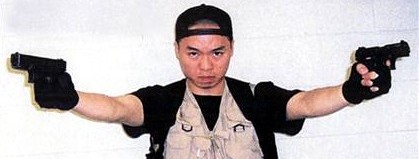 Seung-Hui Cho
Mass murderer · USA · 2007
Seung-Hui Cho was a mass murderer who shot and killed 32 people and wounded man…
32 victims
Seung-Hui Cho
Mass murderer · USA · 2007
Seung-Hui Cho was a mass murderer who shot and killed 32 people and wounded man…
32 victims
 Billi Jo Smallwood
Murderer · USA · 2007
Billi Jo Smallwood was sentenced to 25 years in prison on December 12, 2012, af…
2 victims
Billi Jo Smallwood
Murderer · USA · 2007
Billi Jo Smallwood was sentenced to 25 years in prison on December 12, 2012, af…
2 victims
 Melissa Haskell
Murderer · USA · 1992
Melissa Haskell was a Pennsylvania nanny. She was 19 when Ryan Baurley died in…
1 victim
Melissa Haskell
Murderer · USA · 1992
Melissa Haskell was a Pennsylvania nanny. She was 19 when Ryan Baurley died in…
1 victim
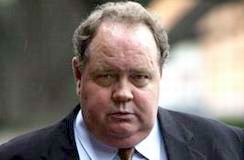 Bruce Burrell
Murderer · Australia · 1995
Bruce Allan Burrell was an Australian convicted double murderer who was sentenc…
2 victims
Bruce Burrell
Murderer · Australia · 1995
Bruce Allan Burrell was an Australian convicted double murderer who was sentenc…
2 victims
- Gender
- male
- Country
- USA
- Location
- Toledo, Ohio, USA
- Date of birth
- April 14, 1938
- Age at first offence
- 42
- Characteristics
- rape
- Victim profile
- Sister Margaret Ann Pahl, 71 (Catholic nun)
- Method of murder
- St abbing with a sword-shaped letter opener 31 times
- Date(s) of murder
- April 5, 1980
- Years active
- 1980
- Date of arrest
- April 23, 2004
- Status
-
Imprisoned
Sentenced to 15 years in prison on May 11, 2006
Case overview
Rev. Gerald Robinson (born April 14, 1938) was an American murderer and a Roman Catholic priest. He was convicted of the murder of nun Margaret Ann Pahl, and he appealed his conviction.
Timeline
- April 5, 1980 — Sister Margaret Ann Pahl was found dead in the sacristy of a chapel at Mercy Hospital in Toledo, Ohio, covered in an altar cloth and later described as having been strangled and stabbed about 30 times (including nine times in the shape of an inverted cross).
- April 9, 1980 — Father Gerald Robinson celebrated Sister Margaret Ann Pahl’s funeral Mass.
- April 18-19, 1980 — Robinson was questioned by police and was given two polygraph tests.
- June 11, 2003 — A woman told the Toledo Catholic Diocese that she suffered years of ritual sex abuse by diocesan and religious-order priests during her childhood, and she mentioned Robinson’s name.
- December 2003 — Authorities received a letter about the woman’s allegations and later reopened the investigation into Sister Margaret Ann Pahl’s death.
- April 23, 2004 — Robinson was arrested at his home and charged in the slaying of Sister Margaret Ann Pahl.
- 2004 — Sister Margaret Ann Pahl’s body was exhumed.
- April 24, 2006 — The trial’s first witness was expected to take the stand in the Lucas County courtroom.
- May 11, 2006 — Robinson was found guilty on all counts; he was sentenced to a mandatory term of 15 years to life in prison.
- October 2009 — The U.S. Supreme Court refused to consider Robinson’s appeal.
- July 12, 2008 — The Ohio 6th District Court of Appeals upheld the 2006 conviction.
Background
In 1980 Robinson was the chaplain at Toledo Mercy Hospital in Toledo, Ohio, where he ministered to the sick and terminally ill. Sister Pahl was the caretaker of the chapel.
Sister Pahl was found covered in an altar cloth. The prosecutors’ account described the wounds as strangling and stabbing, with punctures arranged to resemble a shape of an inverted cross, and the slaying was described as intended to humiliate Sister Pahl in death. Her clothes and body were arranged to suggest she had been sexually assaulted, although it was not clear.
The priest presided at her funeral Mass four days after her death.
Investigation
Investigator Tom Ross investigated 200-250 murder cases, and he retired as a Toledo Police detective after 30 years with the department. Ross later worked for the Lucas County Prosecutor’s Office and helped solve 34 cold cases.
Sgt. Steve Forrester supervised the cold case unit and was a Toledo police officer for 27 years. Forrester added a law degree to his credentials in 2003.
Cold case investigator Ross testified at an earlier hearing that when he interviewed Father Robinson in April 2004, the priest said he had just gotten out of the shower when a nun called him and said Sister Margaret Ann was dead. Ross testified:
"He advised us that he observed Sister Margaret Ann laying on her back in the sacristy, apparently dead. He said that he saw Father Swiatecki anointed the body,"
Ross testified that he asked Father Robinson about a statement he had made to Toledo Police detective Art Marx in 1980, and Ross testified that Robinson told Marx someone had confessed to him concerning the murder of Sister Margaret Ann. Ross also testified that the priest later said he lied about that confession.
Footsteps were another topic Ross raised with Father Robinson. Ross testified:
"The significance of the location is that they occurred on the floor where he was the only resident."
Investigators said Father Robinson admitted that the letter opener police believed was used to stab Sister Margaret Ann had been in his exclusive control before police seized it in 1980. Ross testified that he asked Father Robinson:
"If that being the case, did you or did you not kill Sister Pahl? Wouldn't that point to you, Father?"
Police have not disclosed a motive for the slaying.
After the initial investigation in 1980, the case went cold. The investigation was reopened in December 2003 after the prosecutor’s office received a letter about a woman’s claims that she was molested by priests for years as a child. The woman mentioned Robinson. Police were unable to substantiate her allegations of sexual abuse.
There were also mentions in the case narrative that police believed the nun’s killing appeared to be some type of ritual slaying, that the body was posed to look as though she had been sexually assaulted, and that her underwear was pulled down.
A comment in the case narrative described one patrol officer’s view that the claims of ritual abuse were “smokescreen” set by the killer to throw off investigators. The narrative also stated that it was not known if ritual abuse would be mentioned at Robinson’s trial.
Dawn Perlmutter, described as an expert on religious violence and ritualistic crimes, assisted prosecutors and said she had advised prosecutors in other cases not to mention claims of ritualistic acts. Perlmutter said:
"It just muddies the water,"
"People do not want to believe these things go on. It can really affect the outcome."
Police could not link any ritual abuse to Robinson, and no charges had resulted from the woman’s claims.
Forensic evidence and disputes described in the proceedings
Forensic tests indicated that a sword-shaped letter opener found in Robinson’s apartment was not inconsistent with the weapon that inflicted the wounds; a prosecutor’s expert said it could not “not be ruled out.” The tip of the opener fit a wound in the jaw of the nun’s exhumed body “like a key in a lock,” according to prosecutors.
Male DNA was found underneath Sister Pahl’s fingernails and on her underwear, which did not match the DNA of Robinson. Prosecutors argued that the DNA was an “artifact,” meaning it must have come from an unrelated source after the murder.
Bloodstains found on the altar cloth were also described as consistent with the shape of the letter opener. One prosecution witness conceded that the stains appeared to match a pair of scissors which were missing from the scene.
Arrest and pre-trial
Robinson was questioned in 1980 and given two polygraph tests but was not charged at that time. The case remained unsolved until it was reopened in 2003.
In April 2004, investigators arrested Father Gerald Robinson at his home for the murder of Sister Margaret Ann Pahl. At the time of the arrest, Robinson was ministering to the sick and dying in nursing homes.
Robinson was initially charged with aggravated murder. The charge was later reduced to murder, removing the need for the prosecution to prove premeditation. The narrative stated that he was not eligible for the death penalty because it was not in effect at the time of the crime.
Trial
The case went to trial in the Lucas County courtroom. The trial unfolding was described as including a nationally televised proceeding.
Robinson did not take the witness stand and did not speak during the three-week trial. He wore his priest’s collar throughout the trial and showed no emotion as the verdict was read.
Witnesses and evidence described in the proceedings
Key witnesses expected to testify included forensic scientists, a forensic anthropologist, and the local investigators who arrested Robinson.
Dr. Henry Lee, described as a DNA expert, was expected to testify for the prosecution. The narrative stated that Dr. Lee was credited with helping law enforcement solve more than 6,000 cases.
Forensic scientist Paulette Sutton was expected to testify for the prosecution regarding bloodstain pattern analysis. Sutton testified at a February hearing about her qualification as an expert. Sutton said:
"A transfer is when a bloody object comes in contact with another surface, leaving some sort of imprint of the original bloody object."
Defense witness Dr. Kathy Reichs was expected to testify. The narrative presented her as a forensic anthropologist. Reichs testified at the February hearing, saying:
"With trauma analysis, we look at the bones to determine if there’s a gunshot wound, sharp instrument trauma, blunt instrument trauma."
The defense expected to argue that other weapons could have caused the nun’s bone injuries. Sister Phyllis Ann Gerold was expected to establish that Father Robinson was at or near the scene of the crime at the time of the murder.
Father Jeffrey Grob from the Chicago Archdiocese was described as an expert in Catholic ritual, and the narrative stated that Grob testified about specialized knowledge of church ritual and that the murder was intended to mock and humiliate Sister Margaret Ann, the Catholic Church, and God.
Allegations of ritual and sexual elements described in the trial narrative
The prosecutors described punctures forming an upside-down cross and described the killer as anointing Sister Margaret Ann’s forehead with a smudge of her blood to humiliate her in death.
The narrative stated that jurors agreed it was Robinson who used his distinctive saber-shaped letter opener to stab her nine times over the heart in the shape of an upside-down cross. It further described that he removed the altar cloth, stabbed her 22 more times, and then “anointed” her forehead with her own blood. The narrative also described a final act where Robinson pulled the nun’s dress up to her chest and her girdle and hose down over her ankles, then penetrated her with either a cross, the letter opener, or his finger, according to prosecutors.
In closing arguments described in the case narrative, Dean Mandros said it was “not a satanic cult killing,” and instead characterized it as a rage killing.
Mandros said:
"not a satanic cult killing."
"perhaps the most common scenario there is for a homicide: A man got very angry at a woman and the woman died. The only thing different is that the man wore a white collar and the woman wore a habit."
The narrative also stated that Mandros called it a rage killing and said that Robinson “had taken a lot, but he wasn’t going to take any more.”
Jurors deliberated for six hours after nine days of testimony and returned a unanimous verdict finding Robinson guilty on all counts.
Sentencing
Thomas Osowik sentenced Robinson immediately after the verdict was read. The mandatory term was described as 15 years to life in prison, and the narrative stated Robinson would be eligible for parole in 10½ years.
Robinson was handcuffed and escorted out. The narrative stated he was held overnight in the jail’s second-floor medical unit and was under suicide watch for the next few days as a precautionary measure. The narrative also stated he would be taken to the Corrections Center of Northwest Ohio and transferred to an undetermined facility.
The status field in the case summary also described the sentence as “15 years in prison,” sentenced on May 11, 2006.
Appeals
Robinson appealed his conviction.
In July 2008, the Ohio 6th District Court of Appeals upheld the 2006 conviction in a 95-page ruling. The three-judge panel stated they reviewed and rejected claims including ineffective defense counsel, a lack of DNA evidence, injecting Satanism as a possible motive, and the loss of evidence and key witnesses over the years.
The judges said there was “abundant substantial evidence” for the Lucas County Common Pleas Court jury to have reached its guilty verdict. They described their duty in reviewing the case as serving as “a thirteenth juror.”
The judges rejected the argument about lost evidence and witnesses, and stated:
"a defendant must show how lost witnesses and physical evidence would have proven the defendant’s asserted defense,"
"mere speculation will not be found sufficient."
The judges concluded the evidence of the appellant’s guilt—including evidence showing he was the person who committed the murder and that the instrument was his sword-shaped letter opener—was described as “very strong.” The judges also stated that Robinson’s team of lawyers in Common Pleas Court were “skillful, and their strategy sound.”
The judges rejected claims that prosecutors sought to present Satanism as a motive and cited trial testimony by the Rev. Jeffrey Grob. The narrative stated the judges said Grob did not testify it was a Satanic murder, but that the killer sought to “mock” and “humiliate” her, the Catholic Church, and God.
Robinson’s attorneys stated they would take the case to the Ohio Supreme Court after the appeals court decision.
In October 2009, the U.S.
Outcome
Robinson remained convicted of the murder of nun Margaret Ann Pahl and was serving his sentence after the Ohio appeals court upheld the conviction. The U.S. Supreme Court refused to consider his appeal.
Other details
Victim background
Sister Margaret Ann Pahl was born in the small Williams County town of Edgerton, Ohio. She entered the Sisters of Mercy at the St. Bernadine Convent in Fremont in 1927. She had a nursing background and was the associate director of nursing at Mercy Hospital from 1962 to 1966. She worked in pastoral care and did sacristy work at Mercy from 1971 to 1980. At the time of her death, she was the caretaker of the hospital chapel.
The narrative stated she was 71 years old at the time of her death and that she would have been 72 if she had lived one more day. It also stated she ate grapefruit, cereal, and coffee before heading to the sacristy, next door to the chapel.
Names and places mentioned in the narrative
- Mercy Hospital in Toledo, Ohio
- Lucas County, Ohio
- Toledo Rosary Cathedral
- Christ the King and St. Adalbert in Toledo
- St. Michael in Findlay
- St. Anthony in Toledo
- Sylvania’s Flower Hospital
- Toledo Diocese
- Hocking Correctional Facility in Nelsonville, Ohio
- Corrections Center of Northwest Ohio
- University of Toledo law school
- Maumee
- Edgerton, Ohio
- Nashville, Ind.
- Chicago Archdiocese
- Boulder, Colorado
- New York City (Ground Zero)
People described
- Leonard Blair, bishop of the Toledo Diocese
- Claudia Vercelloti, director of the Toledo office of Survivors Network of those Abused by Priests (SNAP)
- Alan Konop, Robinson’s attorney
- John Thebes, another attorney on the defense team
- Nicole Khoury, a defense attorney listed among those meeting the media
- Jim O’Neal, corrections administrator
- Dean Mandros, lead prosecutor
- Chris Anderson, second chair prosecutor
- Larry Kiroff, assistant Lucas County prosecutor
- Thomas Osowik, presiding judge
- Peter Handwork, Mark Pietrykowski, and William Skow, judges on the appeals panel
- John Donahue (identified as the person stating the plan to appeal further)
- Sgt. Steve Forrester
- Investigator Tom Ross
- Detective Art Marx
- Father Swiatecki
- Dr. Henry Lee
- Paulette Sutton
- Dr. Kathy Reichs
- Sister Phyllis Ann Gerold
- Rev. Jeffrey Grob
- Barbara Robinson of Toledo
- Marilyn Duvall (niece of Sister Margaret Ann Pahl)
- Lee Pahl (nephew of Sister Margaret Ann Pahl)
- Trushay Carpenter and Denise West (jurors)
- Trushay Carpenter (named as one juror)
Defense and statements included in the narrative
Robinson’s attorney Alan Konop said the allegations did not “deserve the dignity of a reply.”
In response to the verdict, Mandros said:
"I don’t see it as a reason to celebrate,"
"We’re dealing with a homicide case. We’re trying to hold the person responsible accountable. We didn’t go back in the office and high-five each other."
Defense lawyer John Thebes said:
"Obviously, we are extremely disappointed with the outcome,"
"Today is difficult. But the jury has spoken and unfortunately that’s the way it is."
Alan Konop said:
"I’m not going to talk about second guessing, what should and what should not have been done,"
"What was done was done. The verdict was rendered. We respect the verdict, and there will be an appeal and we do think there are some appealable issues."
Bishop Leonard Blair said:
"Let us hope that the conclusion of the trial will bring some measure of healing for all those affected by the case as well as for our local church,"
"The diocese has remained steadfast in the work of the Church and its ministries throughout this trial, and will continue to do so."
Legal and procedural details mentioned
The case narrative described that Robinson’s initial aggravated murder charge was reduced to murder and that this removed the need for the prosecution to prove premeditation. It also described that the death penalty was not applicable because it was not in effect at the time of the crime. The narrative also stated Robinson was retired from the Toledo diocese and barred from public ministry while allowed to wear his priest’s collar. It stated he was on leave and that he continued to be barred from public ministry.
Spotted an error, or have more information about this case?