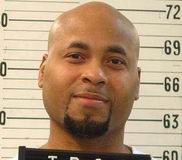
Gregory Robinson
Murderer Russell Ellwood
Murderer · USA · 1991
Russell Ellwood was a former taxi driver. Authorities suspected him of killing…
20 victims
Russell Ellwood
Murderer · USA · 1991
Russell Ellwood was a former taxi driver. Authorities suspected him of killing…
20 victims
 Robert Martines Perez
Murderer · USA · 1994
Name: Robert Martines Perez · Other name used in proceedings: Robert Martinez P…
15 victims
Robert Martines Perez
Murderer · USA · 1994
Name: Robert Martines Perez · Other name used in proceedings: Robert Martinez P…
15 victims
 Billy Frank Vickers
Murderer · USA · 1993
Billy Frank Vickers Vickers was executed by lethal injection in Texas on Januar…
14 victims
Billy Frank Vickers
Murderer · USA · 1993
Billy Frank Vickers Vickers was executed by lethal injection in Texas on Januar…
14 victims
 Vaughn Ross
Murderer · USA · 2001
Vaughn Ross was convicted of capital murder in Texas for the deaths of Douglas…
2 victims
Vaughn Ross
Murderer · USA · 2001
Vaughn Ross was convicted of capital murder in Texas for the deaths of Douglas…
2 victims
 Kiana Barker
Murderer · USA · 2010
Kiana Barker was a foster mother who tried to adopt Viola Vanclief in 2010. Bar…
1 victim
Kiana Barker
Murderer · USA · 2010
Kiana Barker was a foster mother who tried to adopt Viola Vanclief in 2010. Bar…
1 victim
 Nathan Dunlap
Mass murderer · USA · 1993
Nathan Jerard Dunlap was convicted and sentenced to death in 1996 for the murde…
4 victims
Nathan Dunlap
Mass murderer · USA · 1993
Nathan Jerard Dunlap was convicted and sentenced to death in 1996 for the murde…
4 victims
 Lydia Trueblood
Murderer · USA · 1915
Lydia Trueblood was born in 1915. She was convicted in Idaho in 1921 and died o…
6 victims
Lydia Trueblood
Murderer · USA · 1915
Lydia Trueblood was born in 1915. She was convicted in Idaho in 1921 and died o…
6 victims
 Terry Pitchford
Murderer · USA · 2004
Terry Pitchford v. State of Mississippi (No. 2006-DP-00441-SCT) · Terry Pitchfo…
1 victim
Terry Pitchford
Murderer · USA · 2004
Terry Pitchford v. State of Mississippi (No. 2006-DP-00441-SCT) · Terry Pitchfo…
1 victim
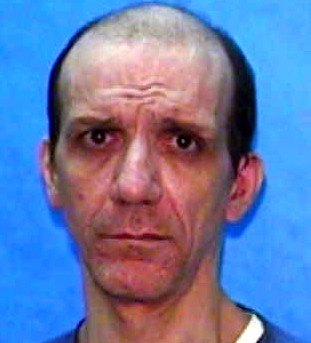 Francisco del Junco
Serial killer · USA · 1995
Francisco del Junco came to Miami in the 1980 Mariel boat lift. He was describe…
4 victims
Francisco del Junco
Serial killer · USA · 1995
Francisco del Junco came to Miami in the 1980 Mariel boat lift. He was describe…
4 victims
- Gender
- male
- Country
- USA
- Location
- Shelby County, Tennessee, USA
- Date of birth
- September 9, 1959
- Age at first offence
- 38
- Characteristics
- gangs, torture
- Victim profile
- Vernon Green
- Method of murder
- Shooting
- Date(s) of murder
- May 1, 1997
- Years active
- 1997
- Date of arrest
- —
- Status
-
Sentenced to death
Sentenced to death on November 23, 1998
Case information
Gregory Robinson was convicted by a Shelby County jury of premeditated first degree murder and especially aggravated kidnapping of Vernon Green and was sentenced to death.
STATUS and appellate posture
The Tennessee Supreme Court reinstated and affirmed Robinson’s convictions and sentence of death after granting the State’s application for permission to appeal. The Court of Criminal Appeals had reversed Robinson’s conviction and death sentence; the Tennessee Supreme Court reversed in part, affirmed in part, and reinstated the judgment of the trial court, concluding that none of Robinson’s other assignments of error warranted relief.
Timeline
- April 30, 1997 — An argument escalated into a fight, including gunfire, between the mothers’ boyfriends associated with rival Memphis gangs, the Gangster Disciples and the Vice Lords, at the Hurt Village Apartments in North Memphis; an “aid and assist” meeting was called at Hurt Village.
- April 30, 1997 (afternoon to evening) — Vernon Green, though not a gang member and not involved in the earlier fight, was seen near the apartment where the aid and assist meeting occurred; gang members accused Green of acting as a lookout for the Vice Lords; Robinson instructed gang members to “snatch him up” and bring him to the apartment; Green was beaten and interrogated for one and one-half to two and one-half hours.
- April 30, 1997 (evening/late evening) — Green was taken from the apartment by six gang members and was shot to death in Jessie Turner Park (later referenced as Bellevue Park).
- May 1, 1997 (between 5 and 5:30 a.m.) — Green’s body was discovered in Jessie Turner Park by members of a local walking club, who called the police.
- May 8, 1997 — Christopher James gave a statement to police regarding what he said he saw and heard.
- May 8, 1997 (same time period as the statement) — Christopher James and police exchanges included James responding to questions about aiding the investigation.
- May 27, 1997 — Jarvis Shipp gave a lengthy statement to the police and was not once mention the defendant’s name.
- September 28, 2004 — The Supreme Court of Tennessee delivered the opinion in State of Tennessee v. Gregory Robinson (No. W2001-01299-SC-R11-DD).
- May 6, 2003 session — The Court of Criminal Appeals considered the direct appeal (as reflected in the appendix).
- May 1, 2005 — The Supreme Court stated that “the sentence of death shall be carried out as provided by law on the 11th day of May 2005 unless otherwise ordered.”
- November 23, 1998 — Robinson was sentenced to death.
Background
Robinson was convicted of ordering a Memphis gang to kill Vernon Green, an innocent bystander in an argument between two rival gangs, in 1997. The argument began after a squabble between two small children in the Hurt Village Apartments in North Memphis that led to an argument between the children’s mothers, escalating into a fight including gunfire between the women’s boyfriends who were members of rival Memphis gangs, the Gangster Disciples and the Vice Lords.
The Hurt Village Gangster Disciples called an “aid and assist” meeting. Memphis-area Gangster Disciples congregated at an apartment in the Hurt Village complex for this meeting.
The offence
Victim and location
- The victim was Vernon Green.
- Green was taken to Jessie Turner Park (the park was also referenced as Bellevue Park) and was shot to death there.
- Green’s body was discovered in the park between 5 and 5:30 a.m. on May 1, 1997.
Events at the apartment
- A gang member accused Green of acting as a lookout for the Vice Lords.
- Robinson instructed other gang members to “snatch him up” and bring Green to the apartment.
- Robinson, along with other gang members, beat and interrogated Green for one and one-half to two and one-half hours.
- Christopher James testified that Robinson hit Green in the face and struck Green numerous times with fists and with a broom stick and pushed Green onto a couch.
- James testified Green remained upstairs for thirty to forty-five minutes while gang members assaulted and interrogated him.
- James also testified that Robinson aimed a nine millimeter gun at his face, threatening that the “same thing” would happen to James if James said “something about it.”
Orders to take Green away
- Multiple witnesses described Robinson giving repeated statements, including “Y’all know what to do.”
- Shipp testified that gang members placed Green under “GD arrest” and that after discussions, they told Kaos on a cellular telephone; after Kaos’s call, they said: “take him fishing.”
- Shipp testified the phrase “take [Green] fishing” meant to “take [Green] way out somewhere out of the district, rough him up a little bit by physical abuse, and let him get back the best way he could.”
Events at the park
- Shipp testified that men selected to take Green drove in two separate cars to Bellevue Park.
- Green pleaded for his life multiple times as he realized he was in a dark area.
- Shipp testified Green was physically carried to the top of a hill and dropped onto the ground.
- Shipp testified Wilkins kicked Green in the side and asked if Green had any last words, and that a gun was cocked and Jackson fired the gun.
- Green was shot repeatedly, including in the lower back and buttocks, and then shot in the head.
- Shipp testified the gun jammed, but Jackson adjusted it and fired again.
- After the shooting, the gang members fled the scene and later met at a gas station on South Parkway, where Wilkins advised them to “take the streets, act normal,” and Wilkins gave them marijuana to “calm us down,” then met again at an apartment in the Mitchell Heights area.
Investigation
Discovery of the body and physical evidence
- Officer Alvin Peppers arrived at the scene and found Green’s body lying face down in a prone position.
- Peppers testified he could not identify features because “the face of the body was so mutilated that there was nothing that we could identify.”
- Peppers found no identifying objects such as a wallet or jewelry but recovered a numbered dry cleaner’s tag from inside Green’s clothing that was apparently helpful in identifying the victim.
- Two live .45 caliber bullets, two .45 caliber bullet casings, and one .20 gauge shotgun shell casing were found within a five foot radius of Green’s body.
Autopsy and wound order
Dr. Thomas Deering performed Green’s autopsy and cleaned and reconstructed the victim’s skull to determine the order of the gunshot wounds. Deering testified to the wounds and their effects:
- Green had a shotgun wound and two gunshot wounds to the right side of his head.
- Deering also described a shotgun wound across Green’s upper back and a shotgun wound to Green’s left buttock.
- Deering testified the shotgun wound to the right side of Green’s head lacerated his brain and fractured the base of his skull and would have itself been fatal.
- Deering testified gunshot wound B near Green’s right temple fractured Green’s skull and struck his brain and was alone “a severe if not fatal wound.”
- Deering testified gunshot wound C began at Green’s right temple, fractured his skull, broke his jawbone on the right, traveled through the back part of his tongue, and injured muscles in the right side of his neck.
- Deering testified the shotgun wound to Green’s upper back caused superficial scraping and would not have produced death by itself though it would have been painful.
- Deering testified the shotgun wound to Green’s left buttock fractured the lower part of his back bone and his coccyx and lacerated his rectum and bladder.
- Deering opined the victim was alive when the various wounds were inflicted.
Deering testified after examining the reconstructed skull and considering bleeding levels:
- the shotgun wound to the right side of Green’s head was inflicted first,
- gunshot wound B was inflicted second,
- and gunshot wound C was next inflicted in almost the same location as gunshot wound B.
Deering testified he could not determine whether the shotgun wounds to Green’s back and buttocks preceded the wounds to his head, but he opined that the shotgun wound to the buttocks had associated bleeding and would have been quite painful. On cross-examination, Deering agreed he had reported no physical evidence of a severe beating; on re-cross-examination, Deering admitted that “an average-sized guy” striking “hard blows with a closed fist” to a person’s head would result in visible injuries.
Arrest
The record described events leading to arrests and statements, but it did not provide a specific arrest date for Robinson in the provided material.
People involved and testimony
Gang structure and participants described at trial
The proof included testimony about the Gangster Disciples’ organization into sections throughout Memphis. Jarvis Shipp testified to sections including Mitchell Heights, South Memphis, Scutterfield, Frayser, Watkins Manor, Binghampton, Hyde Park, Douglass, Riverside, Castalia, Whitehaven, Tulane, and Westwood, and said:
- “T-Money,” who lived in Chicago, was the “head guy over the whole entire city” of Memphis,
- Kevin Foley, also known as “Kaos,” was number two person over the entire city, described as “like the governor” over Memphis when T-Money was out of town. Shipp testified that Robinson was from the Mitchell Heights section and at that time was an “active chief of security over the entire city of Memphis,” ranking just below Kaos.
Christopher James (“Big Chris”)
Christopher James, known as “Big Chris,” testified for the prosecution:
- He had been a Gangster Disciple for three or four months on April 30, 1997.
- He described witnessing a fight involving Shipp’s girlfriend and the Vice Lords member “Snoop,” and then fleeing when another Vice Lord drew a gun.
- He testified that later he and other gang members arrived at the Hurt Village apartment of sisters Natalie, Nichole, and April Black around 8 p.m.
- He testified that Prentiss Phillips came inside and said Vernon Green was outside “watching out.”
- He testified that Robinson instructed “go snatch up” Vernon Green and bring him in.
- He testified that Robinson beat Green and that Green stayed upstairs for thirty to forty-five minutes.
- He testified that Green was escorted from the apartment wearing a black shirt, black pants, and black shoes and that Green’s black shirt had been pulled over his head.
- He testified that before Green left, he overheard Robinson say “Y'all know what to do,” and James believed this meant they were going to kill Green.
- He testified he heard Robinson again say “Y'all know what to do.”
- He testified Robinson aimed a nine millimeter gun at James and threatened that the “same thing” would happen to James if James said “something about it.”
- He testified that after Green was kidnapped and murder, he was walked home in early morning hours of May 1, 1997 by Phillips and “Steve.”
James’s prior May 8, 1997 statement was used for cross-examination, including a portion where James told police he saw Anthony, Jarvis Shipp, Shaun, and a big heavy-set guy he did not know and Big Folk kill Green, with emphasis that in the statement he attributed actions to “Shaun” rather than naming Robinson. James testified he said “Shaun” because Green referred to the person as “Shaun,” and he maintained he had not learned Robinson’s correct name until the first day of trial. Sergeant William Ashton corroborated James’s testimony regarding the photographic array, recalling James identified the defendant’s photograph but referred to the person as “Shaun.”
Jarvis Shipp (“J-Roc”)
Jarvis Shipp, also known as “J-Roc,” testified:
- He admitted he had been a Gangster Disciple and held the “chief of security” rank in the Hurt Village section.
- He corroborated the squabble, Shipp’s fight with Snoop, and the gunshot injury to Popcorn.
- He testified that Phillips ordered the Black sisters upstairs and that Phillips called an aid and assist meeting stating Gangster Disciples were going to “step to another level” and retaliate against the Vice Lords.
- He described gang organization and testified that Robinson ensured organization and gave orders when Kaos was not around.
- He described Robinson calling Shipp and directing him to determine the identity of a “guy peeping around the corner” and testified that after Shipp returned, Robinson asked “Who is Vernon Green?”
- He testified Robinson ordered Shipp and five other gang members to place Green under “GD arrest.”
- He described Green being escorted into the apartment and the defendant, Phillips, and Wilkins punching and physically abusing Green.
- He described the formation of a circle and a punishment of “six minutes six seconds, no cover up,” called “a pumpkin head,” for James.
- After James left, Shipp testified he heard Robinson and others direct preparation and selection of men to take Green “fishing.”
- He testified that Phillips and others talked with Kaos, and that after hanging up, they said Kaos said, “take him fishing.”
- He testified he understood the order meant to rough Green up and leave him.
- He testified that at Bellevue Park, Wilkins supervised and kicked Green, asked about last words, and directed that Jackson shoot Green, with Green being shot multiple times.
Shipp described:
- his protective custody because he feared he could not survive in general jail population due to Gangster Disciples,
- his belief there were no deals promised, while also acknowledging he hoped to avoid death penalty by testifying against Robinson,
- that he conceded he had initially implicated Phillips in earlier statements,
- and that he had not previously implicated Robinson prior to trial.
Dr. Thomas Deering
Dr. Deering testified to the autopsy findings, wound order, and that he rebuilt and cleaned the skull. He also described on cross-examination that there was no physical evidence of severe beating reported, and on re-cross he admitted that closed-fist head blows would produce visible injuries.
Defense witnesses and disputes about identity
Robinson presented testimony challenging identity and gang involvement:
- James Lee White Carradine (“Thug Life”) testified he was present at the Hurt Village apartment, but maintained Robinson was not present and was not MacGreg; he described MacGreg’s physical attributes and tattoos, and testified he first met Robinson at Shelby County jail.
- The record reflected that Robinson displayed his person to the jury, with details about tattoos and gold teeth differing from Carradine’s description.
- Annie Robinson, Robinson’s mother, and two of Robinson’s sisters, Nichole Robinson and Patricia Anne Robinson, testified that Robinson never had tattoos or gold teeth as described by Carradine.
- Danny Williams and Ronald Dowell testified that Robinson had never been a gang member.
- Sepacus Triplett denied being a member of the Gangster Disciples and denied seeing Robinson; he admitted he lied to police in a May 8, 1997 statement and pleaded guilty to facilitation in connection with Green’s murder.
- Frederico Mason testified he was not a member of the gang but was present at the apartment; he maintained Robinson and MacGreg were not the same man; he did not see Robinson at the apartment and first saw Robinson when shown a picture by a detective.
- Steven Hardin testified he pleaded guilty to facilitation to especially aggravated kidnapping in connection with Green’s kidnapping and murder; he arrived between 5:30 and 6 p.m. on April 30, 1997 and said he did not observe Robinson at the apartment.
- April Black testified she was held at gunpoint in an upstairs bedroom by gang members, identified Kaos and Phillips among those she knew, and testified she was serving a ten-year sentence for armed robbery in Mississippi while denying she was incarcerated with Memphis Gangster Disciples; she also admitted her brother had been shot by Gangster Disciples in the Shelby County jail.
- Horace Black testified he was a member of the Gangster Disciples for ten years, knew the defendant from jail, and said the defendant was not a member of the Gangster Disciples.
- Sergeant Richard Parker testified about gang tattoos and suggested that Robinson’s tattoos could possibly be gang tattoos but could not readily identify them as such, and explained tattoos and gold teeth could be altered.
Trial
Guilt phase
Robinson was convicted of:
- premeditated first degree murder (criminally responsible for the conduct of another),
- and especially aggravated kidnapping.
The Supreme Court noted that the trial court did not err by failing to instruct the jury on facilitation and solicitation and by permitting Dr. Deering to display the victim’s cleaned and reconstructed skull as a demonstrative aid. The Court also held the prosecution did not present inconsistent theories and evidence in the separate trials of Robinson and co-defendant Prentiss Phillips, and that the death sentence was not disproportionate.
Specific appellate issues described in the Supreme Court opinion
The Supreme Court addressed and rejected Robinson’s appellate arguments, including:
- the trial court’s failure to instruct on solicitation and facilitation,
- the jury instruction regarding Jarvis Shipp as an accomplice,
- admission and use of the cleaned and reconstructed skull and certain photographs,
- Sergeant Ashton’s testimony based on identification and the hearing on a photo spread “GG,”
- denial of a mistrial after Nichole Black’s testimony was stricken,
- a Due Process claim based on allegedly inconsistent theories and evidence between separate trials,
- Apprendi and Ring challenges to aggravators,
- mandatory review of the death sentence, including disproportionality and statutory aggravators.
Sentencing
Aggravating circumstances found
The jury found two aggravating circumstances:
- “the murder was especially heinous, atrocious, or cruel in that in involved torture or serious physical abuse beyond that necessary to produce death,” and
- “the murder was knowingly committed, solicited, directed, or aided by the defendant, while the defendant had a substantial role in committing or attempting to commit ․ kidnapping.”
Mitigation
Mitigation testimony described Robinson as:
- a “loving father” of seven children aged from one to six years old,
- a member of a large, close-knit family,
- a concerned and caring brother to his five sisters,
- the youngest of his mother’s six children and her only son,
- someone who attended church,
- trained as a welder,
- and evidence that he had a learning disability and dropped out of school in the ninth grade. Debra McNeese, a mitigation specialist with Probation Management Group, testified about his learning disability and educational background, and Robinson’s mother and others testified.
Robinson testified in his own behalf and asked the jury to spare his life so that he could see his children.
Death sentence
After finding that aggravating circumstances were proven beyond a reasonable doubt and that they outweighed mitigating circumstances beyond a reasonable doubt, the jury imposed a sentence of death. The Supreme Court reinstated that sentence.
Comparative proportionality and other mandatory review findings
The Supreme Court conducted Tennessee mandatory review and comparative proportionality review. It held:
- the death sentence was not imposed in an arbitrary fashion,
- evidence supported the jury’s finding of statutory aggravating circumstances,
- evidence supported the jury’s finding that aggravating circumstances outweighed mitigating circumstances beyond a reasonable doubt,
- and the death sentence was not excessive or disproportionate to the penalty imposed in similar cases, considering both the nature of the crime and the defendant.
The Supreme Court concluded that the (i)(5) aggravating circumstance could be vicariously applied and found the evidence supported both aggravators. The Supreme Court also held the (i)(7) felony murder aggravator could be applied upon proof that the murder was knowingly committed, solicited, directed, or aided by the defendant while the defendant had a substantial role in committing or attempting to commit kidnapping.
Appeals
Court of Criminal Appeals
The Court of Criminal Appeals reversed Robinson’s convictions and sentence of death. The Supreme Court’s opinion described the Court of Criminal Appeals’s reasoning in parts, including that it had held the trial court erred in failing to instruct on facilitation and solicitation and other issues reflected in the appendix.
Tennessee Supreme Court
The Tennessee Supreme Court reversed the Court of Criminal Appeals in part and reinstated and affirmed Robinson’s convictions and sentence of death. The Court held that:
- the trial court did not err by failing to instruct on solicitation and facilitation,
- it did not err in the accomplice instruction issue and considered it harmless,
- it did not abuse its discretion regarding the skull display and the admission of photographs,
- it did not abuse its discretion in denying a mistrial after Nichole Black’s testimony was stricken,
- the prosecution did not pursue inconsistent theories at the separate trials of Robinson and co-defendant Phillips,
- the Apprendi and Ring challenge was without merit,
- and the mandatory review and proportionality review did not support relief.
Outcome
Robinson’s convictions and sentence of death were affirmed by the Tennessee Supreme Court. The Supreme Court reversed the Court of Criminal Appeals in part, affirmed in part, reinstated the trial court judgment, and ordered that the sentence of death be carried out as provided by law on the 11th day of May 2005 unless otherwise ordered.
Other details
Parties and counsel named in the Supreme Court opinion
The Supreme Court opinion named:
- FRANK F. DROWOTA, III, C.J., who delivered the opinion,
- E. RILEY ANDERSON, JANICE M. HOLDER, and WILLIAM M. BARKER, JJ., who joined the opinion.
The opinion listed attorneys for the State of Tennessee and for Robinson, including Paul G. Summers and Michael E. Moore, Joseph F. Whalen, William L. Gibbons, Patience R. Branham, Paula Wulff, Joseph S. Ozment, Steffen G. Schreiner, Edmund L. Carey, Jr., and Robert C. Brooks, with references to their roles at trial and on appeal.
Evidence described in the appendix and further factual context
The appendix included additional detailed discussion about voir dire, Batson challenge, sufficiency of the evidence, accomplice corroboration, identification issues, prosecutorial misconduct allegations, jury instructions, and other sentencing-phase issues. It described:
- the final jury consisted of six African-Americans and six Caucasians,
- voir dire denials of individual, sequestered voir dire,
- rejection of a Batson challenge,
- sufficiency findings based on criminal responsibility,
- that the trial court found Shipp was to be treated as an accomplice based on the jury’s role due to waiver,
- a photographic array suppression issue,
- and denial of a continuance request for a tattoo expert and dental testimony.
Dissent/concurrence references
A concurring-dissenting opinion by ADOLPHO A. BIRCH, JR., discussed comparative proportionality protocol concerns and cited multiple prior cases where he had expressed views about the adequacy of proportionality review. It described disparities among co-defendants’ sentences and concluded that he deemed Robinson’s death sentence arbitrary, excessive, and disproportionate while concurring in affirmance of convictions. The appendix also included quotations and procedural descriptions from that concurring-dissenting opinion.
Spotted an error, or have more information about this case?