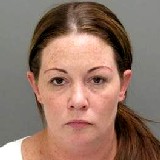
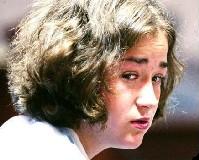
Melissa Haskell
Murderer Bobbie Sue Terrell
Murderer · USA · 1984
Bobbie Sue Dudley Terrell was a Pinellas County nurse and worked as the night s…
12 victims
Bobbie Sue Terrell
Murderer · USA · 1984
Bobbie Sue Dudley Terrell was a Pinellas County nurse and worked as the night s…
12 victims
 Megan Huntsman
Murderer · USA · 1996
Megan Huntsman was 40 at sentencing. She was a mother of three children who wer…
6 victims
Megan Huntsman
Murderer · USA · 1996
Megan Huntsman was 40 at sentencing. She was a mother of three children who wer…
6 victims
 Angela Johnson
Murderer · USA · 1993
Angela Jane Johnson was convicted in federal court of aiding and abetting the m…
5 victims
Angela Johnson
Murderer · USA · 1993
Angela Jane Johnson was convicted in federal court of aiding and abetting the m…
5 victims
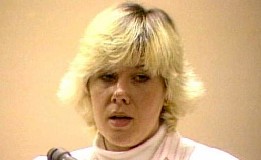 Catherine May Wood
Murderer · USA · 1987
Catherine May Wood was an American caregiver who worked at the Alpine Manor Nur…
5 victims
Catherine May Wood
Murderer · USA · 1987
Catherine May Wood was an American caregiver who worked at the Alpine Manor Nur…
5 victims
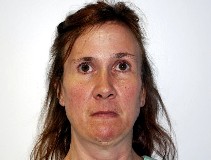 Michele Kalina
Murderer · USA · 1996
Michele Kalina pleaded guilty to murder for one of five infants she initially w…
5 victims
Michele Kalina
Murderer · USA · 1996
Michele Kalina pleaded guilty to murder for one of five infants she initially w…
5 victims
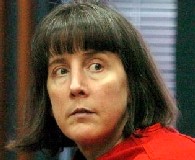 Amy Bishop
Murderer · USA · 1986
Amy Bishop — biology professor and perpetrator · James Anderson — Bishop’s husb…
4 victims
Amy Bishop
Murderer · USA · 1986
Amy Bishop — biology professor and perpetrator · James Anderson — Bishop’s husb…
4 victims
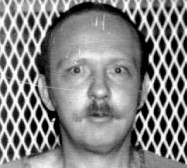 Zane Jack Fields
Murderer · USA · 1988
Zane Jack Fields Sentenced to death in August 1991 Zane Jack Fields was 46 year…
1 victim
Zane Jack Fields
Murderer · USA · 1988
Zane Jack Fields Sentenced to death in August 1991 Zane Jack Fields was 46 year…
1 victim
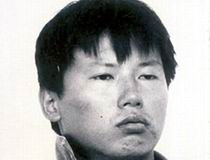 Charles Ng
Serial killer · USA · 1983
Charles Chi-Tat Ng (Chinese: 吳志達/吴志达; born December 24, 1960) was a Chinese-Ame…
25 victims
Charles Ng
Serial killer · USA · 1983
Charles Chi-Tat Ng (Chinese: 吳志達/吴志达; born December 24, 1960) was a Chinese-Ame…
25 victims
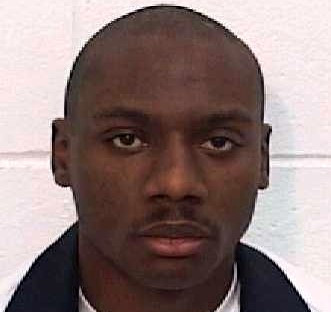 Warren King
Murderer · USA · 1994
Warren King was convicted of malice murder, armed robbery, burglary, aggravated…
1 victim
Warren King
Murderer · USA · 1994
Warren King was convicted of malice murder, armed robbery, burglary, aggravated…
1 victim
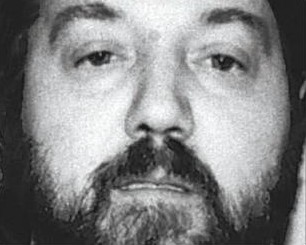 Danny Lee King
Murderer · USA · 1990
Danny Lee King was found guilty of the 1990 capital murder of Mrs. Carolyn Roge…
1 victim
Danny Lee King
Murderer · USA · 1990
Danny Lee King was found guilty of the 1990 capital murder of Mrs. Carolyn Roge…
1 victim
 Tony Protopappas
Serial killer · USA · 1982
Tony Protopappas Tony Protopappas was a local dentist. He operated a high-volum…
3 victims
Tony Protopappas
Serial killer · USA · 1982
Tony Protopappas Tony Protopappas was a local dentist. He operated a high-volum…
3 victims
 Kathryn Schoch
Mass murderer · USA · 1934
Kathryn Schoch was a trained nurse who killed members of the Dempsey family in…
6 victims
Kathryn Schoch
Mass murderer · USA · 1934
Kathryn Schoch was a trained nurse who killed members of the Dempsey family in…
6 victims
- Gender
- female
- Country
- USA
- Location
- Bridgeport, Montgomery County, Pennsylvania, USA
- Date of birth
- 1972
- Age at first offence
- 20
- Characteristics
- babysitter
- Victim profile
- Ryan Baurley, 5-month-old
- Method of murder
- S uffocation and acute alcohol intoxication
- Date(s) of murder
- August 26, 1992
- Years active
- 1992
- Date of arrest
- August 20, 2011 (19 years later)
- Status
-
Imprisoned
Sentenced to 10 to 20 years in prison on October 23, 2012 for third-degree murder in the August 1992 death of 5-month-old Ryan Baurley; conviction upheld
Case record: Melissa Haskell
Background
Melissa Haskell was a Pennsylvania nanny. She was 19 when Ryan Baurley died in August 1992. She had been formerly of Pottstown and was from Bridgeport at the time of the later proceedings.
Ryan Baurley was 5 months old when he died. He died at the King of Prussia home during a time when Haskell was babysitting him. Haskell maintained her innocence throughout, including at sentencing.
The offence
In August 1992, Haskell was caring for 5-month-old Ryan Baurley when he died. The death was originally attributed to sudden infant death syndrome.
Later investigation and medical review resulted in a change from the initial explanation. The coroner later said the boy died of suffocation and acute alcohol intoxication. Prosecutors pursued a murder charge based on homicide.
During the reopened investigation, prosecutors said Haskell confessed to killing 5-month-old Ryan Baurley in August 1992. The defense claimed Haskell was coerced into making that statement by her estranged husband during a custody dispute.
A separate account of Haskell’s statements involved a recorded conversation in which Haskell told her ex-husband that she would never hold her hand over their own child’s mouth and nose, “so he can't breathe, as I did that baby.”
Investigation
Authorities reopened the investigation in 2011 after developments emerged. The case was reopened in 2011 when Haskell’s estranged husband approached police.
In April 2011, authorities received a tip claiming that Haskell admitted suffocating the baby. Police said they reopened the investigation and recorded a conversation in which Haskell described putting her hand over the infant’s mouth and killing him.
After reviewing the original autopsy findings and additional medical information, the county coroner changed its report to conclude Ryan was killed by suffocation with acute alcohol intoxication as a contributing factor.
County Coroner Walter I. Hofman changed the cause of death to suffocation, with a secondary cause of acute alcohol intoxication, due to high blood-alcohol levels in a sample of the baby’s blood. Hofman changed the manner of death to homicide, which was the basis for the murder charge against Haskell.
Arrest
On August 22, 2011, Melissa Haskell was arrested and charged with third-degree murder in the death of 5-month-old Ryan Baurley. Authorities said she was alone with Ryan in his family’s Upper Merion Township home when he died on August 26, 1992.
She was ordered held without bail at the Montgomery County prison pending a preliminary hearing on August 30.
During the later arrest reporting, Haskell was described as having told police she found Ryan unresponsive in his crib. The coroner’s office at the time had concluded the cause of death was sudden infant death syndrome.
District Attorney Risa Vetri Ferman said Haskell was battling heroin withdrawal and became frustrated with the crying baby. Ferman stated: “She was having trouble caring for the child and she was not able to deal with the child crying and a typical infant behavior because of her own personal difficulties,”
In the narrative around the 1992 findings, the 1992 coroner’s report noted bruising consistent with suffocation and a blood alcohol level of .04 percent. Adults were considered too drunk to drive with a level higher than .08 percent.
Trial
Course of proceedings
A jury found Melissa Haskell guilty of third-degree murder in the two-decade-old death of an infant. The verdict came one day after Haskell refused to let the jury consider convicting her of a lesser manslaughter charge.
Defense attorney Frank Genovese said Haskell steadfastly maintained her innocence. Genovese said the murder charge required the killing to be an act of malice, not recklessness or negligence like manslaughter.
Defense attorney Frank Genovese said Haskell did not want a general charge of criminal homicide to replace the murder charge. Genovese also said: “She has steadily maintained her innocence from the first day we met. “She didn't want to create a situation where that would be compromised, and the jury would find her guilty of involuntary manslaughter. She didn't want to create that risk.”
In court, with jurors out of hearing, Haskell told Montgomery County Court Judge Garrett D. Page that she did not wish to have the charge downgraded to involuntary manslaughter. Judge Garrett D. Page said: “So you're going with all or nothing,” and Haskell replied: “Yes,”.
The development came near the end of the seventh day of testimony. Closing arguments began early Wednesday after the defense rested in the late afternoon.
Haskell also told Judge Garrett D. Page from the witness stand that she would not testify in her own defense. Genovese said in a news briefing: “I 100 percent agree with it — not to testify,”
Evidence and expert testimony
The trial included testimony by multiple expert witnesses for the Commonwealth, addressing whether Ryan died without an intervenor. Three expert witnesses—one forensic toxicologist, one forensic pathologist, and one neonatologist—testified that the infant did not die without an intervenor.
The child’s blood was drawn during an autopsy on August 27, 1992. In tests done four days apart in September 1992, the child’s blood alcohol level was 0.03 and 0.04 percent, according to the forensic toxicologist. The toxicologist testified that calculations based on the test data showed that “at least some of this alcohol was there prior to his death,”.
Robert Middleberg testified that toxicology samples can be contaminated and that there was no TV-like straightforward interpretation of death-related toxicology. Middleberg testified: “I'd like to tell you that when you die, it's a beautiful thing, but it is not like on TV. Toxicology samples can be contaminated,” and he also testified that the blood sample in a special red-topped tube did not contain preservatives. He also testified that records were not kept on how warm it became as it was moved from the autopsy room to the lab, and that fermentation could have set in. Middleberg responded to a defense question about whether postmortem production could be excluded as the source of the blood alcohol found in Ryan Baurley: “No,”.
On cause and manner of death, County Coroner Walter I. Hofman testified that he was asked by police investigators in May 2011 to reopen the baby’s medical file because new evidence emerged. Hofman testified that the new evidence included a recorded conversation in which Haskell said she would never hold her hand over their own child’s mouth and nose, “so he can't breathe, as I did that baby.” Hofman testified that signs pointed to suffocation, noting that the baby’s liver, kidneys, brain, and voice box were enlarged, and that frothy fluid came up out of his lungs.
In cross-examination, defense counsel Frank Genovese tried to undercut Hofman’s opinion by implying it was influenced by Haskell’s statement about smothering. Genovese asked: “You relied at least in part on the statement of Melissa Haskell, didn't you?” and Hofman responded: “That — and the alcohol,”.
Alan Spitzer, a neonatologist now working in Florida, testified about sudden infant death syndrome and timing. Spitzer said sudden infant death syndrome is most likely to happen at night and that Ryan died in the morning. Spitzer testified: “It's very different from when the baby is struggling to breathe. It can't get fresh air in and you begin to go through the changes mentioned in the autopsy,”
Defence position and rebuttal
During testimony, two expert witnesses tried to challenge Hofman’s interpretation of details in the autopsy report.
George Jackson, a forensic toxicologist who works in Bensalem, testified that he could not rule out fermentation of the blood sample as the source of the high alcohol readings.
Edward Chmara, a New Jersey forensic pathologist, testified that both cause and manner of death should be ruled “undetermined.” Chmara testified: “There is no scientific evidence to back up suffocation. There are no photos to back up suffocation. There is nothing that changed except a statement that came forward from a concerned citizen,” and he testified that most organs showed congestion or backup of fluids typical of any death and would not necessarily be caused by suffocation. Chmara testified that the baby’s enlarged brain and larynx that Hofman described as abnormally swollen did not necessarily point to suffocation, regarding them as unremarkable.
As a rebuttal witness, Hofman said his reading of the enlarged organs as abnormal came straight out of pediatrics textbook. Hofman testified: “The brain is too big, the lungs and liver are congested. All of these are abnormal findings,”
Witness testimony and disputed confession
Michael Leflar, Haskell’s estranged husband, testified against her. A jury heard that Leflar wore a wire when he got Melissa Haskell to admit to the killing of 5-month-old Ryan Baurley nearly 20 years earlier. The hour-long tape was played in court. Leflar testified that Haskell “pinky” swore she would never do anything to hurt their son.
Defense attorney Marty Mullaney questioned Leflar about whether he had a scheme to get Haskell arrested to prevent her from obtaining partial custody of their son.
Mullaney asked: “How many different times did you get her to say ‘them words,’” and the words in question were described as Haskell’s admissions heard on the tape. The tape included the following statement by Haskell: “I will never, ever, ever put my hand over (our son’s) mouth like I did to that baby.” The report stated that the statement was heard “several times” as Leflar prompted her: “I want to hear them words.”
Mullaney described the operation as a trap conceived by Leflar and in conjunction with county detectives to get Haskell to admit to Baurley’s murder. Mullaney asked: “Your plan, for it to be successful, is to have Melissa Haskell found guilty by this jury, isn’t it?” and “Your plan is still in motion, isn’t it?”
Leflar testified that he was trying to protect his son, stating he thought it could happen to their son like it did before, and that he kept the secret until last year when he agreed to cooperate with detectives to obtain full custody and prevent Haskell from ever getting near him. Leflar testified: “For the safety of my son,” and “It could happen to him like it did before. When Missy told me her story, I was afraid it could happen to my son. I had to keep my son away from a monster.” Leflar also testified: “I needed some guidance. He told me to keep it under, because of the problems that would occur. To take the burden off of me, he told me to take it back to the family.” and “We talked about what a horrible thing it was to have inside of you. It was tearing (Leflar) up inside.” The report further stated that Haskell and Leflar’s eyes did not meet once in court.
Five days after the recorded alleged confession, Leflar filed an emergency petition to temporarily suspend Haskell’s custody of their son. The defense argued that Haskell was in an emotionally compromised state and would have said anything to earn his trust.
Three other Commonwealth witnesses testified Friday that Leflar recalled the confession Haskell made to him some time after the August 26, 1992 murder. Pennsylvania State Trooper Henry Callithen testified that Leflar told him Haskell somehow suffocated a baby years ago and wanted her to “get her life straightened out so they could be a family again.”
Paul Leflar, the older brother of Michael Leflar, testified that Michael told him about Haskell’s confession 10 years earlier and “he had a hard time telling me.” Paul Leflar also testified: “It hits you hard,” and: “I went to a priest because I needed some guidance. To take the burden off of me, he told me to take it back to the family. We talked about what a horrible thing it was to have inside of you. It was tearing (Leflar) up inside.”
Joseph Mariani testified that he had worked for and knew Michael Leflar for 12 years. Mariani testified: “He told me (Haskell) was babysitting, the baby was crying a lot and she put her hand over the baby’s mouth. (Leflar) was upset at the time.”
Patricia Dunn, the sister of Michael Baurley, testified that on the day of Ryan’s death, Haskell approached her and demanded to be paid for a week’s worth of babysitting. Dunn testified: “Melissa came right up to me and wanted to talk to me. She was very matter-of-fact, almost business-like,” and that Haskell told her: “(Baurley) owed her a week’s pay and she wanted her money.” Dunn testified that she paid Haskell $250 in cash to prevent her from asking Baurley directly on the day Baurley was making funeral arrangements for their son: “She told me (Baurley) owed her a week’s pay and she wanted her money,” and “Dunn said she paid her $250 in cash to prevent her from asking Baurley directly, on the day he was making funeral arrangements for his son.”
Sentencing
On October 23, 2012, Melissa Haskell was sentenced to 10 to 20 years in prison in the death of an infant for whom she was babysitting two decades earlier. At sentencing, Haskell choked back tears and maintained her innocence.
She was sentenced in Montgomery County Court. The report identified Judge Garrett Page as the judge. Judge Garrett Page said: “the jury has spoken” and imposed the maximum sentence allowed under the 1992 law.
Outcome
A jury convicted Melissa Haskell of third-degree murder in the August 1992 death of 5-month-old Ryan Baurley. She later received a 10- to 20-year prison sentence on October 23, 2012.
Aftermath
After the conviction and sentencing, family members sought privacy as they dealt with developments in the child’s death.
At the time of Haskell’s arrest in 2011, Ryan Baurley’s father, Michael Baurley, said: “He was our first son and he was a beautiful child, a gift from God and we miss him dearly,” during the reporting.
Michael Baurley also said: “The very recent developments in this investigation has once again ripped open the wounds that are very difficult to heal for our family,” during the reporting around the arrest.
Timeline
- August 26, 1992 — 5-month-old Ryan Baurley died while Haskell was babysitting him in the Upper Merion Township home; the original cause was later attributed to sudden infant death syndrome.
- August 27, 1992 — Blood was drawn during an autopsy.
- September 1992 — Tests done four days apart showed blood alcohol level of 0.03 and 0.04 percent.
- May 2011 — Police investigators asked Coroner Walter I. Hofman to reopen the baby’s medical file due to new evidence, including a recorded conversation.
- April 2011 — A tip was received claiming Haskell admitted suffocating the baby.
- August 22, 2011 — Melissa Haskell was arrested and charged with third-degree murder; she was ordered held without bail pending a preliminary hearing on August 30.
- August 30, 2011 — Preliminary hearing date was set.
- June 7, 2012 — Ex-husband Michael Leflar testified against Haskell, and a tape of Haskell’s admissions was played in court.
- June 13, 2012 — A jury found Haskell guilty of third-degree murder.
- October 23, 2012 — Haskell was sentenced to 10 to 20 years in prison.
Other details
Haskell was described as having a heroin withdrawal condition at the time of events described during the arrest reporting.
The prosecution said Haskell gave the baby whiskey to quiet him. Defense evidence and expert testimony challenged suffocation as the cause of death, including testimony that there was no scientific evidence to back up suffocation and that undetermined conclusions should be reached.
Coroner Walter I. Hofman testified that the enlarged organs abnormal findings came straight out of a pediatrics textbook, including testimony: “The brain is too big, the lungs and liver are congested.
Spotted an error, or have more information about this case?