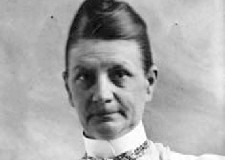
Martha Place
Murderer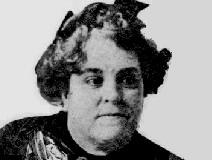 Cordelia Botkin
Murderer · USA · 1898
Cordelia Botkin was a stocky woman of 44 who left her own husband and started a…
2 victims
Cordelia Botkin
Murderer · USA · 1898
Cordelia Botkin was a stocky woman of 44 who left her own husband and started a…
2 victims
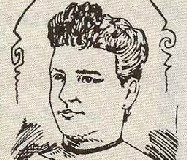 Alice Mitchell
Murderer · USA · 1892
Alice Mitchell was tried for murder and entered a plea of “present insanity,” m…
1 victim
Alice Mitchell
Murderer · USA · 1892
Alice Mitchell was tried for murder and entered a plea of “present insanity,” m…
1 victim
 Lulu Prince Kennedy
Murderer · USA · 1901
Lulu Prince Kennedy was 23 years old and lived in Kansas City, Missouri. She li…
1 victim
Lulu Prince Kennedy
Murderer · USA · 1901
Lulu Prince Kennedy was 23 years old and lived in Kansas City, Missouri. She li…
1 victim
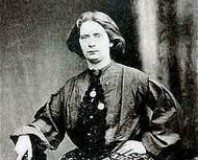 Maria Barbella
Murderer · USA · 1895
Maria Barbella was a seamstress in Manhattan's Little Italy. She lived with her…
1 victim
Maria Barbella
Murderer · USA · 1895
Maria Barbella was a seamstress in Manhattan's Little Italy. She lived with her…
1 victim
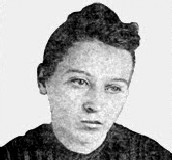 Mary Farmer
Murderer · USA · 1908
Mary Farmer was convicted of murdering Sarah Brennan and was executed by electr…
1 victim
Mary Farmer
Murderer · USA · 1908
Mary Farmer was convicted of murdering Sarah Brennan and was executed by electr…
1 victim
 Michael DeLozier
Murderer · USA · 1995
Michael DeLozier was convicted of two counts of first-degree murder in Oklahoma…
2 victims
Michael DeLozier
Murderer · USA · 1995
Michael DeLozier was convicted of two counts of first-degree murder in Oklahoma…
2 victims
 Timothy Pruitt
— · USA · 1992
Timothy Pruitt was sentenced to death in Lumpkin County in October 1996 for the…
1 victim
Timothy Pruitt
— · USA · 1992
Timothy Pruitt was sentenced to death in Lumpkin County in October 1996 for the…
1 victim
 Charlene Dorcy
Murderer · USA · 2004
Charlene Dorcy, diagnosed as a paranoid schizophrenic, pleaded guilty to two co…
2 victims
Charlene Dorcy
Murderer · USA · 2004
Charlene Dorcy, diagnosed as a paranoid schizophrenic, pleaded guilty to two co…
2 victims
 John Wilkes Booth
Assassin · USA · 1865
John Wilkes Booth (May 10, 1838 – April 26, 1865) was an American stage actor w…
1 victim
John Wilkes Booth
Assassin · USA · 1865
John Wilkes Booth (May 10, 1838 – April 26, 1865) was an American stage actor w…
1 victim
 Nikolay Soltys
Spree killer · USA · 2001
Name: Nikolay Soltys · Also known as: Mykola Soltys, Nikolay A. Soltys, Nikolay…
6 victims
Nikolay Soltys
Spree killer · USA · 2001
Name: Nikolay Soltys · Also known as: Mykola Soltys, Nikolay A. Soltys, Nikolay…
6 victims
- Gender
- female
- Country
- USA
- Location
- New York City, Kings County, New York, USA
- Date of birth
- 1854
- Age at first offence
- 45
- Characteristics
- jealousy, torture
- Victim profile
- Ida Place, 17 (her stepdaughter)
- Method of murder
- Suffocation with a pillow
- Date(s) of murder
- February 7, 1899
- Years active
- 1899
- Date of arrest
- Same day
- Status
-
Executed
Executed by electrocution at Sing Sing prison on April 8, 1899
Background
Martha Place was born in New Jersey. Her brother said she was struck in the head by a sleigh when she was 23 and that she never completely recovered, leaving her mentally unstable. She married widower William Place in 1893. Place had a daughter named Ida from a previous marriage. The marriage was described as William marrying Martha to help him raise his daughter, and it was later rumored that Martha was jealous of Ida. William Place called the police at least once to arrest his wife for threatening to kill Ida.
The offence
On February 7, 1898, William Place arrived at his Brooklyn, New York home and was attacked by Martha, who was wielding an axe. William escaped for help. Police discovered Martha in critical condition lying on the floor with clothes over her head and gas from burners escaping into the room. Upstairs, police discovered the dead body of Ida Place, a 17-year-old girl, lying on a bed under a sheet. Ida’s mouth was burnt from having acid forced into it, and her eyes were disfigured from having acid thrown in them. Evidence later indicated Ida Place died from asphyxiation, and her eyes were burned with acid. Police theory described that, to deaden the screams of the suffering girl, Martha threw Ida onto the bed, pulled a large pillow over the girl’s face, and then knelt on it until Ida became still; the stillness was death.
Martha was hospitalized and arrested.
Investigation
Martha proclaimed her innocence while awaiting trial.
A contemporary newspaper described the defendant in these terms:
"She is rather tall and spare, with a pale, sharp face. Her nose is long and pointed, her chin sharp and prominent, her lips thin and her forehead retreating. There is something about her face that reminds one of a rat’s, and the bright but changeless eyes somehow strengthen the impression."
Another contemporary newspaper report described the case and included details of police handling Martha after her arrest.
Martha remained at St. John’s Hospital, Brooklyn, for the night. The doctors found that there was little the matter with her. She feigned unconsciousness until about 6 A. M. She moaned and mumbled all night, calling for her husband, asking, “Where is Willie? Why don’t Willie come to me?” The physicians did not know at the time whether the axe wounds would kill him or not.
Arrest
At 8 o’clock A. M. Detective Becker told Martha to get ready to go to the Ralph Avenue Police Station. She kept on moaning and walked with eyes half closed to the trolley car to the station-house. Capt. Ennis and the detectives spent an hour trying to get her to say something, but she kept up her wandering talk.
Capt. Ennis then told Policeman North to go to the Hancock street house and get the dead girl’s clothes and the blood-stained axe and bring them back to see if they would shock her into talking. Detectives Becker and Mitchell lifted Martha into an open patrol wagon and brought her back to the house.
Martha did not want to enter the house. The detectives rushed her up the stoop, and she paused while her eyes wandered to the bell where the undertaker had fastened a long string of lilies, white roses and smilax. She started at the emblem of her crime. Detectives then lifted her into the back room where Ida’s body lay on the bed under a sheet. Becker stepped forward and pulled the sheet aside, disclosing Ida’s face. Martha refused to look down.
Becker asked:
“Why don’t you look at her and say why you killed her?”
Martha replied:
“I didn’t kill her. I threw acid in her face. That was all. I don’t know anything about killing her.”
After that, detectives took Martha back to the patrol wagon and then to the station-house. The matron talked with Martha, and Martha told her that her husband would not allow her to have her boy and that it always worried her. Captain Ennis and the detectives again took her in hand, and after questioning she made a partial confession.
Trial
Martha made a partial confession acknowledging everything but the foot that she had murdered Ida. She said she threw acid in the girl’s face.
At 1 o’clock P. M. she was taken down to Police Headquarters, where she was questioned by Deputy Chief MacKellan and Assistant District-Attorney Clark. A stenographer was on hand to take down her statement. Coroner Delai was also on hand. Martha practically reported what she had told Capt. Ennis earlier.
From Police Headquarters Martha was taken to the Gates Avenue Police Court and arraigned before Judge Worth at 2:30 o’clock after a long wait in a private room. Detective Baker made the forma charge against her of:
- homicide by choking her stepdaughter and pouring acid in her face
- assault in the first degree by attacking her husband with an ax
- attempting suicide by inhaling gas
During the reading of the charge, Martha repeated “No! no! no! I did not do that.” She had no counsel, and Lawyer Knittie was assigned to her. Knittie waived examination. The hearing was continued Feb. 15, at 2 P. M.
Sentencing
Martha Place was found guilty of the murder of her stepdaughter Ida and sentenced to death.
The case materials gave the sentencing date as March 20, 1899. The materials also described her as having been sentenced to death on March 20, 1899.
Execution
Martha Place was executed by electrocution in a Sing Sing prison setting. The materials gave these details of the execution process:
- When those responsible carried out the death warrant devised a new way to place the electrodes on her, they decided to slit her dress and place the electrode on her ankle.
- Edwin Davis was the executioner.
- Witnesses reported that she died instantly.
The governor of the State of New York Theodore Roosevelt was asked to pardon Place, but he refused.
Martha Place was buried in the family cemetery plot in East Millstone, New Jersey without religious observances.
Outcome
Martha Place’s conviction led to execution by electrocution.
Maria Barbella was mentioned as a different woman who was later found not guilty of her crime and released, and who was described as having been the first woman sentenced to death in an electric chair before Martha Place. Martha Place was described as the first woman to die in the electric chair.
Other details
Martha Place attempted suicide by inhaling gas after the axe attack on William Place, and she turned on the gas in an attempt to commit suicide.
The materials described medical and physical details:
- Only the outer wall of the skull was fractured in one place by the axe blows.
- Splinters of bone were removed and the operation of trephining was successfully performed in the afternoon.
- Martha spent Monday night in St. John’s Hospital, Brooklyn.
- A doctor described her gas exposure as insufficient to stir the pulse of a baby.
In her partial confession about the events, Martha gave these statements:
“My husband and myself had a dispute yesterday morning before he went to business,” she said. “Ida had told him some stories about me. He asked me about them. I denied them, and we had a sharp talk. Finally he hit me in the face with his hand.
When he had gone I went to Ida’s room. She was dressing. I asked her what she meant by telling such stories about me to her father. She answered me sharply. We talked and argued for some time, and finally I left the room slamming the door.
I went into my room. Then I saw a bottle with acid in it. I don’t know what kind of acid it was. I poured the stuff into a cup, and again going to Ida’s room. I opened the door and threw the stuff into her face. Then I closed the door and did not go near her again.
I spent most of the day attending to the household work. I went downstairs to the cellar to feed the furnace and saw the axe there. I expected that Mr. Place would blame me when he came home. When I went down in the cellar again I brought up the axe and kept it near me. I was afraid my husband would strike me.”
She continued:
“When I heard him come in I rushed toward him and struck him with the axe. When he ran toward the door I struck him again. Then I went upstairs and tried to kill myself.”
That is all she would say.
The materials included other individuals and relationships:
- William Place was described as a key witness against Martha.
- Theodore Place was described as the injured man’s brother and as speaking about Martha’s temper.
- Charles was mentioned as another brother of Mr. Place.
- Hulda Talm was described as the servant employed in the Place household; police said she heard one scream from Ida’s room early in the day.
- Edward Scheldecker was described as engaged to marry Ida.
- Gertrude Elebbard was described as Ida Place’s girl chum; she was identified as the daughter of Mrs. Anna M. Hobbard of No. 268 Reid avenue, and engaged to marry Frederick Fahreivkarg, a private detective employed by the American Detective Association.
- Frederick Fahreivkarg was described as having been hired by Mr. Place to shadow Martha and obtain evidence for divorce proceedings.
- Ross Savacool was mentioned as a boy; he was later described as now fourteen years old and was tied to a son Martha was not allowed to bring into the home. The materials also stated that his father went West and was “supposed” to still be living, and that his mother’s circumstances led to adoption by William B. Aschenbach, a wealthy harness manufacturer on South Orange avenue, Vallsburg, near Newark. The boy’s name was described as changed to William J. Aschenbach, jr.
- Ross’s mother’s correspondence included a letter to her niece Grace Garretson and notes written on blank-hook back leaves.
The materials included statements and quotations attributed to individuals:
- Becker’s question to Martha about looking at Ida and why she killed her was followed by Martha’s reply quoted above.
- Martha was described as keeping repeating “No! no! no! I did not do that.”
- Detective Becker was quoted:
- The quoted family statement from Martha’s brother Peter Garretson was:
“When I reached Jersey City this morning I tried to go over to Brooklyn to see Mattie, but I couldn’t get up the sand. There isn’t the slightest doubt that she was insane. All these stories that she was jealous of Ida must be wrong. Why, she loved that little girl.
Ever since she was forced to let her boy Ross go among strangers she has worried and fretted over that. She was wonderfully attached to him. I think that brooding over her future to get the boy turned her brain, which was none too strong on account of a carriage accident.”
“She has a cruel face, a cruel heart and she is a great actress.”
The materials included additional details about motions and scheduling:
- Martha was arraigned at 2:30 o’clock by Judge Worth.
- The hearing was continued Feb. 15 at 2 P. M.
The materials described described the crime as involving jealousy and disputes:
- Police and relatives agreed it was “simply the ignorant jealousy of Mrs. Place.”
- A narrative attributed to Theodore Place described Martha’s “fearful temper.”
The materials described letters and finances:
- Martha wrote to her niece Grace Garretson and stated that if anything happened to her, Grace should take $200 for herself and keep the rest for Ross when he came of age and use it for a good purpose.
- The letter dated Sept. 20, 1897, quoted these words:
- The same letter included pencil words crawled across the bottom:
“Now is the time. Get our papa to attend to this.”
“Dear Grace Garretson: If anything should happen to me please take $200 for yourself and keep the rest for my on Ross when he comes of age and he to use it for a good purpose. Hoping you will favor my request. I remain – “MATTIE M. PLACE, “598 Hancock street.”
- Martha sent bankbooks including one Howard Savings Institution of Newark account number 103,086 showing deposits of $1.074.08 and one Brooklyn Savings Bank account number 312,312 showing deposits of $213.83.
- The materials described objections by the railroad company delaying the return of Martha’s trunk.
The materials included funeral and family notification details:
- Father Learns of Ida’s Death: a young friend visited the hospital early and gave the father clippings from morning papers.
- Theodore Place was said to confer with his brother, father of Ida, about the funeral.
The materials also included speculation about motive and mental state in the form of quotes and assertions:
- The police said Martha was “a clever actress at simulating insanity; that she posed as demented from the hour of the discovery of her crime until confronted with the distorted body of her step-daughter.”
- The materials stated that the defense would certainly be insanity.
- The materials described that, at her trial, her defense sought to enter a plea of insanity, but it proved unsustainable and she was declared sane.
A magazine-style excerpt included the heading “Martha Place Confesses that She Threw Acid in Ida’s Face The World (New York, N.Y.) February 9, 1898,” and included discussion of electrocution and later described Martha as having been executed on March 20, 1899.


Spotted an error, or have more information about this case?