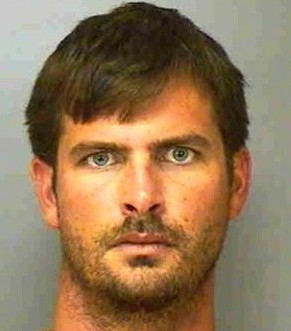
Thomas Rigterink
Murderer Robert Martines Perez
Murderer · USA · 1994
Name: Robert Martines Perez · Other name used in proceedings: Robert Martinez P…
15 victims
Robert Martines Perez
Murderer · USA · 1994
Name: Robert Martines Perez · Other name used in proceedings: Robert Martinez P…
15 victims
 Billy Frank Vickers
Murderer · USA · 1993
Billy Frank Vickers Vickers was executed by lethal injection in Texas on Januar…
14 victims
Billy Frank Vickers
Murderer · USA · 1993
Billy Frank Vickers Vickers was executed by lethal injection in Texas on Januar…
14 victims
 Robert Glen Jones
Murderer · USA · 1996
Defendant: Robert Glenn Jones (ADC#070566) · Co-defendant: Scott Nordstrom (ADC…
7 victims
Robert Glen Jones
Murderer · USA · 1996
Defendant: Robert Glenn Jones (ADC#070566) · Co-defendant: Scott Nordstrom (ADC…
7 victims
 Marlon Howell
Murderer · USA · 2000
Name: Marlon Howell Status: Sentenced to death on March 30, 2001 · May 15, 2000…
1 victim
Marlon Howell
Murderer · USA · 2000
Name: Marlon Howell Status: Sentenced to death on March 30, 2001 · May 15, 2000…
1 victim
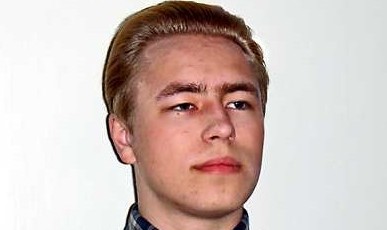 Pekka-Eric Auvinen
Mass murderer · Finland · 2007
Pekka-Eric Auvinen was identified as the gunman in a shooting at Jokela High Sc…
8 victims
Pekka-Eric Auvinen
Mass murderer · Finland · 2007
Pekka-Eric Auvinen was identified as the gunman in a shooting at Jokela High Sc…
8 victims
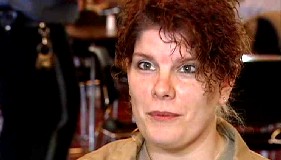 Kristine Bunch
Murderer? · USA · 1995
Kristine Bunch was the defendant in a case involving the 1996 arson and murder…
1 victim
Kristine Bunch
Murderer? · USA · 1995
Kristine Bunch was the defendant in a case involving the 1996 arson and murder…
1 victim
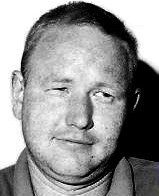 Jerome Brudos
Serial killer · USA · 1968
Jerome Brudos (31 January 1939 – 28 March 2006) was a serial killer and a necro…
4 victims
Jerome Brudos
Serial killer · USA · 1968
Jerome Brudos (31 January 1939 – 28 March 2006) was a serial killer and a necro…
4 victims
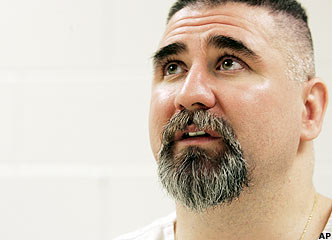 James Filiaggi
Murderer · USA · 1994
James J. Filiaggi (also referred to as James J. Filiaggi) was a death-row priso…
1 victim
James Filiaggi
Murderer · USA · 1994
James J. Filiaggi (also referred to as James J. Filiaggi) was a death-row priso…
1 victim
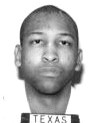 Paul Wayne Slater
Murderer · USA · 1995
Paul Wayne Slater was an African male inmate on Texas death row. He was 26 year…
2 victims
Paul Wayne Slater
Murderer · USA · 1995
Paul Wayne Slater was an African male inmate on Texas death row. He was 26 year…
2 victims
- Gender
- male
- Country
- USA
- Location
- Polk County, Florida, USA
- Date of birth
- December 29, 1971
- Age at first offence
- 32
- Characteristics
- robbery, drugs
- Victim profile
- Jeremy Jarvis, 24 and Allison Sousa, 23
- Method of murder
- St abbing with knife
- Date(s) of murder
- September 24, 2003
- Years active
- 2003
- Date of arrest
- October 15, 2003
- Status
-
Acquitted / overturned
Sentenced to death on October 14, 2005; overturned in 2009
Case record: Thomas Rigterink
Background
Thomas Rigterink was adopted son of Polk Community College professors James and Nancy Rigterink. He was from Winter Haven and had been a former model. Before the killings, he was one semester away from a biology degree at Warner Southern College in Lake Wales, and he worked for a time at a Miami Beach modeling agency.
Rigterink had no past criminal history before the killings. His lawyers insisted he was living a “double life” in a violent drug culture. He admitted experimenting with drugs, regularly using marijuana, and even growing some in the attic of his condo. Prosecutors said Rigterink had been fired from his job for stealing. Prosecutors also said Rigterink had separated from his wife, who worked two jobs to bring in extra income. Prosecutors said Rigterink planned to rob Jeremy Jarvis, his regular drug supplier, on Sept. 24, 2003, at the warehouse unit where Jarvis lived on County Road 542 and Jimmy Lee Road, near Winter Haven, and that investigators later recovered about five pounds of marijuana from Jarvis’ home.
The offence
On Sept. 24, 2003, Rigterink stabbed to death Jeremy Jarvis and Allison Sousa.
Prosecutors said the killings started with an argument between Jarvis and Rigterink in Jarvis’ unit at a business and residential complex near Winter Haven on County Road 542 and Jimmy Lee Road, where the slayings occurred. Prosecutors said Rigterink attacked Jarvis with a knife at least 10 inches long. Jarvis ran from his home to a nearby office where Sousa worked as a secretary. As Sousa tried to call for help, Rigterink entered the office and attacked her with the knife, stabbing her. Both Sousa and Jarvis died from the stabbed wounds.
Durrance described the murders as “heinous, atrocious or cruel,” which he identified as an aggravating circumstance that could provide the legal basis for a death sentence. As Jarvis and Sousa struggled to escape Rigterink’s assault, each suffered defensive wounds. Jarvis was stabbed 22 times, and Sousa was stabbed six times. Durrance’s order said both were conscious for several minutes before bleeding to death.
Rigterink testified that he had arrived at the crime scene after someone else attacked Sousa and Jarvis, and he said he saw the real culprits, who were violent drug dealers, who threatened to harm his loved ones if he told. Prosecutors denied his account and described the attack as “extremely wicked and shockingly evil.”
During the arrest-report narrative, it was stated that Short heard Sousa “pleading, `Please don't hurt me,' and saw a white male advancing toward Sousa in a threatening manner.” Short then locked herself in an office, called 911, and did not come out until deputies arrived. Deputies found Sousa stabbed six times and Jarvis stabbed 13 times and both dead. Another part of the reporting said Jarvis was stabbed 22 times and Sousa was stabbed six times.
Investigation
Fingerprints and identification were central to the investigation. Bloody fingerprints were found on Jarvis’ apartment door, described as “good quality prints.” The prints were submitted to a database and did not match any other in the database, which Crow said tended to indicate the suspect had never been arrested. Investigators also found genetic material underneath the fingernails of Jarvis’ right hand as matching Rigterink. Prosecutors also testified that investigators discovered Jarvis’ blood on the wheel, driver-side door and seat belt of the blue pickup truck belonging to Rigterink’s father; Rigterink had borrowed the truck on the day of the killings.
Authorities followed up on tips after releasing a composite sketch the day of the murders. Crow described the effort as “around-the-clock” and said investigators followed up on more than 100 tips.
A witness reported seeing a blue pickup truck leaving the area, and investigators linked the truck to Rigterink’s parents. Detectives went to the Rigterink parents’ home in Lake Hamilton, informed them that their son was suspected, and impounded the truck. James and Nancy Rigterink were described as cooperative and as not knowing about their son’s involvement until they were contacted by investigators. Crow and Judd said there was “no indication at all” that James and Nancy knew about their son's involvement. It was also said they attended Sousa’s funeral and worked with Sousa’s mother, Alice Diggett, at Polk Community College.
Investigators searched Rigterink’s home in the Cypresswood Golf and Country Club community while he was under interview. Judd said investigators likely used a knife with a “very long blade,” and investigators were still working on recovering the weapon.
Arrest
Rigterink was arrested on two counts of first-degree murder on Thursday afternoon, Oct. 16, 2003, according to the arrest reporting.
On the day of the arrest, Polk County Sheriff Lawrence W. Crow Jr. said that detectives matched Rigterink’s fingerprints to bloody ones found in Jarvis’ apartment. It was stated that detectives said he admitted being involved in the slayings, while refusing to provide a motive for the stabbing. Judd said Rigterink told investigators that his memory of the slayings was like a “Polaroid.” The reporting included that Rigterink told investigators: “when he came to, he had a knife in his hands and observed blood everywhere, and observed two victims lying on the floor of Suite No. 1,” and that he “claims to have blacked out,” and that he was “trying to create a defense.”
The reporting described that after the killings, Rigterink hid from law enforcement. Rigterink said he fled from the scene in his father's blue pickup truck. Judd said he slept on his parents’ roof for two nights in an attempt to avoid law enforcement. James and Nancy Rigterink did not know he was hiding there until detectives contacted them and he was brought to a Sheriff's Office substation in Bartow for questioning. Crow said investigators interviewed him within a day of Sept. 24 because he was a known acquaintance of Jarvis, possibly through drug use, and that at that point he was not considered a suspect.
A 911 account was included. Short said: “Please somebody hurry,” and “Oh God, please hurry.”
Trial
Rigterink was tried for double murder in Florida.
On Sept. 2, 2005, Rigterink took the witness stand and told jurors he had nothing to do with the brutal stabbing deaths of Allison Sousa and Jeremy Jarvis on Sept. 24, 2003, at an office complex near Winter Haven. He said he arrived at the crime scene after the killings and witnessed the carnage. He said that after the killings he tried to stay away from drug dealers who threatened to retaliate against him and his loved ones for seeing the real killers. Under cross-examination, Assistant State Attorney Cass Castillo questioned him about why he did not call 911 and about his claim of innocence. Rigterink said he was “trying to figure out what happened” and that at the time “not a lot made sense.” When asked about whether he wanted help to get there, Rigterink agreed he never picked up a telephone in any office to call for help, or even later after leaving the area. Rigterink repeatedly said: “I didn't kill him.” During that testimony, the prosecutor pointed out that his reaction to arriving on the bloody scene was not to call for help.
It was also stated that Rigterink claimed he planned to get marijuana from Jarvis, and he said he planned to install a grow room at Jarvis’ residence. He described driving in his father's pickup truck to a warehouse space where Jarvis lived. He said he found blood on a door and a burgundy t-shirt covered in blood, and he tracked a trail of blood into the nearby offices of Total Construction Management, where he said he discovered the bodies of Jarvis and Sousa covered in blood. He said he heard what sounded like vehicle doors slam and he ran back through the warehouse and out the front door, and he saw three people in a van drive away.
During the trial, Rigterink’s videotaped statement was described as a key piece of evidence. The videotaped statement was said to be from Oct. 16, 2003, the day of his arrest. It included that he offered details about how the fatal attack occurred, volunteered to draw a diagram of where events took place, and demonstrated for detectives his struggle with Jarvis by holding an imaginary knife and raising his hand over his head. In that videotaped statement, he said: “After the fact . . . honest to God, I didn't feel bad.” He also said he kept up a relatively normal life after the killings and had no problems sleeping. The reporting also described that in the videotape he said he “knew . . . I knew I'd done it,” but he said he did not remember stabbing Jarvis and Sousa.
Defense counsel Byron Hileman argued that the case consisted mostly of circumstantial evidence with the exception of the videotaped statement. Hileman also said the videotape and physical evidence were inconsistent with Rigterink’s claimed innocence.
Rigterink denied setting up an insanity defense by discussing memory lapses. It was stated that he agreed that he told detectives statements to look “crazy.” He said: “There is no psychological problem,” and “There have never been psychological problems.” When asked: “You're fine?” Rigterink replied: “As fine as I can be under the circumstances.” The reporting said he told detectives something suggesting he believed there was something psychologically wrong with him because he kept up a relatively normal life after the killings. During cross-examination about the content of the videotape, Castillo asked whether he would agree that making a statement—“I did not feel bad and I did not have a problem sleeping”—was “heartless.” Rigterink replied: “And that's so far from who I am that it makes no sense . . . I am certainly not a heartless individual.”
It was also reported that when asked about lying, Rigterink said: “I lie from time to time,” and later: “Sure,” and “From time to time, yes.”
On Sept. 8, 2005, jurors were expected to begin deliberations in Rigterink’s double murder trial. Rigterink was described as having finished testimony that spanned more than nine hours over more than three days.
On Sept. 9, 2005, a jury convicted Rigterink on two counts of first-degree murder in the slayings of Sousa and Jarvis. The jury deliberated more than nine hours over two days before convicting him on two counts of first-degree murder.
On Sept. 16, 2005, the same jury recommended death for each killing by two 7-5 votes, after three hours of deliberations. Florida law required unanimous decisions in rendering a verdict, but death recommendations required only a majority vote. Circuit Judge J. Dale Durrance was to make the final decision on Oct. 14, and the reporting said Florida law required that judges give a jury’s recommendation “great weight.”
Witness and family accounts during penalty phase
During sentencing-related reporting, family members and lawyers addressed the jury. Prosecutors described Rigterink as a man who manipulated others and lied while on the witness stand. Assistant State Attorney Cass Castillo said: “It is an evil that emanates from within the individual,” and also: “It is an evil that is part of the individual.” Castillo also said Rigterink was not worthy “to remain on the planet” and deserved to die.
Defense arguments were described as requesting life rather than execution. Defense lawyer David Carmichael argued that the guilty verdicts already provided a death sentence for Rigterink because he would spend the rest of his life in prison, and he urged jurors to consider giving Rigterink “a chance to make amends” by using his education to teach other inmates and deter them from using drugs.
Victim relatives spoke during the proceedings, and it was reported that Darleana Preast Jarvis said Rigterink laughed and smiled through the trial and had no remorse. It was also reported that Rigterink’s conduct was interpreted by his lawyer Byron Hileman as a sign of love for his family.
Sentencing
On Oct. 14, 2005, Circuit Judge J. Dale Durrance sentenced Rigterink to death on two counts.
Durrance read aloud from a 17-page order and commented on how Rigterink pursued a “life of deception and manipulation.” The judge gave no weight to the defense argument that Rigterink should receive a life sentence because he was able to recognize his mistakes. Durrance said: “From the testimony of family members and friends, the defendant was considered Mr. Perfect and could do no wrong.” He also said: “From the jury's verdict, the defendant was found to be a liar, a deceiver, a manipulator, and a double murderer who did do wrong and refuses to recognize it.”
The reporting stated that the murders of Jarvis and Sousa were “heinous, atrocious or cruel.” The order described that both victims were conscious for several minutes before bleeding to death.
Rigterink was described as 33 years old during sentencing reporting, and he turned around to face his family, smiled, and flashed a hand gesture.
Appeals
A Florida Supreme Court opinion was cited as SC05-2162. The case included an issue about whether Rigterink was adequately notified of rights. The Florida Supreme Court halted a retrial, and it was reported as part of halting a retrial.
The status field recorded that the death sentence was overturned in 2009.
Outcome
Rigterink was sentenced to death on October 14, 2005, and the death sentence was overturned in 2009.
Aftermath
After the sentencing-related reporting, it was stated that Polk County now had 14 people on Florida's death row.
During background reporting, it was stated that investigators later would recover about five pounds of marijuana from Jarvis’ home. It was also stated that evidence in the trial included Rigterink’s videotaped statement from Oct. 16, 2003, and physical evidence including bloody fingerprints on Jarvis’ apartment door, genetic material under Jarvis’ right-hand fingernails, and Jarvis’ blood on the truck components in the father’s pickup truck that Rigterink had borrowed.
During arrest reporting, it was also stated that investigative interviews with Rigterink occurred early in the investigation because he was a known acquaintance of Jarvis, possibly through drug use, and that he was not considered a suspect at that time.
Spotted an error, or have more information about this case?