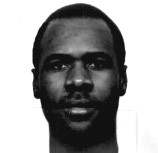
Kenneth Bernard Harris
Murderer Brian Kevin Rosenfeld
Murderer · USA · 1985
Brian Kevin Rosenfeld Brian Kevin Rosenfeld was sentenced to three concurrent l…
23 victims
Brian Kevin Rosenfeld
Murderer · USA · 1985
Brian Kevin Rosenfeld Brian Kevin Rosenfeld was sentenced to three concurrent l…
23 victims
 Yahweh ben Yahweh
Murderer · USA · 1980
Yahweh ben Yahweh was born and legally named Hulon Mitchell Jr. (October 27, 19…
23 victims
Yahweh ben Yahweh
Murderer · USA · 1980
Yahweh ben Yahweh was born and legally named Hulon Mitchell Jr. (October 27, 19…
23 victims
 Russell Ellwood
Murderer · USA · 1991
Russell Ellwood was a former taxi driver. Authorities suspected him of killing…
20 victims
Russell Ellwood
Murderer · USA · 1991
Russell Ellwood was a former taxi driver. Authorities suspected him of killing…
20 victims
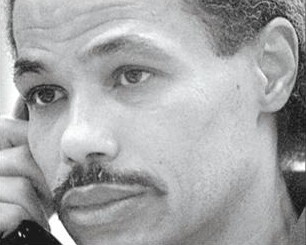 Willie Lloyd Turner
Murderer · USA · 1970
Willie Lloyd Turner was executed by lethal injection in Virginia on May 25, 199…
2 victims
Willie Lloyd Turner
Murderer · USA · 1970
Willie Lloyd Turner was executed by lethal injection in Virginia on May 25, 199…
2 victims
 Robert William Fisher
Murderer · USA · 2001
Robert William Fisher remained at large. Robert William Fisher was born April 1…
3 victims
Robert William Fisher
Murderer · USA · 2001
Robert William Fisher remained at large. Robert William Fisher was born April 1…
3 victims
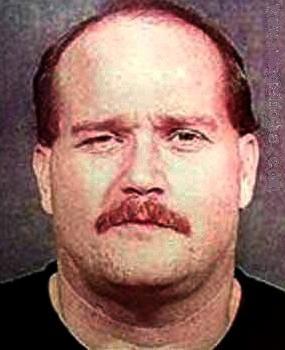 Buford Furrow
Murderer · USA · 1999
Buford O'Neal Furrow, Jr. (born November 25, 1961) perpetrated the August 1999…
1 victim
Buford Furrow
Murderer · USA · 1999
Buford O'Neal Furrow, Jr. (born November 25, 1961) perpetrated the August 1999…
1 victim
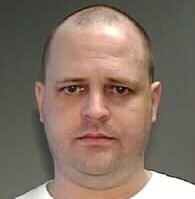 Troy Burkhart
Murderer · USA · 1997
Troy Alan Burkhart was convicted of three counts of murder and three counts of…
3 victims
Troy Burkhart
Murderer · USA · 1997
Troy Alan Burkhart was convicted of three counts of murder and three counts of…
3 victims
 Robbie James Lyons
Murderer · USA · 1993
Robbie James Lyons (male, Black), death row inmate and defendant. · Stephen Wil…
1 victim
Robbie James Lyons
Murderer · USA · 1993
Robbie James Lyons (male, Black), death row inmate and defendant. · Stephen Wil…
1 victim
- Gender
- male
- Country
- USA
- Location
- Harris County, Texas, USA
- Date of birth
- August 8, 1962
- Age at first offence
- 24
- Characteristics
- serial rapist, rape, torture, dismemberment, drugs
- Victim profile
- Lisa Stonestreet, 28 ( his neighbor)
- Method of murder
- Drowning in the bathtub
- Date(s) of murder
- June 7, 1986
- Years active
- 1986
- Date of arrest
- J uly 22, 1986
- Status
-
Executed
Executed by lethal injection in Texas on June 3, 1997
Case identification
Kenneth Bernard Harris (also written as Kenneth B. Harris) was executed by lethal injection in Texas on June 3, 1997.
Timeline
- June 7, 1986 — Lisa Stonestreet, a legal secretary and neighbor at a Gulfton-area apartment complex, was killed.
- June 9, 1986 — Police discovered the body of Lisa Stonestreet in the bathroom of her apartment in Houston, Texas.
- July 16, 1986 — Authorities found a palm print matching Harris' right palm while investigating a recently burned vehicle belonging to Stonestreet.
- July 22, 1986 — Harris was arrested for Stonestreet's murder.
- August 17, 1987 — Trial began before a state jury in Harris County, Texas.
- January 4, 1988 — The trial ended, resulting in Harris' conviction for capital murder.
- January 5, 1988 — Sentencing phase began.
- January 22, 1988 — Sentencing phase ended; the jury affirmatively answered two special issues and the trial court sentenced Harris to death by lethal injection.
- April 25, 1996 — An execution was set for this date.
- May 28, 1996 — The United States Court of Appeals for the Fifth Circuit denied a certificate of probable cause and denied a stay of execution.
- June 3, 1997 — Harris was executed by lethal injection in Texas.
- June 3, 1997 — Harris gave a last statement on the executioner's table.
Background
Harris was described as a serial rapist throughout southwest Houston. He was executed for killing legal secretary Lisa Stonestreet, 28, his neighbor at a Gulfton-area apartment complex, on June 7, 1986.
Harris’ age was stated as 34 (and also written as 23).
Harris had low intellectual capacity and childhood experiences, which he presented as mitigation. Psychiatric evidence was presented during the sentencing phase.
The offence
Victim and scene
On June 9, 1986, police discovered the body of Lisa Stonestreet in the bathroom of her apartment in Houston, Texas. Her body was nude except for a pair of socks and a segment of pantyhose tied around her left wrist. Her body was draped over the side of the bathtub with her knees and feet on the floor and her head emersed in water in the bathtub. Stonestreet's apartment was in near total disarray.
Physical evidence and autopsy findings
Investigating officers found a steak knife in Stonestreet's bedroom bearing a latent fingerprint matching Harris' left index finger.
Several pubic hairs found on her body matched Harris' pubic hair.
An autopsy revealed that Stonestreet had been beaten with a blunt instrument. Her wrists had been tightly bound. She had been manually strangled and drowned. Sperm was found in her vagina and rectum. The autopsy disclosed no damage to the anal sphincter, a finding consistent with anal intercourse after relaxation resulting from unconsciousness or death.
Alleged prior conduct introduced at sentencing
During sentencing, the state called five women who testified that they had been victims of sexual assaults by Harris. These unadjudicated offenses occurred between December 10, 1985 and May 3, 1986, approximately six months and one month, respectively, before Stonestreet's murder.
Investigation
Early in the investigation of the homicide, authorities interviewed Harris, who lived with his girlfriend in the next apartment.
Harris told the authorities that he did not know Stonestreet but that he had noticed a suspicious black pickup truck near the apartment complex a week before her death.
On July 16, 1986, in its investigation of a recently burned vehicle belonging to Stonestreet, the authorities found a palm print matching Harris' right palm.
Arrest and statements
Harris was arrested for Stonestreet's murder on July 22, 1986.
After receiving Miranda warnings, Harris requested and was given permission to speak with his father. After doing so, Harris gave several statements confessing that he strangled Stonestreet after having consensual sex with her.
Harris expressed remorse for the homicide, claiming that he was under the influence of drugs at the time.
Trial
Charges and proceedings
Harris was indicted for the capital murder of Stonestreet. He was tried before a state jury in Harris County, Texas.
The trial lasted four and one-half months, from August 17, 1987 to January 4, 1988, and resulted in Harris' conviction for capital murder.
Sentencing phase and special issues
The sentencing phase extended from January 5, 1988 to January 22, 1988.
Harris presented evidence about his low intellectual capacity and his childhood experiences. In addition to offering psychiatric evidence, the state called five women who testified to sexual assaults by Harris that were unadjudicated offenses occurring between December 10, 1985 and May 3, 1986.
At the conclusion of the sentencing phase the jury affirmatively answered the two special issues posed to it and the trial court sentenced Harris to death by lethal injection.
Appeals
Harris appealed his conviction and sentence to the Texas Court of Criminal Appeals, which abated the appeal and remanded for the limited purpose of an additional Batson hearing.
The appellate court concluded that the trial judge had erred under controlling state precedent by precluding defense counsel from cross-examining the prosecutor about the submitted race-neutral reasons for the exercise of peremptory strikes of four black members of the jury venire.
The trial court scheduled a hearing, as directed by the remand order, for January 30, 1992. Harris' counsel appeared but informed the court that he was not ready to proceed because some of Harris' files had been lost. The trial court granted counsel additional time to locate or reconstruct his files, informing counsel that the record would be returned to the Court of Criminal Appeals on February 27, 1992 unless prior thereto he notified the court that he was ready to proceed. Counsel did not so inform the court and, as advised, the record was returned to the Court of Criminal Appeals which affirmed Harris' conviction and sentence.
Harris filed a petition for writ of certiorari which was denied.
On Harris' state petition for writ of habeas corpus, the trial court of conviction entered detailed findings of fact and conclusions of law and recommended denial of the writ. The Court of Criminal Appeals accepted that recommendation.
Harris then filed a petition under 28 U.S.C. 2254 and moved for a stay of execution, discovery, and an evidentiary hearing. The respondent moved for summary judgment.
The district court granted a stay of execution, denied motions for discovery and for an evidentiary hearing, granted the respondent's motion for summary judgment, dismissed the writ application, lifted its order staying execution, and denied Harris' motion for a certificate of probable cause to appeal.
Harris sought a certificate of probable cause and a stay of execution presently set for April 25, 1996.
Federal appellate ruling (certificate of probable cause)
Harris, Kenneth Bernard Harris, Petitioner-Appellant, v. Gary Johnson, Director, Texas Department of Criminal Justice, Institutional Division, Respondent-Appellee. No. 95-20689. Federal Circuits, 5th Cir. May 28, 1996.
The opinion identified the panel as POLITZ, Chief Judge, and HIGGINBOTHAM and EMILIO M. GARZA, Circuit Judges.
The court stated it had no jurisdiction over Harris' appeal absent a CPC. To obtain a CPC, Harris was required to make a substantial showing of the denial of a federal right; the standard did not require petitioner to show that he would prevail on the merits, but required issues presented to be debatable among jurists of reason. In a capital case, the court could consider the nature of the penalty in deciding whether to grant a CPC, but that fact alone did not suffice.
The court denied the motions for a certificate of probable cause and for a stay of execution.
Issues addressed in the federal appeal
Penry claim
Harris claimed that two special issues posed did not permit the jury to make the mandated reasoned moral response to mitigating evidence about his mental capacity.
Harris relied on testimony of Dr. Priscilla Ray, a forensic psychiatrist, who testified that Harris fell in the borderline defective or mildly defective range, and testimony of Dr. Albert Smith, a clinical psychologist, who testified that Harris was “functioning in the borderline range of mental ability.”
Harris also relied on various lay witnesses to establish difficulty in learning.
The district court relied on state trial judge factual findings in state habeas proceedings that Harris' IQ was estimated at different times to be 68, 71, and 93.
The federal court concluded that, assuming arguendo that Harris' borderline intelligence constituted the type of uniquely severe permanent handicap required, the claim failed for lack of nexus between mitigating evidence and the criminal act, and found the record reflected the absence of such evidence.
Batson claim
Harris maintained that the district court erred in granting summary judgment on his claim that the state's use of four peremptory challenges to strike African-Americans violated Batson v. Kentucky.
The court held that the district court did not err in granting summary judgment, stating the record supported findings that peremptory strikes were prompted by considerations other than race. The prosecutor provided and the court accepted race-neutral reasons supported by the voir dire record. The court noted the voir dire consumed more than three times as many trial days as did the trial on the merits.
Ineffective assistance claim
Harris maintained that defense counsel rendered constitutionally ineffective assistance in handling the Batson issue, contending that if counsel had cross-examined the prosecutor on remand, the challenge would have been successful.
The federal court recited that to prevail Harris had to establish deficient performance and prejudice, and that prejudice required a reasonable probability that, but for counsel's unprofessional errors, the result would have been different. The court found no reasonable probability that cross-examination would have produced a different result.
Discovery and evidentiary hearing
Harris maintained the court erred by failing to permit discovery and for not conducting an evidentiary hearing on Batson and ineffective assistance claims.
The federal court stated discovery and an evidentiary hearing were typically available where a factual dispute, if resolved in petitioner's favor, would warrant relief and the state court had not afforded a full and fair evidentiary hearing. The court stated Rule 6 did not authorize fishing expeditions and that Harris had not made sufficiently specific factual allegations. The court found the record contained no factual allegations that, if fully developed, would have entitled Harris to relief on either claim.
Unadjudicated offences
Harris claimed admission of unadjudicated extraneous offenses during sentencing violated the eighth amendment and the due process and equal protection clauses of the fourteenth amendment.
Harris argued that admission violated due process by undermining reliability of death penalty decision, and that the state must prove unadjudicated extraneous offenses beyond a reasonable doubt. He also argued equal protection, stating that extraneous unadjudicated offenses may not be introduced in trials of defendants convicted of non-capital murder.
The federal court held the submissions were not persuasive, would require announcing and applying a new rule contrary to Teague v. Lane, and relied on its prior holding that use of evidence of unadjudicated extraneous offenses at sentencing in Texas capital murder trials did not implicate constitutional concerns. It also concluded authorities did not support requiring the state to prove unadjudicated offenses beyond a reasonable doubt before using them at sentencing, and it rejected the equal protection challenge.
Sentencing
The trial court sentenced Harris to death by lethal injection after the jury affirmatively answered two special issues.
Outcome
The United States Court of Appeals for the Fifth Circuit denied a certificate of probable cause and denied a stay of execution set for April 25, 1996.
Aftermath
Last statement
On the executioner's table, Harris stated:
I would like to thank all of you for coming. I am sorry for all of the pain I have caused both families – my family and yours. I would like for you to know that I am sorry for all the pain I caused for all these years. I have had time to understand the pain I have caused you. I am ready, Warden.
Victim family remark
The dead woman's sister remarked:
"I hope he saw no bitterness or hate in our hearts. We have forgiven him, but that does not mean he does not pay for his crime. What it comes down to, he is now facing the Lord."
Other details
- The opinion included reference to Harris County, Texas, for trial and described that authorities interviewed Harris early in the investigation.
- Harris lived with his girlfriend in the next apartment.
- A steak knife was found bearing a latent fingerprint matching Harris' left index finger.
- Several pubic hairs matched Harris' pubic hair.
- Sperm was found in Stonestreet's vagina and rectum.
- The autopsy finding that there was no damage to the anal sphincter was described as consistent with anal intercourse after relaxation resulting from unconsciousness or death.
- Harris' trial included five women who testified to sexual assaults by Harris during December 10, 1985 to May 3, 1986.
- The federal appellate opinion referenced the request for “a certificate of probable cause to appeal the district court's dismissal of his petition for writ of habeas corpus and for an order staying his execution presently set for April 25, 1996.”
- The federal appellate opinion noted that summary judgment was appropriate if the record was devoid of a genuine issue of material fact and that it considered facts in the light most favorable to Harris as non-movant while accepting state court findings unless exceptions under 28 U.S.C. 2254(d) applied.
- The federal appellate opinion stated that Harris sought discovery and an evidentiary hearing but the district court denied both.
Spotted an error, or have more information about this case?