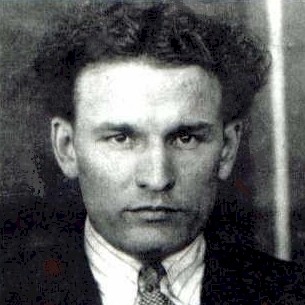
William Kenneth Wagner
Murderer William Hale
Murderer · USA · 1921
Name: William Hale · Known as: the so-called "King of the Osage Hills" · Occupa…
24 victims
William Hale
Murderer · USA · 1921
Name: William Hale · Known as: the so-called "King of the Osage Hills" · Occupa…
24 victims
 Paul Jaworski
Murderer · USA · 1926
Paul Jaworski was born in Poland as Paul Poluszynski in 1900. He later immigrat…
20 victims
Paul Jaworski
Murderer · USA · 1926
Paul Jaworski was born in Poland as Paul Poluszynski in 1900. He later immigrat…
20 victims
 Edward Adams
Murderer · USA · 1920
Edward J. "Eddie" Adams was born in 1887 on a farm in Hutchinson, Kansas as W.J…
7 victims
Edward Adams
Murderer · USA · 1920
Edward J. "Eddie" Adams was born in 1887 on a farm in Hutchinson, Kansas as W.J…
7 victims
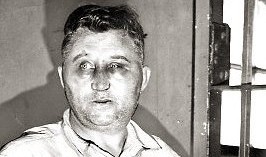 Harry Powers
Murderer · USA · 1931
Harry Powers was executed by hanging on March 18, 1932, at the West Virginia Pe…
5 victims
Harry Powers
Murderer · USA · 1931
Harry Powers was executed by hanging on March 18, 1932, at the West Virginia Pe…
5 victims
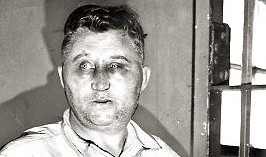 Herman Drenth
Murderer · USA · 1931
Herman Drenth was also known by the aliases Harry F. Powers and Cornelius O. Pi…
5 victims
Herman Drenth
Murderer · USA · 1931
Herman Drenth was also known by the aliases Harry F. Powers and Cornelius O. Pi…
5 victims
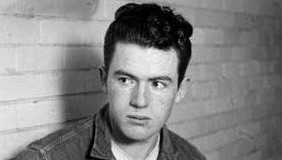 William Edward Hickman
Murderer · USA · 1926
William Edward Hickman was a man who tried to solve his financial problems by k…
5 victims
William Edward Hickman
Murderer · USA · 1926
William Edward Hickman was a man who tried to solve his financial problems by k…
5 victims
 Melanie McGuire
Murderer · USA · 2004
Defendant: Melanie McGuire (born Melanie Lyn Slate on October 8, 1972) Status:…
1 victim
Melanie McGuire
Murderer · USA · 2004
Defendant: Melanie McGuire (born Melanie Lyn Slate on October 8, 1972) Status:…
1 victim
 Scott William Cox
Serial killer? · Several States USA / Canada · 1980
Name: Scott William Cox Tia Hicks vanished in 1990 after Scott William Cox was…
20 victims
Scott William Cox
Serial killer? · Several States USA / Canada · 1980
Name: Scott William Cox Tia Hicks vanished in 1990 after Scott William Cox was…
20 victims
- Gender
- male
- Country
- USA
- Location
- Mississippi, USA
- Date of birth
- February 18, 1903
- Age at first offence
- 21
- Characteristics
- escape
- Victim profile
- Men (two sheriff's deputies)
- Method of murder
- Shooting
- Date(s) of murder
- 1924 - 1926
- Years active
- 1924–1926
- Date of arrest
- August 19, 1926
- Status
-
Died in custody
Sentenced to death. Died in prison on March 9, 1958
Case information
William Kenneth (Kinnie) Wagner (born February 18, 1903 in Scott County, VA) was known as Kenny (Kinnie) Wagner and as “Big Jim” during his time as a fugitive. He was described as a bootlegger in the U.S. state of Mississippi.
He was one of eight children of Charles Monroe and Nancy Clinton Wagner.
Background
In his childhood, he became proficient at target shooting. At the age of 16, Kinnie joined the Richard Brothers Circus. Because of his skill as a bronco buster and target shooter, he became known to audiences as the “Texas Kid.”
After leaving the circus, Kinnie began running moonshine in Mississippi. This led to a shoot-out in which a deputy was killed.
Kinnie claimed that the shooting was justified. He said that he had been framed by a sheriff who hired him to run moonshine. He also claimed that when the FBI came to the county to conduct investigations concerning the manufacture of illegal alcohol, the sheriff was afraid he knew too much and would give up information to the agents.
Kinnie said that he had been given a watch to keep for a friend. He claimed that, on trumped up charges, he was arrested for the theft of the watch. His stay was short-lived because he escaped from the Lucedale, MS jail.
The offence
Kinnie Wagner was wanted in Mississippi for killing a sheriff’s deputy. He had claimed that the shooting was justified.
He was also wanted at Kingsport, Tenn. for slaying two officers and wounding a third in April, 1925.
A bloody gun battle occurred on April 25, 1925 between a notorious fugitive from justice and police officers that attempted to ambush him. Kinnie was wanted in Mississippi for killing a sheriff’s deputy, and a friend had given him a watch for safekeeping. The law accused Kinnie of stealing the watch, which he denied.
An Associated Press report said he was the alleged slayer of six men. The report said that on the day of his surrender he was alleged to have fatally shot Sam and Will Carper and wounded Bob Carper on a farm near Texarkana.
Investigation
In Mississippi, Kinnie was wanted in connection with the deaths of two officers who attempted to prevent him from breaking out of jail.
When the FBI began investigating illegal alcohol operations in the county, Kinnie claimed that the sheriff was afraid he knew too much and would squeal to the law.
In the Associated Press report about his custody, it said that posses had been searching for him since Tuesday as the result of his latest shooting escapade, and that he was wanted at Kingsport, Tenn.
Arrest and detention
Kinnie was arrested on the trumped-up charges related to the watch theft and escaped from the Lucedale, MS jail.
On Christmas Eve, 1924, the sheriff sent a deputy to recapture him. The deputy’s name was McIntosh, and the deputy was waiting to ambush Kinnie. Kinnie discovered him, a gun battle ensued, and the deputy was killed.
Kinnie eventually surrendered and went to trial in Blountville. Before the sentence could be carried out, he escaped from jail and became a fugitive again.
He was re-captured after a jealous rival informed law enforcement officials of his residence at the house of a female friend.
Trial
Kinnie went to trial in Blountville, and the jury returned a verdict of guilty.
The Associated Press report said he had been sentenced to die in the electric chair and was in jail pending an appeal when he led other prisoners in a jail delivery and escaped.
In the Kingsport context, he was described as wanted for slaying two officers and wounding a third in April, 1925. The jury returned a verdict of guilty and he was sentenced to be executed in the electric chair.
A longer account also said the jury returned a verdict of guilty after thirteen hours of deliberation, and he was sentenced to die in the electric chair.
Sentencing
He was sentenced to death and sentenced to die in the electric chair.
Appeals
The Associated Press report said he was in jail pending an appeal when he led other prisoners in a jail delivery and escaped.
Outcome
Kinnie Wagner escaped and became a fugitive again and was placed on the FBI Ten Most Wanted Fugitives list. He remained at large in Wahalak, Mississippi for several years afterward under the alias “Big Jim.”
He ultimately died in prison on March 9, 1958.
Aftermath and legacy
There were several folksongs and ballads about Kinnie Wagner’s many adventures. There were several books written about the Mississippi outlaw, and he had been covered in comics and pulp magazines.
Timeline
- February 18, 1903 — William Kenneth (Kinnie) Wagner was born in Scott County, VA.
- 1919 — Young Kinnie joined the Richard Brothers Circus while the show was playing nearby Clinchport.
- Christmas Eve, 1924 — The sheriff sent a deputy named McIntosh to recapture him; McIntosh waited to ambush Kinnie, a gun battle ensued, and McIntosh was killed.
- April 13, 1925 — Ghostly gunshots were described as ringing out on the Long Island of the Holston each year, associated with “the spirits of Kinnie Wagner and the law.”
- April 25, 1925 — A gun battle took place between Kinnie Wagner and police officers that attempted to ambush him on the island.
- March 9, 1958 — He died in prison.
Other details
- The Associated Press report said Carl “Kinnie” Wagner was 23 at the time of surrender to Sheriff Lillie Barber.
- The Associated Press report said he was in custody after quietly surrendering himself to sheriff Lillie Barber, woman executive of Miller County.
- The Associated Press report included Kinnie’s statement to Sheriff Barber: “I’m tired of being hunted,” Wagner said. “I don’t want to dodge people anymore.”
- The Associated Press report said he declared: “I would have gotten Bob, but it was so dark I couldn’t see to shoot straight.”
- The Associated Press report said: “Kinnie Wagner A story connected with the island concerns the unearthly echoes of a bloody gun battle…”
- The Associated Press report said the prisoner was wanted at Kingsport, Tenn. for slaying two officers and wounding a third in April, 1925, and it said he had been sentenced to die in the electric chair and was in jail pending an appeal when he led other prisoners in a jail delivery and escaped.
- A Kingsport News quote appeared in the narrative: “The tragedy was the most shocking and disastrous one that has ever occurred in or about Kingsport. With ten orphaned children and two newly made widows weeping in their homes, dozens of men of Kingsport and vicinity turned out on the manhunt for the desperado.”
- Another Kingsport News quote appeared in the narrative: “The tragedy was the most shocking and disastrous one that has ever occurred in or about Kingsport. With ten orphaned children and two widows weeping in their homes, dozens of men of Kingsport and vicinity turned out on the manhunt for the desperado.”
- The Kingsport News account included this description of the shooting: “The fugitive, probably seeing that he was hemmed in from both sides,” reported The Kingsport News, “took refuge behind a big sycamore tree and began shooting. [Officer George] Frazier was the first to fall. "The stranger [Wagner] then turned and fired several shots at (Officer George] Smith who died in his tracks. [He was shot through the heart.] "When Smith had fallen the fugitive turned his guns on [Deputy Sheriff Hubert] Webb, who was peering over the overhanging [sic] bank in an effort to get a better shot. Webb fell on the crest of the bank." He had been shot in the face.
- The narrative described that one of the bullets clipped Kinnie’s sister’s hair while another plowed into the ground beside her foot, and that his relatives dove for cover while Kinnie ran across a field.
- The narrative said Kinnie commandeered a horse ridden by Dewey Nelson of Kingsport, promising to return it later, and then he crossed the Holston River, galloped up a steep bank, and disappeared from sight.
- The narrative said the undertaker’s ambulance was needed after all, but not for the party for which it was originally intended.
- The narrative said that by the time the posse formed, Kinnie was in Waycross, Virginia, “snuggled up in a haystack.”
- The narrative said the woman who owned the farm discovered him and advised him to surrender for his own good, after which he agreed and turned himself in later that day.
- The narrative said the Mississippi offered a $1,000 reward for Kinnie's capture, dead or alive.
- The narrative said the State of Mississippi offered a $1,000 reward for him, dead or alive.
- The narrative said he remained at large in Wahalak, Mississippi for several years afterward under the alias “Big Jim.”
- The narrative said he was subsequently placed on the FBI Ten Most Wanted Fugitives list.
- The narrative said his most notable escape was his last attempt and involved a trick that was not discovered until Wagner was outside the prison walls.
- The narrative said he had been made a trustee whose job it was to tend the dogs at the prison.
- The narrative said he realized the dogs were the means by which the prison guards would use to track him if he were to escape again.
- The narrative said he trained the dogs not to track him by whipping them if they followed his scent.
- The narrative said he had been made a trustee to tend the dogs at the prison.
- The narrative said he escaped and became a fugitive again after being sentenced.
- Further reading listed: Dykes, Pete. “Kinnie Wagner Story.” Lulu Press (July 2007) ISBN 0615152430; Gentry, Claude. “The Guns of Kinnie Wagner.” Magnolia (1969) ASIN B0007F29ZM; Moore, J.S. “Gathering Leaves.” Outskirts Press (April 2008); Moore, J.S. “Understanding Apples.” Outskirts Press (October 2006) ISBN 1598007467 or ISBN 1598009753; Sweterlitsch, Richard Carl. “Kinnie Wagner: A Popular Legendary Hero and His ‘Constituency’.” Indiana University Press (1976) ASIN B000JWZ54U.
- The narrative included a description of him being connected with “the unearthly echoes of a bloody gun battle” and said that, according to the Cherokees, no person could ever be killed on the land.

Spotted an error, or have more information about this case?