
Michelle Theer
Murderer Megan Huntsman
Murderer · USA · 1996
Megan Huntsman was 40 at sentencing. She was a mother of three children who wer…
6 victims
Megan Huntsman
Murderer · USA · 1996
Megan Huntsman was 40 at sentencing. She was a mother of three children who wer…
6 victims
 Angela Johnson
Murderer · USA · 1993
Angela Jane Johnson was convicted in federal court of aiding and abetting the m…
5 victims
Angela Johnson
Murderer · USA · 1993
Angela Jane Johnson was convicted in federal court of aiding and abetting the m…
5 victims
 Michele Kalina
Murderer · USA · 1996
Michele Kalina pleaded guilty to murder for one of five infants she initially w…
5 victims
Michele Kalina
Murderer · USA · 1996
Michele Kalina pleaded guilty to murder for one of five infants she initially w…
5 victims
 Tiffany Hall
Murderer · USA · 2006
Tiffany Hall was 24 when she was charged in September 2006. She later entered a…
5 victims
Tiffany Hall
Murderer · USA · 2006
Tiffany Hall was 24 when she was charged in September 2006. She later entered a…
5 victims
 Banita Jacks
Murderer · USA · 2007
Banita Jacks was a Washington, DC resident convicted of murdering her four daug…
4 victims
Banita Jacks
Murderer · USA · 2007
Banita Jacks was a Washington, DC resident convicted of murdering her four daug…
4 victims
 Susan Eubanks
Murderer · USA · 1996
Susan Dianne Eubanks, also referred to as Susan Eubanks, was convicted by a jur…
4 victims
Susan Eubanks
Murderer · USA · 1996
Susan Dianne Eubanks, also referred to as Susan Eubanks, was convicted by a jur…
4 victims
 Omer Ninham
Homicide · USA · 1998
Omer Ninham was sentenced to life in prison without the possibility of parole o…
1 victim
Omer Ninham
Homicide · USA · 1998
Omer Ninham was sentenced to life in prison without the possibility of parole o…
1 victim
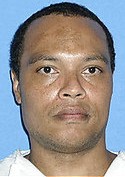 Joseph Nichols
Murderer · USA · 1980
Joseph Bernard Nichols was executed by lethal injection in Texas on March 7, 20…
1 victim
Joseph Nichols
Murderer · USA · 1980
Joseph Bernard Nichols was executed by lethal injection in Texas on March 7, 20…
1 victim
 Connie Villa
Murderer · USA · 2013
Connie Villa was charged in connection with the death of her 13-year-old daught…
1 victim
Connie Villa
Murderer · USA · 2013
Connie Villa was charged in connection with the death of her 13-year-old daught…
1 victim
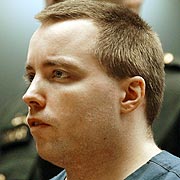 Jeffrey Mailhot
Serial killer · USA · 2003
Jeffrey Mailhot lived in Woonsocket and was described by neighbours as a “nice…
3 victims
Jeffrey Mailhot
Serial killer · USA · 2003
Jeffrey Mailhot lived in Woonsocket and was described by neighbours as a “nice…
3 victims
 Ilshat Kuzikov
Homicide · Russia · 1992
Ilshat Kuzikov was a St Petersburg resident who was suspected of killing three…
3 victims
Ilshat Kuzikov
Homicide · Russia · 1992
Ilshat Kuzikov was a St Petersburg resident who was suspected of killing three…
3 victims
 Albert Dyer
Murderer · USA · 1937
Albert Dyer was a 32-year-old WPA crossing guard and traffic guard at Centinela…
3 victims
Albert Dyer
Murderer · USA · 1937
Albert Dyer was a 32-year-old WPA crossing guard and traffic guard at Centinela…
3 victims
- Gender
- female
- Country
- USA
- Location
- Fayetteville, Cumberland County, North Carolina, USA
- Date of birth
- 1969
- Age at first offence
- 31
- Characteristics
- love triangle
- Victim profile
- H er husband, Air Force Capt. Frank Martin Theer, 31
- Method of murder
- Shooting
- Date(s) of murder
- December 17, 2000
- Years active
- 2000
- Date of arrest
- August 5, 2002
- Status
-
Life imprisonment
Sentenced to life in prison without parole on the first-degree murder charge, plus 13 additional years on a conspiracy charge on December 7, 2004
Overview
Michelle Theer was convicted of first-degree murder by aiding and abetting and of conspiracy to commit first-degree murder in the death of her husband, United States Air Force Captain Frank Martin Theer.
People
- Michelle Catherine Theer — defendant; psychologist; wife of Captain Frank Martin Theer; extramarital relationship with John Diamond
- Frank Martin Theer (Marty) — victim; United States Air Force Captain; husband of Michelle Theer
- John M. Diamond (John Diamond) — co-defendant; Army staff sergeant; extramarital relationship with Michelle Theer; convicted at a general court-martial
- Thomas Harbin — fellow psychologist; shared office space with Michelle Theer
- Angela Forcier — Michelle Theer’s sister; testified at trial
- Lourdes Diamond — John Diamond’s wife
- Rafael Garcia — jury foreman
- Linda Gettler — victim’s mother
- Ed Grannis — District Attorney
- Roy Cooper — Attorney General (in the appellate matter)
- John G. Barnwell — Assistant Attorney General (in the appellate matter)
- Kathleen U. Baldwin — Assistant Attorney General (in the appellate matter)
- Daniel R. Pollitt — Assistant Appellate Defender (for the defendant-appellant)
- Dr. Kenneth Kastleman — clinical psychologist who provided marital counseling to the Theers
- Dr. Deborah Layton-Tholl — clinical psychologist; expert qualified in psychology and extramarital affairs
- Dr. Donald Stewart — clinical psychologist in Florida who provided marital counseling to Michelle Theer and her husband in 1997
- Rosaida Rivera — witness who testified about alleged contact visits
- Charles McLendon — man with whom Michelle Theer had an extramarital affair from late 1999 to early 2000
Timeline
- 1991 — Michelle and Frank Martin Theer married and later lived in several different states as Captain Theer was stationed at Air Force bases around the country.
- 1998 — Michelle and John Diamond met in a virtual world.
- 1999 — the couple moved to Fayetteville, where Captain Theer was posted on Pope Air Force Base and Michelle was employed by psychologist Thomas Harbin.
- June 2000 — Michelle rented her own apartment and lived separately from Captain Theer; they started marital counseling in July while also going through a trial separation.
- July 2000 — Michelle and Captain Theer started marital counseling.
- October 2000 — Michelle reconciled with Captain Theer and moved back into their home, telling Dr. Harbin that she planned to end her affair with Sergeant Diamond.
- November 2000 — Sergeant Diamond sent e-mails to Michelle indicating he was unhappy about the possibility of their relationship ending.
- 9 December 2000 — Michelle met and engaged in sexual relations with Sergeant Diamond in Raleigh, after telling Captain Theer she was going to celebrate her birthday with a graduate school classmate.
- 17 December 2000 — Michelle and Captain Theer traveled from Fayetteville to Cary with Dr. Harbin, his wife, and another couple for a dinner to celebrate the holidays; around 9:00 or 9:30 p.m., Michelle made a cell phone call to Sergeant Diamond.
- 17 December 2000 — Captain Theer was shot and died as a result of five gunshot wounds, including one fired at close range just behind his left ear.
- 20 February 2001 — Sergeant Diamond was placed into pre-trial confinement at a military facility.
- August 2001 — John Diamond’s court-martial began; later, he was convicted of murder and conspiracy to commit murder in the death of Captain Theer and sentenced to life in prison without parole.
- September 2004 — Michelle’s trial began on 27 September 2004.
- 3 December 2004 — the jury returned verdicts of guilty of first-degree murder by aiding and abetting and of conspiracy to commit first-degree murder.
- 7 December 2004 — Michelle was sentenced to life in prison without parole on the first-degree murder charge, plus 13 additional years on a conspiracy charge.
- 8 December 2004 — the victim’s mother, Linda Gettler, gave an interview describing her reaction to the verdict.
- April 2011 — a federal appeals court denied Michelle’s request for a new trial.
- January 16, 2007 — the North Carolina appellate opinion held that Michelle received a fair trial that was free of prejudicial error.
- early 2012 — Michelle’s blog shut down “mysteriously and without warning.”
Background
Michelle Theer was a psychologist. She and her husband, United States Air Force Captain Frank Martin Theer, lived in several different states as Captain Theer was stationed at Air Force bases around the country, and their marriage struggled during periods when Captain Theer was deployed overseas and away from home.
In early 2000, Michelle met United States Army Sergeant John Diamond via the Internet and began an extramarital affair with him. By 1999, Michelle was employed by psychologist Thomas Harbin in Fayetteville, after the couple moved there and Captain Theer was posted on Pope Air Force Base.
Dr. Harbin shared office space with Michelle Theer. The evidence at trial and on appeal described Michelle and Captain Theer as attending marriage counseling and beginning and ending their separation and reconciliation during 2000.
The offence
On 17 December 2000, Captain Theer was shot outside Dr. Harbin’s office in Fayetteville. At the time the group prepared to leave a holiday dinner, Michelle made a cell phone call to Sergeant Diamond around 9:00 or 9:30 p.m. After the phone call, Sergeant Diamond put on cold-weather clothing and left the house.
After Michelle and Captain Theer returned to Dr. Harbin’s office in Fayetteville around 10:30 p.m., Michelle told police that Captain Theer waited outside while she went inside to get reference books to prepare for two book reports due the next day. After she went into the office, she heard gunshots, ran outside, and found Captain Theer unresponsive at the bottom of the steps outside the building. The appellate court found that Captain Theer died as a result of five gunshot wounds, including one fired at close range just behind his left ear.
After Captain Theer’s death, Michelle continued her relationship with Sergeant Diamond, including taking a trip to Florida together.
Investigation
After the killing, police investigated and linked Sergeant Diamond to a semiautomatic pistol of the same model used to kill Captain Theer.
Police later learned that Sergeant Diamond reported a break-in in which his vehicle was broken into and the weapon stolen after police indicated they wanted to obtain the pistol for ballistics testing.
Following Sergeant Diamond’s statements regarding the pistol, military authorities charged him with making a false official statement, false swearing, and obstruction of justice.
Arrest and pretrial matters
Michelle was indicted in May 2002 for first-degree murder and conspiracy to commit first-degree murder in the death of Captain Theer. She had moved to New Orleans since the murder and left there “to ‘start a new life’,” later moving to Florida, renting an apartment, and having plastic surgery performed under an assumed name.
The appellate court reported that police located and arrested Michelle in August 2002. Her trial began on 27 September 2004.
Trial
Charges and verdicts
At the conclusion of nearly three months of trial, the jury returned verdicts of guilty of:
- first-degree murder by aiding and abetting; and
- conspiracy to commit first-degree murder.
Sentence
The trial court sentenced Michelle to life in prison without parole.
Separately, Michelle received life in prison without parole on the first-degree murder charge plus 13 additional years on a conspiracy charge on December 7, 2004.
Witness testimony and court rulings
Michelle contested several evidentiary and procedural rulings on appeal.
Sister’s Fifth Amendment issue (Angela Forcier)
Before Angela Forcier’s testimony, the trial court excused the jury and appointed a local attorney to advise her regarding potential liability and Fifth Amendment rights regarding accessory-after-the-fact to first-degree murder.
After the exchange in open court, the trial court made the following statements:
THE COURT: Ladies and gentlemen of the jury, on yesterday's date, when I sent you out, I simply advised Ms. Forcier of her potential liability in this case of being ․ an accessory after the fact, that she may have some Fifth Amendment rights. It is not my responsibility to prosecute any action in this case. So that's a mischaracter-misstatement․ Do you acknowledge that?
DEFENSE COUNSEL: I acknowledge that you just warned her.
THE COURT: I said she had some Fifth Amendment rights and she stood liable for accessory after the fact.
DEFENSE COUNSEL: To first degree murder.
THE COURT: Correct.
The appellate decision held that there was no prejudicial error from this exchange.
Bad character evidence; jail testimony; and limiting instructions
Michelle argued that the trial court admitted irrelevant evidence and argument about her bad character, including testimony on her Internet activity and other matters. She also challenged testimony by Rosaida Rivera, including statements suggesting a relationship between Michelle and her trial counsel and “special contact visits.”
The appellate opinion included verbatim examples of the testimony statements made by Rosaida Rivera:
A: I told her about her lawyer, about her and her lawyer used to get these-these special contact visits. How they were real close. She used to-before she'd go see her lawyer, she always used to take these little-a whole bunch of paper, which-about her case and stuff like that that she would take to her lawyer. She would brag on her lawyer was so good and how sweet her lawyer is. And people suspected, you know, that her and her lawyer were a little too close than most lawyers would be with a client but how she'd get little special things that no other inmate can get unless her lawyer would bring it in. That would be like erasers and pads, what else?
The trial court instructed the jury on how to evaluate that testimony:
There is evidence which tends to show that the witness Rosaida Rivera solicited help from the State of North Carolina in exchange for her testimony. If you find that she testified in whole or in part for this reason, you should examine her testimony with great care and caution in deciding whether or not to believe it. If, after doing so, you believe her testimony in whole or in part, you should treat what you believe the same as any other believable evidence.
The appellate court found no plain error and upheld the denial of a mistrial.
Marital counseling testimony and privilege
Michelle challenged admission of testimony from Dr. Kenneth Kastleman, who had provided marital counseling to the Theers, including statements about their sessions in summer 2000.
The appellate opinion identified the substance of Dr. Kastleman’s testimony as:
- Michelle was “not looking for common ground” in the marriage;
- she was “establishing boundaries” toward her husband, getting “separation,” attempting “to distance herself from” the marriage, and was not “motivated to undertake therapy”;
- Captain Theer “did indeed want to make [the marriage] work” and was “attempting to accommodate to [Defendant's] wishes”;
- Dr. Kastleman testified that Captain Theer said he was “the one putting all the energy in trying to get things back together” and that he guessed Michelle did not love him anymore and did not “understand why she doesn't want to be together.”
The appellate court held that admission did not violate Rule 405(a) and addressed other relevance and prejudice arguments.
Michelle also challenged the trial court’s order to disclose counseling session records. The appellate decision described that the trial court ordered disclosure “in the interest of the administration of justice” under North Carolina General Statute 8-53.3.
Excluded defense expert evidence (Dr. Layton-Tholl and Dr. Stewart)
Michelle challenged exclusion of portions of testimony from Dr. Deborah Layton-Tholl and Dr. Donald Stewart. The appellate court reported that the trial court excluded testimony based on statements made by Michelle to the psychologists unless she elected to testify.
The appellate court also described the trial court’s view that the victim’s state of mind was not relevant in the manner Michelle sought to use it. In a transcript exchange outside the jury’s presence, the trial court made the following statements:
THE COURT: Frank Martin Theer was assassinated on December 17th of 2000. If the facts in this case show that this arose out of spousal abuse and that they had a shoot-out at the O.K. Corral and you wanted to develop the history between these two individuals, then it may be relevant. But the fact pattern in this case is very simple. Some individual, the state contends it being John Diamond, hid behind some bushes and at some point in time, apparently Frank Martin Theer went up the rear steps of 2500 Raeford Road and some person, the state contends being John Diamond, shot Frank Martin Theer four times and apparently the state contends that once he was on the ground, some person came up and put a bullet through his brain. The mental state of Frank Martin Theer in this case is not relevant.
DEFENSE COUNSEL: When they have paraded in front of this jury, you know, the extramarital affairs of Michelle Theer- THE COURT: They are held relevant as to her state of mind and her reasons or the attribution being made by the state as to why she would want to have Frank Martin Theer killed.
The appellate court concluded the exclusion did not warrant a new trial.
Evidence regarding computers and “body bag disaster pouches”
Michelle challenged evidence about computer documents related to “body bag disaster pouches” stored on her home computer and eBay searches.
The trial court had reviewed “eight boxes of computer records” represented as “an approximately 21,000 documents.” The appellate opinion reported that the trial court instructed the jury that the body bag evidence was offered and received for limited purposes including “intent, plan, motive or design,” and the appellate court held that even if error, it was not prejudicial.
Indictment sufficiency
Michelle argued that the indictment was insufficient. The appellate court stated that courts had previously rejected the same argument and dismissed the assignment of error.
Appeals
North Carolina appellate decision
On January 16, 2007, the North Carolina Court of Appeals decided State of North Carolina v. Michelle Catherine Theer, No. COA05-1640.
The appellate court held:
- Michelle received a fair trial free of prejudicial error; and
- it upheld convictions for first-degree murder and conspiracy to commit first-degree murder.
The appellate opinion addressed and rejected multiple grounds, including:
- sufficiency of the evidence supporting Michelle as a perpetrator;
- claimed improper expression of opinion by the trial court;
- admission of evidence challenged as bad character evidence;
- denial of a mistrial after Rivera testimony;
- admission and compelled disclosure connected to marital counseling privilege;
- exclusion of defense expert testimony;
- alleged plain error connected to references to silence and counsel;
- alleged belittling comments by the trial court;
- alleged improper statements in the prosecutor’s closing argument;
- admission of body bag computer evidence;
- indictment sufficiency.
Federal appeals
Michelle filed a federal lawsuit that was dismissed by a U.S. District Court judge in September 2010. The appellate summary described that the judge said the case had “no genuine issue of material fact.”
In April 2011, a federal appeals court denied Michelle’s request for a new trial. The appellate decision in that matter was described as a three-judge panel rejection in an unpublished opinion released Wednesday, relying on the court record and stating that Michelle failed to show her constitutional rights may have been violated.
Outcome and aftermath
Sentence and incarceration status
Michelle was sentenced to life in prison without parole for first-degree murder and received more than 13 additional years on the conspiracy charge.
She was incarcerated at the North Carolina Correctional Institute for Women in Raleigh, North Carolina.
Claims of innocence
With the help of her mother and sister, Michelle continued to proclaim her innocence. Her blog shut down in early 2012.
Victim’s death and burial
Captain Frank Martin Theer was 31 when he died. His grave was at the Air Force Academy Cemetery in Colorado Springs, Colo. Linda Gettler described her feelings and said:
"Relief that it was finally over," she said.
She also quoted:
"more than that, I liked him and respected him."
She further said:
"He was a very, very tender person. There wasn't a mean bone in his body," Gettler said.
She added:
"I wish I could say the same."
Co-defendant’s status
John Diamond was convicted at a court-martial in August 2001 of first-degree murder. He was sentenced to life in prison without parole and demoted to private. At times described in the case coverage, he attempted to maintain a blog named “Free John Diamond” and later had another appeal filed on the basis of a conflict of interest that was denied by a federal court.
Parole
Neither Michelle Theer nor John Diamond was eligible for parole as described in the case coverage.


Spotted an error, or have more information about this case?