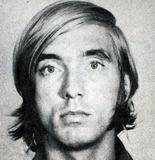
Paul Rowles
Murderer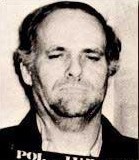 Ervil LeBaron
Murderer · USA · 1972
Ervil Morrell LeBaron (1925 to August 16, 1981) was the leader of a polygamous…
35 victims
Ervil LeBaron
Murderer · USA · 1972
Ervil Morrell LeBaron (1925 to August 16, 1981) was the leader of a polygamous…
35 victims
 Marvin Gray
Murderer · USA · 1975
Marvin Gray was convicted killer who claimed responsibility for 23 slayings and…
23 victims
Marvin Gray
Murderer · USA · 1975
Marvin Gray was convicted killer who claimed responsibility for 23 slayings and…
23 victims
 Yahweh ben Yahweh
Murderer · USA · 1980
Yahweh ben Yahweh was born and legally named Hulon Mitchell Jr. (October 27, 19…
23 victims
Yahweh ben Yahweh
Murderer · USA · 1980
Yahweh ben Yahweh was born and legally named Hulon Mitchell Jr. (October 27, 19…
23 victims
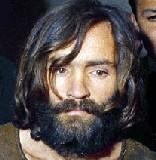 Charles Manson
Murderer · USA · 1969
Charles Milles Manson (born November 12, 1934) was an American criminal and mus…
9 victims
Charles Manson
Murderer · USA · 1969
Charles Milles Manson (born November 12, 1934) was an American criminal and mus…
9 victims
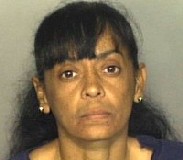 Ana Maria Cardona
Murderer · USA · 1990
Ana Maria Cardona was sentenced to death on April 1, 1992. She was resentenced…
1 victim
Ana Maria Cardona
Murderer · USA · 1990
Ana Maria Cardona was sentenced to death on April 1, 1992. She was resentenced…
1 victim
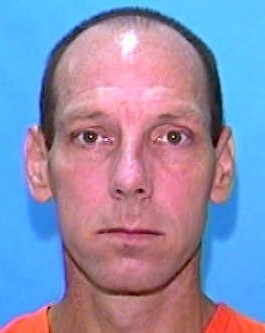 William Happ
Murderer · USA · 1986
Name: William Happ · Prisoner number / identifier: DC# 117027 · Date of birth:…
1 victim
William Happ
Murderer · USA · 1986
Name: William Happ · Prisoner number / identifier: DC# 117027 · Date of birth:…
1 victim
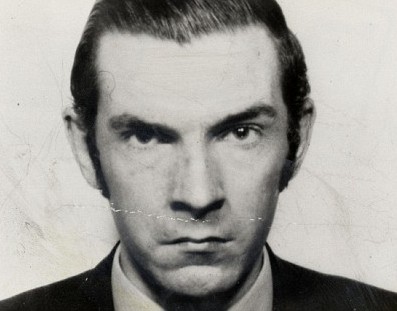 Graham Young
Homicide - Murderer · United Kingdom · 1962
Graham Young was convicted as a “Teacup Poisoner” for poisoning multiple people…
3 victims
Graham Young
Homicide - Murderer · United Kingdom · 1962
Graham Young was convicted as a “Teacup Poisoner” for poisoning multiple people…
3 victims
 Stephen Shaun Griffiths
Serial killer · United Kingdom · 2009
Stephen Shaun Griffiths was convicted after pleading guilty to killing three wo…
3 victims
Stephen Shaun Griffiths
Serial killer · United Kingdom · 2009
Stephen Shaun Griffiths was convicted after pleading guilty to killing three wo…
3 victims
- Gender
- male
- Country
- USA
- Location
- Florida, USA
- Date of birth
- April 28, 1948
- Age at first offence
- 24
- Characteristics
- serial rapist, rape, kidnapping, domestic violence
- Victim profile
- Linda Fida, 20 / Tiffany Sessions, 20 / Elizabeth Foster, 21
- Method of murder
- Stabbing with knife
- Date(s) of murder
- March 29, 1972 / February 9, 1989 / March 15, 1992
- Years active
- 1972–1992
- Date of arrest
- —
- Status
-
Died in custody
Died in prison on February 12, 2013
Case record: Paul Rowles
Status and death
Paul Rowles died in prison on February 12, 2013.
Background
Paul Rowles was born in 1948. At the age of 8, he choked a cat to death. At age 12, he developed rape fantasies involving women. His father beat him unconscious on several occasions. Paul Rowles broke into several apartments to steal victim's underwear and occasionally wore bras and women's underwear. He grew up in Pennsylvania.
Paul Rowles married Linda Schaeffer in 1970, when he was 20 years old. In March of 1973, Schaeffer divorced Rowles. The site described that Rowles confessed to the 1972 murder of Linda Ida, a woman who lived in his apartment complex.
The offence
Murder of Linda Ida (Linda Fida)
In March of 1972, Paul Rowles committed first degree murder. The murder happened in March of 1972 in Miami-Dade County. Joseph Fida found Linda Fida’s naked body, head underwater, in the bathtub, with stab wounds in her breast, when he came home from work on the night of March 31, 1972. Laundry scattered around the living room and two abandoned Band-Aids were found as clues. The Band-Aids were molded into a circular shape, like a ring, with adhesive containing embedded sharp ridges and whorls consistent with a toe print.
As he confessed, Paul Rowles described that he waited behind a door and jumped Linda Fida when she returned. He tore her clothing off, held some of the laundry over her face so she couldn’t see him, choked her with his hands, stabbed her with one knife until the blade bent, stabbed her some more, and held her face under water in the bathtub “for five or six minutes” to be sure she was dead. A medical examiner later concluded Linda Fida did not survive past the choking.
Paul Rowles also tried to rape Linda Fida but “nothing happened.”
He also described that he wore Band-Aids to cover damage to his toes from tennis. When police questioned him after his confession, a processor recorded that he told police about his attempt to rape her and how he held her face under water.
The minister Joe Nilsen later told police that Linda never saw him again after she heard from him and continued to receive his letters for another 10 or 15 years.
Disappearance of Tiffany Sessions (possible murder)
Tiffany Sessions was reported missing on Feb. 9, 1989. Her body was never located. Paul Rowles was described as a reported suspect in the 1989 disappearance and possible murder of Tiffany Sessions.
A photograph in an address book documented Tiffany Sessions’ resemblance to Paul Rowles’ first wife, Linda Schaeffer. The description also said that detectives discovered what appeared to be a coded reference to her death in an old address book belonging to Paul Rowles. The address book reportedly contained a handwritten notation that said “#2 2/9/89”, the day Tiffany Sessions disappeared.
Police in a later description reported that the case had not been fully closed and that they continued pursuing leads, including digging up suspected grave sites, patrolling with cadaver dogs, searching for Tiffany’s jewelry and a vehicle that may have transported her body, and searching homes. The case was described as still pursuing leads and that the information found in Rowles’ address book fell well short of certitude.
Investigation
Detectives’ DNA link to Elizabeth Foster
In 2013, detectives used DNA evidence to link Paul Rowles to Elizabeth Foster's murder. Elizabeth Foster was reported missing on March 15, 1992. Her body was found 11 days later in Gainesville. A medical examiner determined Foster had been raped. There were no significant leads at the time of Foster’s disappearance and death, and the case went cold.
In September of a later description, newly analyzed DNA evidence identified Rowles as the murderer of Elizabeth Foster. The murder took place in 1992. The DNA match was described as confirmed by evidence found on Foster’s body with available known hairs and specimens. The description said Rowles was positively identified as the rapist and murderer.
The description also said Rowles was never formally charged with Foster’s murder.
Cold case investigation and DNA match to Tiffany Sessions (as described)
The investigation involving Tiffany Sessions and DNA linked Paul Rowles as the suspect. Two female deputies went to the prison hospital at the Dade Correctional Institution to question him about Tiffany, and he sent them away. Prison officials said he removed all the names from his list of approved visitors and did not want to talk to anybody.
A detective named Kevin Allen was described as running the investigation. Allen said that the case was “Our case is circumstantial.” He continued:
“But it’s significantly circumstantial. The fact that he documented two other victims alongside the reference to Tiffany is highly significant.
“He’s by far the most significant suspect ever identified in the case.... If we could just find the wristwatch she was wearing when she disappeared and tie it to him, or find her DNA in his old vehicle, that would close the final link.”
Two unnamed caches of photos, paperwork and personal effects were left by Paul Rowles, one at the prison and another with his old minister and only friend in the world, Joe Nilsen.
Address book notation and investigative leads
Investigators used Paul Rowles’ address book, which included entries for the murdered Linda Fida and the kidnapped teenager. It also contained a notation “#2 2/9/89”. A detective said:
“I literally staggered against another officer who was standing beside me,”
and:
“Literally. Because if there’s one date that is engraved on my brain from the Tiffany Sessions investigation, it’s Feb. 9, 1989, the day she disappeared. And she would have been his second victim.”
The investigation continued to pursue leads including a missing watch and a red Bronco. Police knew the red Bronco had been used to transport one of his victims and described it as last sighted in 2003 in Oklahoma, where the FBI was looking for it. The search included checking whether Tiffany could have been inside it and whether DNA traces were left behind.
Investigators also checked suspected grave sites, including digging up 10 acres of woods where Beth Foster was buried and described searching without finding anything.
Arrest and confession (Linda Fida murder)
Arrest and matching toe prints
After obtaining Paul Rowles’ toe prints with a ruse, police matched them to the print in the Band-Aid and arrested him. Paul Rowles was quiet after the arrest, while Linda Shaffer was described as furious and believed the investigators were bullying him.
A prosecutor identified as James Woodard promised to check an upstairs apartment in response to a neighbor’s call. Woodard later described what he saw: on Paul’s sandaled feet, his big toes were wrapped in Band-Aids.
An investigator described that he called the police and said:
“I think I’ve got your man.”
Another detective, Marshall Frank, described that it took him less than an hour to obtain Paul’s full confession. Marshall Frank said:
“We weren’t browbeating him or causing him any stress,”
and:
“We talked for a while about other stuff, things he liked to do, just conversation. Then I said, ‘Look, tell me about the urges. We understand how you feel, other people have urges too, it’s not just you.’”
Marshall Frank said Paul told him about being close to attacking women before, and about a girl in an elevator who “said something nice and it turned him off.”
Trial and sentencing
Murder sentencing (life sentence)
In March of 1976, Paul Rowles was sentenced to life in prison for the murder of Linda Ida. Another description said he pled guilty and was sentenced to life in prison. The murder conviction had been imposed in 1972 for first degree murder.
The legal outcome was described as: sentenced to serve life in prison on March 24, 1976.
Parole
Paul Rowles was paroled in December 1985.
Sexual battery and kidnapping sentencing (July 13, 1994)
In July of 1994, Paul Rowles was sentenced to 19 years in prison for a crime that occurred in January of 1994 in Duvall County. He was convicted of two counts of sexual battery, one count of lewd and lascivious indecent assault on a child, and forced sexual battery.
A later description added that his parole on the murder conviction was revoked, so he would be in prison for the rest of his life. A court-appointed psychiatrist wrote:
“He has not asked that he be set free,”
and:
“but that he would like to get some help for his sexual fantasies which he feels he has no control over.”
The psychiatrist also wrote:
“so grossly endorsed and exaggerated psychopathology that his test was invalid,”
and:
“Whatever was wrong with Paul was literally off the scales.”
Armed burglary sentencing (June 1995)
In June of 1995, Paul Rowles was sentenced to 10 months in prison for a crime that occurred in January of 1994 in Pinellas County. He was found guilty of armed burglary.
Appeals
No appeal details were stated.
Outcome and aftermath
Life in prison and death
The legal descriptions said Paul Rowles was assigned to work in an accounting office in prison after a few years. His supervisor was a woman named Kathryn Forguson, who wrote to the Florida Parole and Probation Commission in 1984. Florida abolished parole in 1995, but before that all convicted felons were eligible for early release on parole.
A later description said multiple law-enforcement investigators believed Kathryn coached him for parole rehabilitation programs that impressed parole hearing officers. His parole commission file was described as including letters promising a job after release and including sociological terms. In one letter, Kathryn suggested:
“Perhaps the commission could have broadened their concept of ‘victim’ to include Paul. Paul’s crime was an outgrowth of many years of suffering physical and emotional abuse as a child.”
Paul Rowles married Kathryn and moved with her two daughters to the St. Petersburg area after his release. The description said that after their jobs ended and the family moved to Gainesville, Paul worked as a delivery man for Pizza Hut and for a construction company putting up scaffolding.
The description said that in February of 2013, Florida Dept. of Corrections records showed Rowles was “out of custody,” and described he died at age 64. A later account stated that reporters discovered his death on February 12, 2013 at a Florida prison near Miami and that the Florida Department of Corrections declined to disclose the cause of death.
Investigation continues and additional lead stories (as described)
The Sessions family continued the search for Tiffany Sessions. Tiffany’s father Patrick Sessions was quoted about the serial-killer scenario, saying:
“We were still wrestling with the question of was there any logic to this,”
and:
“Had it been done by somebody she turned down for a date? Was it somebody I had fired or somebody who didn’t like me and was seeking revenge? Or was it some drifter who came in off the highway and then left again? ”
A behavioral analysis unit representative said:
“We know of at least 50 serial killers out there,”
and:
“We have no idea where they are or what they’re doing or why they’re doing it. And any one of them could have taken Tiffany.”
Patrick Sessions recalled:
“And I just sat there, frozen, not knowing what to think or say.”
A cold-case detective Kevin Allen said the case was circumstantial, and he described efforts to close the final link by finding the wristwatch and DNA in the red vehicle.
Hilary Sessions said:
“I don’t want Tiffy out in a field, under a tree or a rock,”
and:
“I want her back, even it it’s just one bone. I want to give her a Christian burial and know she’s come home.”
A daughter of Kathryn Forguson wrote in an email:
“Paul Eugene Rowles is DEAD! He was and is NO PART of our family! ...You are causing me stress and anxiety and I WILL SUE YOUR ASS and HAVE YOUR BADGE if you continue to harass us,”
and the description said she did not respond to messages.
A witness email story involved a woman who said she saw a blonde girl running into the middle of the road and a man running toward her from a red truck-backed into the treeline. The woman said the trip north took place on Feb. 10, 1989, and that she did not call police at the time. She later contacted police, passed a lie-detector test, and agreed to be hypnotized, but no additional details surfaced. Cadaver dogs did not get any hits.
Other details
Alternate case references and suspect context
A later narrative described that Tiffany Sessions’ parents had sought to waive the death penalty for a murderer and serial rapist named Michael Knickerbocker after receiving a handwritten letter. The letter said:
“I hope you catch him so they can electrocute him,”
and it described that the letter turned out to be written by Knickerbocker himself.
Another portion described a Gainesville murder and rape case involving Beth Foster that used newly analyzed DNA evidence and noted that Paul Rowles was a Florida State prisoner serving a life sentence imposed in 1972 for first degree murder and additional years for several crimes committed in 1994. It stated that some sentences were imposed concurrently and that when he died, his total sentence seemed to be life plus 65 years.
Locations and movement mentioned
Paul Rowles moved to Pinellas County in December 1985. He moved to Gainesville in April 1988. He moved to Jacksonville in May of 1992. He died in a Florida prison near Miami. Elizabeth Foster’s body was found in Gainesville. Tiffany Sessions’ disappearance was reported as Feb. 9, 1989, and her body was never located.
Addresses, vehicles, and items
The narrative described a missing Tiffany Sessions Rolex. The Sessions family sought confirmation by linking a wristwatch to Paul Rowles. It also described a red Bronco owned by Paul Rowles, used to transport one of his victims, last sighted in 2003 in Oklahoma, with serial number details known by police.
Paul Rowles was described as wearing homemade paper rings with Kathryn’s and his first wife’s details in his effects. Letters indicated he tried to hire private detectives to find his wife. He wore “paper rings, one on each finger, bearing her name, the date of their wedding, and — take your picking, chilling or tender — terms of endearment like “the love of my life.””
Victims named
The named victims included Linda Shaffer (Paul Rowles’ first wife), Linda Fida (Linda Ida), Tiffany Sessions, Elizabeth Foster, and a kidnapped Clearwater girl described as a teenager in the narrative.
Quotes about legal planning and parole
A prosecutor named Woodard said about life sentences in the period:
“It was absolutely common for a person sentenced to life on a homicide charge to be out in seven or 10 or 12 years,”
and:
“That was a life sentence in those days. I saw it many, many times.”
Woodard also described that he saw a private attorney conversation as:
“That was a shocker, that he got out after 13 years. I thought somebody with a life sentence would do a hard 40, or at least 20 or 30 years. Thirteen just doesn’t seem right.”
After a psychiatric test, the psychiatrist said:
and the record included the quoted statement that his test was invalid due to exaggerated endorsement of psychopathology:
and:
Spotted an error, or have more information about this case?