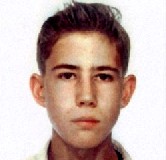
Hampus Hellekant
Murderer Peter Mangs
Murderer · Sweden · 2003
Peter Mangs was sentenced to life in prison for murder and attempted murder con…
3 victims
Peter Mangs
Murderer · Sweden · 2003
Peter Mangs was sentenced to life in prison for murder and attempted murder con…
3 victims
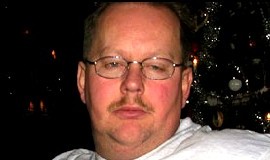 Anders Eklund
Murderer · Sweden · 2000
Anders Eklund (born August 6, 1965) was a Swedish murderer and rapist. He was c…
2 victims
Anders Eklund
Murderer · Sweden · 2000
Anders Eklund (born August 6, 1965) was a Swedish murderer and rapist. He was c…
2 victims
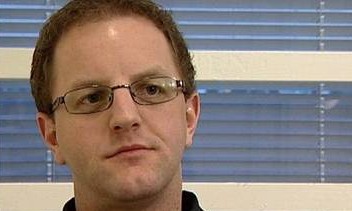 Helge Fossmo
Murderer · Sweden · 1999
Helge Arnold Fossmo (1971-) was a Pentecostal pastor. He was involved in the Kn…
2 victims
Helge Fossmo
Murderer · Sweden · 1999
Helge Arnold Fossmo (1971-) was a Pentecostal pastor. He was involved in the Kn…
2 victims
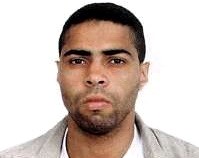 Jackie Arklöv
Murderer · Sweden · 1999
Jackie Arklöv was sentenced to life imprisonment. Jackie Arklöv (born June 6, 1…
2 victims
Jackie Arklöv
Murderer · Sweden · 1999
Jackie Arklöv was sentenced to life imprisonment. Jackie Arklöv (born June 6, 1…
2 victims
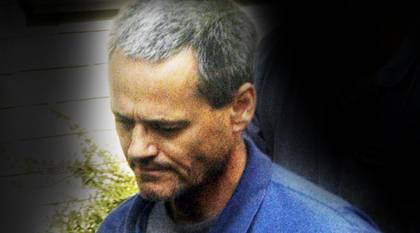 Ulf Olsson
Murderer · Sweden · 1989
Ulf Olsson (1951–), also known as Helénmannen (“the Helén man”) in Sweden, was…
2 victims
Ulf Olsson
Murderer · Sweden · 1989
Ulf Olsson (1951–), also known as Helénmannen (“the Helén man”) in Sweden, was…
2 victims
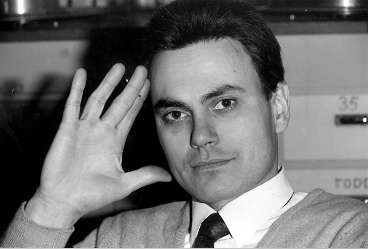 John Ausonius
Murderer · Sweden · 1991
John Ausonius (born Wolfgang Alexander Zaugg on July 12, 1953), also known in t…
1 victim
John Ausonius
Murderer · Sweden · 1991
John Ausonius (born Wolfgang Alexander Zaugg on July 12, 1953), also known in t…
1 victim
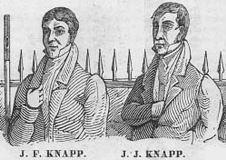 Francis & Joseph Knapp
Murderers · USA · 1930
Francis Knapp and Joseph Jenkins Knapp were the brothers known as the Knapps. T…
1 victim
Francis & Joseph Knapp
Murderers · USA · 1930
Francis Knapp and Joseph Jenkins Knapp were the brothers known as the Knapps. T…
1 victim
 Stuart Hazell
Murderer · United Kingdom · 2012
Stuart Hazell was the partner of Christine Sharp. · Stuart Hazell was the forme…
1 victim
Stuart Hazell
Murderer · United Kingdom · 2012
Stuart Hazell was the partner of Christine Sharp. · Stuart Hazell was the forme…
1 victim
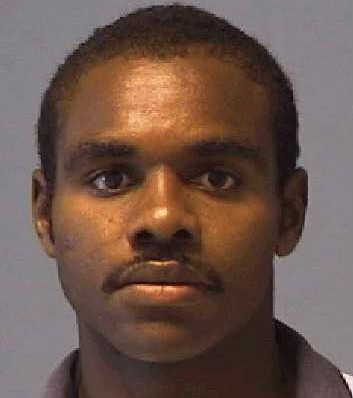 Clinton Bankston
Homicide · USA · 1987
15 August 1987 — Ann Morris (63), her sister Sally Nicholson (59), and Sally’s…
5 victims
Clinton Bankston
Homicide · USA · 1987
15 August 1987 — Ann Morris (63), her sister Sally Nicholson (59), and Sally’s…
5 victims
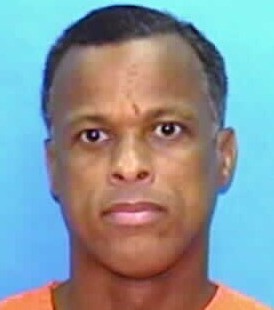 Jacob Dougan
Murderer · USA · 1974
Jacob Dougan was indicted for First-Degree Murder and was convicted and sentenc…
1 victim
Jacob Dougan
Murderer · USA · 1974
Jacob Dougan was indicted for First-Degree Murder and was convicted and sentenc…
1 victim
 Mir Aimal Kasi
Murderer · USA · 1993
Mir Aimal Kasi was a Pakistani native who was also known as Mir Aimal Kansi and…
2 victims
Mir Aimal Kasi
Murderer · USA · 1993
Mir Aimal Kasi was a Pakistani native who was also known as Mir Aimal Kansi and…
2 victims
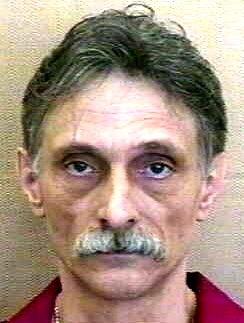 Kenneth Lee Boyd
Murderer · USA · 1988
Kenneth Lee Boyd was convicted of the murders of Thomas Dillard Curry and Julie…
2 victims
Kenneth Lee Boyd
Murderer · USA · 1988
Kenneth Lee Boyd was convicted of the murders of Thomas Dillard Curry and Julie…
2 victims
- Gender
- male
- Country
- Sweden
- Location
- Sätra, Stockholm, Sweden
- Date of birth
- January 30, 1976
- Age at first offence
- 23
- Characteristics
- hate crime
- Victim profile
- Björn Söderberg, 41 (syndicalist union member)
- Method of murder
- Shooting
- Date(s) of murder
- October 12, 1999
- Years active
- 1999
- Date of arrest
- —
- Status
-
Imprisoned
Sentenced to 11 years in prison in 2000.
Case record
Karl Helge Hampus Hellekant was later known as Karl Svensson. He was born January 30, 1976, in Danderyd, Stockholm County. He was a Swedish neo-Nazi. He was sentenced to 11 years in prison in 2000 for the murder of syndicalist union member Björn Söderberg on October 12, 1999. Because of the content of “death lists” created shortly before the murder, the murder was declared a hate crime.
After serving 6 1/2 years, he was released on parole in February 2007.
Timeline
- October 12, 1999 — Hellekant and Björn Lindberg-Hernlund visited Björn Söderberg at his apartment in Sätra and shot him to death following a brawl after Söderberg was called a few hours earlier.
- February 2007 — Hellekant was released on parole.
- 2005 — Hellekant was caught while on temporary release from prison, suspected of assisting a fellow inmate at the Hall prison in an escape attempt.
- Early November (year not specified) — Hellekant’s criminal history became known to Karolinska University Hospital and the media, triggering a debate about whether a convicted murderer should be allowed to practice medicine.
- Fall of 2007 — Hellekant enrolled in medical school at the Karolinska University Hospital.
- January 2008 — It was discovered that Hellekant apparently falsified the name on his high school transcripts, and the authenticity of his high school grades could not be verified; he was expelled from Karolinska.
- 2000 — Hellekant was convicted of murder and was sentenced to 11 years in prison.
- 2009 — It was reported that Hellekant had been accepted to medical school at Uppsala University.
The offence
Björn Söderberg was a Swedish union active syndicalist who was murdered in Sätra, Stockholm on October 12, 1999. Söderberg was born 1958.
The information that Söderberg provided to the newspaper Arbetaren led to an article on September 16, 1999, revealing that Robert Vesterlund was a Nazi.
Because Vesterlund was expelled from his union and quit his job, Hellekant and Björn Lindberg-Hernlund visited Söderberg at his apartment on October 12. Hellekant had admitted that, ordered by another person, he called Söderberg a few hours earlier. A brawl ensued, and a few minutes later Söderberg had been shot multiple times, including in the head. The prosecution described the killing as connected to “death lists” created shortly before the murder.
Hellekant and some of his friends created “death lists” of more than 1200 Swedish individuals they wanted dead. The friends were also sentenced, and the murder was declared a hate crime because of the content of the lists.
Investigation
On September 16, 1999, Arbetaren revealed that Robert Vesterlund held a chair in the board of the local chapter of the Swedish Commercial Employees’ Union at Svanströms lager in Stockholm.
Arbetaren had received the information from a co-worker of Vesterlund, the syndicalist union member Björn Söderberg.
A week later, Vesterlund was expelled from his union and quit his job.
During the killing, Hellekant was under surveillance for neo-Nazi activities by the Swedish Security Service.
Arrest
In 2005, Hellekant was caught while on temporary release from the prison, suspected of assisting a fellow inmate at the Hall prison in an escape attempt.
Trial
Hellekant and Björn Lindberg-Hernlund were convicted of murder in the Court of Appeal.
Jimmy Niklasson, also a member of Nationell Ungdom, was convicted of “grovt vapenbrott och skyddande av brottsling”.
Hellekant’s role included admitting that he, ordered by another person, called Söderberg a few hours earlier.
Sentencing
Hellekant was sentenced to 11 years in prison in 2000.
Medical school controversy
In the fall of 2007, Hellekant enrolled in medical school at the Karolinska University Hospital.
When his criminal history became known to the university as well as the media in early November, a debate ensued as to whether a convicted murderer should be allowed to practice medicine. Harriet Wallberg-Henriksson stated there was no legal way to expel him. She stated:
“no national policy covers the situation”.
Harriet Wallberg-Henriksson also said she considered it unethical to let convicted murderers practice medicine, and that it would be hard for Hellekant to get a physicians’ license from the National Board of Health and Welfare, which is required to practice.
The expulsion from Karolinska occurred after January 2008 discoveries about his educational documentation. In January 2008, it was discovered that Hellekant apparently had falsified the name on his high school transcripts, and that the authenticity of his high school grades could not be verified. He was expelled from Karolinska.
In 2009, it was reported that Hellekant had been accepted to medical school at Uppsala University.
A debate within the medical community arose in Sweden and abroad over the appropriate criteria for exclusion from medical school.
Bioethicist Jacob Appel supported Hellekant and argued that:
“medical authorities would be remiss if they overlooked the unique, positive characterisistics that a gifted ex-felon might bring to the profession”
Jacob Appel suggested that ex-felons might be well-suited to the distinctive demands of providing medical care within the prison system.
People
- Karl Helge Hampus Hellekant / Karl Svensson — defendant; Swedish neo-Nazi; born January 30, 1976, in Danderyd, Stockholm County.
- Björn Söderberg — murdered syndicalist union member; born 1958; killed in Sätra, Stockholm on October 12, 1999.
- Robert Vesterlund — prominent Swedish neo-Nazi movement figure; held a chair on the board of the local chapter of the Swedish Commercial Employees’ Union at Svanströms lager in Stockholm; expelled from his union and quit his job after the Arbetaren article.
- Björn Lindberg-Hernlund — friend with strong ties to the Nazi organization Nationell Ungdom; convicted of murder together with Hellekant.
- Jimmy Niklasson — member of Nationell Ungdom; convicted of “grovt vapenbrott och skyddande av brottsling”.
- Harriet Wallberg-Henriksson — head master (Karolinska); discussed legal grounds for expulsion and ethics of allowing convicted murderers to practice medicine.
- Jacob Appel — bioethicist; advocated for Hellekant.
- Dr. Harriet Wallberg-Henriksson — Karolinska’s president referenced in the medical school controversy narrative.
Other details
On October 23, 20,000 people gathered on Medborgarplatsen to take part in an anti-fascist meeting. October 12 was appointed Day of Civil Courage by SAC. A price in civil courage was given in memory of Söderberg’s murder.
Hellekant took online courses while imprisoned. He was interviewed separately by two admissions committee members, including a psychiatrist. Neither interviewer detected anything unusual or asked him to explain his activities during the previous six-and-a-half-year period.
Spotted an error, or have more information about this case?