
Eric Robert
Murderer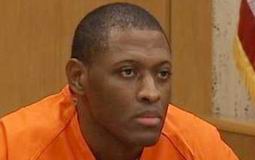 Leon Davis Jr.
Murderer · USA · 2007
Leon Davis Jr. was sentenced to death on April 29, 2011, for the execution-styl…
5 victims
Leon Davis Jr.
Murderer · USA · 2007
Leon Davis Jr. was sentenced to death on April 29, 2011, for the execution-styl…
5 victims
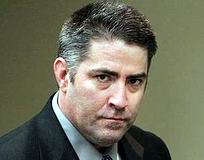 Raymond Lee Oyler
Murderer · USA · 2006
Raymond Lee Oyler was convicted for starting the 2006 Esperanza fire in Riversi…
5 victims
Raymond Lee Oyler
Murderer · USA · 2006
Raymond Lee Oyler was convicted for starting the 2006 Esperanza fire in Riversi…
5 victims
 Anthony Garcia
Murderer · USA · 2008
Anthony Garcia was a former doctor who was found guilty on all counts including…
4 victims
Anthony Garcia
Murderer · USA · 2008
Anthony Garcia was a former doctor who was found guilty on all counts including…
4 victims
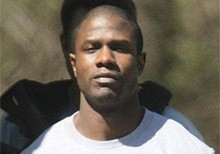 Brian Gene Nichols
Murderer · USA · 2005
Brian Gene Nichols was born December 10, 1971. He was known for his escape and…
4 victims
Brian Gene Nichols
Murderer · USA · 2005
Brian Gene Nichols was born December 10, 1971. He was known for his escape and…
4 victims
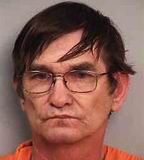 Bruce Mendenhall
Murderer · USA · 2007
Bruce Mendenhall grew up in Crawford County, Illinois. He was married and has t…
4 victims
Bruce Mendenhall
Murderer · USA · 2007
Bruce Mendenhall grew up in Crawford County, Illinois. He was married and has t…
4 victims
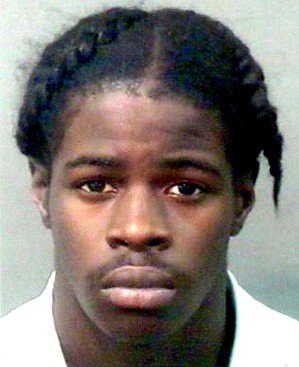 Demarcus Ralls
Murderer · USA · 2002
Demarcus Ralls Demarcus Ralls was 21 during his trial and testified in the pena…
4 victims
Demarcus Ralls
Murderer · USA · 2002
Demarcus Ralls Demarcus Ralls was 21 during his trial and testified in the pena…
4 victims
 Henry Earl Dunn
Murderer · USA · 1993
Henry Earl Dunn, Jr. was a defendant in a capital murder case involving the abd…
1 victim
Henry Earl Dunn
Murderer · USA · 1993
Henry Earl Dunn, Jr. was a defendant in a capital murder case involving the abd…
1 victim
 Juan Rodriguez Chavez
Murderer · USA · 1985
Juan Rodriguez Chavez was convicted in Dallas County, Texas, of capital murder…
12 victims
Juan Rodriguez Chavez
Murderer · USA · 1985
Juan Rodriguez Chavez was convicted in Dallas County, Texas, of capital murder…
12 victims
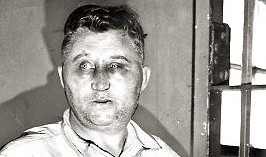 Herman Drenth
Murderer · USA · 1931
Herman Drenth was also known by the aliases Harry F. Powers and Cornelius O. Pi…
5 victims
Herman Drenth
Murderer · USA · 1931
Herman Drenth was also known by the aliases Harry F. Powers and Cornelius O. Pi…
5 victims
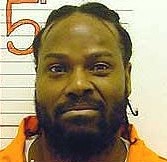 Willie Simmons
Murderer · USA · 1987
Willie Simmons was involved in a case in which the Missouri Supreme Court later…
2 victims
Willie Simmons
Murderer · USA · 1987
Willie Simmons was involved in a case in which the Missouri Supreme Court later…
2 victims
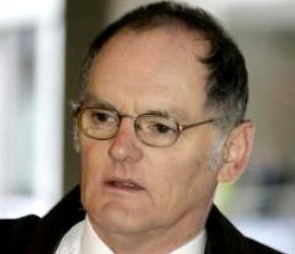 Gordon Park
Murderer · United Kingdom · 1976
Gordon Park (murder of his wife, Carol Park) Sentenced to life in prison in 200…
1 victim
Gordon Park
Murderer · United Kingdom · 1976
Gordon Park (murder of his wife, Carol Park) Sentenced to life in prison in 200…
1 victim
- Gender
- male
- Country
- USA
- Location
- Sioux Falls, South Dakota, USA
- Date of birth
- May 31, 1962
- Age at first offence
- 49
- Characteristics
- police officer
- Victim profile
- Ronald “R.J.” Johnson, 63 (Corrections officer)
- Method of murder
- Beating to death with a lead pipe
- Date(s) of murder
- April 12, 2011
- Years active
- 2011
- Date of arrest
- Same day
- Status
-
Executed
Sentenced to death on October 20, 2011; executed by lethal injection in South Dakota on October 15, 2012
Case identification
Eric Robert
STATUS
Eric Robert was sentenced to death and later executed by lethal injection in South Dakota.
Background
Eric Robert was convicted of kidnapping in Meade County and received an 80-year prison sentence. He was incarcerated in the South Dakota State Penitentiary in Sioux Falls beginning in January 2006.
At sentencing for the first conviction, Judge Warren Johnson stated: “It certainly sounds like the Wisconsin Eric Robert is a totally different person from the South Dakota Eric Robert. It’s the South Dakota Eric Robert I’m dealing with today.”
The offence
July 24, 2005 kidnapping (80-year sentence)
On July 24, 2005, Eric Robert posed as a police officer and pulled over an 18-year-old woman on a rural road near Black Hawk. He forced her into the trunk of his car, drove to a remote location, and then fled after he heard her talking on her cell phone.
When detectives found Robert and his pickup days later, he no longer matched the description of the suspect. He had shaved his head and face and initially denied any involvement. Detectives found a bed, an ax, rope and pornography in the back of his truck. He eventually admitted pulling the victim over and was arrested.
A cellphone call was used by the victim to call a friend to tell them what had happened. The victim was found unharmed.
At sentencing for the kidnapping, prosecutors said the items were evidence that Robert planned to rape the victim, while Robert denied that.
April 12, 2011 murder of Ronald “R.J.” Johnson during escape attempt
On April 12, 2011, Eric Robert and co-defendant Rodney Berget entered the Pheasantland Industries building in the penitentiary complex despite their maximum security classifications meaning neither inmate was authorized access to this building. Ronald Johnson, a corrections officer, was working in the Pheasantland Industries building and was covering a shift.
Robert assaulted Johnson by striking him with a lead pipe acquired earlier specifically for that purpose. The blows fractured Johnson’s skull in at least three locations and exposed a portion of his brain. Johnson also suffered defensive wounds to his hands and arms. An expert testified that the blows to the head continued after Johnson was on the ground. After immobilizing Johnson with the pipe, Robert and Berget wrapped Johnson’s head in plastic wrap which prevented him from crying out and also from breathing. The inmates dragged Johnson’s body behind a large crate to conceal him.
Robert dressed himself in Johnson’s uniform. Berget climbed into a box placed on a four-wheel cart, and Robert pushed the cart toward the west gate of the penitentiary while dressed as Johnson.
Correctional Officer Jodi Hall confronted Robert about his identity because he did not swipe an ID badge. When Robert’s explanation did not satisfy her, Hall notified Officer Matt Freeburg. Freeburg told Hall to call the Officer in Charge. Berget then sprang from the box and both inmates began assaulting Freeburg, using Johnson’s radio to beat Freeburg. Hall issued a distress call: “Code Red—Code 3”.
Robert attempted to scale the exterior gate of the penitentiary but became entangled in razor wire. The pair attempted to grab a gun from responding officers and then tried to bait officers into shooting them. Unsuccessful and surrounded, Robert shook Berget’s hand and the pair surrendered.
Because Robert was wearing Johnson’s uniform, penitentiary staff began searching for Johnson. His body was discovered behind the crate in the Pheasantland Industries building. His face was badly disfigured and swollen from the beating and asphyxiation. The correctional officer who found Johnson attempted CPR. Life-saving efforts continued after medical personnel arrived and on the way to the hospital, but all efforts proved futile. Johnson was declared dead at the hospital.
Johnson was described as a 23-year veteran correctional officer at the South Dakota State Penitentiary. Additional details stated that Johnson worked on his birthday, his 63rd birthday.
The record included a witness statement:
“I saw the sergeant pulling the saran wrap off of RJ's head, I knew it was RJ.”
Investigation
Detectives found Robert and his pickup days after July 24, 2005 kidnapping while Robert no longer matched the description of the suspect.
Arrest
Robert was arrested after he eventually admitted pulling the victim over on July 24, 2005.
Trial
Plea and jury waiver for first-degree murder
On September 16, 2011, Eric Robert pleaded guilty to first-degree murder for the death of penitentiary guard Ronald Johnson in violation of SDCL 22–16–1(1), 22–16–4(1), 22–16–12, and 22–3–3. Robert waived his right to a jury sentencing.
The circuit court found Robert competent, found he was represented by competent counsel, and found that the plea and jury waiver were entered voluntarily, knowingly, and intelligently.
The death penalty prosecution was conducted in two phases. Because Robert pleaded guilty, there was no trial on the guilt phase, and because he waived his right to jury sentencing, the penalty phase was tried to the circuit court.
Pre-sentence hearing findings and aggravating circumstances
Robert’s pre-sentence hearing began on October 24, 2011 and lasted four days. Following the hearing, the circuit court entered extensive findings of fact and conclusions of law.
The circuit court found the State proved beyond a reasonable doubt two aggravating circumstances:
- “the offense was committed against a law enforcement officer, employee of a corrections institution, or firefighter while engaged in the performance of such person's official duties,” identified as SDCL 23A–27A–1(7)
- “the offense was committed by a person in, or who has escaped from, the lawful custody of a law enforcement officer or place of lawful confinement,” identified as SDCL 23A–27A–1(8)
The record indicated evidence had been presented regarding several other aggravating circumstances, but the circuit court found it unnecessary to make further findings regarding any other aggravating circumstances.
The circuit court concluded that “the only effective and reasonable retribution or punishment under the totality of the circumstances in this matter is the imposition of the death penalty.”
The circuit court noted Robert’s intent and desire to die and concluded such a wish was not an aggravating circumstance appropriately considered in determining whether the death penalty should be imposed. The court noted Robert instructed his counsel not to present mitigating evidence on his behalf, but the court indicated it considered all mitigating evidence contained in the record, including acceptance of responsibility and mitigating evidence from the Meade County kidnapping file, of which the court took judicial notice.
Sentencing
January 2006 kidnapping conviction sentence
Robert was convicted of kidnapping in Meade County and was sentenced to 80 years in prison. This conviction resulted in Robert being incarcerated in the South Dakota State Penitentiary beginning in January 2006.
October 20, 2011 death sentence
On October 20, 2011, Judge Bradley G. Zell sentenced Robert to death after Robert pleaded guilty to first-degree murder and waived jury sentencing.
On October 19, 2011, Robert asked for a death sentence from Judge Bradley Zell.
Waiver of appeal and related procedural history
On November 10, 2011, the circuit court entered a Judgment of Conviction and Warrant of Execution. On November 16, 2011, Robert filed a Waiver of Appeal waiving his right to appeal his conviction.
The waiver acknowledged his right to appeal, acknowledged discussing his waiver with counsel, and stated that the waiver was free and voluntary. It was signed by Robert and was notarized.
The Supreme Court conducted statutorily mandated review of the death sentence regardless of Robert’s waiver or lack of a direct appeal.
Appeals
The Supreme Court reviewed the death sentence on mandatory sentence review and affirmed.
The Supreme Court held:
- the death sentence was not imposed under the influence of passion, prejudice, or any other arbitrary factor
- evidence supported findings of aggravating circumstances
- the death sentence was not excessive or disproportionate to the penalty imposed in similar cases, considering both the crime and defendant
The death sentence was affirmed, and the matter was remanded to the circuit court for entry of a warrant of execution pursuant to SDCL 23A–27A–31.
Outcome
Execution and last statement
Robert was executed by lethal injection in South Dakota on October 15, 2012. The warrant and execution scheduling details included a period from Sunday, Oct. 14, 2012 through Saturday, Oct. 20, 2012 inclusive, with the specific date and time selected by the warden.
Execution-related timing details included:
- 9:31 p.m. removed from his holding cell
- 9:32 p.m. placed on the execution table
- 9:37 p.m. restraints were secured
- 9:46 p.m. staff began to escort witnesses to the viewing rooms
- 9:59 p.m. warden ordered the curtains open
- 10:01 p.m. last statement was given: “In the name of justice and liberty and mercy, I authorize and forgive Warden Douglas Weber to execute me for my crimes. It is done.”
- 10:04 p.m. injections were completed
- 10:24 p.m. pronounced dead
A statement from Robert during the execution was included:
“In the name of justice and liberty and mercy, I authorize and forgive Warden Douglas Weber to execute me for my crimes. It is done.”
Witness remarks and statements
Governor Dennis Daugaard was quoted as saying:
“Executions are rare in our state, and they are warranted only with extreme forethought and certainty. In this case, Eric Robert admitted to his crime and requested that his punishment not be delayed. I hope this brings closure to “RJ” Johnson’s family and all those who loved him. I also commend Warden Weber and others in the state Department of Corrections who planned this very difficult task in a professional and careful manner.”
Lynette Johnson, Ronald Johnson’s widow, was quoted after the execution as saying:
“But we do know that the employees of the Department of Corrections and the public in general will be just a little bit safer now. Ron, none of you will ever know how great he is and is missed. We stand proud for Ron.”
An additional quote from Lynette Johnson stated:
“We know this execution tonight is not going to bring back my husband to me. It’s not going to bring our children's father back to them. ... our six grandchildren’s ‘Papa’ to them. But we do know that the employees of the Department of corrections and the public in general will be just a little bit safer now.”
Attorney Mark Kadi was quoted as saying after the execution:
“The problem was it was too orderly. It was so antiseptic and peaceful that it masked what was being done to the person. If more people were able to see the events, there would be fewer of them.”
Another quote attributed to Mark Kadi described the execution as:
“orderly and polished.”
Richard Dieter was quoted as saying:
“You have few people on death row, few executions, and then you have this coincidence of cases coming all at once. When people waive appeals, their cases start to move more quickly.”
Aftermath
Robert’s execution was described as the state’s first execution since 2007 and involved South Dakota’s single-drug lethal injection method using pentobarbital. He was the first South Dakota inmate to die under the state’s new single-drug lethal injection method, and was described as the 17th person executed in the state or Dakota Territory since 1877.
Information also stated that Donald Moeller was scheduled to be put to death the week of Oct. 28 for the 1990 kidnapping, rape and murder of a 9-year-old girl.
Other participants and related cases mentioned
- Rodney Berget: Robert’s co-defendant; pleaded guilty; sentenced to death; later described as having appealed his death sentence.
- Michael Nordman: received a life sentence for providing materials used in the slaying.
- Judge Bradley G. Zell: sentenced Robert to death.
- Douglas Weber: Director of Adult Corrections and Chief Warden for the State of South Dakota; was referenced in Robert’s last statement.
- Matt Freeburg: correctional officer who testified about the events.
- Jodi Hall: correctional officer who confronted Robert about his identity.
- Officer Matthew Freeburg and Officer in Charge responses were described in the record; Hal issued “Code Red—Code 3” on her radio.
- Eric Robert’s waiver of appeal and the mandatory Supreme Court review were described as occurring under SDCL 23A–27A–9.
Other details
Documented legal citations and case name
State v. Robert , 820 N.W.2d 136 (S.D. 2012). (Direct Appeal)
Execution drug description
The execution protocol included the administration of a single drug, pentobarbital.
Additional procedural scheduling detail
A warrant of execution was issued by Second Circuit Court Judge Bradley Zell. Attorney General Marty Jackley announced issuance of the warrant of execution.
Key dated events stated in the record
- May 31, 1962: born in Massachusetts.
- July 24, 2005: kidnapping occurred.
- Jan. 3, 2006: sentenced to 80 years for kidnapping.
- 2007: classified as “high security” at South Dakota State Penitentiary.
- 2009: attempted sentence reduction failed; transfer request denied.
- April 12, 2011: murder during escape attempt.
- Sept. 16, 2011: pleaded guilty to first-degree murder.
- Oct. 19, 2011: asked for a death sentence from Judge Bradley Zell.
- Oct. 20, 2011: sentenced to death.
- Aug. 2012: South Dakota Supreme Court upheld the death sentence.
- Oct. 12, 2012: warden announced the execution date and time.
- Oct. 15, 2012: execution and time of death.
Spotted an error, or have more information about this case?