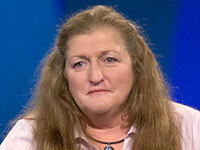
Brenda Hodge
Murderer Kathleen Folbigg
Murderer · Australia · 1989
Kathleen Megan Folbigg (née Donovan) was an Australian child killer. She was co…
4 victims
Kathleen Folbigg
Murderer · Australia · 1989
Kathleen Megan Folbigg (née Donovan) was an Australian child killer. She was co…
4 victims
 Gunn-Britt Ashfield
Murderer · Australia · 1993
Gunn-Britt Ashfield was the mother of six-year-old John Ashfield. In 2011 she w…
1 victim
Gunn-Britt Ashfield
Murderer · Australia · 1993
Gunn-Britt Ashfield was the mother of six-year-old John Ashfield. In 2011 she w…
1 victim
 Storm Brooke
Murderer · Australia · 1990
Storm Brooke was an Australian prisoner who stabbed fellow prisoner Debbie Dick…
1 victim
Storm Brooke
Murderer · Australia · 1990
Storm Brooke was an Australian prisoner who stabbed fellow prisoner Debbie Dick…
1 victim
 Tracey Wigginton
Murderer · Australia · 1989
Tracey Wigginton (born 1965) was an Australian murderer who achieved notoriety…
1 victim
Tracey Wigginton
Murderer · Australia · 1989
Tracey Wigginton (born 1965) was an Australian murderer who achieved notoriety…
1 victim
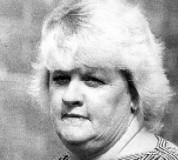 Valmae Beck
Murderer · Australia · 1987
Valmae Beck Valmae Beck was sentenced to life imprisonment with a non parole pe…
1 victim
Valmae Beck
Murderer · Australia · 1987
Valmae Beck Valmae Beck was sentenced to life imprisonment with a non parole pe…
1 victim
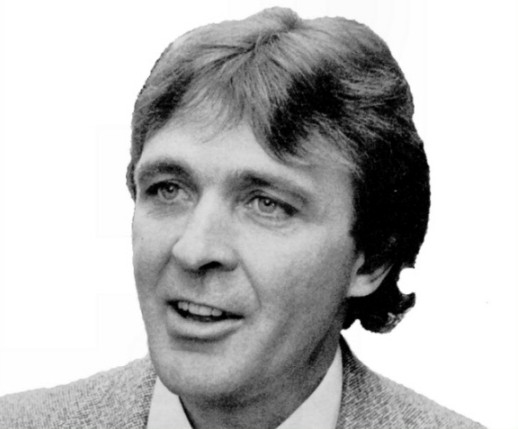 Christopher Flannery
Murderer · Australia · 1979
Christopher Dale Flannery (1949 - missing and believed murdered ca. May 9, 1985…
12 victims
Christopher Flannery
Murderer · Australia · 1979
Christopher Dale Flannery (1949 - missing and believed murdered ca. May 9, 1985…
12 victims
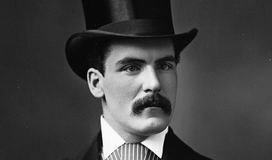 Dr. Thomas Neill Cream
Serial killer · USA / United Kingdom · 1881
Dr. Thomas Neill Cream (May 27, 1850 – November 16, 1892) was a serial killer w…
5 victims
Dr. Thomas Neill Cream
Serial killer · USA / United Kingdom · 1881
Dr. Thomas Neill Cream (May 27, 1850 – November 16, 1892) was a serial killer w…
5 victims
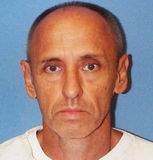 Thomas Whisenhant
Serial killer · USA · 1975
Name: Thomas Warren Whisenhant Gender: M Race: W DOB: 1/29/1947 Inmate: WHISENH…
3 victims
Thomas Whisenhant
Serial killer · USA · 1975
Name: Thomas Warren Whisenhant Gender: M Race: W DOB: 1/29/1947 Inmate: WHISENH…
3 victims
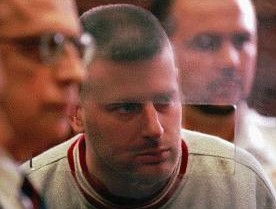 Peter Contos
Murderer · USA · 1997
Peter Contos was convicted on three indictments charging murder in the first de…
3 victims
Peter Contos
Murderer · USA · 1997
Peter Contos was convicted on three indictments charging murder in the first de…
3 victims
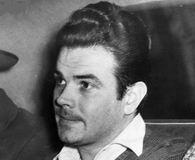 John Francis Roche
Serial killer · USA · 1953
John Francis Roche was a male inmate. He was described as a mass murderer. Roch…
5 victims
John Francis Roche
Serial killer · USA · 1953
John Francis Roche was a male inmate. He was described as a mass murderer. Roch…
5 victims
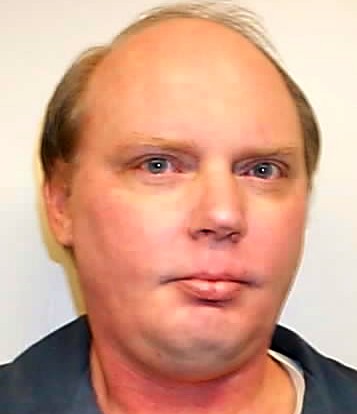 Dale Shackelford
Murderer · USA · 1999
Dale Carter Shackelford was convicted for the 1999 slayings of Donna Fontaine a…
2 victims
Dale Shackelford
Murderer · USA · 1999
Dale Carter Shackelford was convicted for the 1999 slayings of Donna Fontaine a…
2 victims
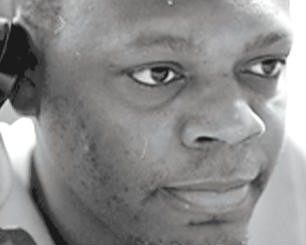 Dana Ray Edmonds
Murderer · USA · 1983
Dana Ray Edmonds Edmonds was sentenced to death after a bench trial in 1983 for…
1 victim
Dana Ray Edmonds
Murderer · USA · 1983
Dana Ray Edmonds Edmonds was sentenced to death after a bench trial in 1983 for…
1 victim
- Gender
- female
- Country
- Australia
- Location
- Leonora, Goldfields-Esperance, Western Australia, Australia
- Date of birth
- 1951
- Age at first offence
- 32
- Characteristics
- parricide, domestic dispute, history of mental illness, alcohol, rape
- Victim profile
- P olice sergeant Peter Rafferty, 39 (her de facto partner)
- Method of murder
- Shooting ( single-barrel shotgun)
- Date(s) of murder
- March 9, 1983
- Years active
- 1983
- Date of arrest
- Same day
- Status
-
Released
Sentenced to death in August 1984; sentence commuted to life imprisonment; paroled on October 20, 1995
Case details
Brenda Hodge was born Dorothy Brenda White in Victoria in 1951 to Beryl Nanette MacKenzie. Her brother was Danny. She was sentenced to death in August 1984 for the murder of her de facto partner and police officer, Peter Rafferty.
Timeline
- August 1984 — Brenda Hodge was found guilty of murder and was sentenced to hang by Justice Pidgeon.
- (Sentence immediately commuted) — Her sentence was commuted to life imprisonment.
- 1988 — She was transferred to Greenough Regional Prison.
- 20 October 1995 — Brenda Hodge was paroled.
- 2003 — She was contacted by her half-sisters in the first time ever.
- 2005 — Her autobiography, WALK ON: The remarkable true story of the last person sentenced to death in Australia, was published, and she appeared on Enough Rope with Andrew Denton.
Background
Brenda Hodge’s childhood was unhappy. She was frequently the victim of beatings by her alcoholic mother. Danny constantly bullied her and grew up with numerous of her mother’s partners.
Brenda Hodge claimed that she was sexually abused as young as four by a babysitter, who would continue to sexually abuse her for nine more years. As a child, she began skipping school.
In 1965, her mother left her stepfather and brother, Edd, and took her to live in Carlton. Brenda Hodge got a job, but her mother began spending most of the money on alcohol.
Brenda Hodge took a job working on a farm. She was happy at first, but left due to a dispute with the owner.
Soon after, her mother sent her off with one of her male friends for the pub. After taking her to a park, he raped her, telling her her mother had allowed him to have sex with her in exchange for alcohol money.
After being sent to court, she was charged with being a “neglected child” and placed into a reformatory in Melbourne. After escaping, she was sent between mental hospitals and reformatories until her biological father contacted her, inviting her to live with him in Brisbane. She later found out he was an alcoholic too and pressured her into having sex with him. Soon after, she ran away and was put into a mental hospital. She was eventually released into a charity worker’s care.
She started working in various places throughout Queensland, eventually moving to Darwin and then to Western Australia.
Other relationships and personal history
Brenda Hodge married a man named David Hodge in 1972 and divorced in 1977.
While working in Leonora in 1983, she became involved with police officer Peter Rafferty. Their relationship was unhappy and plagued with several fights due to his alcoholism and her depression. She decided to leave him.
In 2005, she appeared on Enough Rope with Andrew Denton and discussed her life publicly for the first time. She also wrote an apology in her autobiography to Peter, his family and his friends for his murder.
In 2003, she was contacted by her half-sisters for the first time ever, not knowing she had any more family. She still kept in close contact with them. She currently lived in Geraldton, Western Australia.
The offence
On the day of the murder, Brenda Hodge was packing her belongings to leave. Peter Rafferty began taunting her and yelling. Brenda Hodge claimed in her book that her memory of the incident was blurred; she claimed she only remembered aiming the gun at him and firing and that she did not know what was on her mind or why she did it, describing moments of blackness in her memory.
After being shot, Peter Rafferty retreated to the shed. Brenda Hodge followed and shot him twice more, killing him.
After the incident, Brenda Hodge stopped at a deli and ordered a coke. She went to a hotel and confessed the murder to a friend, who did not believe her. She later went to a lookout where she considered suicide. She then went to Kalgoorlie police station and confessed to the crime.
Investigation, arrest, and confessions
After the incident, Brenda Hodge confessed the murder to a friend at a hotel. She later confessed the murder at Kalgoorlie police station.
Trial
In August 1984, she was found guilty of murder.
She was sentenced to hang by Justice Pidgeon.
Sentencing
In August 1984, Brenda Hodge was found guilty of murder and was sentenced to hang by Justice Pidgeon.
On being sentenced to death, Brenda Hodge recalled: “(I felt)... Numb, detached. I felt nothing. I believe I am not the only person to have had that experience. Many people thought Lindy Chamberlain was guilty simply because she 'showed no emotion' at her trial”.
Her sentence was commuted to life in prison.
She recalled: “It didn't mean anything to me at the time; I still had this vague idea my life was already over, almost as though I was already dead...”
In prison, she remained at Bandyup maximum security prison until 1988, when she was transferred to Greenough Regional Prison.
Prison life and rehabilitation
Brenda Hodge began to study in prison. She learned to touch type and enrolled in English and Literature courses. She also completed a TAFE trade apprenticeship in cooking.
She became friendly with a parish priest and converted to Roman Catholicism while imprisoned. She also studied and attained educational qualifications including a BA in English at Curtin University and a Graduate Diploma in Creative Writing.
She described the prison psychiatrist Dr Rollo and said:
“The hell of being in prison was that I had to keep living, and it was worse than any nuthouse I've ever been in, I can tell you now. It was just chaos, every day is chaos, every day is anarchy, every day is madness, every day is - you just can't get away from it.”
She stated about Dr Rollo:
“It did because he recognised that I was grieving, and grief is more than just depression. He used to bring me in books to read. He was all into self-help and we tried all the drugs, and I hated being drugged and I hated not being drugged. I mean I hated everything. I hated myself. But, as I began to get into being educated and my understanding of life and people broadened through literature, and then I started winning prizes, so that was good, I felt good about myself in some ways. But it did, it gave me... it was my escape.”
She stated about education and writing:
“I got a BA in English at Curtin University, then I did a Graduate Diploma in Creative Writing. That's when I got serious about writing poetry. And once I started writing poetry, I was alive again.”
She described depression as something she learned to cope with:
“depression is a bit like alcoholism in a way. You never really stop being an alcoholic or a depressive, but you just learn to cope with it and you learn to stop it from ruling your life, from organising your life.”
Appeals and parole
After numerous appeals, Brenda Hodge was paroled on 20 October 1995.
On release, Brenda Hodge described needing determination, friends, and a job:
“I had a lot of determination and I had a few very good friends and someone gave me a job. That would be it in a nutshell. I had to become a person, become part of the community - which I am, I contribute in the community.”
Aftermath and public profile
Brenda Hodge’s autobiography WALK ON: The remarkable true story of the last person sentenced to death in Australia was published in 2005.
She appeared on Enough Rope with Andrew Denton in 2005 and spoke about her life.
She described her attitude toward anger:
“No. And how have you dealt with it? Where have you put it? ... I don't know where it's gone. But when I get angry now, I feel angry at injustices, corruption, all those sorts of things.”
She stated about reconciling inside her mind:
“No. No, you can't, not 100 per cent. I mean, I don't persecute myself with guilt like I used to, but it's just a very hard thing to live with.”
Quotations (verbatim)
Brenda Hodge — sentencing recollection (verbatim)
“I felt)... Numb, detached. I felt nothing.
“It didn't mean anything to me at the time; I still had this vague idea my life was already over, almost as though I was already dead...”
Enough Rope interview — exchanges (verbatim)
ANDREW DENTON: Brenda, welcome. BRENDA HODGE: Thank you.
ANDREW DENTON: Now, we have to talk about some pretty difficult things tonight. Are you up for this? BRENDA HODGE: Oh, I hope so.
ANDREW DENTON: When you were about 14, in exchange for drinking money, your mum gave you to a grown man for sex, and he raped you. BRENDA HODGE: That's right.
ANDREW DENTON: What kind of a mother to you was your mum, Nan? BRENDA HODGE: She was just very punitive, very self-centred. There's reasons why she was like that. She had a hard life herself. The only mothering that I really got was from my grandmother - my step-father's mother - and she used to look after me every now and then, only for a day or two at a time.
ANDREW DENTON: When you were four, your mum arranged for you to be looked after by a young man called Eric. How did he treat you? BRENDA HODGE: He just used me.
ANDREW DENTON: Physically abused you? BRENDA HODGE: (Nods)
ANDREW DENTON: Was your mum aware of this? BRENDA HODGE: Yes. She was aware of it. It was never spoken about. I grew up thinking that incest, as I know it to be now, and abuse by relatives and friends and everything that happened to me, I just thought all of that was just normal.
ANDREW DENTON: Can you explain what was in your head when you shot him? BRENDA HODGE: No, I can't because I was... I can tell you what I can remember, which is fragments, bits and pieces, but not what was in my head, because I was split from myself. I didn't have any sense of self. When I say, "I did this" or "I did that", at the time, it wasn't 'I', I had no 'me', it just sort of happened. I was packing to leave and Peter was helping me and he said, "If you're not back in 20 minutes, I'll chuck all the rest of your gear out on the road." I was just crying all the time, and I went out the back and he came running through the house and he'd been drinking all day and just started abusing me and...
ANDREW DENTON: Physically or verbally? BRENDA HODGE: Verbally. No, he never abused me physically. And I just went into that whatever it is - there's been all sorts of labels put on it by experts. I still don't know what it was, but it's just... I had no hearing. All I could hear was the whirring in my ears. I just went and got the rifle and ended up shooting him.
ANDREW DENTON: You were sentenced to death for that murder. BRENDA HODGE: I was.
ANDREW DENTON: What did that sentence mean to you? BRENDA HODGE: Nothing.
ANDREW DENTON: Nothing? BRENDA HODGE: Nothing.
ANDREW DENTON: Why nothing? BRENDA HODGE: Because I wanted die.
ANDREW DENTON: Were you grieving for Peter? BRENDA HODGE: Yeah
ANDREW DENTON: Were you grieving for yourself? BRENDA HODGE: Oh, well, both.
ANDREW DENTON: Don't be modest, over those years, what awards and degrees did you attain? BRENDA HODGE: I got a BA in English at Curtin University, then I did a Graduate Diploma in Creative Writing. That's when I got serious about writing poetry. And once I started writing poetry, I was alive again.
Poetry/book-related statements (verbatim)
“anger is fear in daytime clothes”
“It certainly wasn't a decision, I was what's called dissociated, I was split from reality and split from my sense of self, it's hard to put into words. All I can remember is just seeing blackness and then I was looking at the back of the rifle. I felt like I was walking on the moon, everything just slowed right down.”
“all I know is I was trying to leave, he was following me around and saying horrible things and I shot him.”
Audience quotations (verbatim)
“I find this woman truly remarkable and my heart aches for her. How can one woman or person be subject to so much in one life and still have the will to carry on and better themselves”
“i would love to know how i can get in touch with Brenda. i too am recovering from depression and since i was a child i have used my poetry as an outlet. i would just like to let her know how much her story ment to me and how wonderful i think she is. thank-you”
Other details
Brenda Hodge was described as “the last person to be sentenced to death in Australia.”
She was also said to have been transferred from Bandyup maximum security prison to Greenough Regional Prison in 1988.
Her autobiography and media appearance were discussed, including the topic that Western Australia was the last state to remove the death penalty for murder shortly after her sentence.
Her half-sisters, contacted in 2003, did not know she had family until then.
The Morning Program interview included a quote attributed to Shelley Rafferty:
“She had 21 years to apologise. All of a sudden now that she's written her book, she decides to apologise in public. I think it's nothing more than a publicity stunt. … There’s four children, three of us want absolutely nothing to do with it … [but] my older sister Debbie would like a face-to-face confrontation with her. Debbie feels that if she at least has her say and lets her know how much pain and devastation she’s caused us then maybe [Debbie’s] pain may be eased a little. If she wrote the book partly as an apology to us, where’s our copy? … Why haven’t we been able to read it? The last thing we’re going to do is go out to the bookshop and buy it!”
In mid 2005, the Western Australia director of public prosecutions considered whether royalties from the autobiography should be regarded as the proceeds of crime.
Ken Bates’s quoted position was:
“It will be necessary to look at the book, examine it, and make the judgement as to whether it can be said that any profit from the book has been derived from the person’s involvement in a criminal offence. Our position is that if Brenda Hodge wants to write a book as part of her rehabilitation and tell her life story she’s more than entitled to do that but our concern is that she not profit from a book which essentially deals with her commission of a criminal offence”
Spotted an error, or have more information about this case?