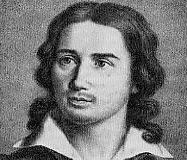
Karl Ludwig Sand
Murderer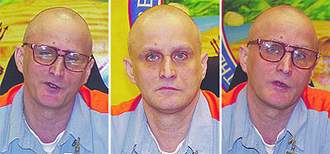 David Elliot Penton
Child serial killer · USA · 1984
David Elliot Penton was a 5-11, 49-year-old balding man who was interviewed whi…
9 victims
David Elliot Penton
Child serial killer · USA · 1984
David Elliot Penton was a 5-11, 49-year-old balding man who was interviewed whi…
9 victims
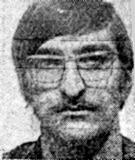 George Geschwendt
Mass murderer · USA · 1976
George Geschwendt — defendant · Joseph M. Ryan — Superintendent (warden) · Erne…
6 victims
George Geschwendt
Mass murderer · USA · 1976
George Geschwendt — defendant · Joseph M. Ryan — Superintendent (warden) · Erne…
6 victims
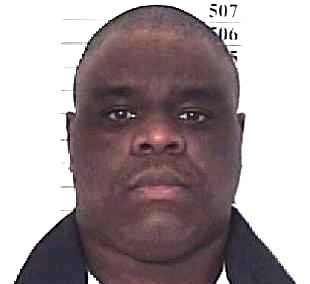 Scotty Morrow
Murderer · USA · 1994
Scotty Morrow began dating Barbara Ann Young in June 1994. Young broke up with…
2 victims
Scotty Morrow
Murderer · USA · 1994
Scotty Morrow began dating Barbara Ann Young in June 1994. Young broke up with…
2 victims
 Susan Hendricks
Mass murderer · USA · 2006
Susan Hendricks was accused of killing four members of her own family in order…
5 victims
Susan Hendricks
Mass murderer · USA · 2006
Susan Hendricks was accused of killing four members of her own family in order…
5 victims
 Terrie Robinson
Murderer · USA · 2011
Terrie Robinson was a 25-year-old woman who pleaded guilty to the murder of her…
1 victim
Terrie Robinson
Murderer · USA · 2011
Terrie Robinson was a 25-year-old woman who pleaded guilty to the murder of her…
1 victim
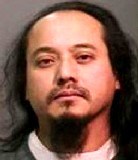 Jordan Criado
Mass murderer · USA · 2011
Jordan Adam Criado was a 53-year-old man from Medford, Oregon, who was sentence…
5 victims
Jordan Criado
Mass murderer · USA · 2011
Jordan Adam Criado was a 53-year-old man from Medford, Oregon, who was sentence…
5 victims
- Gender
- male
- Country
- Germany
- Location
- Mannheim, Baden-Württemberg, Germany
- Date of birth
- October 5, 1795
- Age at first offence
- 24
- Characteristics
- beheading
- Victim profile
- August von Kotzebue (conservative dramatist)
- Method of murder
- St abbing with knife
- Date(s) of murder
- March 23, 1819
- Years active
- 1819
- Date of arrest
- Same day (suicide attempt)
- Status
-
Executed
Executed by beheading in Mannheim on May 20, 1820
Case summary
Karl Ludwig Sand was a German university student and a member of a liberal Burschenschaft (student association). He was executed in 1820 for the murder of the conservative dramatist August von Kotzebue the previous year in Mannheim. As a result of his execution, Sand became a martyr in the eyes of many German nationalists seeking the creation of a united German national state.
Background
Karl Ludwig Sand was born in Wunsiedel, then in Prussia, on 5 October 1795. He was the youngest son of Godfrey Christopher Sand and Dorthea Jane Wilheltmina Schapf. His siblings were George, Fritz, Caroline, and Julia.
Education In 1804, Sand attended the Lateinschule (Latin school) in Wunsiedel. In 1810, he moved on to the grammar school (Gymnasium) in Hof, living with the school's rector, Georg Heinrich Saalfranck, a friend of Sand's Enlightened Protestant family. Following the closure of the Hof Gymnasium under the institution of Montgelas's Reforms, Sand followed his teacher to the Neues Gymnasium (New Grammar School) in Regensburg, completing his studies in September 1814. In November 1814, Sand matriculated at the University of Tũbingen.
In 1815, Sand volunteered under Major von Falkenhausen, participating in the Battle of Waterloo in June and in Paris by July. He returned from the war disillusioned and fell into a deep depression.
In 1816, while at the University of Erlangen, Sand formed Burschenschaft Teutonia with his friend Dittmar. They met at castle ruins near Erlangen which they named Ruttli. They built a meeting house for their group of 80 students. Sand's depression was further intensified by the destruction of Ruttli by the competing political group the Landmannschaft and by the drowning death of Dittmar in 1817.
Starting in 1817, Sand studied at the University of Jena, attending the lectures of Jakob Friedrich Fries, Heinrich Luden, and Lorenz Oken, and joining further Burschenschaften. Sand was among the nationalist students who gathered at the 1817 Wartburg festival, at which Kotzebue's History of the German Empires was one of the books ceremoniously burned.
The offence
Sand had contemplated the murder of August von Kotzebue in a diary entry of 5 May 1818. He referred to Kotzebue as a "traitor to the nation" and a "deceiver of the people" and characterized him as an enemy of the Burschenschaft.
On the morning of 23 March 1819, Sand, using the pseudonym Henry, visited Kotzebue in his Mannheim house. Sand was refused entry to the house and told to return in the afternoon. Sand returned just before five o'clock. After exchanging just a few words with Kotzebue, Sand produced a dagger and with the words "Here, you traitor to the fatherland!" stabbed him repeatedly in the chest. Kotzebue’s four-year-old son witnessed the event from the nursery. Sand lost his wits after seeing the child and stabbed himself. Leaving the house, he handed a servant a piece of writing he had prepared ("Death to August von Kotzebue") and stabbed himself again in the street. His suicide attempt failed, and he was taken to hospital.
Investigation
After the assassination, the academic senate caused Sand's room to be opened on 26 March 1819 when the news of Kotzebue's assassination came from Mannheim to Jena. Two letters were found: one addressed to Sand’s friends of the Burschenschaft in which he declared that he no longer belonged to their society; and another letter, superscribed "To my nearest and dearest," containing an account of what he meant to do and the motives that had led him to the act.
Arrest
Sand was taken to hospital after his suicide attempt failed.
Trial
The Mannheim Hofgericht (court of law) sentenced Sand to death on 5 May 1820.
Sand was informed that two councillors of justice were at the door when his sentence was read to him. He asked to rise, but he was too weak to stand.
Sentencing
On 5 May 1820, the high court of justice delivered judgment. The judgment was confirmed on 12 May by His Royal Highness the Grand-Duke of Baden. The court declared that Sand, Karl Sand of Wonsiedel, was guilty of murder, including on his own confession, upon the person of the Russian imperial Councillor of State, Kotzebue. The court ordered that he be put from life to death by the sword for his just punishment and for an example that may deter other people.
The court ordered that all costs of the investigations, including those occasioned by his public execution, would be defrayed from the funds of the law department, on account of his want of means.
Five days were still allowed to elapse, and the verdict was not announced until 17 May.
Before the reading of the sentence, Sand greeted the deputation. He said:
"You are welcome, gentlemen; far I have suffered so much for fourteen months past that you come to me as angels of deliverance."
He heard the sentence with a gentle smile and said:
"I look for no better fate, gentlemen, and when, more than a year ago, I paused on the little hill that overlooks the town, I saw beforehand the place where my grave would be; and so I ought to thank God and man far having prolonged my existence up to to-day."
After the councillors withdrew, Sand said to Mr. G—, the governor of the prison, about his parents’ preference for a violent death rather than a slow and shameful disease. He said:
"I hope that my parents would rather see me die by this violent death than of some slow and shameful disease. As for me, I am glad that I shall soon hear the hour strike in which my death will satisfy those who hate me, and those wham, according to my principles, I ought to hate."
Sand wrote a letter dated "MANNHEIM. 17th of the month of spring, 1820," addressed to his parents, brothers, and sisters.
He wrote:
"You should have received my last letters through the grand-duke's commission; in them I answered yours, and tried to console you for my position by describing the state of my soul as it is, the contempt to which I have attained for everything fragile and earthly, and by which one must necessarily be overcome when such matters are weighed against the fulfilment of an idea, or that intellectual liberty which alone can nourish the soul; in a word, I tried to console you by the assurance that the feelings, principles, and convictions of which I formerly spoke are faithfully preserved in me and have remained exactly the same; but I am sure all this was an unnecessary precaution on my part, for there was never a time when you asked anything else of me than to have God before my eyes and in my heart; and you have seen how, under your guidance, this precept so passed into my soul that it became my sole object of happiness for this world and the next; no doubt, as He was in and near me, God will be in and near you at the moment when this letter brings you the news of my sentence. I die willingly, and the Lord will give me strength to die as one ought to die.
I write to you perfectly quiet and calm about all things, and I hope that your lives too will pass calmly and tranquilly until the moment when our souls meet again full of fresh force to love one another and to share eternal happiness together.
As for me, such as I have lived as long as I have known myself—that is to say, in a serenity full of celestial desires and a courageous and indefatigable love of liberty, such I am about to die.
May God be with you and with me!—Your son, brother, and friend,
KARL-LUDWIG SAND."
From that moment, Sand’s serenity remained untroubled.
Appeals
No appeal is described.
Outcome
Sand was executed by beheading in Mannheim on 20 May 1820.
Before the execution Sand was told the execution was fixed for 20 May, three full days after the reading of his sentence. After his permission, visitors were admitted with Sand’s consent, including Major Holzungen, a young student from Jena, a workman, and another guest who had been among those invited into Kotzebue’s house and who asked about repentance. Sand replied:
"I had thought about it during a whole year. I have been thinking of it for fourteen months, and my opinion has never varied in any respect: I did what I should have done."
Sand also asked Mr. G— to let him talk to the executioner before the execution so he could ask for instructions.
On the day of execution, officials came before four in the morning to ask Sand’s permission to advance the time by six hours because collision with students was feared. Sand agreed at that moment and wrote an authorization with steady hand. The writing was:
"I thank the authorities of Mannheim for anticipating my most eager wishes by making my execution six hours earlier.
Sit nomen Domini benedictum.
From the prison room, May 20th, day of my deliverance.
After the authorization, the physician dressed Sand’s wound. Sand decided the dressing should be done.
Sand took a bath, had his hair arranged, and dressed in a German-style frock-coat (short coat with shirt collar turned back over the shoulders, close white trousers, and high boots). Sand prayed with the clergy. He then said the lines by Korner:
"All that is earthly is ended, And the life of heaven begins."
Sand declined accompaniment to the scaffold, stating he was at peace with God and his conscience. When asked whether he left life in hatred, Sand replied:
"Why, good heavens! have I ever felt any?"
Sand greeted the executioner and spoke to him about the sword, asking to see it. The executioner presented the weapon to Sand. Sand examined it and said:
"Come," said he, "the blade is good; do not tremble, and all will go well."
Sand asked Mr. G— to lead him to the scaffold, then repeatedly said:
"Well, what are you waiting for, gentlemen? I am ready."
At the scaffold Sand saw the scaffold and said:
"Well, God has given me strength so far."
He was asked whether he felt strong enough to hear his sentence standing. He said he would try and that if his physical strength failed, his moral strength would uphold him. After the judgment was read, he said:
"I die trusting in God."
Mr. G— interrupted him. Sand then extended his right hand and said in a low voice to those around him:
"I take God to witness that I die for the freedom of Germany."
He threw his rolled-up handkerchief toward the crowd. After the executioner cut his hair, the executioner tied Sand’s hands. Sand asked the bandage be placed so he could see the light to his last moment.
Execution A profound stillness hovered over the crowd and scaffold. The executioner drew his sword and struck. A cry rose because the head did not fall at the first strike and remained attached though sunk towards the breast. The executioner struck a second time, cutting off the head and a part of the hand. Soldiers’ line broke; men and women rushed onto the scaffold to wipe blood and to take fragments of the broken chair.
Immediate aftermath Sand’s head and body were placed in a coffin draped with black and carried back with a large military escort to prison. At midnight the body was borne silently without torches or lights to the Protestant cemetery where Kotzebue had been buried fourteen months previously. A grave had been dug. Those present were sworn upon the New Testament not to reveal the spot where Sand was buried until they were freed from their oath. The grave was covered so that no new grave could be perceived, and guards were left at the entrance. The account says that Sand and Kotzebue lay about twenty paces apart: Kotzebue opposite the gate and Sand in the corner to the extreme left of the entrance gate. The cemetery had a tomb for Kotzebue with the inscription:
"The world persecuted him without pity, Calumny was his sad portion, He found no happiness save in the arms of his wife, And no repose save in the bosom of death. Envy dogged him to cover his path with thorns, Love bade his roses blossom; May Heaven pardon him As he pardons earth!"
The place where Sand was buried had no inscription, and a wild plum tree rose alone upon the grave. The execution site in the meadow was still called by the people "Sand's Himmelsfartsweise."
Other details
Carlsbad Decrees and liberal-nationalist restrictions Sand’s murder of Kotzebue was described as a catalyst for government restrictions on liberal and German nationalist thought. On September 20, 1819, Prince Klemens Wenzel von Metternich called a meeting of representatives from across the German Confederation to create the Carlsbad Decrees. The decrees outlawed the Burschenshaften and set limits on freedom of the press and the rights of members of such organizations, and they banned members from public office, teaching, or studying at universities.
Later portrayals and cultural references Alexandre Dumas, père wrote about Sand’s life and published excerpts from his journals and letters in Karl Ludwig Sand, part of Celebrated Crimes. Dumas visited Widmann’s son in Mannheim in 1838 to gather information about Sand’s character. Alexander Pushkin memorialized Sand in a poem about assassins entitled "Kinzhal" (The Dagger). In Germany, three films had been made concerning events of Karl Sand’s life: Karl Sand in 1964, Sand in 1971, and Die Unbedingten in 2009.
Letters and quotations On 26 March 1819, two letters were found in Sand’s room: one declaring he no longer belonged to their society and another, superscribed "To my nearest and dearest," setting out his motives. The letter’s content included the following passages and wording:
"To all my own "Loyal and eternally cherished souls "Why add still further to your sadness? I asked myself, and I hesitated to write to you; but my silence would have wounded the religion of the heart; and the deeper a grief the more it needs, before it can be blotted out, to drain to the dregs its cup of bitterness. Forth from my agonised breast, then; forth, long and cruel torment of a last conversation, which alone, however, when sincere, can alleviate the pain of parting.
This letter brings you the last farewell of your son and your brother.
...
I will act, therefore; and though driven violently away from my fair dreams of the future, I am none the less full of trust in God; I even experience a celestial joy, now that, like the Hebrews when they sought the promised land, I see traced before me, through darkness and death, that road at the end of which I shall have paid my debt to my country.
Farewell, then, faithful hearts: true, this early separation is hard; true, your hopes, like my wishes, are disappointed; but let us be consoled by the primary thought that we have done what the voice of our country called upon us to do; that, you knew, is the principle according to which I have always lived.
...
Your eternally attached son, brother and friend,
KARL-LUDWIG SAND. "JENA, the beginning of March, 1819."
A further letter from Sand was dated 11 August and addressed to his parents. It began:
"MY VERY DEAR PARENTS:—The grand-duke's commission of inquiry informed me yesterday that it might be possible I should have the intense joy of a visit from you, and that I might perhaps see you here and embrace you—you, mother, and some of my brothers and sisters."
Sand wrote in that letter:
"The balance has inclined in the direction of sacrifice."
On 1 January 1820 (dated in the narrative as "January 1820, from my isle of Patmos"), Sand wrote again to his family, including the following opening:
"MY DEAR PARENTS, BROTHERS, AND SISTERS,— "In the middle of the month of September last year I received, through the grand-duke's special commission of inquiry, whose humanity you have already appreciated, your dear letters of the end of August and the beginning of September..."
The account also included a letter from Sand’s mother responding to his decision, stating:
"DEAR, INEXPRESSIBLY DEAR KARL,—How Sweet it was to me to see the writing of your beloved hand after so long a time! No journey would have been so painful and no road so long as to prevent me from coming to you, and I would go, in deep and infinite love, to any end of the earth in the mere hope of catching sight of you."
In the narrative, Sand continued his account of personal motives and convictions in letters during his imprisonment.
Timeline
- 5 October 1795 — Karl Ludwig Sand was born in Wunsiedel (then in Prussia).
- 1804 — Sand attended the Lateinschule (Latin school) in Wunsiedel.
- 1810 — Sand moved to the grammar school (Gymnasium) in Hof and lived with rector Georg Heinrich Saalfranck.
- September 1814 — Sand completed his studies at the Neues Gymnasium (New Grammar School) in Regensburg.
- November 1814 — Sand matriculated at the University of Tũbingen.
- June 1815 — Sand participated in the Battle of Waterloo.
- By July 1815 — Sand was in Paris.
- 1816 — While at the University of Erlangen, Sand formed Burschenschaft Teutonia with Dittmar.
- 1817 — Ruttli was destroyed by the Landmannschaft; Dittmar drowned.
- 1817 — Sand studied at the University of Jena and attended lectures of Jakob Friedrich Fries, Heinrich Luden, and Lorenz Oken.
- 1817 — Sand attended the Wartburg festival where Kotzebue's History of the German Empires was burned.
- 5 May 1818 — Sand recorded his contemplation of the murder of August von Kotzebue in a diary entry.
- 23 March 1819 (morning) — Sand visited Kotzebue’s house in Mannheim under the pseudonym Henry and was refused entry.
- 23 March 1819 (just before five o'clock) — Sand returned and stabbed Kotzebue repeatedly in the chest; Kotzebue’s four-year-old son witnessed the event.
- 23 March 1819 — Sand handed the servant a prepared writing ("Death to August von Kotzebue") and stabbed himself again in the street; he was taken to hospital.
- 26 March 1819 — Academic senate in Jena opened Sand’s room and found two letters.
- September 20, 1819 — Prince Klemens Wenzel von Metternich called a meeting that led to the Carlsbad Decrees.
- 5 May 1820 — Mannheim Hofgericht sentenced Sand to death.
- 12 May 1820 — The sentence was confirmed by the Grand-Duke of Baden.
- 17 May 1820 — Sand’s verdict was announced.
- 20 May 1820 — Sand was executed by beheading in Mannheim.
Spotted an error, or have more information about this case?