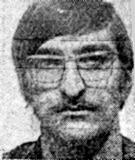
George Geschwendt
Mass murderer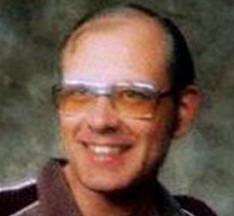 James Huberty
Mass murderer · USA · 1984
James Oliver Huberty was a 41-year-old unemployed security guard. He was born i…
21 victims
James Huberty
Mass murderer · USA · 1984
James Oliver Huberty was a 41-year-old unemployed security guard. He was born i…
21 victims
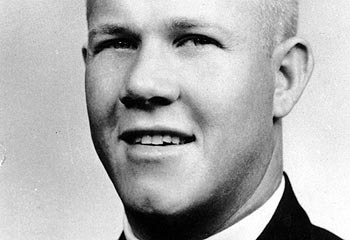 Charles Whitman
Mass murderer · USA · 1966
Charles Joseph Whitman (June 24, 1941 – August 1, 1966) shot and killed 14 peop…
15 victims
Charles Whitman
Mass murderer · USA · 1966
Charles Joseph Whitman (June 24, 1941 – August 1, 1966) shot and killed 14 peop…
15 victims
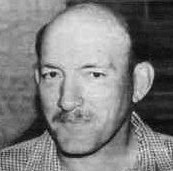 Patrick Henry Sherrill
Mass murderer · USA · 1986
Patrick Henry Sherrill Patrick Henry Sherrill committed suicide by shooting him…
14 victims
Patrick Henry Sherrill
Mass murderer · USA · 1986
Patrick Henry Sherrill Patrick Henry Sherrill committed suicide by shooting him…
14 victims
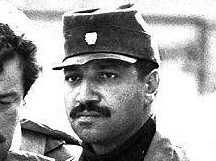 George Emil Banks
Mass murderer · USA · 1982
George Emil Banks was an American mass murderer and a former Camp Hill prison g…
13 victims
George Emil Banks
Mass murderer · USA · 1982
George Emil Banks was an American mass murderer and a former Camp Hill prison g…
13 victims
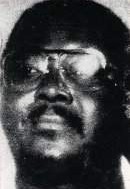 James Edward Pough
Mass murderer · USA · 1971
James Edward Pough (1948 – 18 June 1990) was an American mass murderer. On 18 J…
12 victims
James Edward Pough
Mass murderer · USA · 1971
James Edward Pough (1948 – 18 June 1990) was an American mass murderer. On 18 J…
12 victims
 Christa Pike
Murderer · USA · 1995
Christa Gail Pike was sentenced to death on March 29, 1996. She was the younges…
1 victim
Christa Pike
Murderer · USA · 1995
Christa Gail Pike was sentenced to death on March 29, 1996. She was the younges…
1 victim
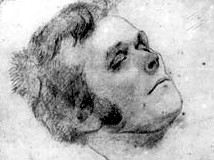 Alexander Pearce
Murderer · Australia · 1822
1819 — Alexander Pearce was sentenced at Armagh in 1819 to penal transportation…
6 victims
Alexander Pearce
Murderer · Australia · 1822
1819 — Alexander Pearce was sentenced at Armagh in 1819 to penal transportation…
6 victims
 Julian Andrew Frank
Mass murderer · USA · 1960
6 January 1960 — National Airlines Flight 2511 exploded and crashed 1-1/2 miles…
33 victims
Julian Andrew Frank
Mass murderer · USA · 1960
6 January 1960 — National Airlines Flight 2511 exploded and crashed 1-1/2 miles…
33 victims
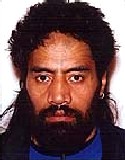 Taffy Hotene
Murderer · New Zealand · 2000
Taffy Hotene was born in Murupara in 1970. He was brought up in a chaotic and a…
1 victim
Taffy Hotene
Murderer · New Zealand · 2000
Taffy Hotene was born in Murupara in 1970. He was brought up in a chaotic and a…
1 victim
 Donald Gene Franklin
Murderer · USA · 1975
Donald Gene Franklin was convicted of capital murder under Tex.Penal Code Ann.…
1 victim
Donald Gene Franklin
Murderer · USA · 1975
Donald Gene Franklin was convicted of capital murder under Tex.Penal Code Ann.…
1 victim
 Melissa Marvin
Homicide · USA · 1999
Melissa Lynn Marvin was a 29-year-old waitress and amateur surfer at the time o…
4 victims
Melissa Marvin
Homicide · USA · 1999
Melissa Lynn Marvin was a 29-year-old waitress and amateur surfer at the time o…
4 victims
- Gender
- male
- Country
- USA
- Location
- Bucks County, Pennsylvania, USA
- Date of birth
- 1953
- Age at first offence
- 23
- Characteristics
- neighborhood disputes
- Victim profile
- John Abt, 49; his wife, Margaret, 48; three of their children, Margie, 19, John Jr., 13, and Cathy, 12; and a family friend, Garson Engle, 20
- Method of murder
- Shooting (.22 caliber gun)
- Date(s) of murder
- March 12, 1976
- Years active
- 1976
- Date of arrest
- March 23, 1976
- Status
-
Life imprisonment
Sentenced to a term of six life sentences on 1978
Parties
- George Geschwendt — defendant
- Joseph M. Ryan — Superintendent (warden)
- Ernest Preate — Attorney General of the State of Pennsylvania
- District Attorney of Bucks County — appellee (name not provided)
- Garson Engle — family friend and victim
- John Abt — victim
- Margaret Abt — victim
- Margie Abt — victim
- John Jr. Abt — victim
- Cathy Abt — victim
Timeline
- Prior to March 12, 1976 — Geschwendt purchased a .22 caliber gun and falsely reported to local police that it was stolen on the day of the purchase.
- March 12, 1976 — after his brother and mother had gone to work, Geschwendt broke into the Abt family's empty home; when the Abts returned, he shot and killed five of them and a boyfriend of one victim.
- 1978 — Geschwendt was convicted of six first degree murders and was sentenced to a term of six life sentences.
- March 21, 1991 — a U.S. District Judge Robert F. Kelly denied Geschwendt’s petition for habeas corpus.
- January 4, 1983 — the state Supreme Court refused to grant a new trial to Geschwendt.
- September 5, 1991 — appeal was argued.
- March 21, 1991 — Geschwendt appealed from the district court judgment denying habeas corpus.
- May 6, 1992 — appeal was reargued.
- June 18, 1992 — the Third Circuit decided the appeal.
- June 19, 1992 — a divided federal appeals court ruled that Geschwendt received a fair trial 15 years earlier and should not be retried.
Background
George Geschwendt was convicted in 1978 of six first degree murders committed in Bucks County, Pennsylvania, and he was serving six consecutive life terms.
Geschwendt lived in Bensalem Township, directly across the street from a residence occupied by the Abt family.
The case was described as a mass murder involving the Abt family and a family friend.
The offence
Geschwendt broke into the Abt family's empty home on March 12, 1976, waited for the Abts to return, and using the .22 caliber gun he had falsely reported stolen, shot and killed:
- John Abt (49)
- Margaret Abt (48)
- Margie Abt (19)
- John Jr. Abt (13)
- Cathy Abt (12)
- Garson Engle (20)
The killing also included a boyfriend of one of the victims.
Geschwendt had intended to kill the entire family, but he left before he completed his mission because he was alarmed by the constant ringing of the telephone.
After the killings, Geschwendt attempted to conceal his role by disposing of his clothes and the gun.
When questioned, Geschwendt gave a complete confession which he had never repudiated.
Geschwendt was indicted for six first degree murders.
Investigation
Prior to the break-in, Geschwendt purchased a .22 caliber gun and falsely reported it to local police as stolen on the day of the purchase.
Arrest
No arrest facts were stated in the provided material.
Trial
Structure of the trial
The case was tried to a jury in two stages:
- A culpability stage to determine the offenses, if any, Geschwendt had committed.
- A penalty phase.
Defence and mental condition issue
The defense was insanity. Geschwendt did not deny committing the homicides. He attempted to establish that he was insane using expert testimony, while the Commonwealth countered with expert testimony that Geschwendt was sane.
Jury instructions and alternatives
The trial court defined the elements of first degree murder, including the specific intent to take life, and instructed the jury that Geschwendt could be convicted of first degree murder if the Commonwealth proved beyond a reasonable doubt that the elements had been satisfied.
The court also instructed the jury that it could convict Geschwendt of third degree murder if he suffered from a mental defect rendering him incapable of forming the requisite intent for first degree murder, and it charged the jury it could convict Geschwendt of voluntary manslaughter.
The trial court instructed the jury that if it found Geschwendt guilty of first degree murder, it would deliberate again to decide whether to sentence him to life imprisonment or death. The court also instructed the jury that Geschwendt could be found not guilty.
Regarding insanity, the court gave detailed instructions:
- The Commonwealth bore the burden of proving Geschwendt guilty beyond a reasonable doubt.
- The Commonwealth bore the burden of proving Geschwendt sane beyond a reasonable doubt.
- If the Commonwealth failed to prove Geschwendt sane beyond a reasonable doubt, the jury should find him not guilty. The court told the jury these points multiple times.
Geschwendt objected because the jury could find him not guilty only by returning a general verdict, whereas he urged he was entitled to a charge allowing a specific verdict of not guilty by reason of insanity. The trial court refused the specific verdict charge.
Following the completion of the evidence on the first phase, Geschwendt was convicted of six counts of first degree murder.
Penalty phase
In the penalty phase, the trial court instructed the jury:
- If it found that the first degree murders were accompanied by at least one aggravating circumstance, and no mitigating circumstance, it was obliged to sentence Geschwendt to death.
- Otherwise, the sentence would be life imprisonment.
The court explained that the Commonwealth could demonstrate an aggravating circumstance by proving beyond a reasonable doubt that Geschwendt broke into the house with the intent to commit murder, and that if Geschwendt formed that intent after he entered, the Commonwealth would not have proven an aggravating circumstance.
The court reminded the jury that Geschwendt, who was 24 years old at the time of the murders, urged that his mental age and lack of maturity constituted a mitigating circumstance, and it noted that Geschwendt presented evidence on this point from Dr. Strochak.
The court instructed the jury:
"lacked maturity, was young mentally insofar as his age was concerned, you have then determined that a mitigating circumstance exists, and if you so determine, then the punishment must be life imprisonment."
During deliberations, in response to a question from the jury, the court instructed it that if there was a mitigating circumstance, the sentence was to be life imprisonment even if there was an aggravating circumstance.
The jury returned six death penalty verdicts.
A jury charge excerpt regarding third degree murder included the following:
"Now, if you conclude that the Commonwealth has sustained its burden of proof and has demonstrated by the degree of proof required that the defendant was sane at the time the crimes were committed, and you find that he did commit such crimes and in such degree as you may determine, you still have an additional problem.
This problem, however, only arises and comes into play if you have previously concluded that the defendant was guilty of first degree murder. You will recall that I told you earlier that the main distinction between murder in the first degree and that of third degree lies in the specific intent to take life being required in the former. Such intent to take life supplies the quality of wilfulness, deliberation and premeditation, otherwise essential to murder in the first degree. If you conclude that the defendant did not possess the capacity to form this specific intent to take life, due to a mental defect or disease, that is to say, that he did not possess the capacity to enter into a deliberately premeditated killing, then for those reasons you would not be justified and could not return a conviction of murder in the first degree against him for there would be no rhyme or reason, no logical escape from a proposition that a person cannot be guilty of wilful, deliberate and premeditated killing when he did not act deliberate [sic], premeditated and was not wilful for he was incapable of mentally doing so. If you find that he did not possess sufficient mental capacity to form this specific intent to kill, but nevertheless the killing did result from his act, and he was sane, then this inability to form such an intent would reduce the killing from first degree murder to third degree murder, and that should be your verdict.
This, again, is for the reason that the Commonwealth must prove beyond a reasonable doubt that the defendant possessed the mental capacity to form the required intent to kill as is required for first degree murder.
On this problem, namely, whether the defendant possessed a mind capable of forming the specific intent to kill, as with the defense of insanity, you should as I have just told you look to and at all of the testimony both of lay witnesses and expert witnesses and from that testimony make your determination as to whether George Geschwendt was sane, and if so, was he capable of forming the intent which we have just outlined. App. at 108-10 (emphasis added)."
Sentencing
After Geschwendt’s trial, the Supreme Court of Pennsylvania invalidated the death penalty in Commonwealth v. Moody, 476 Pa. 223, 382 A.2d 442 (1977), with cert. denied in 438 U.S. 914, 98 S.Ct. 3143, 57 L.Ed.2d 1160 (1978).
Accordingly, Geschwendt was resentenced to life imprisonment.
Appeals
Direct appeal and state supreme court
Geschwendt’s conviction and modified sentence were affirmed on direct appeal.
The Supreme Court of Pennsylvania affirmed in Commonwealth v. Geschwendt, 500 Pa. 120, 454 A.2d 991 (1982).
A three-justice plurality rejected Geschwendt’s argument regarding refusal to instruct that a verdict of not guilty by reason of insanity might lead to psychiatric treatment and commitment, reasoning that Commonwealth v. Mulgrew, 475 Pa. 271, 380 A.2d 349 (1977) changed the law after Geschwendt’s trial, but the change was not retroactive.
In Mulgrew, the Pennsylvania Supreme Court held:
"when insanity is raised as a possible defense to criminal charges, a jury must be instructed concerning the possible psychiatric treatment and commitment of the defendant after the return of a verdict of not guilty by reason of insanity."
Three justices dissented, maintaining Geschwendt was entitled to a specific charge that he could be found not guilty by reason of insanity, concluding that there had been a requirement in Pennsylvania since 1860 for a specific verdict when sanity was in issue.
Petition for habeas corpus and federal appeal (Third Circuit)
Geschwendt filed a petition for habeas corpus arguing his due process rights were violated by the trial court’s refusal to charge the jury that it could be found not guilty by reason of insanity.
After counsel was appointed, he moved to amend to argue ineffective assistance on his direct appeal for failing to preserve that the trial court erred in refusing the instruction about not guilty by reason of insanity.
A magistrate judge issued a report dated February 4, 1991, recommending habeas relief because Pennsylvania law required the instruction at the time of trial; the magistrate judge reasoned the refusal violated Geschwendt’s due process rights under the United States Constitution.
The district court rejected the recommendation, holding Pennsylvania did not require such instruction as standard practice until after Mulgrew, and determined that because Mulgrew was decided after Geschwendt’s trial he had not been denied due process. The district court also noted:
"a telling point that the jury returned a verdict of death on the same day it found him guilty."
The district court did not address the ineffective counsel argument.
Geschwendt appealed the district court’s judgment denying habeas corpus.
The Third Circuit affirmed the judgment, deciding that Geschwendt did not obtain federal habeas relief for the refusal to charge the not guilty by reason of insanity option.
The Third Circuit panel included:
- STAPLETON, GREENBERG, and ALDISERT (Circuit Judges)
- SLOVITER, Chief Judge, and BECKER, STAPLETON, MANSMANN, GREENBERG, SCIRICA, COWEN, NYGAARD, ALITO, ROTH, and ALDISERT (Circuit Judges) listed in the provided materials The decision was written by GREENBERG, Circuit Judge.
A dissent by ALDISERT, Circuit Judge stated that the appeal involved whether Geschwendt had been deprived of liberty without due process because the jury was not given the option of finding him not guilty by reason of insanity, and it argued the judgment should be reversed and the petition granted.
Other procedural developments mentioned
- A U.S. District Judge Robert F. Kelly denied a new trial petition on March 21, 1991 in connection with the habeas corpus proceedings.
- The state Supreme Court refused to grant a new trial on January 4, 1983.
- A petition for a new trial was denied by a U.S. District Judge, and separate federal appellate decisions addressed due process and jury-instruction issues.
Outcome
The Third Circuit affirmed the district court’s March 21, 1991, denial of habeas corpus relief.
A divided federal appeals court ruling stated that Geschwendt received a fair trial and should not be retried.
Other details
- Geschwendt was described as an unemployed landscaper.
- Geschwendt was reported as a mass murderer in southeastern Pennsylvania history.
- Geschwendt was alleged to have intended to kill the entire family but left when alarmed by the ringing of the telephone.
- Geschwendt concealed his role by disposing of his clothes and the gun, but he then gave a complete confession that he never repudiated.
- Geschwendt was 39 at the time referenced in the materials relating to his appeal proceedings.

Spotted an error, or have more information about this case?