Ludwig Tessnow
Murderer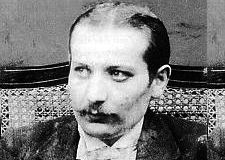 Mathias Kneibl
Murderer · Germany · 1900
Mathias Kneißl was known as Robber Kneißl (in German Räuber Kneißl , in Austro-…
2 victims
Mathias Kneibl
Murderer · Germany · 1900
Mathias Kneißl was known as Robber Kneißl (in German Räuber Kneißl , in Austro-…
2 victims
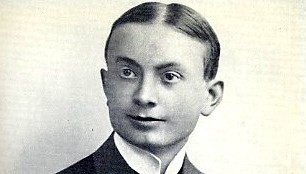 Karl Hau
Murderer · Germany · 1906
Karl Hau was accused of the murder of his mother-in-law, Frau Josephine Molitor…
1 victim
Karl Hau
Murderer · Germany · 1906
Karl Hau was accused of the murder of his mother-in-law, Frau Josephine Molitor…
1 victim
 Walter Leroy Moody
Murderer · USA · 1989
Walter Leroy Moody was sentenced to death in Alabama in 1997. Walter Leroy Mood…
2 victims
Walter Leroy Moody
Murderer · USA · 1989
Walter Leroy Moody was sentenced to death in Alabama in 1997. Walter Leroy Mood…
2 victims
 Conan Wayne Hale
Murderer · USA · 1995
Conan Wayne Hale was sentenced to death on May 29, 1998. On automatic and direc…
3 victims
Conan Wayne Hale
Murderer · USA · 1995
Conan Wayne Hale was sentenced to death on May 29, 1998. On automatic and direc…
3 victims
 David Ray Duren
Murderer · USA · 1983
David Ray Duren David Ray Duren was executed by electrocution in Alabama on Jan…
1 victim
David Ray Duren
Murderer · USA · 1983
David Ray Duren David Ray Duren was executed by electrocution in Alabama on Jan…
1 victim
 Nicole Abusharif
Murderer · USA · 2007
Nicole M. Abusharif was an American woman convicted in the murder of Rebecca Kl…
1 victim
Nicole Abusharif
Murderer · USA · 2007
Nicole M. Abusharif was an American woman convicted in the murder of Rebecca Kl…
1 victim
 Tyler Peterson
Mass murderer · USA · 2007
Tyler Peterson committed suicide by shooting himself the same day victims. Tyle…
6 victims
Tyler Peterson
Mass murderer · USA · 2007
Tyler Peterson committed suicide by shooting himself the same day victims. Tyle…
6 victims
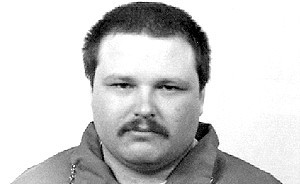 William Benirschke
Murderer · USA · 1988
William Benirschke had depression and antisocial personality, and he had drug a…
2 victims
William Benirschke
Murderer · USA · 1988
William Benirschke had depression and antisocial personality, and he had drug a…
2 victims
- Gender
- male
- Country
- Germany
- Location
- Lower Saxony/Rugen Island, Germany
- Date of birth
- 1872
- Age at first offence
- 26
- Characteristics
- mutilation, rape
- Victim profile
- Two young girls, aged 7 and 10 years / Hermann Stubbe, 8, and Peter Stubbe, 6
- Method of murder
- St abbing with knife
- Date(s) of murder
- September 9, 1898/July 1, 1901
- Years active
- 1898–1901
- Date of arrest
- —
- Status
-
Executed
Executed in 1904
Case record: Ludwig Tessnow
Background
Ludwig Tessnow was a carpenter from Baabe.
The offence
In 1895, Tessnow’s first known killings occurred in Lechtingen, where he abducted and killed two young girls. He left their bodies dismembered and butchered in some nearby woods.
In 1901, authorities focused on Tessnow after the murders of two brothers on the island of Rugen. The victims were Hermann Stubbe, age 8, and Peter Stubbe, age 6. The boys set out to play and failed to return. Searchers later found dismembered body parts scattered among the woods, and the eviscerated remains of both children.
A later account also described additional details of the boys’ remains, stating that “when their heads were found, the skulls were shattered, and from the eight-year-old, the heart was missing,” and that a blood-stained stone proved to be the murder weapon.
Tessnow had also been implicated in earlier killings involving two young girls found in the woods near the location of the boys’ murders. Those girls had been butchered and disemboweled in a manner described as similar to the boys.
Investigation
A witness reported seeing a man by the name of Ludwig Tessnow conversing with the children on the day of their disappearance.
Police interrogated Tessnow and searched his home. The search produced recently-laundered clothing and shoes covered in dark stains.
Tessnow denied involvement and claimed that the stains were from wood dye, a substance he said he used in his carpentry work. Authorities initially left him alone after he could not be disproved and after other incriminating evidence was not found.
After investigators later recalled a similar earlier crime, they revisited the circumstances around the 1895 killings. They also noted that Tessnow had been recently identified as the man who had hacked a local farmer’s sheep to death.
Police had the stains tested using a method developed by biologist Paul Uhlenhuth. The method could distinguish blood from other substances, such as wood dye, and could also mark the difference between human and animal blood.
Uhlenhuth examined Tessnow’s clothing and the blood-stained stone. The results found dye and detected traces of both sheep and human blood.
Arrest
Police arrested Tessnow after the blood test results returned positive for both human and sheep blood.
Tessnow had also been brought in for a line-up after a farmer reported that a man who looked like Tessnow fled from the farmer’s field, leaving behind seven slaughtered sheep. The farmer had no trouble picking Tessnow as the man who ran from his field.
Trial
Tessnow was charged, tried, and convicted.
Sentencing
Tessnow was executed in 1904.
Appeals
No appeals were described.
Outcome
Tessnow’s conviction led to his execution in 1904.
Aftermath
A later status narrative stated that Tessnow was allegedly beheaded in the courtyard of the Greifswald prison in 1904.
Other details
The case was also described as involving “the brutal murder and dismembering of two young boys on the island of Rugen, off the coast of Germany,” and that authorities organized a search after the boys failed to return.
A biologist’s test results were presented as a turning point in forensic science, marking a historical development in distinguishing wood dye from blood and differentiating human blood from animal blood.
Spotted an error, or have more information about this case?