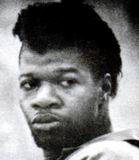
Christopher Scarver
Murderer Brian Kevin Rosenfeld
Murderer · USA · 1985
Brian Kevin Rosenfeld Brian Kevin Rosenfeld was sentenced to three concurrent l…
23 victims
Brian Kevin Rosenfeld
Murderer · USA · 1985
Brian Kevin Rosenfeld Brian Kevin Rosenfeld was sentenced to three concurrent l…
23 victims
 Yahweh ben Yahweh
Murderer · USA · 1980
Yahweh ben Yahweh was born and legally named Hulon Mitchell Jr. (October 27, 19…
23 victims
Yahweh ben Yahweh
Murderer · USA · 1980
Yahweh ben Yahweh was born and legally named Hulon Mitchell Jr. (October 27, 19…
23 victims
 Russell Ellwood
Murderer · USA · 1991
Russell Ellwood was a former taxi driver. Authorities suspected him of killing…
20 victims
Russell Ellwood
Murderer · USA · 1991
Russell Ellwood was a former taxi driver. Authorities suspected him of killing…
20 victims
 Robert Martines Perez
Murderer · USA · 1994
Name: Robert Martines Perez · Other name used in proceedings: Robert Martinez P…
15 victims
Robert Martines Perez
Murderer · USA · 1994
Name: Robert Martines Perez · Other name used in proceedings: Robert Martinez P…
15 victims
 William Eugene Thompson
Murderer · USA · 1974
William Eugene Thompson (DOB 7-26-51) was sentenced to death on March 18, 1998.…
2 victims
William Eugene Thompson
Murderer · USA · 1974
William Eugene Thompson (DOB 7-26-51) was sentenced to death on March 18, 1998.…
2 victims
 Douglas Crabbe
Mass murderer · Australia · 1983
Douglas John Edwin Crabbe (b. 1948) was sentenced to five consecutive terms of…
5 victims
Douglas Crabbe
Mass murderer · Australia · 1983
Douglas John Edwin Crabbe (b. 1948) was sentenced to five consecutive terms of…
5 victims
 Tamara Samsonova
Serial killer · Russia · 1995
Tamara Samsonova (Russian: Тамара Самсонова; born 5 February 1947) was a Russia…
11 victims
Tamara Samsonova
Serial killer · Russia · 1995
Tamara Samsonova (Russian: Тамара Самсонова; born 5 February 1947) was a Russia…
11 victims
 Alexander Letkemann
Murderer · USA · 2007
Alexander Letkemann was 18 years old. He of Westland. Jean Pierre Orlewicz was…
1 victim
Alexander Letkemann
Murderer · USA · 2007
Alexander Letkemann was 18 years old. He of Westland. Jean Pierre Orlewicz was…
1 victim
- Gender
- male
- Country
- USA
- Location
- Wisconsin, USA
- Date of birth
- J uly 6, 1969
- Age at first offence
- 21
- Characteristics
- —
- Victim profile
- Steve Lohman, 27 / Jeffrey L. Dahmer and Jesse Anderson (fellow inmates)
- Method of murder
- Shooting / Beating with a bar from a weight machine
- Date(s) of murder
- June 1, 1990 / November 28, 1994
- Years active
- 1990–1994
- Date of arrest
- —
- Status
-
Life imprisonment
Sentenced to three life sentences without parole
Background
Christopher Scarver (born July 6, 1969) was a convicted American murderer. While incarcerated, he killed Jeffrey L. Dahmer and Jesse Anderson.
Scarver was the second son of five children born in Milwaukee, Wisconsin. He attended James Madison High School and dropped out in the 11th grade. When his mother forced him to leave the house, he began to drink beer and smoke marijuana.
Scarver was hired as a trainee carpenter in a Youth Conservation Corps job program. He said that he had been promised by a supervisor that upon completion of this program he would be hired full time, but the supervisor was dismissed and his full time position never materialized. Scarver blamed the site manager, John P. Feyen, for his troubles. He began planning revenge after losing his “job” at the program.
Scarver was described as mentally ill in prison and as suffering from messianic delusions. He was diagnosed with schizophrenia and was known as a mentally ill inmate who took anti-psychotic medications.
The offence
1 June 1990 robbery and shootings
On 1 June 1990, Scarver went to the training program office, expecting to find only Feyen there, but saw Steve Lohman, a program worker. Scarver ordered Lohman at gunpoint to lay face down on the floor and demanded money from Feyen.
When Feyen showed him he only had $15 in his wallet, Scarver shot Lohman in the head. Scarver then shot Lohman two more times before forcing Feyen to write the check for $3,000. Scarver shot Lohman again in the head before Feyen was able to break free and run into the street. Scarver took the check, $15 in cash, and the manager’s credit card, and then ran away.
According to authorities, Scarver said:
- “Do you think I'm kidding Mr. Hitler? I need more money”
- “I need more money.”
- “Now, do you think I'm kidding?”
- “I need more money.”
Scarver shot Lohman four times in the head.
Prison killings of Jeffrey L. Dahmer and Jesse Anderson (1994)
On the morning of November 28, 1994, Scarver was assigned to a work detail with Jeffrey Dahmer and Jesse Anderson that included cleaning the prison gymnasium bathroom.
When guards left the three unsupervised, Scarver beat Dahmer and Anderson with a bar from a weight machine; the beating was sometimes described as being with a broom handle and others a metal bar. When Scarver returned to his cell early, a guard asked him why he was not still working.
Scarver explained:
- “God told me to do it. You will hear about it on the 6 o'clock news. Jesse Anderson and Jeffrey Dahmer are dead”.
Two guards found the bodies of Dahmer and Anderson during that time. Dahmer was pronounced dead on his way to the hospital from extensive head injuries, and Anderson died two days later.
Scarver received two more life sentences for these murders. At the time, he was serving a sentence for two counts of first-degree murder.
Investigation and arrest
Scarver was arrested a couple of hours after the 1 June 1990 robbery shootings while he sat on the stoop of his girlfriend’s apartment building. Police found the check, the credit card, and the .25-caliber semiautomatic pistol that had been used in the slaying in his pockets.
Scarver later told arresting officers that he had planned to turn himself in because he knew he had done wrong; this was testified to at his 1992 trial by a police officer.
In interviews with a court-appointed psychiatrist, Scarver said that the voices had told him he was the son of God and “told me to do what I'm here for today.” He said the voices included a family consisting of “a woman, a man, a little girl and a boy” who told him:
- “everything was going to be all right and it was meant to happen like this.”
- “I'm the chosen one.”
Trial
1992 trial for the 1 June 1990 shootings
Scarver was convicted and sentenced to life in prison and sent to the Columbia Correctional Institution in Portage, Wisconsin in 1992. In the trial, psychiatrists disagreed on whether he was competent to stand trial. Scarver pleaded not guilty by reason of mental disease.
At his trial, a dispute occurred about whether a prosecution psychiatrist who had testified at Dahmer’s trial would be allowed to cite that testimony in establishing Scarver’s expertise. Steven Kohn, Scarver’s lawyer, said that mentioning Dahmer would prejudice Scarver. Kohn said:
- “I think it's fair to say emotions in the community are high.”
- “I think it's fair to say,”
- “emotions in the community are high.” He also said:
Assistant District Attorney Douglas J. Simpson of Milwaukee County replied:
- “Absolutely not. The cases have nothing to do with each other.”
The judge asked whether the psychiatrist was going to compare Scarver and Dahmer, and Simpson responded:
- “Absolutely not.
Scarver told a court-appointed psychiatrist several months after the shooting:
- “I don't know what came over me,” and:
- “I was never in any trouble with the law, never in a fight with anyone.”
In a 1990 interview with the court-appointed psychiatrist William Crowley, Scarver expected to spend the rest of his life in prison. When asked if he thought it was a just fate, Scarver said:
- “Nothing white people do to blacks is just.”
Dr. Crowley testified in court:
- “He began to brood about it. He felt that there were racial overtones involved.”
Scarver also said that he did not want to go to a mental hospital because the doctors would turn him into a “vegetable” and that the voices told him to go to prison instead.
Sentencing
Scarver was sentenced to life in prison for the 1 June 1990 shootings. On November 28, 1994, he was 25 years old and was serving a sentence for two counts of first-degree murder. He later received two more life sentences for the prison murders of Dahmer and Anderson, resulting in three life sentences without parole.
Appeals and civil rights litigation
In 2005, Scarver brought a civil rights suit against the officials of the Wisconsin Secure Program Facility (“Supermax”), arguing that he had been subjected to cruel and unusual punishment contrary to his constitutional rights.
A district judge dismissed the suit against several defendants and ruled that the actions of the remaining officials could not be considered unlawful. The district judge also granted summary judgment for the remaining defendants on qualified immunity grounds, reasoning that settled law did not establish the unlawfulness of their behavior. Scarver appealed to the U.S. Court of Appeals, and the decision was upheld in 2006.
The case was styled:
- Christopher Scarver, Plaintiff-Appellant, v. Jon Litscher, et al., Defendants-Appellees. United States Court of Appeals for the Seventh Circuit No. 05-2999, argued December 8, 2005, and decided January 18, 2006.
The appeals text included a definition for “Supermax”:
- “Supermax” actually is a generic term for “facilities or units designated for inmates who have been disruptive or violent while incarcerated and whose behavior can be controlled only by separation, restricted movement, and limited direct access to staff and other inmates, thereby excluding routine disciplinary segregation, protective custody, or other routine purposes.”
The appeals narrative described conditions at Supermax, including Level One conditions involving windowless single-person cells locked for all but four hours a week, illuminated 24 hours a day, no air-conditioning, extreme heat, restrictions on mechanical or electronic possessions, and limited allowed property.
The appeals narrative described how these conditions interacted with Scarver’s anti-psychotic drugs, including increased risk of heat stroke, dangerously low blood pressure, and “neuroleptic malignant syndrome (NMS).” It also described attempts at suicide, including:
- taking an overdose of anti-psychotic pills,
- swallowing a large number of Tylenol tablets, and other self-harm, including banging his head against the cell wall and cutting his head with a razor and cutting his wrists.
The appeals narrative quoted a denial of a promotion due to behavior:
- “the incident of you banging your head on the wall and other bizarre behavior is not appropriate. We highly recommend that you cooperate w/ clinical services so that advancement can be considered in the future.”
The appellate decision affirmed the judgment:
- “AFFIRMED.”
Outcome
Scarver was convicted for the 1 June 1990 robbery shootings and sentenced to life in prison; he later received two more life sentences without parole for killing Jeffrey L. Dahmer and Jesse Anderson on November 28, 1994.
Other details
Mental health and prison transfers
While imprisoned, Scarver complained of experiencing messianic delusions and was diagnosed with schizophrenia.
The appeals narrative described that Scarver twice attempted suicide while at Columbia Correctional Institution, including one attempt by setting fire to himself.
The appeals narrative described a transfer after the two prison murders, including a brief sojourn in the U.S. Medical 974 Center for Federal Prisoners in Springfield, Missouri, for psychiatric evaluation, followed by transfer to a federal prison at Florence, Colorado. The narrative described audio-tapes to help quiet voices, work, and daily contact with other inmates in recreation yard “without incident.” It also described that Scarver was returned to Wisconsin at the request of one of the defendant officials and interned in the Supermax facility in Boscobel, Wisconsin, and later sent back to Colorado to a state prison.
The appeals narrative included statements about the staff at the state prison not regarding him as a management problem.
Suspected racial motivation and disputed narratives
Many believe the killings were racially related. The narrative asserted that Scarver was black and that most of Dahmer’s 17 victims were black and that Anderson blamed a crime he committed against his wife on two black men in a fabricated story. The narrative also stated that prison officials said there was no evidence that the attacks on Dahmer and Anderson were racially motivated, while noting that court records stated Scarver had previously said he was a victim of racism.
The narrative also described claims by others that contradicted parts of the official story. A report from “Robert,” a purported former inmate at the prison where Dahmer was murdered, contradicted portions of the official story by stating that Dahmer was dead before the ambulance arrived and that the guards from that area were all in the bathroom while Dahmer was murdered, suggesting “an inside job” and that Scarver received $100 compensation.
An internet website, findadeath.com, included statements from a former inmate at the prison where Dahmer was murdered saying that guards had “mysteriously” vanished on the day Dahmer was murdered, and that guards “never” left the area where Dahmer worked, but on that day they vanished for a long time.
References to Dahmer-related culture
The narrative stated that death metal band Macabre made an eponymous song about Scarver for their concept album Dahmer.
Other quoted statements from the proceedings
A psychiatrist’s testimony included:
- “God told me to do it.” and related statements: It also included the statement:
- “I don't know what came over me,” and the “chosen one” statements:
- “I'm the chosen one.”
Time and place details mentioned in the narrative
Scarver was sent to the Columbia Correctional Institution in Portage, Wisconsin. The prison was about 40 miles north of Madison in the narrative. The Supermax facility was in Boscobel, Wisconsin. Florence, Colorado was described as a secure prison in the federal system. The U.S. Medical 974 Center for Federal Prisoners was in Springfield, Missouri.
Association with other murders
The narrative stated that Dahmer was the “notorious Jeffrey Dahmer— the cannibal murderer of 17 young men.” It also stated that Scarver was known as hearing voices constantly, and that he claimed God ordered him to commit the murders.

Spotted an error, or have more information about this case?