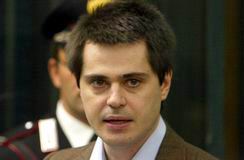
Giovanni Scattone
Murderer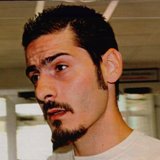 Andrea Volpe
Murderer · Italy · 2004
The Beasts of Satan were a suspected satanic cult in Italy. Members of this gro…
3 victims
Andrea Volpe
Murderer · Italy · 2004
The Beasts of Satan were a suspected satanic cult in Italy. Members of this gro…
3 victims
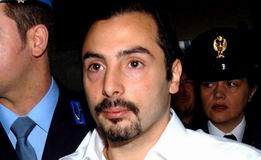 Nicola Sapone
Murderer · Italy · 2004
Nicola Sapone was one of the members of the suspected satanic cult “The Beasts…
3 victims
Nicola Sapone
Murderer · Italy · 2004
Nicola Sapone was one of the members of the suspected satanic cult “The Beasts…
3 victims
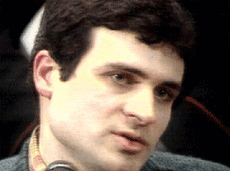 Luigi Chiatti
Murderer · Italy · 1992
Luigi Chiatti was an Italian serial killer. He was born Antonio Rossi to a 24-y…
2 victims
Luigi Chiatti
Murderer · Italy · 1992
Luigi Chiatti was an Italian serial killer. He was born Antonio Rossi to a 24-y…
2 victims
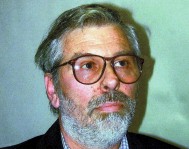 Michele Profeta
Murderer · Italy · 2001
Michele Profeta was described as a serial killer of Padua. He was said to have…
2 victims
Michele Profeta
Murderer · Italy · 2001
Michele Profeta was described as a serial killer of Padua. He was said to have…
2 victims
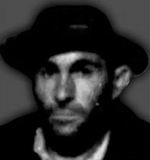 Ernesto Picchioni
Murderer · Italy · 1944
March 12, 1949 — He was sentenced to life in prison. · 2016 — The case record l…
16 victims
Ernesto Picchioni
Murderer · Italy · 1944
March 12, 1949 — He was sentenced to life in prison. · 2016 — The case record l…
16 victims
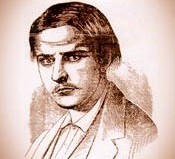 Vincenzo Verzeni
Murderer · Italy · 1869
Vincenzo Verzeni was born in Bettanuco, in the Bergamasco region, in 1849. He m…
12 victims
Vincenzo Verzeni
Murderer · Italy · 1869
Vincenzo Verzeni was born in Bettanuco, in the Bergamasco region, in 1849. He m…
12 victims
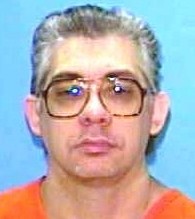 George Michael Hodges
Murderer · USA · 1987
George Michael Hodges was sentenced to death on August 10, 1989. · 01/08/87 — A…
1 victim
George Michael Hodges
Murderer · USA · 1987
George Michael Hodges was sentenced to death on August 10, 1989. · 01/08/87 — A…
1 victim
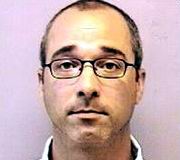 Mark Winger
Murderer · USA · 1995
Mark Winger was born November 26, 1962 and worked as a former Springfield, Illi…
2 victims
Mark Winger
Murderer · USA · 1995
Mark Winger was born November 26, 1962 and worked as a former Springfield, Illi…
2 victims
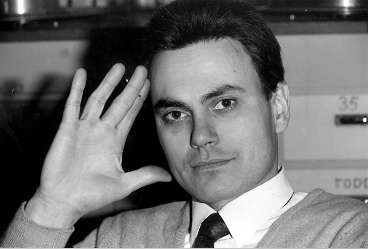 John Ausonius
Murderer · Sweden · 1991
John Ausonius (born Wolfgang Alexander Zaugg on July 12, 1953), also known in t…
1 victim
John Ausonius
Murderer · Sweden · 1991
John Ausonius (born Wolfgang Alexander Zaugg on July 12, 1953), also known in t…
1 victim
 Benjamin Ng
Mass murderer · USA · 1983
Benjamin Ng participated in the killings at the Wah Mee gambling club in Seattl…
3 victims
Benjamin Ng
Mass murderer · USA · 1983
Benjamin Ng participated in the killings at the Wah Mee gambling club in Seattl…
3 victims
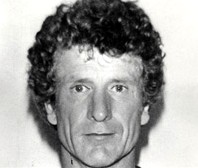 Arthur Hutchinson
Murderer · United Kingdom · 1983
Arthur Hutchinson was an English murderer and rapist who committed three murder…
3 victims
Arthur Hutchinson
Murderer · United Kingdom · 1983
Arthur Hutchinson was an English murderer and rapist who committed three murder…
3 victims
 Daniel Wayne Cook
Murderer · USA · 1987
Daniel Wayne Cook worked at a restaurant in Lake Havasu City, Arizona, and shar…
2 victims
Daniel Wayne Cook
Murderer · USA · 1987
Daniel Wayne Cook worked at a restaurant in Lake Havasu City, Arizona, and shar…
2 victims
- Gender
- male
- Country
- Italy
- Location
- Rome, Italy
- Date of birth
- February 7, 1968
- Age at first offence
- 29
- Characteristics
- murder for hire
- Victim profile
- Marta Russo, 22
- Method of murder
- Shooting
- Date(s) of murder
- May 9, 1997
- Years active
- 1997
- Date of arrest
- June 14, 1997
- Status
-
Imprisoned
Convicted to involuntary manslaughter; sentenced to seven years in prison in June 1999
Background
Giovanni Scattone was accused in relation to the killing of Marta Russo, a 22-year-old law student at the Faculty of Law at the Sapienza University of Rome. Russo was killed within the university grounds, and her death became the centre of a complex court case that drew huge media attention.
Giovanni Scattone was described as a 31-year-old junior lecturer in the legal philosophy department of Rome's La Sapienza University. He was described as not having a criminal record and as having no reason to murder Marta Russo. He was described as "exceptionally intelligent with brilliant career prospects" and as having big blue eyes and a fleshy baby face, with an uncool Seventies haircut and a shy manner. He denied the allegations and stated: "I did not commit any murder, voluntary or involuntary." He also said: "If I had done, I would have said so immediately and avoided a year and a half in jail. It was the first thing they proposed to me after my arrest."
Salvatore Ferraro was described as a 32-year-old junior lecturer in the legal philosophy department of Rome's La Sapienza University. Like Scattone, he was described as not having a criminal record and as having no reason to murder Marta Russo. He was described as more talkative, preppy-looking, clean-cut, extroverted, and known to friends as Sasa.
Jolanda Ricci was a fellow law student with whom Marta Russo was walking at the time of the shooting.
Donato, Marta Russo's father, was identified as a physical education teacher. Aureliana was identified as Marta Russo's mother. Giorgio Ferraro was identified as Salvatore Ferraro's older brother.
Giovanni Scattone's father was identified as Giuseppe Scattone, a 72-year-old retired engineer with a passion for art and languages, who said he believed Giovanni was framed.
The offence
On 9 May 1997 at 11.35, a 0.22 calibre bullet hit Marta Russo while she walked with a friend on the university's grounds. The shooting occurred in a driveway located between the faculties of Statistical Sciences, Law and Political Science. Marta Russo was transported to the nearby Policlinico Umberto I but died on May 14 without regaining consciousness.
An autopsy showed the bullet had entered Marta's head from behind and on the left. This direction corresponded with toilets on the ground floor, frequented by hundreds of people per day. The area near the scene included busy university grounds and an alley dividing the Law and Political Science faculties. The scene where Marta Russo fell was described as a narrow lane between faculties, and separately as a walkway between two four-storey buildings.
Forensic tests showed traces of gunpowder on the sill of a window on the second floor, in a reading room in the legal philosophy department. The circle tightened around the group of people who often used that reading room to consult textbooks or use computers.
Investigation
Police searched for motives and attempted to identify the shooter. No weapon was discovered. The gun has never been found and no ordinary motive for the killing was established.
Forensic and ballistics hypotheses focused on the reading room in the legal philosophy department and later expanded to other possible firing locations. Traces of gunpowder were found on the window ledge of Room Six, a reading room in the Department of Legal Philosophy. A laser experiment on the trajectory of the bullet also pointed to Room Six.
Investigators used telephone records to identify a person in the room. Telephone records also identified one person, Gabriella Alletto, in the room. Later events involved disputes about her testimony and video evidence.
A telephone tap on the department head, Bruno Romano, was described as capturing him discouraging his staff from giving evidence. Romano was briefly arrested for obstructing justice, and later the charges were dropped. Bruno Romano was also described as cleared of obstructing justice.
A police complaint described a climate of "omerta", meaning mafia silence.
Telecom records were described as showing a phone call made in Room Six at 11.44, two minutes after Marta was shot. The caller was Maria Chiara Lipari, assistant to the head of department.
Maria Chiara Lipari initially recalled: "at a subliminal level" only that there were other colleagues in the room, but not who they were. After lengthy prodding she put names to faces.
Maria Chiara Lipari's account was that, as she entered Room Six, she saw the department secretary, Gabriella Alletto, and an assistant librarian, Francesco Liparota, and that two researchers, Giovanni Scattone and Salvatore Ferraro, were leaving in a great hurry.
Gabriella Alletto at first denied being near the reading room that morning, but eventually signed a statement confirming Maria Chiara Lipari's account. She then claimed: "I saw Scattone half hidden behind the curtain with a black revolver in his hand and Ferraro alongside with his hands in his hair in a gesture of desperation." She said she had not disclosed these facts until a month after the crime because she had been scared for herself and her two children.
Another witness, Francesco Liparota, was described as a library assistant. He initially denied being present in the reading room but was arrested as an accomplice. He was freed when he agreed to testify against Scattone and Ferraro.
As the investigation progressed, the case faced issues with cooperation among department staff. All department employees were brought in for questioning and were described as reticent, worried about protecting jobs and the department's reputation.
The case was described as attempting to commit a "perfect crime", with prosecutors proposing that the killing was an intellectual dare connected to the notion of a perfect murder without motive. Police and prosecutors argued that the lack of motive itself was treated as a motive.
Investigators were also reported to have considered multiple theories earlier, including hypotheses of mistaken identity and possible external involvement; however, no ordinary motive was found and the weapon was not discovered.
There were indications of prosecutorial misconduct. A magistrates' governing body opened disciplinary proceedings to see whether prosecutors abused their powers. A video shown in court involved Gabriella Alletto and was described as showing prosecutors threatening her with life imprisonment if she incriminated the defendants. In that context, the recording also included threats such as: "You are guilty of murder" and "you will never again come out of prison". A prosecutor was quoted as saying: "What do you think? That murder inquiries are carried out offering tea and little cakes?" Separately, the investigating magistrates were described as defending their tactics with the assertion: "A murder inquiry is not a tea party."
By January 1998, eight university employees were indicted in connection with Marta Russo's murder. Two university researchers were accused of the shooting while others included administrative staff and the dean of the law philosophy institute. The dean and staff were accused of complicity for allegedly withholding evidence or lying to the police. The eighth defendant, student Marianna Marcucci, was alleged to have tried to provide an alibi for Ferraro. Giovanni Scattone, with Salvatore Ferraro, was described as firing the fatal shot with a .22 calibre gun from a lecture room window, and Francesco Liparota was described as a doorman in that set of charges. All three were charged with voluntary homicide in that indicted group, while other defendants were charged with complicity.
In June 1997, Giovanni Scattone was being held by police on suspicion of having shot and killed Marta Russo as she walked on the campus. He was arrested on June 15 after Bruno Romano and two of his assistants had been arrested and charged with "withholding information." Investigators believed the shooting may have been an accident.
Arrest
On 14 June 1997, just over a month after the killing, the police arrested Giovanni Scattone and Salvatore Ferraro. Giovanni Scattone was described as 31 years old, and Salvatore Ferraro as 32 years old.
In later account details, Scattone was described as accused of firing the fatal shot, while Ferraro was accused as an accomplice.
Trial
Commencement and setting
On 20 April 1998, the trial for Marta Russo's murder began in Rome at a packed Corte d'Assise.
The trial was described as lasting over a year, followed by long appeals. Court proceedings were described as attracting huge public interest, including TV and radio broadcasts.
Evidence and witness credibility disputes
In a face-to-face encounter during trial, Gabriella Alletto held that she had seen Scattone at the window with a pistol. Scattone accused her of making it all up.
A secret police video shown in court in September last year was described as presenting Alletto in tears and protesting that she was never in Room Six and swearing she had not been in the reading room at the time. The video was described as showing her in a break during a lengthy night-time interrogation. She signed a full declaration later dated three days after the video. Several defence witnesses were described as saying Alletto had told them she was being pressured to accuse.
The role of Francesco Liparota was described as involving a retraction. In one account, his earlier confession was retracted, and in another, the library assistant testified that he was not in Room Six at the time of the murder and claimed police had terrorised him during custody with the idea he would end up in jail unless he confirmed the magistrates' accusations.
Scientific evidence disputes
At the end of trial, court-appointed experts ruled that particles found on the reading room window ledge were "probably incompatible with gunpowder." Later, a report described criticism of both the chemical analysis and ballistics. The chemicals were described as not necessarily indicative of gunpowder, and only one particle in bags and on the clothes of Scattone and Ferraro could be traced to gunpowder. The experts also criticised a ballistics report indicating the bullet was fired from Room Six, stating the fatal shot could have been fired from six other locations and that the most likely were two bathrooms on the ground floor.
Deliberations and verdict
After a 13-month trial and nearly 30 hours deliberation, the jury was described as releasing its verdict. The jury was described as an eight-member jury.
The court convicted Scattone of involuntary manslaughter for Marta Russo's killing, and sentenced him to seven years in jail. The court also convicted Ferraro and gave a four-year term for aiding and abetting.
The jury reduced the charge from murder to involuntary manslaughter for Scattone and described this as throwing out the perfect crime theory. Ferraro's statements after sentencing included: "There are still people who believe in a non-existent diary of mine in which I supposedly wrote `the blonde passes by and off goes her head.'"
At the same time, the court acquitted other defendants. The court acquitted other defendants, including star witness Gabriella Alletto and usher Francesco Liparota, of aiding and abetting, on the grounds that they had been threatened. Professor Bruno Romano, charged with obstructing justice, was also cleared.
Defence claims and posture
Giovanni Scattone denied committing any murder and maintained innocence. He said: "I did not commit any murder, voluntary or involuntary." and also: "If I had done, I would have said so immediately and avoided a year and a half in jail.
Scattone's defence lawyer was identified as Manfredo Rossi, who slammed the verdict as "a sordid compromise".
Sentencing
In June 1999, Giovanni Scattone was convicted of the involuntary manslaughter of Russo and was sentenced to seven years in prison.
Salvatore Ferraro was given a four-year term for aiding and abetting.
Scattone was described as having been in preventative custody and house arrest for two years by the time of sentencing.
Appeals
After conviction, it was stated that a sentence in Italy would only be enforced once defendants exercised their right to appeal to two higher courts. The appeals court hearing was described as scheduled for this autumn. Following the verdict, it was also said that Scattone and Ferraro were free pending appeals.
The appeals process involved investigations into prosecutorial misconduct and possible threatening of witnesses, and questioning the credibility of main witnesses. The professional body opened disciplinary proceedings regarding allegations of abuse of powers by the prosecutors.
Outcome
Giovanni Scattone was convicted of involuntary manslaughter in connection with the killing of Marta Russo and sentenced to seven years in prison in June 1999.
Salvatore Ferraro was convicted of aiding and abetting Scattone and received a four-year term.
Other defendants were acquitted, including Gabriella Alletto and Francesco Liparota, of aiding and abetting on the grounds that they were threatened. Professor Bruno Romano was cleared of obstructing justice.
Aftermath
The case gained huge attention in the media because of the apparent lack of substantial evidence and motive. Court proceedings were broadcast live on radio. Campus killings were described as unheard of in Italy, leading parents to insist students wear motorcycle helmets while outside. More than 10,000 students attended Russo's funeral, joined by the Prime Minister and other dignitaries, and the Pope sent a message of condolence. Academics were described as being banned from speaking directly to the press.
Marta Russo's father, Donato, said he had fulfilled his promise to her that her assassins would be identified, but he admitted it hurt to see them walk free pending appeals. Marta Russo's mother, Aureliana, said: "We live in a system where only the accused has his rights guaranteed," and she was quoted in the aftermath of the verdict.
A juror defended the decision by stating: "The fact is that we have not managed to understand the motive of this thing. For murder you need a motive and there wasn't one."
Scattone and Ferraro were described as granting an exclusive interview to state television RAI at 8pm, and the interview led to rowdy protests from opposition channels, with critics saying it was offensive to use taxpayers' money to finance convicted killers. The account described the interview payment as "100m lire (pounds 30,000)".
After conviction, it was stated that the two convicted men were free and could go to the beach for the summer, while the appeals process continued.
During the aftermath, the case continued to be framed in terms of the perfect murder theory and divided public opinion about guilt.
Other details
Marta Russo's private life was described as having no history of drug abuse, no outspoken political or religious convictions, and no jilted lovers. She was described as "terribly normal", averagely popular and averagely academic, and as dreaming of becoming a successful lawyer.
In one account, it was described that Marta Russo lived with her father, a physical education teacher, and housewife mother, and student sister in a middle-class suburb of Rome. She was also described as driving a second-hand Fiat and having a regular boyfriend. She was described as sporty and social. Her father was quoted as saying: "I just want the truth."
In the investigation and trial, the authorities were described as having assured the public that Marta's assassins would be caught despite having little to go on.
A hypothesis mentioned that the real target might have been Marta's friend, Jolanda, whose father was described as a senior official in the prison service and had been in charge of Rome's maximum security Rebibbia prison.
The case included reported disputes on evidence location and timing, including a passerby calling an ambulance at 11.42am, while investigators later relied on telecom records showing a phone call at 11.44am. Maria Chiara Lipari was described as making her entry and seeing Scattone and Ferraro leaving in a great hurry.
Giovanni Scattone described an alibi: he said that around 1pm he had left the family apartment in the leafy dormitory suburb of EUR, went to the Literature Faculty not on the main La Sapienza campus to consult a timetable, chatted to a professor who cannot confirm the visit, and picked up a certificate, and he said that earlier at the time of the shooting he was on his way to the main campus.
Salvatore Ferraro's claim was that he was studying at home all morning. His lawyer sister, Teresa, confirmed this. Telecom records were described as showing a phone call to the apartment at 11.30, and it was stated it takes only 12 minutes to walk from there to the Law Faculty.
While detained, Scattone completed a PhD with a thesis on "The legal rights of future generations."
A depiction of the case included commentary about the intellectual challenge of committing a perfect murder and how prosecutors argued for an intellectual dare linked to Nietzsche's theories. This was denied by the accused.
A quote attributed to Scattone’s television interview also included an assertion about his response to the allegations: "If I had done, I would have said so immediately and avoided a year and a half in jail.
The trial included references to notes from Salvatore Ferraro's diary. One diary entry was quoted as: "They have killed Sasa Ferraro who exalts the private war. They found him on the footpath, his eyes rolled back in fear. He no longer looked like a God."
A quote attributed to Ferraro about his diary included: "There are still people who believe in a non-existent diary of mine in which I supposedly wrote `the blonde passes by and off goes her head.'"
A statement from Scattone's father included a claim that police homed in on the Department and those who used the reading room, and that police knew Scattone could shoot because of his military service in the Carabinieri corps. Giuseppe Scattone also said he believed Giovanni could not prove beyond doubt where he was at the time of the shooting.
Manfredo Rossi was identified as Scattone's defence lawyer.
Giovanni Scattone and Salvatore Ferraro were described as being escorted out of court after the verdict and as being taken by police.
The record also referenced a sequence after conviction: at 11pm the two men had parted company, with Scattone described as relaxing in his local pizzeria with friends while Ferraro took a stroll in Piazza Navona after a family dinner.
The case was described as having included speculation about the prosecutors, witness credibility, and investigations into scientific evidence, including challenges to gunpowder compatibility and ballistics location probabilities.
Spotted an error, or have more information about this case?