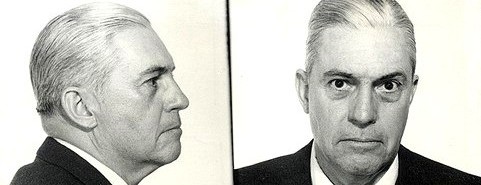
Leonard Ewin Scott
Murderer Gary Duane Rardon
Murderer · USA · 1962
Gary Duane Rardon killed a man in 1962 and later served 4 years for manslaughte…
4 victims
Gary Duane Rardon
Murderer · USA · 1962
Gary Duane Rardon killed a man in 1962 and later served 4 years for manslaughte…
4 victims
 Charles Howard Schmid
Murderer · USA · 1964
Charles Howard Schmid was born on 8 July 1942 and was adopted by Charles and Ka…
3 victims
Charles Howard Schmid
Murderer · USA · 1964
Charles Howard Schmid was born on 8 July 1942 and was adopted by Charles and Ka…
3 victims
 Albert Soleilland
Murderer · France · 1907
Albert Soleilland was sentenced to death on July 24, 1907 for a homicide involv…
1 victim
Albert Soleilland
Murderer · France · 1907
Albert Soleilland was sentenced to death on July 24, 1907 for a homicide involv…
1 victim
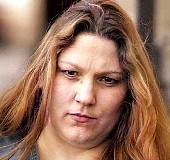 Angela Johnson
Murderer · USA · 1993
Angela Jane Johnson was convicted in federal court of aiding and abetting the m…
5 victims
Angela Johnson
Murderer · USA · 1993
Angela Jane Johnson was convicted in federal court of aiding and abetting the m…
5 victims
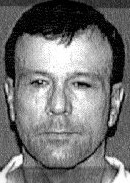 Richard Charles Duncan
Murderer · USA · 1987
Richard Charles Duncan was the longtime homosexual partner and business partner…
2 victims
Richard Charles Duncan
Murderer · USA · 1987
Richard Charles Duncan was the longtime homosexual partner and business partner…
2 victims
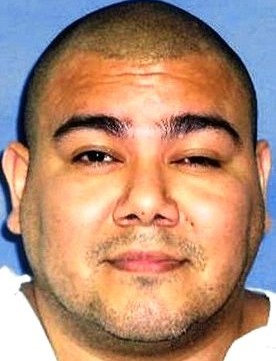 David Martinez
Murderer · USA · 1994
David Martinez was convicted and sentenced to death for the 1994 capital murder…
2 victims
David Martinez
Murderer · USA · 1994
David Martinez was convicted and sentenced to death for the 1994 capital murder…
2 victims
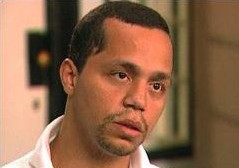 Matias Reyes
Homicide · USA · 1988
Matias Reyes was a juvenile at the time of the events described as part of a se…
2 victims
Matias Reyes
Homicide · USA · 1988
Matias Reyes was a juvenile at the time of the events described as part of a se…
2 victims
 Christopher Hargrave
Murderer · USA · 2002
Christopher Hargrave worked at Jack in the Box from April to May of 2002 and ha…
3 victims
Christopher Hargrave
Murderer · USA · 2002
Christopher Hargrave worked at Jack in the Box from April to May of 2002 and ha…
3 victims
- Gender
- male
- Country
- USA
- Location
- Bel Air, Los Angeles County, California, USA
- Date of birth
- 1897
- Age at first offence
- 58
- Characteristics
- parricide, abuse, alcohol
- Victim profile
- H is wife, Evelyn Throsby Scott, 63
- Method of murder
- Striking on the head with a rubber mallet ?
- Date(s) of murder
- May 16, 1955
- Years active
- 1955
- Date of arrest
- March 9, 1956
- Status
-
Died in custody
Sentenced to life in prison on December 27, 1957; released in 1978; died on August 17, 1987
Case record: Leonard Ewin Scott
Background
Leonard Ewin Scott was married to Evelyn Throsby Scott (née Mumper). They met at a society party and married in Mexico. Evelyn Scott was wealthy and had considerable wealth that she possessed prior to their marriage. Evelyn Throsby Scott had been twice divorced and twice widowed by the time she was 63 and was married to her fifth husband, Leonard Ewing Scott. By the time of her disappearance, she had been twice divorced and twice widowed.
In 1951, after a disagreement with an E.F. Hutton broker, Scott forced his wife to close her account there and liquidate her holdings. Scott told the broker and various acquaintances that he was a skilled investor and would handle things for his wife.
Evelyn dropped out of sight on May 16, 1955, and was never heard from again. Scott later provided various explanations for her disappearance, including that she had been hospitalized or that she had run off, and he said she was under treatment in a distant sanitarium. Friends questioned Evelyn about her health, and Evelyn responded that she was fine. Scott alleged that Evelyn was a heavy drinker and that her alcohol abuse was becoming more problematic, and he told friends that eventually she would have to be hospitalized. Scott hinted that Evelyn was ill and that he was moving her to a sanitarium in Baltimore or New York City. Scott continued to live in the Bel Air home for the better part of a year, brushing off attempts by Evelyn’s friends to gather more details, refusing to provide contact information, and stating that she was “not doing well” in the sanitarium.
Scott began a relationship in July 1955 with a divorcée named Harriet Livermore. Scott told Harriet that Evelyn had abandoned him while he was out running an errand. He claimed Evelyn was an alcoholic lesbian. When Harriet asked why he did not divorce his wife, Scott said he was waiting for seven years to pass so he could have her declared legally dead. The relationship stalled after Scott invited Harriet to travel to Guatemala with him and Harriet declined.
A month later, Scott met Marianne Beaman, a frequent overnight guest in the Bel Air home, according to court testimony. Marianne and Scott traveled around the Western United States. In November 1955, they went to Las Vegas, where they stayed as Mr. and Mrs. Scott. Scott gave Marianne several of Evelyn’s pieces of jewelry as well as luggage and furniture.
In November 1955, Evelyn’s brother, Raymond Throsby, who had been living in the South Pacific, went to the Bel Air home and apparently surprised his brother-in-law. Raymond Throsby stated later: “Scott turned white and told me ‘You’re the last person in the world I expected to see here,’” and that Scott asked where his sister was and Scott told him: “She is out. She is on a drunk.” Scott denied allegations that he had killed Evelyn and said Evelyn had disappeared and that they communicated with each other by leaving notes beneath a vase outside the house.
Scott had man-of-distinction looks and had man-of-distinction looks. He clerked in a paint store in the interval between two wealthy wives, and he carried a business card billing himself as an “investment broker.” He had wooed and won another woman with inherited money back in the 1930s, and that marriage ended in divorce. He wrote “How to Fascinate Men,” a brief handbook for women, but it made him no money and he never paid the printer’s bill for copies, and a court awarded the printer all the copies.
Scott was an older prisoner in the state’s penal system. In 1986, bedridden, frail, and slowly dying in a Silver Lake convalescent home, Leonard Ewing Scott agreed to see a visitor, Times reporter David Johnston.
The offence
Evelyn Scott was last seen alive at the couple’s home in the Bel Air community of Los Angeles on May 16, 1955. Her disappearance was followed by an investigation that found no signs of murderous violence in the Scott household or any other place she was known to frequent. Other evidence suggested that Scott murdered Evelyn for her money.
Scott was convicted of having murdered his wife, and the case was described as one of the first cases to establish a “bodyless” murder, meaning a murder in which no body had been discovered to bear out that there had been a crime. Evelyn’s body was never found, and her dentures, eyeglasses, and some of her personal items were found among buried ashes near the incinerator on the couple’s estate at 217 North Bentley Ave., in Bel Air, Los Angeles.
Scott was also connected to financial crimes involving Evelyn’s finances. The Los Angeles police arrested Scott and charged him with forgery and fraud for the looting of his wife’s bank accounts after they visited Evelyn’s safe deposit boxes and found only envelopes filled with sand. Scott withdrew large sums from Evelyn’s safe deposit boxes and deposited those funds in his own accounts. In addition, he forged Evelyn’s signature on a card giving him access to her safe deposit boxes. He opened several bank accounts around town depositing large sums of cash and cancelled the insurance policies she kept on her jewelry.
Scott physically intimidated his wife into acquiescing to his demands. After a crash of some object in their bedroom, the next morning Evelyn had a bruise on her cheek. Scott told the cook: “Well, I just slapped the wind out of her.” Scott spied on his wife and asked that the cook help him. He insisted the cook listen in on his wife’s phone calls, and when the cook refused, he terminated the cook’s employment.
Scott hinted Evelyn was ill before her disappearance. “Mrs. Scott is in terrible shape,” one witness testified that Scott repeatedly said. Scott also allegedly said: “I had an awful time with her last night.” Another quote included Scott saying, when Evelyn’s health was questioned, that Evelyn was “standing in the bedroom holding a bottle of whisky and cursing.” Scott also told the handyman that Evelyn had “gone east” because she was ill and that he was planning to close up the house and follow her. He said: “I’m discouraged with the way the doctors are making no headway with her diagnosis,” and “The only thing they have decided on is that she doesn’t have cancer. I’m afraid there is something wrong with her mentally.”
Investigation
Raymond Throsby reported Evelyn’s disappearance to the police, beginning the investigation on March 5, 1956.
Three days later, detectives searched the Bel Air residence and discovered evidence that Evelyn was very likely dead. In the heavy brush behind the house, buried in several inches of dirt, they found Evelyn’s dentures and two pairs of eyeglasses. The eyeglasses and dentures were found in a pile of ashes. Investigators found nearly two dozen hose fasteners, “usually present on women’s garments,” some belt buckles, and fabric in the incinerator. Police found Evelyn’s black porcelain cigarette holder in the brush behind the house.
Her dentist and her ophthalmologist told police it was unlikely that Evelyn would have gone anywhere without her dentures or her glasses. The dentures were necessary to hold her natural teeth in place, and she was apparently quite blind without the glasses.
During the investigation, detectives searched the landscaped grounds around the home. In the incinerator were metal snaps from a woman’s underclothing, and carelessly buried under a heap of leaves on an adjoining lot were false teeth and eyeglasses later identified as Evelyn Scott’s. Deputy District Attorney J. Miller Leavy planned to present exhausting all possibilities that the 63-year-old woman was still alive.
Capt. Arthur G. Hertel testified that he removed some leaves and scratched with his hands and discovered dentures partially buried and encrusted with dirt and mud. Hertel clarified he found gelatin capsules and white pills, an empty Eff-Remin can, a hairbrush, a tube of oily material, a short piece of dog chain, a cigarette holder, a large number of cigarette filters, and “wampum jewelry.” Hertel testified he found a pair of glasses exposed to view under a heavily leaved bush and another pair partially embedded in a heap of ashes, with the lower portion of the lens covered by ashes while the bow was exposed.
Hertel testified that none of the items had been photographed before they were recovered, and that the items had not been checked for fingerprints, blood, or hair because their weathered condition convinced him that nothing would be found. Hertel testified that Evelyn Scott’s dentist and other doctors identified the dentures and glasses.
Defense counsel P. Basil Lambros objected vigorously to the introduction of the items, and the objection included the assertion: “They have not been tied in any manner to the problem that faces us with corpus delicti. They are immaterial, incompetent and irrelevant. There is no proof of how they got there, if they were there... It would be just as easy to introduce Mrs. Scott's hat and say it was found in the yard. The prosecution is saying that because they were found there Scott killed his wife.”
In his interview with police, Scott said his wife had abandoned him while he went out to run an errand and that he had found her car abandoned on a nearby street. There was no evidence in the car of foul play, but Scott admitted to having spent considerable time cleaning it up after he found it. Scott said birds had soiled the car.
Arrest
Scott was arrested for forgery and fraud related to looting his wife’s bank accounts after police visited her safe deposit boxes and found only envelopes filled with sand.
Scott fled to Canada after being indicted by a Los Angeles grand jury. The grand jury produced an indictment on 13 counts of forgery and theft, and Scott posted $25,000 bail before fleeing to Canada. After the additional indictment for murder was produced while he was absent, he was arrested in Canada.
On April 9, 1957, Canadian customs authorities stopped him as he was re-entering Canada after a visit to Detroit to buy a car. During his absence, the grand jury produced an additional indictment against Scott for murder. He was arrested in Detroit as he attempted to cross back into the United States.
Trial
Scott was indicted by a Los Angeles grand jury on 13 counts of forgery and theft, and later indicted for murder.
Scott was put on trial, and the jury convicted him of murder, citing a mountain of circumstantial evidence. The conviction was for first-degree murder. During Scott’s eleven-week trial, the defense produced witnesses who testified that they had seen Evelyn Scott after May 16, 1955. The jury deliberated and found Scott guilty of first-degree murder after deliberating for 29 hours.
Scott was sentenced to life imprisonment. Two days after the jury fixed the sentence of life imprisonment, he continued protesting that his wife must be alive somewhere. He told newsmen: “If there is anyone who has any idea where she is or knows anything about her,” and “I would like them to communicate with my attorney.”
The trial evidence focused on Evelyn Scott’s eyeglasses and dentures, which were found behind the Bel Air home by police investigating her May 16, 1955, disappearance. The presentation included Deputy Dist. Atty. J. Miller Leavy and Capt. Arthur G. Hertel.
Scott complained that the original trial court had failed to establish corpus delicti. He argued that the State of California had failed to establish corpus delicti, including the legal argument that corpus delicti refers to “the body of the offense,” and that evidence could be circumstantial even in murder cases where the victim’s body was never found.
Sentencing
Scott received a life sentence for murder. The conviction was upheld by the appeals court in December 1959 and life sentence was upheld despite Scott’s complaint regarding corpus delicti.
Appeals
In December 1959 the appeals court upheld Scott’s conviction and life sentence.
Scott continued his legal fight without success. During the trial, prosecutor J. Miller Leavy hammered away at Scott for failing to testify. A legal dispute was described involving the U.S. Supreme Court decision in Griffin vs. California, which found that such remarks violated the 5th Amendment. The court did not make the ruling apply retroactively to cases such as Scott’s. Scott had no grounds for an appeal as far as the state was concerned.
Outcome
After being convicted, Scott was given a life sentence. After his conviction and life sentence, he was released in 1978. Parole was offered in 1974, but Scott refused, claiming it did not apply and that he was being wrongfully held.
After refusing to be “suckered into accepting a parole,” Scott said prison officials told him he was being released. On March 17, 1978, an 81-year-old Leonard Ewing Scott limped out of San Quentin, leaning on a cane after breaking his hip in a fall, wearing his prison denims with $200 from the state in his pocket. He was released to some friends who ran a mobile ministry for truck drivers.
Scott’s confession and later statements included a conversation with Diane Wagner in 1984 for a manuscript titled “Corpus Delecti.” Scott told Wagner that he killed his wife by striking on the head with a rubber mallet, wrapped the body in a tarp, and buried it near Las Vegas. When asked why he confessed, Scott told Wagner and later told reporters: “Acknowledge it? I'd be a damn fool to acknowledge it--they never found the body.” He also asserted: “Acknowledge it? I'd be a damn fool to acknowledge it--they never found the body.” Scott was sometimes disoriented and edging toward senility, and he also acknowledged that Wagner was his third wife.
On Aug. 5, 1984, Scott called and asked to see Wagner one more time, and he told her: “Well,” he said suddenly, “I arrived in Las Vegas about dusk.... I hit her in the head with a mallet, a hard rubber mallet. Just once. On the head, right on top.” He told Johnston’s story that he wrapped his wife’s body in a tarp, put it in the trunk of a 1940 Ford, drove to the desert six miles east of the Sands Hotel in Las Vegas, dug a grave, dumped the body, drove around to cover his tracks, then “went to sleep the car for a while. Then I drove back to Los Angeles.”
Scott remained adamantly denying the killing except for the confession to Wagner and the conversation described with Johnston.
Scott died on August 17, 1987 at age 91 at Skyline Convalescent Hospital. His body remained unclaimed at the Los Angeles County morgue. He had no known survivors.
Aftermath
After Scott’s release in 1978, two years later Gene Blake found him living on Social Security at a downtown Los Angeles hotel, having moved from Santa Monica because the rent “got too stiff.” He said: “That's what I'm getting by on,” and “It's not a hell of a lot. That's the reason I moved down here.” At 83, he was continuing to fight his conviction. When Wagner began working on her book in 1983, Wagner found Scott living in a seedy mid-Wilshire apartment.
Scott sent a letter to Times reporter Gene Blake who covered the trial in 1957. The letter stated: “I told you some time ago that you would be the first to be given information when I leave this hellhole. I always try to abide by my promises,” Scott wrote.
When released, Scott said his first act of freedom would be to sue his wife for divorce, and he asserted she was still alive and had been arrested twice in Mexico for drunk driving. His first meal after being freed was a Big Mac.
Repoters dropped in at Skyline Convalescent Home in Silver Lake hoping he would admit the killing. Tom Towers covered the trial for the Examiner and said: “I always felt that he did it, but I was just unable to bring all the pieces together to finalize my own conviction because there was no body.” Towers said he visited him repeatedly because: “I visited him repeatedly because, like a lot of newspapermen, I felt if he is going to cop out he'd cop out to me.”
Other details
A Los Angeles grand jury indicted Scott on 13 counts of forgery and theft, and he was released on $25,000 bail before fleeing to Canada.
During Scott’s absence, a new indictment for murder was produced, and while he remained on the lam he was later arrested during an attempt to re-enter Canada after buying a car.
At trial, prosecutors recommended a death sentence, and jurors sentenced him to life in prison.
During Scott’s eleven-week trial, the defense produced witnesses who testified they had seen Evelyn Scott after May 16, 1955, and despite this, the jury convicted Scott of first-degree murder.
During the parole efforts, Scott stated in reference to parole papers: “They pulled out a piece of paper and said, 'Here, sign this,' ” and he said he read it over and responded: “From just what in the hell do you propose to parole me? You know I'm being held here illegally, without a valid conviction.” He said: “Well, they were flabbergasted. They're all used to guys saying, 'Yes sir, no sir, whatever you say, sir.' But I won't do that.”
A Federal judge, Arthur Alarcon, was also mentioned as having been assistant prosecutor in the case.
The case was also noted as being a landmark in the first U.S. history conviction of someone being convicted of murder purely on circumstantial evidence without the victim’s body being located.
The estate address of the couple’s home was 217 North Bentley Ave., in the affluent Bel Air community of Los Angeles.
Spotted an error, or have more information about this case?