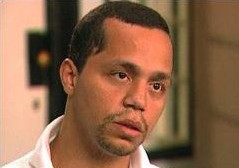
Matias Reyes
Homicide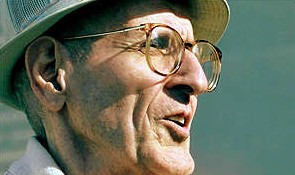 Jack Kevorkian
Homicide · USA · 1990
Jack Kevorkian (born May 26, 1928) was a controversial American pathologist. He…
130 victims
Jack Kevorkian
Homicide · USA · 1990
Jack Kevorkian (born May 26, 1928) was a controversial American pathologist. He…
130 victims
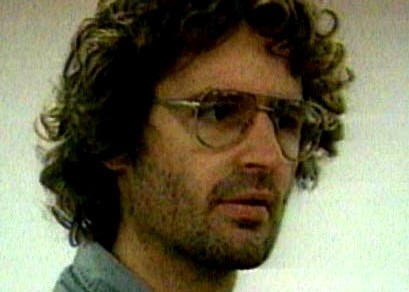 David Koresh
Homicide · USA · 1993
David Koresh (born Vernon Wayne Howell; August 17, 1959 – April 19, 1993) led t…
79 victims
David Koresh
Homicide · USA · 1993
David Koresh (born Vernon Wayne Howell; August 17, 1959 – April 19, 1993) led t…
79 victims
 Todd Hall
Homicide · USA · 1996
Todd Hall was described by neighbors as "mentally slow" and was said to have su…
9 victims
Todd Hall
Homicide · USA · 1996
Todd Hall was described by neighbors as "mentally slow" and was said to have su…
9 victims
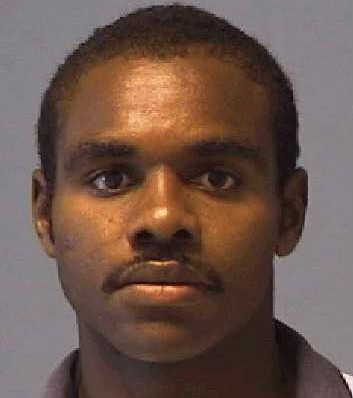 Clinton Bankston
Homicide · USA · 1987
15 August 1987 — Ann Morris (63), her sister Sally Nicholson (59), and Sally’s…
5 victims
Clinton Bankston
Homicide · USA · 1987
15 August 1987 — Ann Morris (63), her sister Sally Nicholson (59), and Sally’s…
5 victims
 Joshua Jenkins
Homicide · USA · 1996
Joshua Jenkins was a 15-year-old American killer who killed five members of his…
5 victims
Joshua Jenkins
Homicide · USA · 1996
Joshua Jenkins was a 15-year-old American killer who killed five members of his…
5 victims
 Ronnie Cauthern
Murderer · USA · 1987
Ronnie M. Cauthern was convicted of the 1987 slayings of a husband and wife who…
2 victims
Ronnie Cauthern
Murderer · USA · 1987
Ronnie M. Cauthern was convicted of the 1987 slayings of a husband and wife who…
2 victims
 Mark Anthony Guglielmo
Murderer · USA · 1994
December 12, 1968 — Mark Anthony Alexander Guglielmo was born in Westchester Co…
1 victim
Mark Anthony Guglielmo
Murderer · USA · 1994
December 12, 1968 — Mark Anthony Alexander Guglielmo was born in Westchester Co…
1 victim
 Robert Wallace West
Murderer · USA · 1982
Robert Wallace West Jr. was convicted of capital murder in Texas and sentenced…
1 victim
Robert Wallace West
Murderer · USA · 1982
Robert Wallace West Jr. was convicted of capital murder in Texas and sentenced…
1 victim
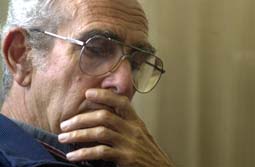 Ricardo Barreda
Mass murderer · Argentina · 1992
Ricardo Alberto Barreda (born 1936, in La Plata, Buenos Aires Province) was an…
4 victims
Ricardo Barreda
Mass murderer · Argentina · 1992
Ricardo Alberto Barreda (born 1936, in La Plata, Buenos Aires Province) was an…
4 victims
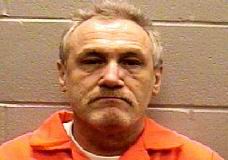 Donald Blom
Murderer · USA · 1999
Donald Blom (born 1949) was convicted of first-degree murder in the killing of…
1 victim
Donald Blom
Murderer · USA · 1999
Donald Blom (born 1949) was convicted of first-degree murder in the killing of…
1 victim
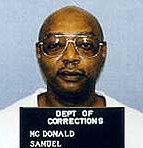 Samuel Lee McDonald
Murderer · USA · 1981
Name: Samuel Lee McDonald · Case citation: State of Missouri v. Samuel Lee McDo…
1 victim
Samuel Lee McDonald
Murderer · USA · 1981
Name: Samuel Lee McDonald · Case citation: State of Missouri v. Samuel Lee McDo…
1 victim
- Gender
- male
- Country
- USA
- Location
- New York, USA
- Date of birth
- 1971
- Age at first offence
- 17
- Characteristics
- juvenile (17), serial rapist
- Victim profile
- 24-year-old pregnant woman / Trisha Meili, the "Central Park Jogger"
- Method of murder
- ??? / Beating with a rock
- Date(s) of murder
- 1988 / April 19, 1989
- Years active
- 1988–1989
- Date of arrest
- August 5, 1989
- Status
-
Life imprisonment
Sentenced to 33 1/3 years to life on November 1, 1991
Case details
Matias Reyes was a juvenile at the time of the events described as part of a serial pattern of rapes. He later served a life sentence for raping three women near Central Park and for raping and killing a pregnant woman. While serving that lifetime prison sentence, he confessed to the rape and nearly fatal assault of Trisha Meili, known as the "Central Park Jogger," connected to the events of April 19, 1989.
Timeline
- April 19, 1989 — A woman who became known as the Central Park Jogger was assaulted in Central Park at about 9 p.m. reports began filtering into the Central Park precinct about a marauding gang of youths beating up joggers and bicyclists; the initial response involved patrol cars dispatched around 9:30, with additional assaults reported near 10 p.m. and around 10:30.
- About 10 p.m. (April 19, 1989) — Jogger John Loughlin was bludgeoned in the back of the head, apparently with a pipe.
- About 10:30 (April 19, 1989) — At 100th Street and Central Park West, two cops grabbed five boys, including Richardson and Santana.
- About 1:30 a.m. (April 20, 1989) — Two construction workers walking through the park heard moaning and discovered a woman writhing in a ravine; the woman had been helpless for nearly four hours.
- May 29 (year not stated) — The tabloids and TV news included coverage stating: "A 28-year-old investment banker, jogging through Central Park, was attacked by a group of teenagers. They kicked and beat her in the head with a pipe and raped her. The teenagers, who were from East Harlem, were quickly arrested."
- April 21 (year not stated) — Videotaping began after most of the suspects had been awake for nearly two days.
- 1990 (year stated) — In the assault on Meili, six youths under 18 were convicted of that crime in 1990, based in part upon confessions that implicated each other.
- August 5, 1989 — Reyes was arrested after a rape victim managed to run out screaming when the attacker went into the kitchen searching for a knife; the building super whacked Matias Reyes with a mop and held him until police arrived.
- June 1990 (year stated) — Reyes’s confession was described as coming from Matias Reyes in May 2002 later in the narrative, while the detective said he knew nothing of Central Park DNA until the first trial, in June 1990.
- May 2002 (month and year stated) — Reyes confessed to the crime in May 2002.
- December 2002 (month and year stated) — The convictions in the Central Park case were vacated in December 2002.
- December 19, 2002 (date stated) — A judge dismissed the convictions of all five men who served prison time for the Central Park attack, dismissed all indictments against the five less than a week before Christmas, and prosecutors would have to start from scratch with a grand jury to retry the five.
- 2002 (spring day stated) — Reyes returned to the scene of the crime in handcuffs accompanied by investigators from the Manhattan district attorney's office during a spring day in 2002 to test the claim that Reyes waited until this year to make the confession about April 19, 1989.
- October 21 (year not stated) — The Manhattan District Attorney’s office was described as returning to State Supreme Court asking for a 30-day extension.
- April 19, 1989 attack referenced — The case described the victim being left for dead in a pool of mud and blood after the attack on April 19, 1989.
Background
Matias Reyes was born in Fajardo, Puerto Rico, and spent most of his early years there with his father while his mother lived in New York. At age 7, Reyes told a psychologist hired by his defense lawyer that he was sexually abused by two male strangers. His former lawyer Richard Siracusa said: "Given what Reyes did later on in life, this fits the pattern." Reyes later came to live with his mother in New York and Siracusa described "a little problem when he was 15 or 16." Siracusa said he and a friend sexually abused Reyes’s mother, and that Reyes returned to his father’s house, with his mother moving out of state. Siracusa said: "He comes back from Puerto Rico after a couple of years, when he's about 17." Siracusa said: "I don't think he ever saw the mother again." Siracusa said Reyes lived over a grocery store, by himself, and then decided to become a serial rapist.
Reyes told a psychologist hired by Siracusa that he snorted cocaine daily but that "I always say no to violence." In an account of the events surrounding sentencing, Reyes was described as a muscular but unimposing five-foot-seven-inch ninth-grade dropout who stocked shelves in a bodega beneath his apartment on Third Avenue at 103rd Street.
The offence
Central Park Jogger assault (April 19, 1989)
The victim, Trisha Meili, was described as a 28-year-old woman left for dead in a pool of mud and blood after the attack on April 19, 1989. It was stated that she nearly died, lost three-quarters of her blood, and her body temperature dipped into the 80s. She was bruised from head to toe, and on a scale of 3 to 15 used by neurologists to measure brain function, she was rated a 4. She spent 12 days in a coma. It was stated she had no memory of what happened, preventing her from helping identify any suspects. Later, it was stated that after years of rehabilitation she still suffered from impaired vision and sketchy balance.
The narrative described that on the night of April 19, 1989, dozens of teenagers descended on Central Park to mug runners and bicyclists, a crime spree dubbed "wilding." It also described a broader pattern of violence alleged in the Central Park case, with packs of 30 to 40 youths that night. Investigators and prosecutors treated the jogger attack as part of that broader picture.
Reyes’s confession and claims about acting alone
Reyes confessed to the crime in May 2002. It was described that he told investigators he raped the jogger, crushed her skull with a rock, and left her for dead. It was also stated that he claimed he followed his usual pattern of acting alone.
DNA evidence confirmed that Reyes raped Meili but could not confirm that he acted alone as he claimed.
Investigation
Initial response to the assault on April 19, 1989 was described as haphazard. Jogger David Good approached an officer on a scooter to say he'd been attacked; the cop rode off in the opposite direction. Patrol cars were dispatched around 9:30, responding to assault and robbery calls.
Near 10 p.m., at the northern edge of the reservoir, jogger John Loughlin was bludgeoned in the back of the head, apparently with a pipe. At roughly 10:30, at 100th Street and Central Park West, two cops grabbed five boys, including Richardson and Santana. The first interviews were conducted inside the tiny Central Park station house, where Santana contributed many of the 33 names on a list of kids said to be in the park that night. It was described that it wasn't until 1:30 a.m. that two construction workers heard moaning and discovered the jogger in a ravine.
A call described that later that morning Linda Fairstein got a call. The head of the Manhattan D.A.'s Sex Crimes unit learned that her superior, Nancy Ryan, then the assistant district attorney for homicide cases, was taking control of the investigation with Ryan's top aide, Peter Casolaro, because the jogger was thought likely to die. Fairstein went over Ryan's head to District Attorney Robert Morgenthau and argued that the jogger was definitely the victim of a sex crime and if she lived would need a compassionate prosecutor. Fairstein won the turf skirmish, and described that Soon her best prosecutor, Elizabeth Lederer, was preparing to make videotapes.
In the Central Park case, supporters of the accused said the statements made to detectives were coerced. Police officials told reporters that the boys had coined a new term, wilding, to describe beating up random victims. Another law-enforcement leak was described about Salaam explaining why the boys had gone on their spree: "It was fun," Salaam was said to have said.
It was stated that no blood or DNA tests tied the five to the jogger. The narrative said hairs found on Richardson's clothes were said to be "consistent" with those of the jogger, but it was described as precious little residue given the muddy ravine setting and multiple accused. The narrative also described videotapes showing inconsistencies in the boys' accounts of the evening.
The narrative included a quotation from McCray: "We charged her. We got her on the ground. Everybody started hitting her and stuff. She was on the ground. Everybody stompin' and everything. Then we got, each -- I grabbed one arm, some other kid grabbed one arm, and we grabbed her legs and stuff. The we all took turns getting on her, getting on top of her." The narrative included a quotation from Richardson: "Raymond had her arms, and Steve [Lopez] had her legs. He spread it out. And Antron got on top, took her panties off." The narrative included a quotation from Santana: "He was smackin' her, he was sayin', 'Shut up, bitch!' Just smackin' her . . . I was grabbin' the lady's tits." The narrative included a quotation from Wise: "This is my first rape."
It was stated that during deliberations juror Ivette Naftal picked up Kevin Richardson's underpants and showed other jurors what she said were grass and mud stains, implying Richardson had pulled his pants down and raped the jogger. It was also stated that prosecutors had never tested the stains, so their origin remained a mystery.
Arrest and interrogation
August 5, 1989 arrest after another rape
On August 5, 1989, a rape victim managed to run out her apartment door screaming when her attacker went into the kitchen searching for a knife with which to blind her. When the rapist ran down to the lobby in pursuit, the building super whacked Matias Reyes with a mop and held him until police arrived. The detective who took Reyes's statement inside the 20th Precinct that day was Mike Sheehan.
Mike Sheehan described: "In 25 years on the job, I took over 1,000 confessions, in 3,000 homicides," Sheehan said. "Out of all the bad guys I've talked to across the table, this is one of the top five lunatics. This guy was a frightening guy. He was capable of doing anything. He's very manipulative." Sheehan described that he spent six hours getting to know Reyes and that they shared roots in East Harlem. It was described that Pretty soon, Reyes was calling him Mikey.
The narrative included Sheehan’s statement: "Nobody does rape for the sex," Sheehan says. "It's a crime of violence. They're lashing out. A lot because they were victims of some kind of sexual abuse. I said to Reyes, 'We're all guys in this room. Nobody is gonna embarrass anybody. I guarantee you that something really bad happened to you as a kid.' He starts looking down. I say, 'I know, because something really bad happened to me as a kid.' 'To you?' he says. I tell him, 'I wasn't always this size, I wasn't always a detective. A lot of crazy stuff happens in this city. I'll tell you what happened -- and I'll even go first, and then you tell me what happened to you. Is that fair? Something did happen to you, right?' He says, 'Maybe.' "
The narrative included Sheehan’s account of how he cracked Reyes's resistance: "I said, 'I'm not gonna run out on the street and tell people Matias Reyes got raped. Maybe it was even a relative.' The guy went wild, cursing. Now he's totally discombobulated."
The narrative included Sheehan’s account of Reyes’s victimology and method: "This was not a guy to have sex as part of a group of people," Sheehan says. "Totally different M.O. This guy was a hostage taker. He wanted total control, by himself. And as he told me, describing what he did with Lourdes Gonzalez, 'We made love.' Not like 'I fucked her.' It was 'I made love. In the sleeping room.' The park was not his thing. Obviously, now we know he was there. But there was no reason to suspect him in that case at all."
The narrative described that detectives took down Reyes's confession to three rapes, and that Reyes denied having anything to do with the rape and murder of Lourdes Gonzalez. It also described that Sheehan became involved in June after the second victim, Lourdes Gonzalez, 24, was stabbed to death while her three young children watched. It was described that detectives from the Sex Crimes unit took down Reyes's confession to three rapes, but he denied having anything to do with the rape and murder of Lourdes Gonzalez.
May 2002 confession about the Central Park Jogger
In May 2002, Reyes confessed to the Central Park jogger attack. It was described that he told investigators he raped the jogger, crushed her skull with a rock, and left her for dead, and that he said he followed his pattern of acting alone. It was stated that tests returned in May confirmed Reyes’ DNA matched semen collected from the jogger's body.
Trial
Convictions and challenges
In 1990, six youths under 18 were convicted in connection with the Central Park jogger assault, based in part upon confessions in which they implicated each other. At trial, they argued the confessions were coerced or improperly obtained.
The narrative discussed that Wise got out of prison August 12, and that the only DNA collected at the crime scene had never been tied to any of the accused until the time when it was matched to Reyes. It also stated that the five men’s convictions were vacated in December 2002.
The narrative included details that defense attorneys said the youths were coerced into bogus confessions by police. It stated that until January's confession, there seemed to be little chance of overturning the convictions against Antron McCray, Kevin Richardson, Raymond Santana, Kharey Wise, and Yusef Salaam. The narrative also stated: "Wise got out of prison August 12 -- just months after the only DNA collected at the crime scene, which was never tied to any of the accused, was matched to Reyes."
The narrative described that McCray, Richardson, Santana, Wise, and Salaam served prison sentences ranging from 5 1/2 years to 13 years, and it described completed prison sentences ranging from 5 1/2 years to 13 years on their convictions.
Sentencing
On November 1, 1991, Reyes appeared in court for sentencing. The sentence described in the current status field was: sentenced to 33 1/3 years to life on November 1, 1991.
The narrative also described that Reyes wheeled and punched his lawyer in the head when it was his turn to speak, and knocked the lawyer to the ground. It was described that he called Judge Thomas Galligan -- the same man who’d presided over the Central Park trials -- a "motherfucker," then yelled, "I didn't kill anybody. I'm tired of this shit. The attorneys this court give me don't do nothing for me." The narrative stated that Reyes put a couple of court officers out for a few months, dislocated a shoulder, and broke a bone. Siracusa described: "He was kicking and screaming the whole way out. I still remember that look on his face, a face out of your nightmares. He totally changed -- it was like the devil. He's a pure psychopath." The narrative included quotations from Dr. N. G. Berrill, the psychologist hired by the defense: "He was like a wounded child, a defective human being," Berrill said. "Not psychotic, but someone whose impulse control was poor. He's manipulative. I wouldn't put money on anything he says."
Appeals
In December 2002, convictions were vacated in connection with the Central Park jogger assault. A judge dismissed the convictions of all five men who served prison time for the attack. It was stated that his ruling dismissed all indictments against the five less than a week before Christmas and that prosecutors would have to start from scratch with a grand jury to retry the five.
The narrative included details that Tejeda's decision came two weeks after Manhattan District Attorney Robert Morgenthau recommended dropping all the convictions in the case. It was also stated that Tejeda’s decision came after lawyers from the police detectives’ union unsuccessfully tried to block his ruling, and that the Detectives' Endowment Association wanted an evidentiary hearing first.
The narrative also stated that the decision to dismiss the indictments meant prosecutors would have to start from scratch with a grand jury to retry the five, and that the ruling opened the door to civil suits against the city and freed the men from having to register as sex offenders for the rest of their lives.
Outcome
Reyes’s DNA was confirmed to have matched semen collected from the jogger’s body. The narrative stated that DNA evidence could not confirm that Reyes acted alone as he claimed. It also stated that the five Central Park rape convictions were tossed and the men were cleared after DNA implicated another man for the 1989 attack.
Other details
Additional rapes and later pattern
The narrative described that Reyes had been linked to eight rapes in a seven-month period, including one in Central Park on April 17, two days before the infamous jogger attack.
Statements by other legal figures
The narrative described that the former prosecutor in the Central Park case, Linda Fairstein, said she had no doubts the five were guilty and that Reyes merely finished the assault.
People mentioned in the broader case narrative
The narrative named Mike Sheehan as one of the key detectives in the Central Park case. It also named Michael Warren as the lawyer trying to vindicate McCray, Richardson, and Santana, and Roger Wareham as co-counsel, described as a leader in the slavery-reparations movement. Bill Perkins was identified as president of the Schomburg tenants' association, and it stated he later became a city councilman.
The narrative named Elizabeth Lederer as the prosecutor who prepared videotapes after Fairstein won the turf skirmish. It also named Nancy Ryan as assistant district attorney for homicide cases, Peter Casolaro as Ryan's top aide, and Robert Morgenthau as District Attorney. It named Judge Charles Tejada and noted that the Central Park trials were presided over by Judge Thomas Galligan. It also named Philip Karsyk as the attorney for the Detectives' Endowment Association.
The narrative also included Schomburg Plaza details: it stated that three Central Park defendants lived in Schomburg Plaza, an apartment complex at 110th Street and Fifth Avenue, and that William Perkins consulted families and called Michael Warren, who enlisted co-counsel Roger Wareham.
Reyes’s location and alleged travel at arrest time
The narrative described that in August 1989 Reyes was arrested in the lobby of a building at Lexington and East 91st, and detectives drove him to the office of the Sex Crimes unit inside the 20th Precinct on West 82nd. It described that the police car crossed through Central Park and that Reyes looked out at the park on both sides of him.
Schomburg Plaza interviews and motion details
The narrative stated that Warren and Wareham sent a private investigator, Earl Rawlins, upstate to interview Reyes. Rawlins returned with detailed written and audiotaped revelations described as forming the backbone of the motion to dismiss the Central Park convictions. It also stated that Yusef Salaam and Kharey Wise were represented by two other attorneys who filed parallel actions.
Sheehan on Central Park DNA and conviction concerns
The narrative stated that Sheehan said he knew nothing of the Central Park DNA until the first trial, in June 1990. The narrative also described Detective Tom McKenna being more active, and included McKenna’s quotation: "Salaam looks at me and says, 'I was there, but I didn't rape her,' " and: "We are allowed, by law, to use guile and ruse, and we do. People only give things up when you tell 'em you got 'em. But to frame somebody and leave the right son-of-a-bitch out in the street? I'm irate anyone would infer that."
The narrative also included Sheehan's quote about conviction: "I used to lie awake at night thinking about cases we had over the years: I hope to God we have the right guy ," he says. "That's your biggest fear: You never want to put an innocent person in jail. Mother of God! I didn't worry much on this one. Because they're telling us where they were. They are telling us -- the sequence may be off, but they're essentially telling us the same stuff. They remember a guy they beat and took his food, they remember hitting this guy running around the reservoir. They went through all of these things, each kid. And they also tell you about the jogger. And they place people, so you have a mental picture of where they were around this woman's body. And their parents are with them, not only in the interviews but in the videotape, for the record. That's enough for me. I'm satisfied."
Additional quoted statements on coercion discussions
The narrative included a quote from Sheehan: "All this stuff about coercion really pisses me off," Sheehan says. "Do you honestly think that we -- detectives with more than twenty years in, family men with pensions -- would risk all of that so we could put words in the mouth of a 15-year-old kid? Absolutely not." The narrative included a quote from Warren: "Oh, the police are lying," Warren says. "Absolutely. I've spoken to the parents, I've spoken to our clients, and I've seen the effect on them when they begin to tell the story of what was done to them during the interrogations: They break down. So I don't have any question as to their version of what took place."
Other narrative quotations involving defendants and investigation
The narrative included a juror analysis quote attributed to Tim Sullivan: "There's always that danger, that jurors will try to come up with something, because at some point they feel like prisoners," Sullivan said. "If a jury is in there for ten or twelve days, as these were, people start looking for a way to get out."
Innnocence Project references and related quotes
The narrative named Peter Neufeld and Barry Scheck, and described that they launched the Innocence Project in 1992. It included Scheck’s quote: "A guy in California just got out, and there will be two more guys next week in Savannah," Scheck says, staring into the distance and trying to do the math in his head. "And soon there will be five more in New York, right?" The narrative included Scheck’s quote: "Twenty-three percent of the post-conviction DNA exonerations involve false confessions or admissions," Scheck says. "And that's just after conviction. There are thousands of cases where people have been exonerated by DNA after they were arrested but before they were convicted. Many of those cases involve false confessions. The DNA work has pointed clearly and dramatically to this problem of false confessions." It also included a quote from Scheck: "It would be a terrible shame if this whole reexamination did not result in doing something to prevent false confessions," Scheck says. "The Central Park case has all the earmarks we've seen in our other cases of false confessions. And in all these cases, we find that the real assailant committed many crimes." The narrative included Scheck’s quote about receiving a letter: "The next time I heard about this case was in June, when I was called by a reporter for the Times , who told me that we, the Innocence Project, had received a letter from Matias Reyes," Scheck says. "Except that we hadn't. Oddly enough, he had written to Lynne Stewart and asked her to send the letter on to us."
Reyes’s statements at sentencing
At sentencing, Reyes said: "I didn't kill anybody. I'm tired of this shit.
Reyes also called Judge Thomas Galligan a "motherfucker."
Spotted an error, or have more information about this case?