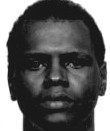
John Henry Selvage
Murderer Ervil LeBaron
Murderer · USA · 1972
Ervil Morrell LeBaron (1925 to August 16, 1981) was the leader of a polygamous…
35 victims
Ervil LeBaron
Murderer · USA · 1972
Ervil Morrell LeBaron (1925 to August 16, 1981) was the leader of a polygamous…
35 victims
 Brian Kevin Rosenfeld
Murderer · USA · 1985
Brian Kevin Rosenfeld Brian Kevin Rosenfeld was sentenced to three concurrent l…
23 victims
Brian Kevin Rosenfeld
Murderer · USA · 1985
Brian Kevin Rosenfeld Brian Kevin Rosenfeld was sentenced to three concurrent l…
23 victims
 Marvin Gray
Murderer · USA · 1975
Marvin Gray was convicted killer who claimed responsibility for 23 slayings and…
23 victims
Marvin Gray
Murderer · USA · 1975
Marvin Gray was convicted killer who claimed responsibility for 23 slayings and…
23 victims
 Yahweh ben Yahweh
Murderer · USA · 1980
Yahweh ben Yahweh was born and legally named Hulon Mitchell Jr. (October 27, 19…
23 victims
Yahweh ben Yahweh
Murderer · USA · 1980
Yahweh ben Yahweh was born and legally named Hulon Mitchell Jr. (October 27, 19…
23 victims
 Paul Bernardo
Serial killer · Canada · 1990
Paul Kenneth Bernardo (born August 27, 1964 in Toronto, Ontario) was a Canadian…
3 victims
Paul Bernardo
Serial killer · Canada · 1990
Paul Kenneth Bernardo (born August 27, 1964 in Toronto, Ontario) was a Canadian…
3 victims
 Gary Addison Taylor
Serial killer · USA · 1972
Gary Addison Taylor Gary Addison Taylor was born in 1936 in Michigan. He spent…
20 victims
Gary Addison Taylor
Serial killer · USA · 1972
Gary Addison Taylor Gary Addison Taylor was born in 1936 in Michigan. He spent…
20 victims
 Julio Gonzalez
Mass murderer · USA · 1990
Julio Gonzalez was sentenced to 174 twenty-five-year sentences (a total of 4,35…
87 victims
Julio Gonzalez
Mass murderer · USA · 1990
Julio Gonzalez was sentenced to 174 twenty-five-year sentences (a total of 4,35…
87 victims
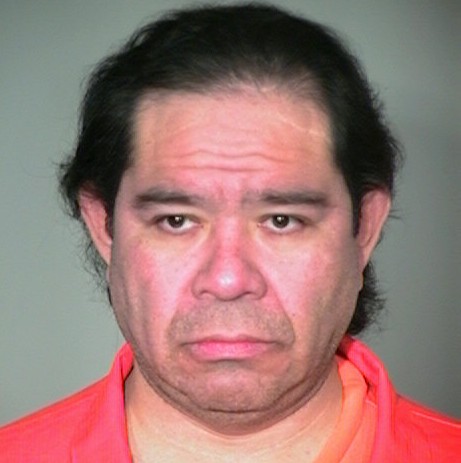 George Molina Lopez
Murderer · USA · 1989
George Molina Lopez lived in a Tucson apartment with his girlfriend and their 1…
1 victim
George Molina Lopez
Murderer · USA · 1989
George Molina Lopez lived in a Tucson apartment with his girlfriend and their 1…
1 victim
- Gender
- male
- Country
- USA
- Location
- Harris County, Texas, USA
- Date of birth
- August 7, 1950
- Age at first offence
- 29
- Characteristics
- jewelry store robbery
- Victim profile
- Albert Garza, 48 (Harris County deputy sheriff)
- Method of murder
- Shooting
- Date(s) of murder
- July 30, 1979
- Years active
- 1979
- Date of arrest
- A week after
- Status
-
Sentenced to death
Sentenced to death on March 17, 1980
Case identification
John Henry Selvage was the petitioner-appellant in Selvage v. Lynaugh in the United States Court of Appeals for the Fifth Circuit, involving habeas corpus proceedings attacking his state court conviction for capital murder and his resulting sentence of death. The case involved James A. Lynaugh, Director, Texas Department of Corrections, as respondent-appellee, and it was styled No. 87-2285. The appellate panel included CLARK, Chief Judge, and WILLIAMS and HIGGINBOTHAM, Circuit Judges. The decision was per curiam and was issued July 23, 1987. A rehearing was denied on Aug. 19, 1987. The appeal had been from the United States District Court for the Southern District of Texas.
A second Fifth Circuit proceeding related to Selvage’s second habeas trip was styled No. 88-2278, also involving James A. Lynaugh, Director, Texas Department of Corrections. That decision was issued March 28, 1988, and it involved POLITZ, WILLIAMS and HIGGINBOTHAM, Circuit Judges, with PATRICK E. HIGGINBOTHAM writing. The United States District Court for the Southern District of Texas had granted a stay of Selvage’s execution scheduled to be carried out before sunrise on March 30, 1988. The State of Texas asked the appellate court to vacate that stay, and Selvage requested a stay pending appeal of his dismissed claims if the stay was vacated.
Timeline
- December 4, 1979 — Selvage was indicted for the offense of capital murder of Albert Garza on two grounds: (1) that Garza was a peace officer known by Selvage to be acting in the lawful discharge of his duty; and (2) that Selvage or his confederate killed Garza while attempting to rob Stephen Ventura.
- July 30, 1979 — The attempted robbery and murder occurred.
- February 1980 — After the punishment hearing, the jury’s special interrogatories required by Texas law resulted in Selvage’s sentence of death.
- November 14, 1985 — The 230th District Court of Harris County, Texas, set Selvage’s execution date.
- November 8, 1985 — Selvage requested a stay of execution from the United States District Court for the Southern District of Texas.
- December 16, 1985 — The district court directed Selvage to file an amended petition to meet the pleading requirements of the rules governing federal habeas.
- July 23, 1987 — The Fifth Circuit issued its decision in No. 87-2285, affirming the denial of habeas corpus.
- Aug. 19, 1987 — Rehearing was denied.
- March 28, 1988 — The Fifth Circuit vacated the stay of execution granted by the district court in the No. 88-2278 proceeding and denied Selvage’s request for a stay pending appeal.
- March 21, 1988 — The Texas Court of Criminal Appeals adopted the trial court’s findings and denied the writ in the state habeas proceedings, in Ex Parte Selvage, No. 16, 884-02.
- March 14, 1988 — Without an evidentiary hearing, the state trial court denied a stay with detailed findings of fact and conclusions of law.
Background
Selvage appealed from the district court’s denial of his petition for habeas corpus in which he attacked his state court conviction for capital murder and his resulting sentence of death. Selvage made three related arguments attacking the sufficiency of the evidence, and the Fifth Circuit affirmed.
In the second habeas trip, the district court had granted a stay of Selvage’s execution scheduled to be carried out before sunrise on March 30, 1988. The State of Texas asked the appellate court to vacate that stay. Selvage requested a stay pending appeal of his dismissed claims if the appellate court vacated the stay granted by the district court. The Fifth Circuit concluded that it had to vacate the stay and deny Selvage’s request for stay because Selvage’s only substantial claim had not been preserved for review.
The offence
Capital murder indictment and theory
Selvage was indicted for capital murder of Albert Garza on two grounds:
- That Garza was a peace officer known by Selvage to be acting in the lawful discharge of his duty.
- That Selvage or his confederate killed Garza while attempting to rob Stephen Ventura.
Victims and participants
The attempted robbery and murder occurred on July 30, 1979. Stephen Ventura owned and operated Ventura’s Jewelry Store in Houston, Texas. Albert Garza was a deputy sheriff with the Harris County Sheriff’s Department and was a friend of Ventura.
Garza visited Ventura’s store shortly before 6:00 p.m. to use the telephone. Garza’s duties included the service of process for state district courts in Harris County, and he carried an arrest warrant (or instanter subpoenae) and other civil process when he entered the store. Garza engaged in conversation with Ventura and two employees, Charlye Jo Ivy and Ken Roberts.
A black female entered the store and asked Ivy’s assistance in choosing a birthday present. Ivy became suspicious when the woman did not remember the birthdate of her daughter for whom she claimed to be shopping.
Shortly thereafter, two black males entered the store, each carrying a bag or satchel. Ventura told Garza he was uncomfortable because he had seen the two black men in the store before and they were not regular customers. Garza, seeing Ventura was nervous, came from the back of the store. As he did so, he removed his coat, making visible his gun and badge attached to his belt. Garza walked toward Selvage and volunteered to help him.
When Garza asked Selvage if he could help, Selvage asked about the “big diamond” he had earlier seen, while the man with him asked Ventura about wedding sets. While Ventura was bending over to obtain a lay-a-way ticket, Ventura heard a shot but no one saw who fired it. Garza was struck in the neck by the bullet. Garza pushed Ventura toward the back office to which Ventura fled.
Ventura obtained a pistol from his safe in the office and returned to the showroom where Selvage was removing jewelry from a showcase. Ventura opened fire as Selvage and his partner fled the store. Ventura chased them into a parking lot around the corner where Selvage and his partner returned the fire.
Garza was armed but never had the opportunity to unholster his gun. Garza died of the gunshot wound to the neck.
Ventura, Ivy and Roberts each identified Selvage as one of the two males who entered the store. Wilbur Kelley was the other male.
Investigation and evidentiary details at trial
The evidence included identification testimony by Ventura, Ivy and Roberts that Selvage was one of the two males who entered the store. There was also evidence that Selvage and his partner planned the robbery, including that Ventura saw both of them in the store the Friday before the robbery. An acquaintance of Selvage testified that Selvage tried to get him to participate in the robbery and that Selvage had helped Kelley plan it.
Selvage and Kelley entered the store armed with hidden pistols on the pretext of buying jewelry. While there was no direct evidence that Selvage fired the fatal shot, the evidence placed Selvage standing immediately in front of and talking to Garza at the time Garza was struck in the neck. The evidence described the distance between the strike and the triggerman as three to six feet. The record also described that several witnesses saw Selvage fire his pistol during his escape. There was evidence that the pistol which fired the fatal shot came from a brown bag which belonged to Selvage.
Trial
Jury verdict and sentencing findings
A jury found Selvage guilty. After the punishment hearing, the jury answered affirmatively the special interrogatories required by Texas law, resulting in his sentence of death.
In the second federal appeal, the jury found Selvage guilty on February 8, 1980, and on February 11, 1980 answered affirmatively the requisite interrogatories submitted pursuant to Article 37.071, Tex. Code Crim. Proc. (Vernon Supp. 1988), the Texas capital sentencing provision.
The Texas Court of Criminal Appeals affirmed his conviction and sentence in Selvage v. State, 680 S.W.2d 17 (Tex. Crim. App. 1984) (en banc).
Jury instructions relevant to arguments
At the guilt stage, the state trial judge’s charge included an abstract definition of the law of parties and criminal responsibility from the Texas Penal Code. The charge included:
- “All persons are parties to an offense who are guilty acting together in the commission of an offense.”
- “A person is criminally responsible as a party to an offense if the offense is committed by his own conduct, by the conduct of another for which he is criminally responsible, or by both” (quoting Tex. Penal Code Ann. Sec. 7.01 (Vernon 1984));
- “A person is criminally responsible for an offense committed by the conduct of another if[,] ... acting with intent to promote or assist the commission of the offense, he solicits, encourages, directs, aids, or attempts to aid the other person to commit the offense” (quoting Tex. Penal Code Ann. Sec. 7.02(a)(2) (Vernon 1984));
- “If, in the attempt to carry out a conspiracy to commit one felony, another felony is committed by one of the conspirators, all conspirators are guilty of the felony actually committed, though having no intent to commit it, if the offense was committed in furtherance of the unlawful purpose and was one that should have been anticipated as a result of the carrying out of the conspiracy” (quoting Tex. Penal Code Ann. Sec. 7.02(b) (Vernon 1984)).
The jury was also instructed that “mere presence alone will not constitute one as a party to an offense.”
At the penalty phase, the record described that the jury had to consider the issue of the future dangerousness of Selvage.
Sentencing
Selvage was sentenced to death following the punishment hearing and affirmative answers to the special interrogatories required by Texas law. In federal habeas proceedings, the challenged death sentence was described as the result of the jury’s affirmative answers to those interrogatories.
In the second federal appeal, it was described that Selvage’s execution had been rescheduled multiple times, and that it was scheduled to be carried out before sunrise on March 30, 1988 at the time of the district court’s stay.
Appeals and post-conviction proceedings
First federal habeas appeal (No. 87-2285)
In the first habeas appeal, Selvage argued that there was insufficient evidence:
- To show he was a party to capital murder on the charge presented to the jury, and specifically that “there is no evidence of any kind to show appellant intended to kill Albert Garza or that he solicited, encouraged, anyone to do so.”
- Relatedly, that “there is no evidence to show any pre-arranged plan or agreement to kill.”
The Fifth Circuit applied the Jackson v. Virginia sufficiency standard and concluded it was unpersuaded, affirming the denial of habeas corpus.
Standard applied
The Fifth Circuit stated the inquiry as: “[W]hether, after viewing the evidence in the light most favorable to the prosecution, any rational trier of fact could have found the essential elements of the crime beyond a reasonable doubt.” (quoting Jackson v. Virginia, 443 U.S. 307, 319, 99 S.Ct. 2781, 2789, 61 L.Ed.2d 560 (1979) (emphasis in original; citation omitted)).
Law of parties issue
The Fifth Circuit addressed Selvage’s argument that the abstract statements about law of parties and criminal responsibility were not applied to the facts and his guilt rested solely on the abstract instruction. The Fifth Circuit concluded that Selvage had not challenged the charge at trial and his failure to object was relied upon by the Texas Court of Criminal Appeals.
The Fifth Circuit stated that the Texas law of parties supported the jury’s findings and that, even without direct evidence of Selvage firing the fatal shot, the jury could conclude Selvage aided or attempted to aid his companion in murdering Garza.
The court also noted that a jury finding was not essential for an Enmund finding of personal culpability, citing Cabana v. Bullock.
Deliberateness death penalty interrogatory
Selvage argued there was insufficient evidence to support the affirmative answer to the first death penalty interrogatory, which asked whether “the conduct of the defendant that caused the death of the deceased was committed deliberately and with the reasonable expectation that the death of the deceased or another would result.” The Fifth Circuit concluded the jury could find the shooting deliberate from the circumstance that Selvage entered the store with a deadly weapon planned to use it in the robbery and escape, and from his willingness to take life in the gunfire accompanying his flight.
Knowledge of peace officer status
Selvage argued there was insufficient evidence for the jury to conclude that he knew Garza was acting as a peace officer in the lawful discharge of his official duty. The Fifth Circuit concluded the jury could properly have concluded Selvage knew Garza was a peace officer, based on testimony:
- Ventura testified that Garza “brazenly” showed his gun and badge to the three individuals who walked into the store, and that they all turned to look at Garza.
- Ivy testified that when Garza walked from the back office, having removed his coat, he “directed his badge and gun toward one of the males.”
- Roberts testified that Garza’s badge was visible when Garza removed his coat and placed it in the chair.
The Fifth Circuit affirmed the judgment.
Notes included in the first appeal decision
The Fifth Circuit stated that Selvage made no Enmund argument, presumably because the Texas Court of Criminal Appeals made an explicit Enmund finding. The Fifth Circuit referenced Selvage v. State, 680 S.W.2d 17, 22 (Tex. Crim. App. 1984), and it cited Enmund v. Florida and Cabana v. Bullock. The court also stated that Selvage did not challenge the exclusion of certain veniremen on appeal, although he had raised the issue below, and because the issues were not raised before the Fifth Circuit, the court did not consider them.
Second federal habeas appeal (No. 88-2278)
In the second federal appeal, the district court had granted a stay based solely on Selvage’s first claim that he was denied the right to conduct voir dire regarding veniremens’ understanding of Texas parole law. The district court rejected other grounds, denied a certificate of probable cause as to them, but did not address the state’s contention that Selvage had abused the writ.
The Fifth Circuit reviewed a stay using factors including:
- whether the movant showed likelihood of success on the merits,
- irreparable injury if the stay was not granted,
- whether granting the stay would substantially harm other parties, and
- whether granting the stay would serve the public interest, citing O’Bryan v. McKaskle, O’Bryan v. Estelle, and Ruiz v. Estelle.
The Fifth Circuit noted that in a capital case the movant must present a substantial case on the merits when a serious legal question is involved and show the balance of equities weighs heavily in favor of granting the stay, citing O’Bryan v. McKaskle and Ruiz v. Estelle, and also citing Celestine v. Butler and Streetman v. Lynaugh.
Writ abuse analysis and the voir dire/Parole claim
The Fifth Circuit explained that it found no writ abuse in the failure of Selvage to include the voir dire claim in his earlier federal habeas petition. The court discussed that legal excuse exists if new claims are based on facts or legal theories about which the petitioner had no knowledge when prosecuting his prior habeas petition, such as new facts arising or the law changing substantially.
The court also discussed King v. Lynaugh and the effect of rehearing en banc. It stated that the grant of rehearing en banc vacated the panel opinion and that it had no force, so controlling law must be stated without giving effect to that panel opinion.
The court concluded it was not persuaded Selvage had shown the requisite likelihood of success on the voir dire issue. It relied on Milton v. Procunier and the Texas rule that a jury may not consider the possibility of parole in its deliberation. It also referenced O’Bryan v. Estelle regarding rejection of an assertion that the Texas rule was unconstitutional.
The Fifth Circuit discussed Turner v. Murray and described that Turner involved a capital defendant accused of an interracial crime and that the Court held the defendant may on voir dire have the veniremen told the race of the victim and questioned about racial bias. The Fifth Circuit found Turner inapposite to the parole-voir-dire subject and concluded that refusing to examine veniremen about their understanding of parole or a life sentence did not deny Selvage any right secured by the Constitution.
Unadjudicated crime evidence at penalty phase
Selvage argued that admission of “unadjudicated crime evidence during the penalty phase” rendered his sentence unreliable and unfair. He argued that because he was not convicted he was presumed innocent and the jury was never told it had to be persuaded beyond a reasonable doubt of guilt before considering this evidence.
The Fifth Circuit noted there was no objection at trial and that state courts had relied on failure to object as a procedural bar. It held the claim was tested under the procedural default doctrine of Wainwright v. Sykes and Engle v. Isaac, requiring Selvage to show legal excuse and prejudice. The Fifth Circuit concluded Selvage made no showing of legal excuse and that it found no justification for the failure to object, making the objection procedurally barred. The Fifth Circuit also concluded that, in any event, it was persuaded the state’s evidence was admissible at the penalty phase and denied Selvage no right due him.
The Fifth Circuit described the penalty-phase evidence admitted by the court:
- two prior federal convictions: possession of a controlled substance and conspiracy to commit bank robbery,
- testimony of a New Orleans police officer that Selvage had attempted to escape from a Louisiana state institution, injuring himself in the process,
- testimony implicating Selvage in a July 6, 1979 robbery and murder at a convenience store, including testimony by a store clerk that Selvage and an accomplice demanded money from the register and ordered the clerk to a back room, and after gunshots, the clerk returned to find a customer shot, with corroboration by a customer who had accompanied the killed customer.
The Fifth Circuit explained that this evidence was admitted only in the punishment phase and thus did not risk an erroneous finding of guilt. It also explained that at the penalty phase the jury had to consider future dangerousness, and that the evidence was directly relevant. It cited Barefoot v. Estelle and also cited Jurek v. Texas and other cases including Williams v. Lynaugh and Milton v. Procunier.
Mitigating evidence instruction/consideration
Selvage argued that the Texas capital sentencing procedure prevented the jury’s consideration of mitigating evidence. The Fifth Circuit found no likelihood of success, in part because Selvage did not object to the court’s charge at the punishment phase and did not request an instruction on mitigating evidence or otherwise question the capital sentencing structure on those grounds. The Fifth Circuit also referenced Ex Parte Selvage, No. 16, 884-02 (March 21, 1988).
It held that absent a showing of cause and prejudice, federal habeas could not review a claimed error in the conduct of a state criminal trial when the state refused review under the contemporaneous objection rule.
The Fifth Circuit also addressed that approximately a month before Selvage’s trial, the Texas Court of Criminal Appeals rejected a similar argument and the Supreme Court had not acted on a petition for certiorari in that case, citing Quinones v. State and cert. denied. The court also referenced Reed v. Ross and Engle v. Isaac.
It discussed Jurek v. Texas and Lockett v. Ohio, including a quotation from Jurek: “I t is as yet undetermined whether or not the jury’s consideration of those questions would properly include consideration of mitigating circumstances.... We cannot ... construe the statute; that power is reserved to the Texas courts.” It also addressed Murray v. Carrier in the context of counsel not recognizing or raising a claim.
The Fifth Circuit then discussed the merits question, including references to Franklin v. Lynaugh and Penry v. Lynaugh, and it described Supreme Court action in Franklin. It discussed that in Williams v. Lynaugh, the Supreme Court had granted a stay, describing the date:
- February 10, 1988.
The Fifth Circuit concluded that it did not require it to grant a stay simply because of certiorari or a Supreme Court stay in similar cases, and it stated it applied settled circuit law until changed. However, it noted that it had questioned its treatment of the Franklin issue in Penry and stated that the grant of certiorari in Franklin had halted reconsideration by the en banc court.
The Fifth Circuit stated that in those circumstances the execution of a properly preserved and potentially valid Franklin claim should be stayed, but ultimately its rejection of a stay on this claim rested on Selvage’s failure to object to the instruction at the punishment phase or request additional instruction.
Ineffective assistance of counsel
Selvage contended he suffered from ineffective assistance of counsel. The Fifth Circuit held the claim failed because its premise had been rejected. It discussed Strickland v. Washington and that Selvage had to affirmatively demonstrate prejudice, citing Hill v. Lockhart. It described that Selvage’s counsel, John Crow, filed an affidavit stating: Crow asserted that he decided not to investigate Selvage’s mental background because, as he saw it, the state’s rebuttal evidence would turn Selvage’s mitigating evidence against him on the question of future dangerousness.
The Fifth Circuit concluded that the ineffectiveness claim was no more than a variation of the Franklin claim.
Final disposition in the second appeal
The Fifth Circuit stated that its decision to vacate the stay rested only on Selvage’s failure to object and the state court’s reliance on Texas’ contemporaneous objection rule. It stated there was no claim of factual innocence and found no legal excuse under Engle v. Isaac. It therefore vacated the stay of execution granted by the district court and denied Selvage’s request for stay pending appeal and for a certificate of probable cause pending appeal.
Outcome
In the first federal appeal, the Fifth Circuit affirmed the district court’s denial of Selvage’s petition for habeas corpus attacking his state court conviction for capital murder and sentence of death.
In the second federal appeal, the Fifth Circuit vacated the stay of execution granted by the district court and denied Selvage’s request for a stay pending appeal of claims dismissed by the district court and for a certificate of probable cause pending appeal.
Other details
Selvage did not seek review by the United States Supreme Court after the Texas Court of Criminal Appeals affirmed his conviction and sentence. In the second federal appeal, it was stated that Selvage did not petition for a writ of certiorari.
In the first federal appeal, the record described that Selvage sought a stay of execution on November 8, 1985 and that the district court granted a stay pending further order, directing an amended petition on December 16, 1985. The district court then denied the amended petition.
In the second federal appeal, the record described that when the trial court rescheduled execution for January 27, 1988, Selvage filed a second application for state habeas relief. The state habeas petition asserted four bases for relief: (1) denial of due process by refusing inquiry during voir dire of the panel regarding veniremens’ understanding of a life sentence under Texas law; (2) admission into evidence of “unreliable, unadjudicated crimes evidence during the penalty phase” contrary to the eighth and fourteenth amendments; (3) failure of the capital sentencing procedure to allow jury consideration of evidence of mitigation contrary to the eighth and fourteenth amendments; and (4) failure of the Texas capital sentencing procedure to provide a means for the jury’s independent consideration of mitigating evidence.
The second federal appeal also described that Selvage’s application in the United States District Court made the same arguments and added that trial counsel had failed to investigate and present evidence of Selvage’s mental illness, depriving him of effective representation required by the sixth and fourteenth amendments. The state conceded exhaustion of state remedies. The state moved to dismiss for abuse of the writ.
The district court granted leave to proceed in forma pauperis and granted a stay, resting solely on the voir dire/understanding-parole claim. The appellate court vacated that stay.

Spotted an error, or have more information about this case?