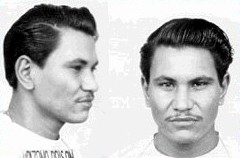
Angel Serna
Murderer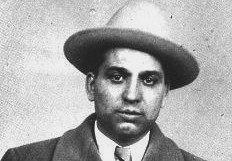 Harry Maione
Murderer · USA · 1937
Harry “Happy” Maione (1908 – February 19, 1942) was a New York mobster who serv…
12 victims
Harry Maione
Murderer · USA · 1937
Harry “Happy” Maione (1908 – February 19, 1942) was a New York mobster who serv…
12 victims
 Albert Dyer
Murderer · USA · 1937
Albert Dyer was a 32-year-old WPA crossing guard and traffic guard at Centinela…
3 victims
Albert Dyer
Murderer · USA · 1937
Albert Dyer was a 32-year-old WPA crossing guard and traffic guard at Centinela…
3 victims
 George Sitts
Murderer · USA · 1945
George Sitts was executed by the State of South Dakota on April 8, 1947 for the…
3 victims
George Sitts
Murderer · USA · 1945
George Sitts was executed by the State of South Dakota on April 8, 1947 for the…
3 victims
 Joseph Medley
Murderer · USA · 1940
Joseph Medley was a male White person identified as being associated with robbe…
3 victims
Joseph Medley
Murderer · USA · 1940
Joseph Medley was a male White person identified as being associated with robbe…
3 victims
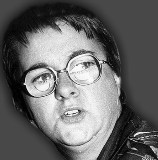 Carol Bundy
Murderer · USA · 1980
Carol Bundy was an American serial killer. She was known as Carol M. Bundy and…
2 victims
Carol Bundy
Murderer · USA · 1980
Carol Bundy was an American serial killer. She was known as Carol M. Bundy and…
2 victims
 Banita Jacks
Murderer · USA · 2007
Banita Jacks was a Washington, DC resident convicted of murdering her four daug…
4 victims
Banita Jacks
Murderer · USA · 2007
Banita Jacks was a Washington, DC resident convicted of murdering her four daug…
4 victims
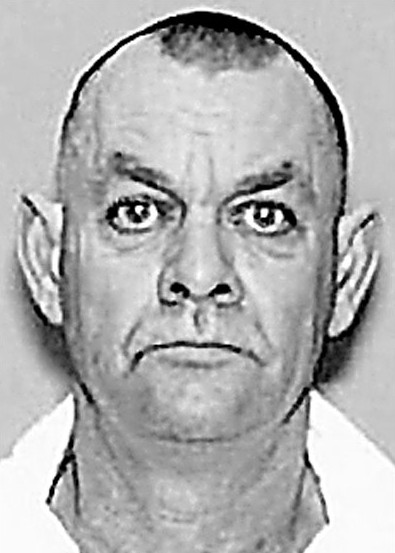 Larry Allen Hayes
Murderer · USA · 1999
Larry Allen Hayes was convicted of capital murder and was executed by lethal in…
2 victims
Larry Allen Hayes
Murderer · USA · 1999
Larry Allen Hayes was convicted of capital murder and was executed by lethal in…
2 victims
 Roger Girerd
Mass murderer · France · 1965
Roger Girerd was the perpetrator of a mass murder in Charvieu-Chavagneux on May…
10 victims
Roger Girerd
Mass murderer · France · 1965
Roger Girerd was the perpetrator of a mass murder in Charvieu-Chavagneux on May…
10 victims
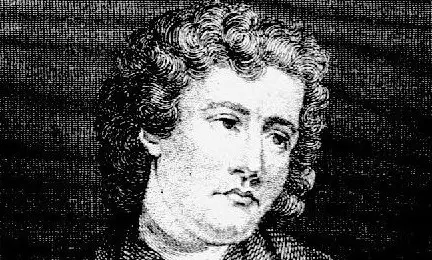 Eugene Aram
Murderer · United Kingdom · 1744
Eugene Aram (1704 - August 6, 1759) was an English philologist who also became…
1 victim
Eugene Aram
Murderer · United Kingdom · 1744
Eugene Aram (1704 - August 6, 1759) was an English philologist who also became…
1 victim
- Gender
- male
- Country
- USA
- Location
- Pinal County, Arizona, USA
- Date of birth
- May 19, 1923
- Age at first offence
- 24
- Characteristics
- rape, robbery
- Victim profile
- A woman
- Method of murder
- Shooting
- Date(s) of murder
- December 29, 1947
- Years active
- 1947
- Date of arrest
- Same day
- Status
-
Executed
Executed by asphyxiation-gas in Arizona on July 29, 1950
Case record: Angel Serna
STATUS / Outcome
Angel Serna was executed by asphyxiation-gas in Arizona on July 29, 1950.
Background
Angel P. Serna was interviewed in the cell at the Arizona State Prison while he awaited execution.
He was a twenty-eight year old Mexican male. He was small but muscular, with intense dark eyes. He sat quietly on the edge of his cot and answered questions somewhat slowly, often with a preliminary “What” or “What did you say”, requiring the examiner to repeat the question. His glance was intense and expressed a mixture of uncertainty, defiance, and apprehensiveness. His responses were laconic but relevant. There was little evidence of anxiety or flight of ideas nor of blocking. Frequent hesitation before replying was associated with a slightly defensive and suspicious manner, but the replies, although under-productive and laconic, appeared to be truthful.
Questions concerning his past elicited that he was the fourth of eight siblings and was born in Franklin, Arizona. He reached the sixth grade at about age fifteen. He admitted that he had not liked school nor been a good student. He was reluctant to go into details concerning his earlier life and activities after leaving school.
Serna stated that his work was mainly on ranches. He served from 1942 to 1945 in the ground forces of the Air Corps and received an Honorable Discharge. His grade was privates. He was twice court martialed for drunkenness.
He stated that the first time he got into trouble with the law was at the age of twenty-four. He said, rather sullenly, that he had pled guilty, having been advised to do so although he was not guilty but merely among those present when a store was held up. After having served his sentence for this offense he was out about a year.
He stated that he worked in the mountains on ranches, and again gave no details. He said he had a preference for working away from others, saying that he never liked to have a lot of people around: people made him “nervous”. He denied questions directed at bringing out the presence of actual delusions of persecution or hostility on the part of people, saying it was just the way he felt, that he did not actually think that people were hostile toward him nor trying to harm him.
He denied delusions and hallucinations during examination; he denied psychotic ideas and none could be elicited aside from the tendency to periods of feeling disliked by the guards, which he recognized as being subjective.
The examination and mental state
Serna said that he was “accused of murder” but that he hid no recollection of the act. The only thing he could remember was that he was drinking in a bar and was arrested later while sleeping at the roadside.
Concerning his present adjustment, he stated that he had been feeling nervous of late. He complained vaguely of pains in the back of the neck and head and occasional darting pains in the face. He said that he sometimes did not want to talk to anyone and had the feeling that the guards were mad at him, yet he knew they were not mad at him because when he asked them for a cigarette or anything they gave it to him, so he thought it was just his “nerves.”
Asked whether he thought he might be crazy he became quite hostile and tense and countered angrily that he was by no means crazy and what the examiner was trying to do—make him mad.
Throughout the examination he maintained an air of controlled and veiled defensiveness coupled with an uncommunicative attitude. He seemed to be acting out his concept of the stoic indifference of a condemned man. His emotional reactions were in the main blunted, but when he was made insecure by certain questions a volcanic outburst of anger seemed about to erupt. The examiner changed the subject at these times to avoid irritating him, but the impression of emotional instability was definitely gained.
He was fully oriented to time, place, and person during the examination. Aside from alleged amnesia concerning his crime, there was no evidence of any memory defects either in the remote or recent sphere. He became irritated when asked to do several calculations and was annoyed by questions directed toward evaluating his general knowledge and intelligence. He did rather badly in answering such questions and revealed what appeared to be at best a border-line intelligence. His insight was extremely shallow. His attitudes of hostility and defensiveness and sullen defiance seemed to be based on marked emotional immaturity and shallowness of insight. He seemed encased in a defensive armor and his attitude resembled that of a defiant, sullen, and inarticulate child.
It was exemplified by his answer to the question as to what he thought should be done with him, which was: “I don’t care. I don’t care what they do with me. It doesn’t make any difference.”
Summary of mental assessment
The examination displayed the characteristics of a man of borderline intelligence and of immature self-circumscribed emotional development. His general mental trends were described as mildly paranoid and defensive. His affect was blunted and shallow yet unstable. He was described as fully oriented and of sufficient intelligence to differentiate right from wrong. No evidence was elicited of psychotic ideas. Delusions and hallucinations were denied and none could be elicited aside from the tendency to periods of feeling disliked by the guards, which was recognized as subjective. This was described as a paranoid trend but not making diagnosis of psychosis.
The assessment described the case as part of personality patterns of the so-called Constitutional Psychopathic States with asocial and antisocial trends, and stated there was no evidence of actual psychosis i.e. leg& insanity.
Other documents: letters addressed to officials
A letter was addressed to “Dear Warden Walters:” and described the interview of Angel P. Serna in the cell at Arizona State Prison awaiting execution.
A letter addressed to “Dear Governor Garvey:” requested the governor’s personal contact regarding a request to “give the sight back” to a four and a half year old boy who had lost the sight of one eye and within a month would have lost the sight of the other eye. The letter requested that the governor contact “any prisoner, who is condemned to die,” and ask if they would give up one of their eyes so that the young fellow may not be condemned to a life time of darkness. It identified the boy as the youngest son of a Mr. Allie Hulker of 511 Wrights Ave. Augusta, Ga. It stated that Mr. Hulker had exhausted all his funds trying to save the first eye of his boy and was up against it, and that the governor could give the eyesight back. The letter asked for an answer letting the writer know if the governor felt it would be successful.
Dear Governor Garvey: I call on you personally to give the sight back to a four and a half year old boy who has lost the sight of one eye and within a month will have lost the sight of the other eye. You we the one person that I ask to contact personally any prisoner, who is condemned to die, and ask if they will give up one of their eyes so that this young fellow may not be condemned to a life time of darkness. With your salesmanship and broad views on humanitarianism I feel confident that you will take it upon yourself to personally contact either the warden or the prisoner. This might seem like a big task considering all your other duties but the results would be such that I know you would gladly donate the time that is necessary to fulfill this request. This young lad, that we are interceding for, is the youngest son of a Mr. Allie Hulker of 511 Wrights Ave. Augusta, Ga. Mr. Hulker has exhausted all his funds trying to save the first eye of his boy, and is now entirely up against it. I realize that this is unfortunate. but please remember, it is only someone like you that can give the eyesight back to this 7.5 year old. boy. I would appreciate an answer to this letter, letting me know if you feel as though you can be successful in this venture. Yours very truly, J B Mannelly
Timeline
- December 29, 1947 — The crime occurred on December 29, 1947, near Apache Junction, Arizona.
- May 11, 1948 — Trial began in Superior Court of Pinal County.
- May 12, 1948 — Trial continued in Superior Court of Pinal County.
- May 13, 1948 — Trial concluded in Superior Court of Pinal County; the jury found him guilty of the crime of Murder in the First Degree and set punishment at death.
- May 22, 1948 — The court adjudged him guilty and sentenced him to be executed on August 13, 1948.
- July 29, 1950 — He was executed by asphyxiation-gas in Arizona.
The offence
On the afternoon of December 29, 1947, at approximately two o’clock, Angel Serna appeared at the service station belonging to Mr. Donald Thompson, situated three quarters of a mile west of Apache Junction service station.
Mrs. Ferrie Thomson, together with her two daughters, Bonnie Joan Thomson aged approximately fifteen years, and Margaret Thompson aged approximately nine or ten years of age, were in the service station and store attending to business. There were some customers in the store at the time Serna appeared, so he ordered a cup of coffee.
He went out in back, apparently to the rest room. When he returned, the customers were gone. He drew a gun on Mrs. Thompson and ordered them into another room.
Mrs. Thompson, who knew the defendant, thought he was merely fooling. When she realized he was serious, she told him that the money was in the cash register. Without provocation he shot her through the upper chest.
Mrs. Thompson and the girls fled out of the back door in the direction of the Apache Junction Service Station. Serna came out the side and ordered them to stop running or he would shoot them again. They did not stop.
After about one hundred yards, Mrs. Thompson was picked up by a passing motorist. The girls continued on to Apache Junction where they reported the shooting.
Officers of Maricopa County were first notified, and then officers of Pinal County.
After an extensive search, Serna was located and captured up near King’s Ranch, approximately six miles in an easterly direction from Apache Junction.
During his wandering up there, he was in possession of the deceased car and met a cowboy named Paul Marchand. He had blood on his shirt and trousers and asked Marchand to take him to Stafford. Marchand acted as if he agreed and went down to the sand tanks station where he contacted one of the officers and informed him of what had happened.
In the conversation Serna also told Marchand that he had shot two women that afternoon.
Investigation and arrest
Highway Patrolman Ike Mulleneaux, Highway Patrolman Coy Beasley, Constable Earl Parrish of Chandler, and an army officer from Williams Field drove up the road to King’s Ranch and located the car.
Soon afterwards the officers scattered to look through the brush, leaving Mr. Parrish in charge of the car. Serna appeared around a rise a short distance from the car. After ordering him twice to drop the gun, Mr. Parrish captured him. He was brought back to Apache Junction, together with the car of the deceased.
At that time it was thought proper to investigate the residence of Mrs. Cohen. Upon arrival it was found that she was dead. She was lying across her bed, practically all her clothes off except a shirtwaist on the upper portion of her body. The back of her head was beaten in, and there was a bullet wound through her left wrist and into her abdomen.
At the time of his capture, Serna was in possession of Mrs. Cohen’s car, together with her billfold, a camera, and other personal property belonging to Mrs. Cohen.
Tracks picked up near the Thompson’s service station were traced through the desert south of the highway, across the highway, and up to Mrs. Cohen’s residence.
The gun in possession of Serna belonged to a cowboy living at Apache Junction named Grady Haskins. The bullet that shot Mrs. Thompson and the bullet taken from the body of Mrs. Cohen were identified as probably coming from the same weapon, which was in Serna’s possession.
Charges and trial
A complaint was filed in the Justice Court of number One Precinct, charging Serna with the crime of Murder, a felony.
He was tried on the 11th, 12th, and 13th days of May 1948 in the Superior Court of Pinal County.
W. C. Truman served as Judge, and F. Preston Sult served as County Attorney.
The jury found him guilty of the crime of Murder in the First Degree. The punishment was set at death.
On May 22, 1948, the court adjudged him guilty and sentenced him to be executed on August 13, 1948.
Serna filed Notice of Appeal to the Supreme Court.
Prior convictions
He had been previously convicted and served a term for the crime of burglary in the Arizona State Prison.
Outcome / Aftermath
Serna was executed by asphyxiation-gas in Arizona on July 29, 1950.
Spotted an error, or have more information about this case?