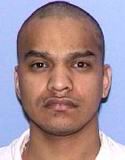
John Manuel Quintanilla
Murderer Robert Martines Perez
Murderer · USA · 1994
Name: Robert Martines Perez · Other name used in proceedings: Robert Martinez P…
15 victims
Robert Martines Perez
Murderer · USA · 1994
Name: Robert Martines Perez · Other name used in proceedings: Robert Martinez P…
15 victims
 Billy Frank Vickers
Murderer · USA · 1993
Billy Frank Vickers Vickers was executed by lethal injection in Texas on Januar…
14 victims
Billy Frank Vickers
Murderer · USA · 1993
Billy Frank Vickers Vickers was executed by lethal injection in Texas on Januar…
14 victims
 Tasmiyah & Yasmiyah Whitehead
Homicides · USA · 2010
Jarmecca “Nikki” Whitehead was the mother of identical twin daughters, Tasmiyah…
1 victim
Tasmiyah & Yasmiyah Whitehead
Homicides · USA · 2010
Jarmecca “Nikki” Whitehead was the mother of identical twin daughters, Tasmiyah…
1 victim
 Craig Price
Juvenile serial killer · USA · 1987
Craig Price was a juvenile serial killer from the Buttonwoods neighbourhoods of…
4 victims
Craig Price
Juvenile serial killer · USA · 1987
Craig Price was a juvenile serial killer from the Buttonwoods neighbourhoods of…
4 victims
 Brandon Wilson
Murderer · USA · 1998
Brandon Wilson was a drifter from Milltown, Wisconsin. He had no permanent plac…
1 victim
Brandon Wilson
Murderer · USA · 1998
Brandon Wilson was a drifter from Milltown, Wisconsin. He had no permanent plac…
1 victim
 Stuart Kennedy
Murderer · USA · 1986
Stuart Kennedy was a White male from West Chester, Ohio. Stuart Kennedy was con…
1 victim
Stuart Kennedy
Murderer · USA · 1986
Stuart Kennedy was a White male from West Chester, Ohio. Stuart Kennedy was con…
1 victim
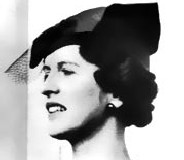 Florence Ransom
Murderer · United Kingdom · 1940
Florence Ransom was a middle-aged woman who was described as physically beautif…
3 victims
Florence Ransom
Murderer · United Kingdom · 1940
Florence Ransom was a middle-aged woman who was described as physically beautif…
3 victims
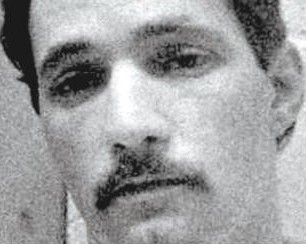 Joseph Savino
Murderer · USA · 1988
Joseph Savino was sentenced to death and was executed by lethal injection in Vi…
1 victim
Joseph Savino
Murderer · USA · 1988
Joseph Savino was sentenced to death and was executed by lethal injection in Vi…
1 victim
- Gender
- male
- Country
- USA
- Location
- Victoria County, Texas, USA
- Date of birth
- December 9, 1976
- Age at first offence
- 26
- Characteristics
- —
- Victim profile
- Victor Billings, 60 (retired deputy)
- Method of murder
- Shooting
- Date(s) of murder
- November 24, 2002
- Years active
- 2002
- Date of arrest
- January 14, 2003
- Status
-
Executed
Sentenced to death December 8, 2004; executed by lethal injection on July 12, 2013
Case information
John Manuel Quintanilla
Timeline
- 11/24/2002 — Quintanilla and two male co-defendants entered an action amusement center in Victoria, Texas, through a partially opened back door, demanded cash from an employee, and advised other patrons to get down on the floor.
- January 14, 2003 — Quintanilla was arrested on a warrant from Calhoun County for an unrelated aggravated robbery.
- January 15, 2003 — At 2:30 p.m., Quintanilla was taken before a magistrate for Article 15.17 warnings and other proceedings; at approximately 4:00 p.m. investigators began interrogating Quintanilla; State’s Exhibit 1a ended after a break at approximately 7:55 p.m.; a new videotape (State’s Exhibit 1b) was inserted; at around 8:10 p.m. the interrogation resumed; at about 8:35 p.m. Arriazola returned with Detectives Alfred Santiago and Tom Copeland.
- December 8, 2004 — The court sentenced Quintanilla to death by lethal injection.
- June 27, 2007 — The Texas Court of Criminal Appeals delivered the opinion affirming Quintanilla’s conviction and sentence.
- June 22, 2006 — Quintanilla sought a state writ of habeas corpus with the state trial court.
- 2007 — The trial court held an evidentiary hearing on the ineffective-assistance-of-counsel claim.
- June 4, 2008 — The Texas Court of Criminal Appeals affirmed the denial of habeas relief.
- May 30, 2009 — Quintanilla filed a federal petition for a writ of habeas corpus.
- January 25, 2011 — The federal district court denied Quintanilla’s petition for writ of habeas corpus.
- October 17, 2011 — The U.S. Court of Appeals for the Fifth Circuit denied COA.
- January 6, 2012 — Quintanilla filed a petition for a writ of certiorari in the U.S. Supreme Court.
- March 19, 2012 — The U.S. Supreme Court denied Quintanilla’s petition for writ of certiorari.
- July 9, 2013 — Quintanilla filed a petition for a writ of habeas corpus in the U.S. District Court.
- July 11, 2013 — The U.S. district court transferred petition to the U.S. Court of Appeals.
- July 11, 2013 — Quintanilla filed a motion for stay of execution.
- July 13, 2013 — The U.S. Court of Appeals denied the petition for a writ of habeas corpus and stay.
- July 15, 2013 — Quintanilla filed a petition for writ of certiorari in the U.S. Supreme Court.
- July 16, 2013 — The U.S. Supreme Court denied Quintanilla’s petition for writ of certiorari and a motion for stay of execution.
- July 12, 2013 — Quintanilla was executed by lethal injection.
Other details
Personal background and offense-related attributes
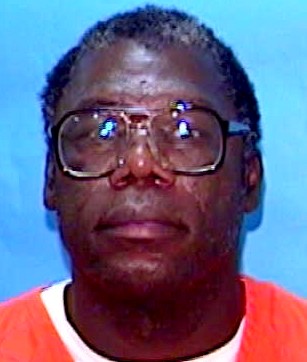
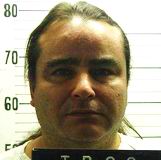
Quintanilla had 8 years of education and worked as a laborer. He was born in Calhoun County. He was Black and male. His hair color was Black, his eye color was Brown, and he was 5' 08" tall and weighed 153.
Prior criminal history and incarceration
Quintanilla had prior prison record: TDCJ #701105 on a 10 year sentence from Victoria County for 2 counts of Burglary Habitation and Engaging in Organized Criminal Activity.
Under Texas law, prior criminal acts could not be presented to a jury during the guilt-innocence phase, but jurors could be presented information about prior criminal conduct during the second phase when they determined punishment. At punishment, the State presented testimony that Quintanilla committed another five armed robberies or burglaries and attempted to commit a sixth, beginning in September 2002 and continuing through January 2003. The State also presented evidence that Quintanilla stabbed and sliced guards with improvised weapons and razor blades while trying to escape from the county jail in January 2003. Penitentiary packets revealed Quintanilla pled guilty to second-degree felony burglary of a habitation in 1995 and received a 10-year sentence. Quintanilla also pled no contest to five other burglaries in 1995.
Quintanilla was linked to a series of other armed robberies in the area in the same time span.
Co-defendants
The incident involved two male co-defendants: Jeffrey Bibb and Rodney Rodriguez.
Victims and related people
Victim: Victor Billings, a retired law enforcement officer described as a retired chief deputy from nearby Edna in adjacent Jackson County, and a 60-year-old retired sheriff’s deputy. Billings was shot in the course of committing or attempting to commit a robbery.
Billings’s wife: Linda Billings, described as his wife of forty years and as the dead man’s wife and watched through a window.
Two daughters of Victor Billings watched through a window.
Another patron: an adult white female was also shot; the injury was not fatal. Another adult white male attempted to disarm Quintanilla and was fatally shot three times.
Bradley Hill testified that he and his partner had waited at a distance from the game room until police had assured its safety; he testified that Billings was lying face down in the floor and showed no respiration or pulse.
Background
Quintanilla was charged in Texas state court with the murder of Victor Billings. A Victoria County jury found Quintanilla guilty of murdering Victor Billings in the course of committing or attempting to commit robbery, and the trial judge sentenced him to death based on the jury’s verdict on the issues of punishment.
The offence
On 11/24/2002 in Victoria, Texas, Quintanilla and two male co-defendants entered an action amusement center through a partially opened back door. They demanded cash from an employee and advised all other patrons to get down on the floor. The robbers wore pantyhose masks and carried long rifles.
A retired law enforcement officer, Victor Billings, was playing games inside with his wife Linda, who had been married to him for forty years. One robber went into the parlor office while Quintanilla ordered the clerk standing next to Mrs. Billings to give him the money in her apron, and she complied. Quintanilla later stated he stole some two thousand dollars from the game parlor that day.
Victor Billings approached one of the robbers and attempted to disarm Quintanilla. Quintanilla shot Billings three times. Billings died of gunshot wounds to the torso. Billings grabbed the muzzle of the gun and Quintanilla shot him a third time, knocking him flat to the ground. Witnesses described shots striking the front door area; after shooting Billings, Quintanilla noticed two other customers trying to leave through the front door and fired at the doorway head high.
A second victim, an adult white female, was also shot, but the injury was not fatal. Another account described a 56-year-old woman was also shot in the foot.
The robbery amount was described as $2,000 or about $2,000 in fleeing accounts.
Investigation
Statements and recovery of items
During questioning by detectives for an unrelated robbery some two months later, Quintanilla made references to the still unsolved Billings case and then led authorities to a canal where divers recovered items used in the holdup, including the mask and the guns and statements about “who did what.”
Jim Beeler, Quintanilla’s lead trial lawyer, stated:
"They had the mask, the guns and his statements saying who did what," Jim Beeler, Quintanilla's lead trial lawyer, said. "He told them everything."
Police arrival and scene condition
Senior Patrol Officer Eddie Stevens was dispatched shortly before 7 p.m. He was the first person on the scene. Stevens testified:
"He advised me he did not see anybody else run out," Stevens said. "We did not know if we still had an active shooter inside."
Sgt. Ralph Buentello arrived a couple of minutes later. Buentello testified:
"The immediate situation was extremely unstable as we tried to determine if we still had people inside."
Knowing Special Response Team mobilization would take about 40 minutes, Buentello decided to send three officers in through the front door behind a ballistic shield. The officers made their way in, allowing Linda Billings and another woman to run out.
Bradley Hill testified that Billings was lying face down in the floor and showed no respiration or pulse.
Witness and prosecutor accounts of identification
Dexter Eaves, the former Victoria County district attorney and lead prosecutor at the trial, stated:
"There wasn't any coercion whatsoever,"
and also said witnesses were able to identify the shooter clearly:
"describe very clearly who the triggerman was."
Eaves characterized the killing:
"so no one else was going to be hurt and paid for it dearly," Eaves said.
He said Billings was shot three times, the last one fired while on his knees, and called it:
"A very cold killing," Eaves said.
Arrest
Quintanilla was arrested on January 14, 2003 on a warrant from Calhoun County for an unrelated aggravated robbery. At the time of arrest, no charges had been brought and no warrant issued for the instant offense.
Trial
Guilt phase and punishment phase
A Victoria County grand jury indicted Quintanilla in 2003 for murdering Victor Billings while committing or attempting to commit robbery on or about Nov. 24, 2002.
In 2004, a Victoria County jury found Quintanilla guilty of murdering Victor Billings. The jury recommended capital punishment, and the court sentenced Quintanilla to death.
At punishment, after the State rested its punishment case, the court convened a hearing outside the presence of the jury. Quintanilla’s trial counsel indicated they would rest in obedience to their client’s instructions.
Refusal to present mitigation evidence
The trial court questioned Quintanilla regarding his awareness and understanding of his right to present evidence on punishment and possible benefit of such evidence. Quintanilla confirmed it was his wish not to present evidence in mitigation or regarding future dangerousness. Before the jury, defense counsel rested.
The following day, before argument began and outside the jury’s presence, the court again addressed Quintanilla and emphasized possible benefits of presenting evidence in mitigation. The court pointed out that trial counsel had experience to make determinations regarding useful evidence, and noted that without punishment evidence from the defense, the jury’s decision would be based solely on the State’s presentation.
Quintanilla repeatedly indicated he had fully discussed the issue with his attorneys and that his decision was made freely, knowingly, and voluntarily. Defense counsel stated they disagreed with Quintanilla’s decision but did not believe him to be incompetent in any way, and the court concurred. Counsel also said this had been an ongoing situation for the two years they represented him and that both attorneys had counseled Quintanilla for those two years without success in changing his position. Beeler stated:
"You want to argue your case, completely and totally," Beeler said. "In that situation, we're not being allowed to present our case, based on our client. "It's extremely frustrating."
Evidence of future dangerousness
Prosecutors bolstered the case for future dangerousness by presenting evidence that Quintanilla attacked a jailer with a homemade weapon while awaiting trial.
A forensic psychiatrist testified at punishment: Dr. Richard Coons opined, based on a hypothetical question greatly resembling the facts of this case, that such an inmate would probably be a future danger, and that he would be a greater risk if sentenced to life than if sent to death row.
Miranda and interrogation evidence (State’s Exhibits 1a and 1b)
Quintanilla was taken before a magistrate on January 15, 2003 at 2:30 p.m. For an aggravated-robbery offense, he requested that an attorney be appointed.
At approximately 4:00 p.m., Victoria County Sheriff’s Office Investigator Abel Arriazola and Calhoun County Sheriff’s Department Investigator Mike Kovorek began interrogating Quintanilla, recording the interview on videotape later labeled State’s Exhibit 1a. Arriazola gave Miranda warnings. Quintanilla indicated he understood his rights and wished to continue, and made no statements regarding the capital murder during this portion, nor did he invoke right to counsel during this portion.
At approximately 7:55 p.m., the officers and Quintanilla took a break marking the end of State’s Exhibit 1a. A new videotape labeled State’s Exhibit 1b was inserted. The appellant and Kovorek resumed at about 8:10 p.m.; Kovorek left again; at about 8:35 p.m., Arriazola returned with Detectives Alfred Santiago and Tom Copeland. Arriazola told Quintanilla:
"Nothing has changed from the time I've talked to you,"
which the testimony stated meant his rights were still in full effect.
Santiago and Copeland began interrogation, including questions about the capital murder, without re-administering warnings. About fifteen minutes into the interview, the detectives reminded Quintanilla of his Miranda rights, and he acknowledged remembering and understanding those rights. Santiago acknowledged in pre-trial testimony that he inadvertently left out the warning that an attorney would be appointed if the appellant could not afford to hire one. Quintanilla did not invoke right to counsel at any time during the interview and made inculpatory statements regarding the instant offense.
Court findings on admissibility
The trial court made required findings of fact and conclusions of law concerning admissibility of the statement in State’s Exhibits 1a and 1b, including that:
- Quintanilla received the Article 15.17 magistrate warning on and requested an attorney for the aggravated-robbery offense for which he had been arrested on a warrant from Calhoun County.
- Quintanilla had not been arrested on the capital-murder offense in Victoria County at the time of the interview.
- State’s Exhibits 1a and 1b constituted one continuous interview, so Miranda warnings given by Arriazola applied to the entire interview.
- The Miranda warnings complied with Article 38.22.
- Quintanilla freely, knowingly, and voluntarily waived his rights as to the capital murder at the beginning of videotape 1a, including right to a court-appointed attorney.
- Statements regarding the Calhoun County aggravated robbery were taken in violation of the Sixth Amendment, but this did not prohibit admission of statements about other offenses.
Portions of State’s Exhibits 1a and 1b were consolidated into State’s Exhibit 29 and admitted into evidence at the guilt phase of trial; State’s Exhibit 29 contained only portions relating to the offense at hand, with references to Calhoun County aggravated robbery and other extraneous offenses omitted.
Defense objections and appellate issues reflected at trial
Quintanilla claimed that State’s Exhibit 29 was admitted in error because the videotaped statement was obtained in violation of the Fifth Amendment right to counsel and also in violation of Article 38.22. The appellate record described these as points of error later addressed by the Texas Court of Criminal Appeals.
The trial court also admitted a penitentiary packet at the punishment phase labeled State’s Exhibit 133, over objection that it lacked a required seal on the certification page.
Sentencing
The trial court sentenced Quintanilla to death. The Texas Court of Criminal Appeals described affirmation of the trial court’s judgment.
At punishment, the jury found a probability that Quintanilla would commit future acts of criminal violence constituting a continuing threat to society. Accordingly, the trial court sentenced Quintanilla to death.
Appeals
State appeal and habeas
In 2004, after conviction, Quintanilla appealed, and in 2007 the Texas Court of Criminal Appeals affirmed his conviction and sentence. The delivered opinion included that the appellant’s two points of error were without merit.
Quintanilla sought state habeas relief: on June 22, 2006 he sought a writ of habeas corpus in the state trial court; in 2007 the trial court held an evidentiary hearing on ineffective-assistance-of-counsel; on June 4, 2008 the Texas Court of Criminal Appeals affirmed denial of habeas relief.
Federal habeas and COA proceedings
On May 30, 2009, Quintanilla filed a federal habeas petition. On January 25, 2011, the federal district court denied the petition and declined to issue a COA.
On October 17, 2011, the U.S.
On July 9, 2013, Quintanilla filed a petition for writ of habeas corpus in the U.S. District Court. On July 11, 2013, the district court transferred petition to the U.S. Court of Appeals. On July 11, 2013, he filed a motion for stay of execution. On July 13, 2013, the U.S.
Supreme Court denials
On January 6, 2012, Quintanilla filed a petition for writ of certiorari in the U.S. Supreme Court. On March 19, 2012, the Supreme Court denied the petition.
On July 15, 2013, Quintanilla filed another petition for writ of certiorari in the U.S. Supreme Court. On July 16, 2013, the U.S.
Outcome
Quintanilla was executed by lethal injection. His punishment was carried out after the U.S. Supreme Court refused two last-day appeals.
A statement before execution included that he told his wife he loved her:
"Thank you for all the years of happiness,"
Quintanilla was pronounced dead at 7:32 p.m. CDT, about 15 minutes after being given the drug.
Aftermath
Quintanilla was described as having become the ninth Texas inmate to receive lethal injection in that year and the 501st since Texas resumed capital punishment in 1982. It was described as the first of two executions set for that week, with another planned for Thursday.
David Dow, the appeals lawyer, told the high court:
"It is clear that Quintanilla would not have been convicted of capital murder if his confession had not been admitted — a fact confirmed by two of his jurors," appeals lawyer David Dow told the high court.
Dexter Eaves said:
and also stated about identification:
Spotted an error, or have more information about this case?