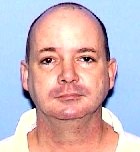
Ronald Short
Murderer Russell Ellwood
Murderer · USA · 1991
Russell Ellwood was a former taxi driver. Authorities suspected him of killing…
20 victims
Russell Ellwood
Murderer · USA · 1991
Russell Ellwood was a former taxi driver. Authorities suspected him of killing…
20 victims
 Robert Martines Perez
Murderer · USA · 1994
Name: Robert Martines Perez · Other name used in proceedings: Robert Martinez P…
15 victims
Robert Martines Perez
Murderer · USA · 1994
Name: Robert Martines Perez · Other name used in proceedings: Robert Martinez P…
15 victims
 Billy Frank Vickers
Murderer · USA · 1993
Billy Frank Vickers Vickers was executed by lethal injection in Texas on Januar…
14 victims
Billy Frank Vickers
Murderer · USA · 1993
Billy Frank Vickers Vickers was executed by lethal injection in Texas on Januar…
14 victims
 Rhonda Wisto
Murderer · USA · 2010
Rhonda Maye Wisto was accused alongside her son, Frank Jacob York, in the Septe…
1 victim
Rhonda Wisto
Murderer · USA · 2010
Rhonda Maye Wisto was accused alongside her son, Frank Jacob York, in the Septe…
1 victim
 Nathaniel Abraham
Homicide · USA · 1997
Nathaniel Abraham is the individual named in the record (also referred to as Na…
1 victim
Nathaniel Abraham
Homicide · USA · 1997
Nathaniel Abraham is the individual named in the record (also referred to as Na…
1 victim
 John Lotter
Murderer · USA · 1993
John L. Lotter was convicted in connection with the December 1993 deaths of Tee…
3 victims
John Lotter
Murderer · USA · 1993
John L. Lotter was convicted in connection with the December 1993 deaths of Tee…
3 victims
 Modise Mokwadi Fly
Murderer · Botswana · 2006
Modise Mokwadi Fly was a Botswana politician and activist. He was the general s…
1 victim
Modise Mokwadi Fly
Murderer · Botswana · 2006
Modise Mokwadi Fly was a Botswana politician and activist. He was the general s…
1 victim
 Richard Head Williams
Murderer · USA · 1997
Richard Head Williams killed Jeanette Williams in a capital murder committed fo…
1 victim
Richard Head Williams
Murderer · USA · 1997
Richard Head Williams killed Jeanette Williams in a capital murder committed fo…
1 victim
- Gender
- male
- Country
- USA
- Location
- Manhattan, New York, USA
- Date of birth
- 1950
- Age at first offence
- 49
- Characteristics
- parricide, abuse, domestic violence, kidnapping
- Victim profile
- His two sons, Richhard, 7, and John, 3
- Method of murder
- B ludgeoning and hacking with an axe and a hammer
- Date(s) of murder
- January 9, 1999
- Years active
- 1999
- Date of arrest
- 14 days after
- Status
-
Life imprisonment
Pleaded guilty; sentenced to two life terms in prison and two additional terms of 25 years to life on May 9, 2001
Parties and identities
- Ronald Short was the father of two homicide victims: Richard Short, 7, and John Short, 3.
- Jolanta Short was Ronald Short’s wife.
- Ellen Borakove was a spokeswoman for the office of the Chief Medical Examiner.
- Chief of Detectives William Allee led police statements at the time of the bodies’ discovery.
- Robert M. Morgenthau was the Manhattan District Attorney.
- Richard A. Brown was the Queens District Attorney.
- Barbara Thompson was a spokeswoman for the Manhattan District Attorney, Robert M. Morgenthau.
- Judge Laura D. Blackburne ordered bail on minor charges in Queens and granted a request for a psychiatric examination.
- Donald B. Lyons was Ronald Short’s lawyer in Queens.
- Larry Busching was an assistant Manhattan district attorney.
- Gary Galperin was a prosecutor at sentencing.
- Justice Edwin Torres sentenced Ronald Short in State Supreme Court in Manhattan.
- Norman L. Reimer was a lawyer for Ronald Short at sentencing.
- Sarah Jones was Ronald Short’s lawyer when he pleaded guilty.
- Adrian Van Caneghem was a resident at 521 Hudson Street in Greenwich Village.
- William Allee identified police investigative steps and spoke publicly after the bodies were found.
- Jennifer Falk was a spokeswoman for the Administration for Children’s Services.
- Steve Cowan was an antiques dealer in a building next door.
- David Rohde was a reporter who wrote about an indictment.
- David M. Halbfinger was a reporter who wrote about the discovery of the bodies.
- Michael Cooper was a reporter who wrote about holding Ronald Short on minor charges.
- Barbara Ross was a reporter who wrote about the guilty plea.
Timeline
- Jan. 9, 1999 — Ronald Short and his wife had an argument in their apartment in the Citylights co-op at 4-74 48th Avenue; his wife left, and when she returned her husband and sons were gone.
- Jan. 13, 1999 — Ronald Short’s wife reported the boys missing.
- Dec. 10, 1995 — Ronald Short plunged “a knife” into a couch, according to a police official, and Ronald Short was arrested on menacing charges; the case was never prosecuted.
- July 4 — Ronald Short called the police and accused his wife of pushing their older son, Richard; after an investigation, no signs of abuse were found.
- Jan. 15, 1999 — Ronald Short was arrested on charges that he had endangered their welfare by keeping them out of school; it was described as a misdemeanor.
- Jan. 16, 1999 — Ronald Short was freed after his wife and relatives posted $10,000 bail.
- Jan. 21, 1999 — Ronald Short skipped his court date; a warrant for his arrest was issued.
- Jan. 22, 1999 — Ronald Short checked himself into St. Vincent’s Hospital after telling officials that he was suicidal; the hospital called his wife, who called the police; Ronald Short was arrested at the hospital at 2 A.M.; the next day detectives found the bodies of his two children.
- Jan. 23, 1999 — A hatchet and a crowbar were removed from the basement of the building where the bodies were found.
- Jan. 24, 1999 — The bodies of Richard Short and John Short were found hidden in the sub-basement of a Manhattan loft building.
- Jan. 25, 1999 — Ronald Short was ordered held on $10 million bail on minor charges related to their disappearance in Queens.
- Feb. 6, 1999 — Ronald Short was indicted on first-degree murder charges and could face the death penalty if prosecutors sought it and if he was convicted.
- Apr. 10, 2001 — Ronald Short pleaded guilty to two counts of first-degree murder.
- May 9, 2001 — Justice Edwin Torres sentenced Ronald Short to two life terms in prison and two additional terms of 25 years to life.
- May 10, 2001 — Court proceedings and the sentencing were reported the following day.
The offence
Ronald Short pleaded guilty to bludgeoning and hacking his two young sons, Richard Short and John Short, to death, and to hiding their bodies in the basement coal room of a Manhattan building he oversaw.
The prosecutor described the killings as follows:
- Larry Busching said Ronald Short “forced his sons -- Richard, 7, and John, 3 -- to take cold showers with their clothes on.”
- Gary Galperin described how Mr. Short “murdered his boys with a foot-long, hammer-headed hatchet,” and said that he “stopped chopping at Richard's body only when his arm grew tired.”
Medical findings described in connection with the victims’ deaths included:
- An autopsy found that Richard Short died of “multiple chop wounds to the head and neck.”
- John Short died of a fractured skull and brain injuries, and was also described as having “blunt impacts to the head.”
Background
Relationship and domestic allegations
Prosecutors and testimony at sentencing described an abusive and controlling domestic context.
- Larry Busching said Ronald Short had tormented his wife, including “stealing the light bulb from the room when she tried to study.”
- Busching also said Ronald Short once poured “a full container of milk over her head.”
- The sentencing narrative included statements about Ronald Short’s controlling nature, including that “she was not allowed to have a mailbox key.”
- The statement read aloud at sentencing described “fruitless iteration among the numerous psychiatrists he saw.”
- The statement also recounted that “on the night of the killings, the couple had spit in each other's faces.”
Prior domestic-violence-related events
Queens proceedings included earlier allegations described by a police official:
- On “May 10,” Jolanta Short filed a complaint that Ronald Short had been harassing her, and it was said that her husband had plunged a knife into a couch on “Dec. 10, 1995,” leading to an arrest on menacing charges; “the case was never prosecuted.”
- It was also stated that on “July 4,” Ronald Short called the police and accused his wife of pushing their older son, Richard; “After an investigation, no signs of abuse were found.”
Investigation
At the time the bodies were found, police said:
- The bodies were found hidden in the sub-basement of a Manhattan loft building.
- Chief of Detectives William Allee said the bodies were wrapped “together in a common stretcher” when they were carried out to a medical examiner’s van.
- Chief Allee stated: “It’s just a horror when you see children like that,” and later refused to discuss the cause of the boys’ death or the condition of the bodies, saying that an autopsy would be performed by the Medical Examiner’s office.
Police described investigative steps and locations:
- Chief Allee said detectives repeatedly searched “five buildings managed by Mr. Short,” as well as “his apartment in Hunters Point,” “another apartment in lower Manhattan,” “a storage room in Manhattan,” and “a car.”
- Chief Allee said the bodies were found as detectives combed through “36 West 25th Street, near Madison Square Park” for the second time.
- Chief Allee said detectives crawled through “a small door” into “a room that ‘probably at one time was used to store coal, next to the boiler, when these buildings had coal-fired boilers.’”
Police described a dispute timeline:
- Chief Allee said that on Jan. 9, the police believed Ronald Short and his wife had a dispute; his wife left their home in the City Lights apartments at 4-74 48th Avenue in Hunters Point and returned to find her husband and sons gone.
- Chief Allee said for several days Ronald Short refused to tell his wife where the boys were, including saying they were “in good health and with relatives.”
Police described arrests and responses:
- After the disappearance was reported on Jan. 13, it was said Ronald Short was arrested two days later at the couple’s Queens apartment and charged with “endangering the welfare of a minor.”
- Chief Allee said it was ordered held on $10 million bail and a court appearance was scheduled.
- Chief Allee said Ronald Short failed to appear, and was arrested again at 2 A.M. Friday in Manhattan.
- Chief Allee said Ronald Short refused to answer police questions both times he was arrested and retained a lawyer after the second arrest.
Police described evidence removal in connection with the case:
- It was stated that “a hatchet and a crowbar were removed from the basement of the building in the Flatiron district where the bodies of the two boys were found on Jan. 23.”
Police described emergency welfare and bail:
- Ronald Short had been held on a $10 million bail.
- The charge brought in Queens included “endangering the children’s welfare by failing to bring them to school,” and it was said the Shorts had recently moved to a co-op building in the Hunters Point neighborhood, leading Queens prosecutors to bring that misdemeanor charge there.
Arrest and custody
First charges and bail in Queens
Ronald Short was ordered held on $10 million bail on minor charges related to the boys’ disappearance.
- The charge was described as endangering the children’s welfare by failing to bring them to school.
- A Queens judge, Laura D. Blackburne, set bail at $10 million.
- Judge Blackburne granted a request by Ronald Short’s lawyer Donald B. Lyons for “a psychiatric examination … to determine whether he is competent to understand the charges against him.”
Later arrest at hospital
It was stated that after skipping a court date, Ronald Short checked himself into St. Vincent’s Hospital and told hospital workers he was suicidal.
- The hospital called his wife, who called the police.
- Ronald Short was arrested at the hospital at 2 A.M. on Jan. 22.
Discovery following hospital arrest
The next day after the hospital arrest, detectives found the bodies of his two children.
Charges and potential penalty
Indictment
Ronald Short was indicted on first-degree murder charges.
- The Manhattan District Attorney Robert M. Morgenthau said that Ronald Short “could face the death penalty” if prosecutors decided to seek such a punishment and if he was convicted.
Death penalty decision
Morgenthau publicly described a decision period and political concern:
- It was stated he had “four months to determine whether to seek the death penalty.”
- It was said Morgenthau declined to pursue the death penalty previously and could face criticism from relatives of some murder victims and police union officials.
Prosecutors would not disclose detailed reasons at that time:
- It was stated that prosecutors “would not disclose exactly why they believe Mr. Short killed his children.”
- It was also stated that Morgenthau declined to detail where, how, or when prosecutors believed the boys were killed or what evidence linked Ronald Short to the slayings.
A quote by Morgenthau at indictment included:
- “My reaction is that we’re going to make every effort to make sure that Mr. Short is never a free man.”
Statements by Ronald Short’s lawyer on death penalty
Douglas B. Lyons said:
- “I hope that Mr. Morgenthau decides after a thorough review of the facts and the evidence not to seek lethal injection for Ronald Short.”
- “As far as I know, Mr. Short has never been convicted of any criminal offense.”
Trial and plea
Ronald Short pleaded guilty to “bludgeoning and hacking his two young sons to death and hiding their bodies” and to two counts of first-degree murder.
- It was stated that his guilty plea was entered “over the objections of his lawyers, Norman Reimer and Sarah Jones,” who said they had urged him to proceed to trial using an insanity defense.
- At the time of the killings, Ronald Short was described as taking Prozac to deal with depression.
A quote attributed to Norman Reimer at the plea included:
- He told Manhattan Supreme Court Justice Edwin Torres that Short “decided to plead guilty because "he does not wish to inflict on anyone the agony of [a] trial."”
Prosecutors described confession and motive context for the plea:
- Assistant Manhattan District Attorney Gary Galperin said that Short confessed to the murders after refusing for days to tell cops where his sons were.
- It was stated Galperin said Ronald Short killed the boys after getting into a fight with his wife, Yolanta, who threatened to tell police he had slapped her.
- It was stated that Short told cops he feared his wife “would use domestic abuse charges to win custody of the boys and take them to her family home in Poland.”
A further quote attributed to Gary Galperin included:
- “All in all, the psychiatric investigation has shown that the people would be able to prove he was guilty,” without elaborating.
Justice Edwin Torres told Ronald Short he faced a maximum sentence of life in jail and should not expect less for pleading guilty.
Sentencing
Sentencing hearing conduct and parties
The sentencing hearing in State Supreme Court in Manhattan was described as taking place in Courtroom 928 and included courtroom statements and characterizations:
- Larry Busching gave a detailed portrait of Ronald Short’s abusive life.
- Gary Galperin described how Ronald Short murdered his boys with a foot-long, hammer-headed hatchet.
- The prosecutor said:
- “May your prison cell, much like the coal cellar for your children, become a dungeon of darkness!”
Ronald Short sat in court “wearing a dark green cable-knit sweater,” with his wife Jolanta seated directly behind him.
- Jolanta’s statement was read aloud by a friend, described as a “24-page statement” in which her “dysfunctional marriage” was described and her psychotherapist was thanked for helping her survive it.
Victim-family statement themes
The statement recounted controlling behavior and mental-health context:
- It included that “she was not allowed to have a mailbox key.”
- It described “fruitless iteration among the numerous psychiatrists he saw.”
- It recounted that “on the night of the killings, the couple had spit in each other's faces.”
- It recommended that Justice Torres consider Ronald Short’s mental problems.
- It included the recommendation:
- “If it is possible,” the statement said, “don’t take away his hope.”
A defense-lawyer theme at sentencing was described:
- Norman L. Reimer said:
- “This was not the act of a bad or evil person.”
- “It was the act of a sick person. The man was crying out for help.”
Judicial remarks and sentencing structure
Justice Edwin Torres sentenced Ronald Short.
- The judge read aloud an order with allusions to Shakespeare’s “Macbeth” and Euripides’s “Medea.”
- Justice Torres told Mr. Short:
- “This act of yours,” he told Mr. Short, “was not born of demons in your head but of bitterness and rancor.”
Justice Torres compared Ronald Short to a character in Macbeth:
- The judge acknowledged that Ronald Short had been “beset by a sea of troubles.”
- The judge compared him to Macduff, who moans, “All my pretty ones?” when he learns his children have been killed.
Sentencing terms
Justice Edwin Torres ordered the prison terms for first- and second-degree murder to be served consecutively and sentenced Ronald Short to:
- two life terms in prison, and
- two additional terms of 25 years to life.
At the conclusion of the hearing, it was described that Ronald Short was led away by “a pair of armed guards” while his wife stayed on.
Outcome
- Ronald Short pleaded guilty.
- Ronald Short received a sentence of two life terms in prison and two additional terms of 25 years to life on May 9, 2001.
Aftermath
Divorce and living situation
After the murders, Jolanta Short divorced Ronald Short and “now lives in Manhattan.”
Community and online reactions described during investigation
During the investigation, it was described that Ronald Short was well known in the Citylights co-op building and ran for a seat on the co-op board but lost.
- It was described that the building had a chat room on the Internet and that Ronald Short posted messages frequently, including detailed minutes of committee meetings and complaints about telephone and cable television service and “the way several paintings were hung on the lobby’s wood-paneled walls.”
- A message attributed to Ronald Short included:
- “Leaving the screws on display for us to see every day is insulting,”
It was also described that after the deaths, the chat room included speculation and hostile remarks, including:
- “I don’t like the idea of sharing a roof with suspected murderers/ kidnappers/wife beaters,”
- “I’d like to see them forced out.”
- “I don’t want to see this building become like some public housing building where stuff like this is commonplace.”
- “We don’t need this type of publicity.”
Additional statements from nearby residents and officials
- Jennifer Falk said the agency “had not received any reports concerning the Short children before they were reported missing.”
- Steve Cowan said it would have been easy for someone to move the bodies to the West 25th Street location without being noticed and stated:
- “During the week over here, it’s so busy with United Parcel, Fed Ex trucks, all the private carriers -- it’s amazing how busy it is,”
- “If you took a box, a bag, or anything into this building, nobody would think twice."
- Adrian Van Caneghem said of the boys:
- “The father seemed devoted to the kids, and the kids seemed really well adjusted,” and
- “They seemed like a normal, close-knit family unit.”
- “They were always happy and smiling -- they talked to the neighbors.”
Statements regarding removal of charges or future custody threats (as alleged)
- Prosecutors described that Ronald Short feared his wife would use domestic abuse charges to win custody and take the boys to her family home in Poland.

Spotted an error, or have more information about this case?