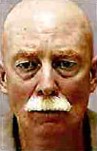
Marcus Shrader
Serial killer Donald Henry Gaskins
Serial killer · USA · 1969
Donald Henry Gaskins, also known as Donald “Pee Wee” Gaskins, was a serial kill…
200 victims
Donald Henry Gaskins
Serial killer · USA · 1969
Donald Henry Gaskins, also known as Donald “Pee Wee” Gaskins, was a serial kill…
200 victims
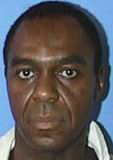 Carl Eugene Watts
Serial killer · USA · 1974
Carl Eugene Watts (born November 7, 1953; died September 21, 2007), also known…
100 victims
Carl Eugene Watts
Serial killer · USA · 1974
Carl Eugene Watts (born November 7, 1953; died September 21, 2007), also known…
100 victims
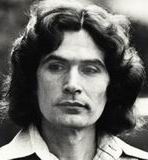 Rodney Alcala
Serial killer · USA · 1977
Rodney James Alcala (born August 23, 1943) was also known as Rodrigo Jacques Al…
100 victims
Rodney Alcala
Serial killer · USA · 1977
Rodney James Alcala (born August 23, 1943) was also known as Rodrigo Jacques Al…
100 victims
 Donald Harvey
Serial killer · USA · 1970
Donald Harvey was known as an American serial killer and a self-professed “Ange…
87 victims
Donald Harvey
Serial killer · USA · 1970
Donald Harvey was known as an American serial killer and a self-professed “Ange…
87 victims
 Donald Leroy Evans
Serial killer · USA · 1975
Donald Leroy Evans (born July 5, 1957) was an American serial killer who murder…
60 victims
Donald Leroy Evans
Serial killer · USA · 1975
Donald Leroy Evans (born July 5, 1957) was an American serial killer who murder…
60 victims
 Michael Swango
Serial killer · USA · 1981
Michael Swango (Joseph Michael Swango) was a physician and American serial kill…
60 victims
Michael Swango
Serial killer · USA · 1981
Michael Swango (Joseph Michael Swango) was a physician and American serial kill…
60 victims
 Shannon Johnson
Murderer · USA · 2006
Shannon Johnson (Black male) was executed by lethal injection in Delaware on Ap…
1 victim
Shannon Johnson
Murderer · USA · 2006
Shannon Johnson (Black male) was executed by lethal injection in Delaware on Ap…
1 victim
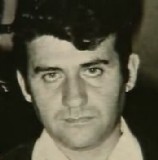 Marcel Barbeault
Serial killer · France · 1969
Marcel Barbeault was convicted for murders described as involving him as “Rando…
8 victims
Marcel Barbeault
Serial killer · France · 1969
Marcel Barbeault was convicted for murders described as involving him as “Rando…
8 victims
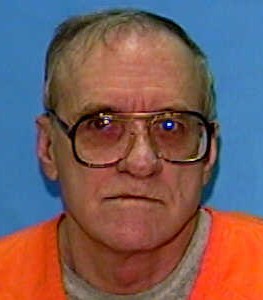 Lloyd Chase Allen
Murderer · USA · 1991
Lloyd Chase Allen was convicted and sentenced to death for the November 13, 199…
1 victim
Lloyd Chase Allen
Murderer · USA · 1991
Lloyd Chase Allen was convicted and sentenced to death for the November 13, 199…
1 victim
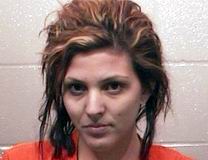 Mary Courtney York
Murderer · USA · 2013
Mary Courtney York was a Del City woman. She previously entered a guilty plea t…
1 victim
Mary Courtney York
Murderer · USA · 2013
Mary Courtney York was a Del City woman. She previously entered a guilty plea t…
1 victim
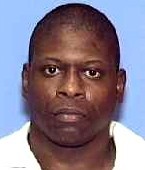 Rodney Reed
Murderer · USA · 1996
Rodney Reed (TDCJ Number 999271) was born on 12/22/67 and was received into cus…
1 victim
Rodney Reed
Murderer · USA · 1996
Rodney Reed (TDCJ Number 999271) was born on 12/22/67 and was received into cus…
1 victim
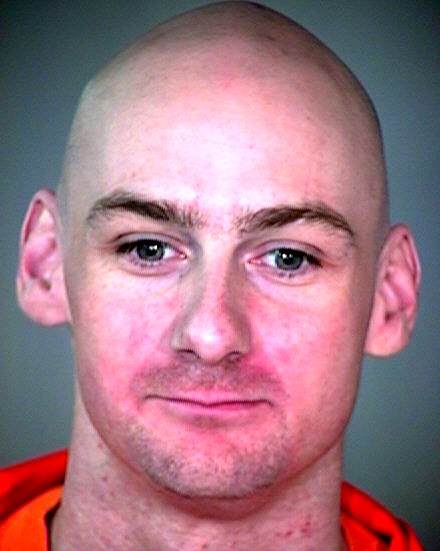 Tracy Allen Hampton
Murderer · USA · 2001
Tracy Allen Hampton was staying with Charles Findley and Findley’s girlfriend,…
2 victims
Tracy Allen Hampton
Murderer · USA · 2001
Tracy Allen Hampton was staying with Charles Findley and Findley’s girlfriend,…
2 victims
- Gender
- male
- Country
- USA
- Location
- Onslow County, North Carolina, USA
- Date of birth
- 1941
- Age at first offence
- 33
- Characteristics
- rape, kidnapping, robbery, torture, murder for hire, dismemberment
- Victim profile
- Ginger Rader, 23 / Cindy Howard, 15, and Karen Amabile, 15 / Cheryl Potter Boyd, 19
- Method of murder
- Shooting / Strangulation
- Date(s) of murder
- January -August 1974
- Years active
- 1974
- Date of arrest
- August 18, 1974
- Status
-
Died in custody
Sentenced to death in 1974; commuted to life imprisonment in 1976 after the U.S. Supreme Court ruled the death penalty in North Carolina unconstitutional; died in prison on July 10, 2007
Case record: Marcus Shrader
Background
Marcus Shrader was a Navy corpsman who was stationed at Camp Lejeune at the time of the crimes. Delma Collins served as one of the investigators in Shrader’s case as a young Jacksonville police detective in 1974. Retired Jacksonville police officer Art Turner remembered a “lucky break” that led to Shrader’s arrest on Aug. 18, 1974. Retired district attorney Bill Andrews said: “He was the most dangerous man I ever prosecuted.” He also said he worked hard every year to make sure Shrader never got out of prison. Susan Howard Henderson said Shrader’s death helped bring some closure: “It lets you go on with life, and just have the good memories,” and “Now we can just remember Cindy as being Cindy.”
People
- Marcus Shrader — defendant; Navy corpsman.
- Cheryl Potter Boyd — victim; 19-year-old; her kidnapping and murder were the basis for Shrader’s conviction.
- Karen Amabile — victim; 15-year-old; was accused by police of being killed by Shrader but Shrader was never tried for those charges.
- Cindy Howard — victim; 15-year-old; was accused by police of being killed by Shrader but Shrader was never tried for those charges.
- Ginger Rader — victim; 23-year-old; was accused by police of being killed by Shrader but Shrader was never tried for those charges.
- Debra Ann Brown — 16-year-old stepdaughter of Shrader at the time; testified against Shrader; served seven years of a 15-year sentence for her part in Boyd’s kidnapping.
- Gerald Potter Jr. — Boyd’s younger brother; described Boyd entering her car and being forced to help rob a nearby bank.
- Art Turner — retired Jacksonville police officer; described the identification that led to the arrest.
- Delma Collins — investigator; described raiding Shrader’s Cedar Point home and finding a “torture chamber” in the attic.
- Bill Andrews — retired district attorney.
- Dewey Hudson — district attorney; opposed parole.
- Ernie Lee — assistant district attorney; met with the Parole Commission.
- Melita Groomes — executive director of the N.C. Post Release Supervision and Parole Commission; discussed parole review and expectations.
- Ed Brown — Onslow County Sheriff; met with the Parole Commission.
- Mike Yaniero — Jacksonville police Chief; met with the Parole Commission.
- Onslow County Commissioner Delma Collins — stated comments about Shrader meeting “final judge.”
- Barbara Shrader — Shrader’s wife; told The Daily News she packed up children and left Onslow County.
- Angelo Amabile — sister’s family member; whose 15-year-old sister Cindy Howard was sexually assaulted and killed by Shrader.
- Arsenio Amabile — Angelo Amabile’s father; commented on relief after the parole decision.
- Angelo Amabile — said: “I would like to say thank you from everybody in my family to all those who called the parole board and voiced their opinion in opposition to (Shrader) getting parole.”
- Potter — Gerald Potter Jr.; senior in high school when his sister was killed; described mixed feelings and that the death felt like an end to waiting.
- Susan Howard Henderson — Cindy Howard’s older sister; commented on continued suffering from parole hearings and later closure.
- The Parole Commission — North Carolina Parole Commission.
Timeline
- January 1974 — Shrader kidnapped 23-year-old Ginger Rader of Jacksonville; he forced her to help him rob a bank; police said he shot her to death.
- Aug. 2, 1974 — Amabile and Howard went to mail a letter at the post office when they were stopped by Shrader’s stepdaughter, Debra Ann Brown; Brown offered them a ride home; police said Shrader was waiting in his van, handcuffed the two girls, bound their mouths with pantyhose, and put tape over their eyes; police said Shrader sexually assaulted and strangled them to death; their bodies were found in the Bear Creek area.
- Aug. 16, 1974 — Shrader kidnapped Boyd from the parking lot of the post office on New Bridge Street; he forced Boyd to help him rob a nearby bank; police said he shot her in the face and left her body in the car behind New River Shopping Center.
- Aug. 16, 1974 — Shrader forced Boyd to help him rob North Carolina National Bank in the Northwoods area.
- Aug. 18, 1974 — Shrader was arrested; police said he was identified after a corpsman recognized freckles around the eyes despite a ski mask; he was charged in connection with four deaths including Boyd’s and Ginger Rader’s, and Cindy Howard’s and Karen Amabile’s deaths.
- 1974 — Shrader was convicted of kidnapping and murdering Cheryl Potter Boyd.
- 1976 — Shrader’s death sentence was commuted to life imprisonment after the U.S. Supreme Court ruled the death penalty in North Carolina unconstitutional.
- 1986 — Shrader became eligible for parole.
- Oct. 01, 2005 — Shrader was denied parole after review by the state; he was to be reviewed again in September 2006.
- Sept. 23, 2005 — county officials raised concerns with the Parole Commission about Shrader’s release.
- Sept. 21 — Shrader’s next parole eligibility date was set.
- 2005 — the first time the board considered the possibility of his release.
- July 10, 2007 — Shrader died in prison on Friday of natural causes in Central Prison in Raleigh.
The offence
Boyd kidnapping and murder; bank robbery
In January 1974, Shrader was accused of kidnapping 23-year-old Ginger Rader and forcing her to help him rob a bank; police said he shot her to death, but he was never tried on those charges. On Aug. 16, 1974, Shrader kidnapped 19-year-old Cheryl Potter Boyd from the parking lot of the post office on New Bridge Street. Gerald Potter Jr. said Boyd was getting into her car when Shrader got in on the other side. Police said Shrader forced Boyd to help him rob a nearby bank and then shot her in the face, leaving her body in the car behind New River Shopping Center. The parole-related account stated that Shrader kidnapped Boyd in the parking lot of the Jacksonville post office on New Bridge Street and forced her to help him rob North Carolina National Bank in the Northwoods area; after the robbery, Shrader shot Boyd in the head with a “.45-caliber pistol,” and she was discovered dead in her car behind New River Shopping Center.
Amabile and Howard abduction, sexual assault, strangling, and dumping
On Aug. 2 of that year, Karen Amabile and Cindy Howard went to mail a letter at the post office. They were stopped by Debra Ann Brown, Shrader’s 16-year-old stepdaughter. Police said Brown knew Amabile from school and offered the girls a ride home. Police said Shrader was waiting in his van. Police said Shrader handcuffed the two girls, bound their mouths with a pair of pantyhose, and put tape over their eyes; Brown later testified. Police said Shrader sexually assaulted the girls and strangled them to death. Police said their bodies, clothed only in panties, were found in the Bear Creek area.
Rader kidnapping and bank robbery; shooting
In January 1974, police said Shrader kidnapped 23-year-old Ginger Rader and forced her to help him rob a bank; then he shot her to death. Shrader was also accused by police of killing 15-year-olds Karen Amabile and Cindy Howard, and 23-year-old Ginger Rader, though he was never tried on those charges.
Stepdaughter involvement and testimony
Debra Ann Brown testified against Shrader in court. The parole-related account stated that Brown was originally also charged in connection to Boyd’s murder. The parole-related account also stated that Brown served seven years of a “15-year-sentence” for second-degree kidnapping.
Investigation and arrest
Art Turner described the identification that led to Shrader’s arrest: “Back then we had a building for Camp Lejeune Military Police next to the police station,” and “A corpsman that was walking through saw the wanted picture we had tacked up on the wall. Even though the suspect had a ski mask on, the corpsman recognized the freckles around the eyes.” Turner said the corpsman recognized Shrader despite a ski mask. Delma Collins said police raided Shrader’s Cedar Point home within three hours.
Collins described what he found in Shrader’s attic:
“That was the most eerie feeling that I ever had in my life,”
“I will never forget the chamber of horrors Shrader had set up in his attic. It was a torture chamber.”
Collins said Shrader was suspected of repeatedly molesting and raping his five stepchildren there.
Trial
Shrader was convicted in 1974 of kidnapping and murdering 19-year-old Cheryl Potter Boyd. The parole-related account stated that Shrader was convicted in December 1974 of the first-degree murder and kidnapping of 19-year-old Cheryl Potter Boyd; it also stated that he was tried only in that case. Brown testified against Shrader at his trial and served seven years of a 15-year sentence for her part in Boyd’s kidnapping.
Brown described physical abuse in her testimony:
“He beat me with chains, fists, guns and bottles,”
The trial evidence included testimony from both Brown and Shrader about sexual activity beginning when she was a child. Shrader testified that he started having sex with Brown when she was 14. Brown testified that he began raping her when she was 12. At the time of Brown’s testimony, Brown was pregnant with Shrader’s baby. Collins said he thought a relative took Brown’s baby when the child was born.
Shrader wrote letters to Brown while both were incarcerated:
“Until I’m dead and in a box, you belong to me body and soul,”
“Don’t get any false feelings of security as long as I’m alive. I may just decide to take you to hell with me. As long as I live, you may damned well die.”
Sentencing
Shrader was sentenced to death for Boyd’s murder and kidnapping. His sentence was commuted to life imprisonment in 1976 after the U.S. Supreme Court ruled the death penalty unconstitutional in North Carolina. When the death penalty was later reinstated, Shrader’s sentence did not change. He was eligible for parole beginning in 1986. The parole-related account stated that Shrader also had to serve a 20-year federal sentence.
Appeals
The death sentence commutation occurred after the U.S. The record did not describe further appellate outcomes beyond the commutation.
Parole and prison status
Parole denial and case review
On Oct. 01, 2005, the North Carolina Parole Commission announced that Shrader was denied parole after a review of his case. The announcement stated Shrader would be reviewed again in September 2006. Melita Groomes said Shrader killed four Jacksonville women in 1974 and was tried only in one case. Groomes said the Parole Commission made its decision Monday and the information was released to The Daily News on Friday. District Attorney Dewey Hudson said he was “very happy with the decision of the Parole Commission” and had spoken with the commission about why he believed Shrader should remain in state prison.
Hudson was quoted describing his opposition:
“I oppose any early release of the defendant,”
“This individual is a dangerous and brutal killer who should remain in prison for the rest of his life.”
Potter and Henderson described ongoing effects of parole consideration on their families. Potter said:
“It’s just an excellent chance that if he got out, he’d do it again,”
and Potter also said: “That’s what I’ve been waiting for this whole time,”
“He’s outlived everybody (else) in my family.”
Henderson said:
“It’s affected our family’s whole life,”
and: “He’s continued to make us suffer every year by the legal system’s allowing him to be up for parole. ? I don’t feel like he deserved to have the freedom that you and I have on a daily basis after the horrendous murder he committed.”
Henderson also said:
“I think it is so wrong to make the families relive the nightmare of losing a loved one every six months or every year,”
“It’s been hard bringing up all the memories again.”
Parole investigation concerns and detainers
District Attorney Dewey Hudson said parole was being investigated due to requirements regarding defendants with detainers lodged from other states or the federal government. Hudson stated:
“We were informed that the parole commission is mandated by the legislature to review those defendants incarcerated in the North Carolina Department of Correction who have detainers lodged against them,”
“A detainer has been filed against Shrader by the federal government in reference to a federal bank robbery conviction, arising out of the robbery of the NCNB in Jacksonville on Aug. 16, 1974.”
The notice of Shrader’s parole consideration was released Aug. 25. Groomes said she expected the group to make a decision “very soon.” The Parole Commission had 90 days to make a decision.
Collins described his meeting response:
“For my part, I told them that having lived in this community my entire life and having served all my adult life in public service, I know of no other case that had the notoriety attributed to this case,”
“I can’t tell you how receptive they were,”
“When I left, I felt like they had really taken what we told them to heart. They couldn’t tell us what they were going to do, but my instinct tells me they are going to do the right thing.”
The parole-related account stated Shrader was in a medium-security prison at Eastern Correctional Institute in Maury, which is in Greene County. It also stated that since he was placed in the N.C. Department of Corrections, he had 67 disciplinary infractions.
Federal sentence for bank robbery
The parole-related account stated Shrader had to serve a 20-year federal sentence. It described that detainer was filed by the federal government in reference to a federal bank robbery conviction arising out of the robbery of the North Carolina National Bank in Jacksonville on Aug. 16, 1974.
Outcome
Shrader’s parole was denied in the Oct. 01, 2005 decision after the state review process. The record stated that Shrader died in prison on July 10, 2007, of natural causes in Central Prison in Raleigh.
“When our time is up, we all have to meet our final judge,”
said Onslow County Commissioner Delma Collins, who served as one of the investigators in Shrader’s case as a young Jacksonville police detective in 1974.
“I would hate to be in Shrader’s shoes right now.”
Aftermath
Potter learned of Shrader’s death when he called to make his appointment for this year. Potter said:
“It seems weird that this is going to be over,”
and:
Henderson said:
“Now we can just remember Cindy as being Cindy.”
Potter and Henderson credited community efforts for keeping Shrader incarcerated. Potter said:
“If you don’t bring this to the attention of people, it’s going to be slipped under the rug”
and: “I appreciate everybody that had anything to do with it.”
Arsenio Amabile said he felt “very good” about the parole decision and that it made him feel comfortable. He said:
“I felt very good about it,”
“It made me feel comfortable. I’m thankful for all the people who called.”
Arsenio Amabile also expressed that annual parole misery continued:
“If he was sentenced to life, it should be there from birth to life,”
“He doesn’t deserve to be free. Every year when this comes up it’s another misery.”
Delma Collins and Hudson both described effects of the investigation and prosecution challenges. Hudson described needing to “go back and relearn what had happened in 1974” and emphasized that reopening older deaths required new evidence or a witness. Hudson also said:
“Thank goodness we did have some people who actually worked on case that are still around.”
and: “We have plenty to do without revisiting Marcus Shrader, but there is no other case that has ever been like Marcus Shrader,”
“He’s a woman’s worst nightmare.”
Barbara Shrader told The Daily News that she packed up her four other children and left Onslow County in the middle of the night, going to Boston to the home of her husband’s aunt.
Spotted an error, or have more information about this case?