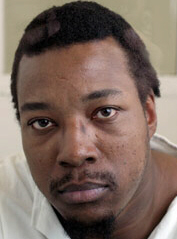
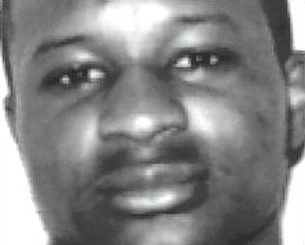
Richard Head Williams
Murderer Russell Ellwood
Murderer · USA · 1991
Russell Ellwood was a former taxi driver. Authorities suspected him of killing…
20 victims
Russell Ellwood
Murderer · USA · 1991
Russell Ellwood was a former taxi driver. Authorities suspected him of killing…
20 victims
 Robert Martines Perez
Murderer · USA · 1994
Name: Robert Martines Perez · Other name used in proceedings: Robert Martinez P…
15 victims
Robert Martines Perez
Murderer · USA · 1994
Name: Robert Martines Perez · Other name used in proceedings: Robert Martinez P…
15 victims
 Billy Frank Vickers
Murderer · USA · 1993
Billy Frank Vickers Vickers was executed by lethal injection in Texas on Januar…
14 victims
Billy Frank Vickers
Murderer · USA · 1993
Billy Frank Vickers Vickers was executed by lethal injection in Texas on Januar…
14 victims
 Charlie Livingston
Murderer · USA · 1983
Charlie Livingston was executed by lethal injection in Texas on November 21, 19…
1 victim
Charlie Livingston
Murderer · USA · 1983
Charlie Livingston was executed by lethal injection in Texas on November 21, 19…
1 victim
 Aleksandr Rubel
Serial killer · Estonia · 1997
Aleksandr Rubel (born 25 December 1980) was a serial killer convicted of six mu…
7 victims
Aleksandr Rubel
Serial killer · Estonia · 1997
Aleksandr Rubel (born 25 December 1980) was a serial killer convicted of six mu…
7 victims
 Joseph Donald Ture
Serial killer · USA · 1978
Joseph Donald Ture was indicted by a Stearns County grand jury on four counts o…
6 victims
Joseph Donald Ture
Serial killer · USA · 1978
Joseph Donald Ture was indicted by a Stearns County grand jury on four counts o…
6 victims
 William Oliver Reese
Murderer · Japan · 2006
William Oliver Reese William Oliver Reese was a US Navy airman assigned to the…
1 victim
William Oliver Reese
Murderer · Japan · 2006
William Oliver Reese William Oliver Reese was a US Navy airman assigned to the…
1 victim
 Carlton Jerome Pope
Murderer · USA · 1986
Carlton Jerome Pope was convicted of capital murder in the commission of robber…
1 victim
Carlton Jerome Pope
Murderer · USA · 1986
Carlton Jerome Pope was convicted of capital murder in the commission of robber…
1 victim
 Jeffrey Johnson
Murderer · USA · 2012
Jeffrey Johnson was a 58-year-old clothing designer who had been laid off. Poli…
1 victim
Jeffrey Johnson
Murderer · USA · 2012
Jeffrey Johnson was a 58-year-old clothing designer who had been laid off. Poli…
1 victim
- Gender
- male
- Country
- USA
- Location
- Harris County, Texas, USA
- Date of birth
- J uly 19, 1969
- Age at first offence
- 28
- Characteristics
- murder for hire, rape, drug addict, history of mental illness
- Victim profile
- Jeanette Williams, 47 (paraplegic woman)
- Method of murder
- St abbing with knife
- Date(s) of murder
- March 24, 1997
- Years active
- 1997
- Date of arrest
- 3 days after
- Status
-
Executed
Executed by lethal injection in Texas on February 25, 2003
Parties and context
Richard Head Williams killed Jeanette Williams in a capital murder committed for remuneration or the promise of remuneration.
Jeanette Williams was 47 years old and confined to a wheelchair for 22 years. She took pain medication and had become addicted to crack cocaine. She had lived with Bruce and Michelle Gillmore at various times and was an acquaintance of them.
Bruce Gillmore took out a $25,000 life insurance policy on Jeanette Williams and designated himself as the beneficiary.
Williams was described as having no relation to Jeanette Williams. After being released from a prison sentence, Williams went to live with Jerrol Blueford. Jeanette Williams and the Gillmores were also friends with Blueford.
The offence
Several days prior to the murder, Bruce Gillmore approached Jerrol Blueford about killing Jeanette Williams so that, as beneficiary, Bruce Gillmore could collect the life insurance proceeds. Blueford refused, but he introduced Bruce Gillmore to Williams.
Bruce Gillmore promised to pay Williams $12,000 if he murdered Jeanette Williams. Williams agreed.
On March 24, 1997, Williams, Jeanette Williams, and Bruce and Michelle Gillmore drove to the Third Ward in Houston, apparently to buy cocaine for Jeanette Williams and for Michelle Gillmore. While Bruce Gillmore stayed in the car, Williams and Michelle Gillmore pushed Jeanette Williams in her wheelchair toward a corner to supposedly purchase the drugs.
Williams then grabbed Jeanette Williams’ forehead from behind and, using a nine-inch steak knife, slit Jeanette Williams’ throat. Once Jeanette Williams fell from her wheelchair, Williams repeatedly stabbed her in the chest.
Bruce and Michelle Gillmore drove away and left Williams at the crime scene. Afterward, the officers who responded initially believed Jeanette Williams was killed in a hit and run accident because she was lying in the street in a pool of blood with her wheelchair approximately three feet away. When the body was turned over, officers discovered the gaping wound to the neck and numerous stab wounds to the chest.
According to the medical examiner, the wound to the victim's throat severed her jugular vein and windpipe. It was determined that the victim suffocated and bled to death.
Investigation
The investigation provided telephone numbers that led to the Gillmores, who in turn implicated Williams.
Williams confessed to the murder on videotape.
Williams’ confession included details that the Gilmores recruited him to kill Jeanette Williams for $12,000 so they could collect proceeds from the $25,000 life insurance policy. Williams also stated that he attacked her using the weapon supplied for the killing.
During a videotaped confession and related testimony, Williams said he and the victim even slept in the same bed one night while Jeanette Williams was present during discussions of the murder.
After his arrest, Williams told police that he talked the Gilmores out of two of their plans for killing Jeanette Williams, including shooting her and taking her out of state for the murder. Williams said the gun would be too loud and that the group would be more readily connected to the murder if they traveled.
Williams also said he was “high and drunk” when he went to police.
Arrest and related actors
Williams was indicted in the 174th District Court of Harris County, Texas, for the capital offense of murdering Jeanette Williams on March 27, 1997 for remuneration or the promise of remuneration.
Blueford was told by Bruce and Michelle Gillmore that Williams was crazy and that Williams had murdered Jeanette Williams. The Gillmores gave Blueford $400 to give to Williams as payment for the murder and instructed him not to tell Williams where they were going.
When Williams returned to Blueford’s house, his hand was wrapped in a blood-soaked towel. Williams asked Blueford if the Gillmores had left anything for him, and Blueford gave him the $400. Williams became noticeably upset over the amount of money and told Blueford that he would find and murder the Gillmores because they owed him more.
Williams was convicted of capital murder.
Bruce and Michelle Gillmore were convicted of capital murder for their part in the scheme and each received life sentences.
Trial
Williams pleaded not guilty and was tried before a jury.
The jury found Williams guilty of capital murder on Oct. 28, 1997. A separate punishment hearing followed.
On Nov. 21, 1997, the court assessed Williams’ punishment at death by lethal injection.
Defence and mental condition evidence mentioned during trial
During punishment, evidence indicated Williams’ prior history and prison discipline.
During the trial process, Williams’ attorneys raised the issue of his intelligence and called witnesses who said he should undergo neurological testing. When the prosecutor asked Dee Dee Halpin, an educational diagnostician testifying for the defense, whether Williams was mentally retarded, she said, “No.” She testified that Williams scored a 93 on an IQ test when he was 6.
A bill before the Texas Legislature would classify defendants with an IQ of 70 or below as mentally retarded. Williams stated he believed he was mentally retarded. Prosecutor Lynn Hardaway disputed the claim, saying Williams had average to low-average intelligence.
Sentencing
Williams was sentenced to death by lethal injection.
In the record of prior criminal history presented during punishment, the State showed Williams had previously served a 10-year sentence in the Texas Department of Corrections for burglary of a building, burglary of a railroad car, arson, and aggravated sexual assault.
Evidence also showed that, while serving his sentence, Williams was subjected to discipline on multiple occasions for assaulting and threatening correctional officers, for spitting in the face of a correctional officer, and for possessing contraband.
Williams was discharged one month before the murder; another account stated he was discharged Feb. 28, 1997.
Appeals and habeas corpus
Williams’ conviction and sentence were automatically appealed to the Texas Court of Criminal Appeals, which affirmed in an unpublished opinion on May 12, 1999.
Williams did not seek certiorari review in the United States Supreme Court.
Williams filed an application for writ of habeas corpus in state court on Jan. 25, 1999. After the state habeas court entered detailed findings of fact and conclusions of law recommending that habeas relief be denied, the Court of Criminal Appeals denied the application in an unpublished order on Feb. 9, 2000.
After obtaining appointment of counsel, Williams filed a petition for writ of habeas corpus on Aug. 4, 2000, in the United States District Court for the Southern District of Texas, Houston Division. The district court denied habeas relief on Sept. 27, 2001.
Thereafter, on July 25, 2002, the United States Court of Appeals for the Fifth Circuit denied Williams a certificate of appealability in an unpublished opinion.
Williams then filed a petition for writ of certiorari in the United States Supreme Court. The Court denied certiorari on Dec. 2, 2002.
On Feb. 11, 2003, Williams filed a subsequent application for state habeas relief in the 174th District Court of Harris County. His application was still pending.
Mental retardation-related arguments and disputed issue mentioned
Williams’ attorneys insisted in last-ditch appeals that he was mentally retarded and could not be put to death under a U.S. Supreme Court ruling. At his trial, testimony showed his IQ at age 6 was 93.
A separate concurring opinion excerpt stated that the applicant had failed to meet a threshold factual burden for mental retardation under Atkins and recounted IQ testing and school observations. The excerpt also discussed dyslexia and impairment, while stating dyslexia was not mental retardation.
The concurring opinion excerpt included the following statement:
In my opinion, an applicant must, at a bare minimum, provide evidence of at least one I.Q. test (preferably taken before the age of 18) from which a reasonable trier of fact could conclude that the person is mentally retarded under Atkins. Better yet is evidence of several such I.Q. tests, coupled with supporting school and medical records, and record evidence or affidavits from qualified experts (or laymen with sufficient personal knowledge of specific conduct) that at least raise an issue concerning applicant's lack of adaptive skills and the onset of mental retardation before age 18. In the present case, I conclude that applicant has failed to meet that threshold factual burden.
The excerpt further stated:
When applicant was in the first grade, his Slosson I.Q. tested at 93. In 1981, his verbal I.Q. tested at 65, his performance I.Q. at 85, and his full score I.Q. at 72. In 1982, applicant's I.Q. score (WISC-R) increased to Verbal 68; Performance 96; Full Scale 80.
The assessment at that time, when applicant was in the 6th grade, was "intellectual functioning in the low average range. Significant discrepancy in development of his nonverbal intelligence. Characterized as a visual learner. Academic achievement (esp. in reading) below intellectual functioning."
When applicant was 14, every teacher noted poor or very poor attendance. One stated that he "has the ability to learn but needs much individualized personal instruction and attention." Another stated that "when in attendance [he] was making a passing grade ... If Richard would stay in attendance he would average a C or B for a nine weeks period." It was also noted that applicant had "poor peer relationships," "defies authority," and "leaves home but never arrives at school."
In 1984, when applicant was 15 and charged with burglary of a coin-operated machine, he was given a psychological assessment. The examiner stated: "Richard [applicant] is functioning in the borderline range of intellectual ability as assessed by the Peabody Picture Vocabulary Test on which he obtained an IQ of 72."
At that time, applicant was in regular 8th grade classes but was expelled for fighting. The examiner stated that applicant's poor performance in reading and spelling "show a lack of ability to use phonetics, i.e. to sound out words. Consequently he reads entirely by sight and his sight vocabulary is very small."
The examiner also stated that "[p]rojective tests and clinical impressions indicate that [applicant] is an immature boy who wants and needs positive relationships with others." Applicant also felt "overcontrolled or caged in by his parents" and "seems to perceive his mother as negatively controlling and withdrawn."
In the "Conclusions" section of his report, the examiner does not mention any mental deficiencies, but rather focuses on the fact that applicant's needs were not being met at home and thus outside placement was recommended to provide "support and consistent limits which are enforced in a non-reactive, calm fashion."
In 1985, the Texas Youth Commission retested applicant and he again obtained a 72 Peabody "full score I.Q." It was noted that applicant made "minimal effort" during the testing. When applicant attended Crockett State School under the control of the Texas Youth Commission, his school work improved dramatically: he made A's in Math, B's in Survival Skills, English/Language Arts and P.E., and C's in Social Studies and Health. He tested in the 53rd percentile on the TONI test of Non-Verbal Intelligence.
In 1985, applicant was placed in Vocational Education for the Handicapped classes at Wheatley High School, where he received mainly A's and B's and his teacher reported applicant had a "generally positive and serious approach to schoolwork" and that "a lot of good things are waiting for [applicant's] positive influence out there." Despite these improvements, applicant dropped out of school three months later.
According to a defense psychologist expert who testified at applicant's capital murder trial, applicant suffered from developmental delay, a learning disability (dyslexia) and impaired motor function. By the time of his capital murder trial, he also had some possible brain dysfunction. This evidence certainly supports a conclusion that applicant has dyslexia- a learning disability- which has adversely affected his reading abilities, as well as his ability to score well on the verbal component of an I.Q. test. But dyslexia is not mental retardation. Applicant's factual allegations and writ materials also support a conclusion that applicant is not well-educated, has poor motor skills, some possible brain dysfunction, and has not shown much interest in education during his youth (except for a short period during and after his stay at TYC when he improved dramatically), but none of this constitutes "sufficient specific facts" to support a claim of mental retardation under Atkins.
Execution and final statement
Williams was scheduled to be executed after 6 p.m. on Tuesday, Feb. 25, 2003.
He was executed by lethal injection in Texas on February 25, 2003.
A final statement was delivered in the moments before the lethal drugs began flowing into his arms. The final statement included the following words:
The statement I would like to make is to all my loved ones - and to the Abrahams and Williams families. We came a long way through the tragedy - from hate to love and I would like to apologize for the pain I have caused all my families on both sides. I am looking at you Mr. Frank: I am sorry brother for what happened to your sister and I hope that you would forgive me one day. Ask God to forgive me and ask God to forgive you and allow me to pass through. My brother Farooq, I love you my brother and send my love to all my family members. And I was not a monster like they said I was. I made a mistake and this mistake cost - but they won't cost no more. I leave you with all my love and blessings. may Allah bless each and every one of you.
Another account stated that Williams apologized to “all the pain he had caused” and that he told Jeannette Williams’ brothers, including Frank Abraham, “I am sorry, brother, for what happened to your sister and hope that you would forgive me one day.”
Another account also stated that Williams was pronounced dead at 6:19 p.m. and that it was seven minutes after the lethal dose began.
After the execution, a written statement attributed to Williams criticized the Texas criminal justice system and included the following quoted lines:
"I could have been that someone if I (had) been given a chance in life instead of denial or incarceration every time I was arrested for something the community believed I did," he said. "To be here on Texas death row show (sic) all people that we people of American (sic) don't care about helping. This about destroying lives to show they can kill."
Another quoted written statement included:
"Now I lay here dead," he wrote. "But we have gave all Texans the sign that in some instances and some cases, 'Killing is alright to do as long it's for justice of the American people,'" he printed in capital letters. "So who win? No one do!"
Timeline
- Jan. 25, 1999 — Williams filed an application for writ of habeas corpus in state court.
- Feb. 9, 2000 — The Texas Court of Criminal Appeals denied the state habeas application in an unpublished order.
- Aug. 4, 2000 — Williams filed a petition for writ of habeas corpus in the United States District Court for the Southern District of Texas, Houston Division.
- Sept. 27, 2001 — The district court denied habeas relief.
- July 25, 2002 — The United States Court of Appeals for the Fifth Circuit denied a certificate of appealability.
- Dec. 2, 2002 — The U.S. Supreme Court denied certiorari.
- Feb. 11, 2003 — Williams filed a subsequent application for state habeas relief in the 174th District Court of Harris County.
- Feb. 25, 2003 — Williams was executed by lethal injection in Texas.
- May 12, 1999 — The Texas Court of Criminal Appeals affirmed Williams’ conviction and sentence in an unpublished opinion.
Other details
Williams’ materials included a written message dated Aug. 11, 2000, stating:
“I was confused on what I really wanted in life, where I wanted to go in this world.”
The record also included personal details in a message addressed to correspondents, including statements about his age and appearance, his child Jason (age 15), and that he was on Texas death row awaiting execution for 2 years, 10 months and 4 days.
A separate listed homepage-type message included these quoted statements:
“Some might say I was bad,” he wrote, “but really I was confused on what I really wanted in life, where I wanted to go in this world.”
During pre-execution interviews, Williams denied involvement and made statements including:
"I ain't did nothing to nobody," he insisted he was in Louisiana at the time of the slaying, never received any money for the killing and "didn't know no Gilmores. The whole thing is a setup," he said.
During these interviews, Williams also said:
"The way I look at it, the whole trial was rehearsed," he said then. "They used everything I did in my life against me. It had nothing to do with my case, but that's the way the system is designed, to get railroaded. I'm just a dumb black man with no money, caught in the system."
A victim advocate quote included:
"brass ring"
Prosecution and legal figures mentioned included Texas Attorney General Greg Abbott and Harris County district attorney Vanessa Velasquez.
A prosecution quote attributed to Vanessa Velasquez included:
“Then why did he give that confession? I had hoped he would reconcile with his own guilt. That's unfortunate. I think he was a cold-blooded killer. He slit a woman's throat who couldn't walk, was a paraplegic, from ear to ear, on a dark street," Velasquez said. "She fell out of the chair but that wasn't enough. He had to continue stabbing her. She was found laying in the road like a wounded dead animal, with her wheelchair thrown to the side."
Prior to execution, Williams’ final meal was described as:
- Two chili cheese dogs
- Two cheeseburgers
- Two orders of onion rings with French dressing
- Turkey salad with French fries
- Chocolate cake
- Apple pie
- Butter pecan ice cream
- Egg rolls
- One peach
- Three Dr. Peppers
- Jalapeno peppers
- Ketchup
- Mayonnaise
Spotted an error, or have more information about this case?